Tag: Contempt

  • Shadows: Jungian & Scripture Compared

    Shadows: Jungian & Scripture Compared

    The Shadow lives inside us, all of us, at varying degrees.

    We are not the shadow, but we created the shadow by disassociating from and clouding the memory of our inner child.

    As children without the ability to logically analyze and understand, we begin to fear our own selves. The parts of us that received trauma, rejection, or shame are dangerous in our little minds, so we cut him or her off to survive. A child doesn’t understand as adults understand.

    The shadow keeps our inner child captive, so we remain in a delusional state of safety. This is fragmented, cut-off version of ourselves that we don’t remember consciously but that affects us nonetheless, driving our actions, choices, and behaviors. Recognizing this aspect and exploring what caused this disconnection from ourselves is not about being a victim, but about taking back control and responsibility for ourselves. As God’s children, we confront this brokenness, this separation, this sin…


    Carl Jung Quotes about The Shadow:

    Until you make the unconscious conscious, it will direct your life

    Knowing your own darkness is the best method for dealing with the darkness of other people.”

    “Everyone carries a shadow, and the less it is embodied in the individual’s conscious life, the blacker and denser it is.”

    “One does not become enlightened by imagining figures of light, but by making the darkness conscious.

    “The shadow is a moral problem that challenges the whole ego-personality, for no one can become conscious of the shadow without considerable moral effort.


    Shadow in the Bible:

    “The people living in darkness have seen a great light; on those living in the land of the shadow of death, a light has dawned.” – Matthew 4:16

    “Even though I walk through the darkest valley, I will fear no evil, for you are with me; your rod and your staff, they comfort me.” – Psalm 23:4

    “All things are exposed when they are illuminated by the light, for everything that is illuminated becomes a light itself.”

    – Ephesians 5:13

    “God is light; In him there is no darkness at all.” – 1 John 1:5

    “The light shines in the darkness, and the darkness has not overcome it.” – John 1:5


    The importance of recognizing and integrating the shadow aspects of ourselves, as well as the transformative power of Light and Truth who is Salvation (Christ)

    Through the valley of the shadow of evil, I walk with unwavering determination, for the One Creator has equipped me with his rod and staff, offering me solace and protection from the depths of my soul’s depraved casing.

    We are subject to the limitations of the material world and the polarity it imposes upon us. To ignore the darkness within ourselves is to allow it to fester and grow, leading to obstacles in our relationships and hindering our ability to thrive.

    Embracing the role of shadow laborer grants us the means needed to tame the monster within us. We realize that the dragon within us can only be overcome by the light of truth, and God embodies that truth. Hence, denying any part of ourselves, whether light or dark, is to choose not to embody God entirely.

    As adults, we must nurture the inner child who was abandoned, not only by caregivers but, more tragically, by ourselves. We must take responsibility for our shocking behaviors, regardless of the abuse we have endured, and embark on the path to wholeness.

    Through this journey of self-discovery and integration, we piece together the fragments of our being and emerge as complete, whole, and fulfilled individuals.

    Read More:

  • The Misconception Of Judgment And Contempt In Westernized Christian Society: Personal Relationships

    The Misconception Of Judgment And Contempt In Westernized Christian Society: Personal Relationships

    Misconception:

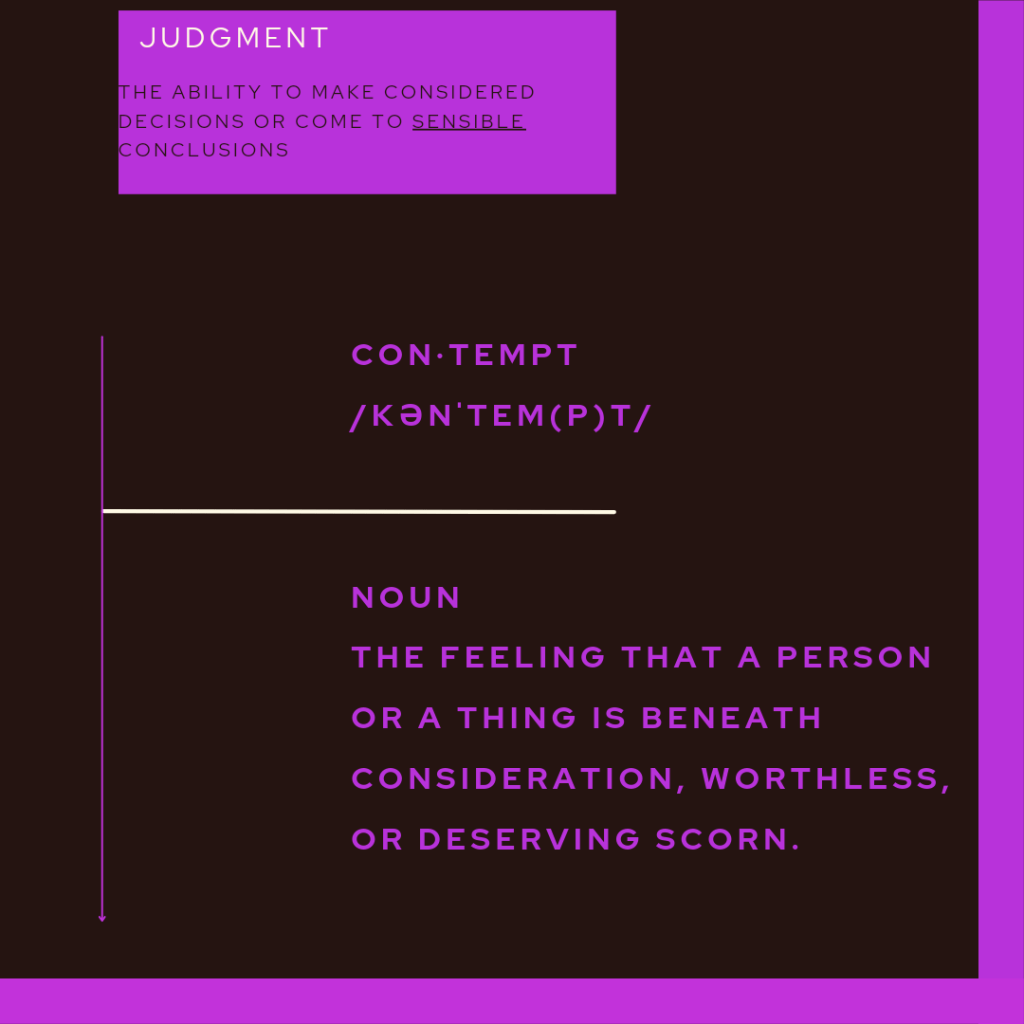
    Judgment is often misunderstood as synonymous with contempt in Westernized Christian society. However, judgment simply means forming an opinion or making a decision based on careful consideration of available information. Contempt, on the other hand, involves a deep-seated feeling of dislike or disrespect towards someone. It is important to distinguish between these two concepts in order to promote healthy communication and relationships.

    Judgment

    Judgment is the act of evaluating someone’s behavior or actions to form an opinion or make a decision. The Bible promotes the use of judgment, with Jesus urging his followers to judge righteously in John 7:24. This means that judgment can be a valuable tool for making thoughtful and empathetic choices.

    Judgment VS Contempt

    While judgment can be constructive and positive, contempt is a harmful emotion characterized by feelings of disrespect or disdain for others. It can be destructive to relationships and the Bible warns against it. Jesus himself cautioned against contempt when he said, “Do not judge, or you too will be judged” (Matthew 7:1).

    Contempt is a harmful emotion and can be destructive to relationships.

    Contempt can manifest itself in various ways, such as through insults, belittling, and dismissive behavior. It often stems from a sense of superiority or a desire to assert dominance over others. However, its negative effects can be far-reaching and long-lasting.

    Contempt In Personal Relationships

    Contempt in personal relationships can take different forms like insults, sarcasm, eye-rolling, dismissive behavior, and criticism. It can lead to a breakdown in communication and emotional connection, which is damaging in romantic relationships where love and mutual respect are crucial.

    A Vicious Cycle

    Contempt can lead to a negative cycle in a relationship and make it hard to resolve conflicts. In extreme cases, it can cause the relationship to end completely.

    Rehash

    To further illustrate the differences between judgment and contempt, let’s take a look at each concept in more detail.

    Judgment is the process of forming an opinion or making a decision through careful consideration or analysis. It involves making a rational and objective assessment of a situation or person based on available information. We use judgment every day to make decisions that affect our lives, such as which job to apply for or who to trust.

    Contempt Is Disrespect

    On the other hand, contempt is a feeling of disrespect or disgust towards someone or something. It is a negative emotion that arises when we perceive someone or something as inferior, unworthy, or despicable. Unlike judgment, which is based on information and logic, contempt is driven by emotions and can be irrational.
    While judgment can be helpful in making informed decisions, contempt can be damaging to relationships and create a negative environment. It can lead to resentment, anger, and an overall breakdown of communication and trust. When we feel contempt towards someone, we are less likely to listen to them, show empathy, or work towards a resolution.

    How To Use Judgment Righteously

    In order to use judgment effectively and avoid contempt, it’s important to approach situations with empathy, curiosity, and an open mind. Rather than jumping to conclusions or dismissing alternative viewpoints, we can seek to understand different perspectives and evaluate evidence objectively. By doing so, we can make informed decisions while maintaining positive relationships with others.

  • Contempt: A Destructive Force

    Contempt: A Destructive Force

    As an overthinker, I’ve come to realize judgment and contempt often get tangled up in a messy web of confusion.

    Contempt is like a souped-up version of criticism. It’s when we take our disapproval to a whole new level, adding a sprinkle of superiority and a dash of disdain towards the poor soul on the receiving end. It’s like our fallen nature’s way of rebelling against the divine order.

    When we let contempt rule our hearts, we basically kick God’s authority to the curb and place ourselves on a lofty pedestal. We start thinking we’re better than others, believing we’re superior in every way. And let me tell you, this kind of prideful thinking leads to one thing: a big dose of contempt for our fellow human beings.

    Contempt doesn’t just harm the person we direct it towards, but it also messes with our own ability to trust, communicate, and cooperate. It’s like a toxic cloud that ruins any chance of building healthy relationships.

    The difference between contempt and criticism.

    Criticism is when we express our disapproval or dissatisfaction with someone’s behavior, action, or idea. It’s like saying, “Hey, I don’t think this is the right way to go about things.”

    But contempt… takes it to a whole new level. Contempt is when we add that extra spice of superiority and disdain, throwing in some sneaky insults, mockery, and other mean-spirited antics.

    Contempt has been discussed and dissected by scholars and philosophers throughout history.

    In psychological terms, contempt is considered one of the four destructive behaviors that can predict the demise of a relationship, alongside criticism, defensiveness, and stonewalling. It is characterized by a feeling of superiority, disdain, and a devaluation of the other person. When we hold contempt for someone, we perceive them as beneath us, unworthy of respect or consideration.

    But what fuels this contempt? It is often rooted in judgment and comparison.

    We create standards and expectations for others, and when they fail to meet them, we react with contempt. It can stem from our own insecurities, as we project our fears and self-doubt onto others. It can also arise from a feeling of injustice or a perceived threat to our own self-worth.

    It is crucial to recognize that contempt is a destructive force. It erodes trust, creates distance, and prevents meaningful connections from forming. It limits our ability to empathize and understand others’ perspectives, hindering personal and collective growth. It blinds us to the inherent worth and dignity of every individual, regardless of their flaws or shortcomings.

    To combat contempt, we must cultivate empathy, compassion, and a willingness to see beyond our own biases. We can start by practicing active listening, seeking to truly understand others before passing judgment. We should also challenge our own assumptions and prejudices, recognizing that everyone is fighting their own battles and deserving of grace.

    Contempt is a destructive emotion that reflects our flawed human nature.