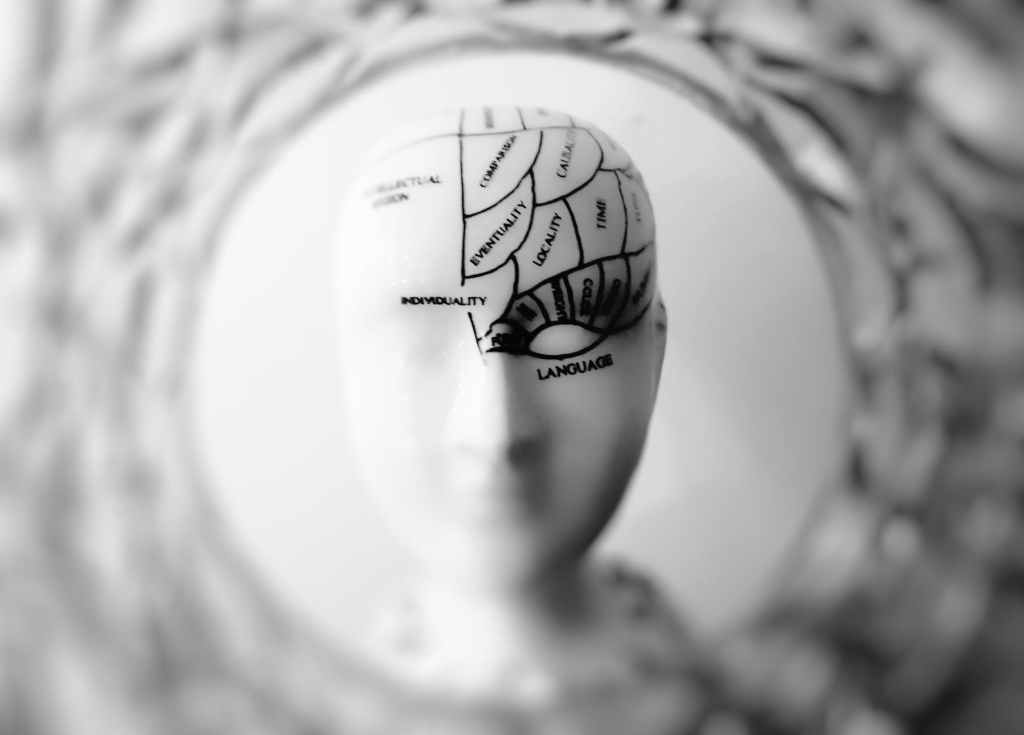
Have you ever found yourself feeling confused or divided in your thoughts?
It’s easy to blame your confusion on the information you receive or the people around you for causing this confusion.
The responsibility does not lie with the individual who brought forth the preexisting confusion within your thoughts.
Proverbs 3:5 -“Trust in the Lord with all your heart, and do not lean on your own understanding.”
1 Corinthians 14:33 – “For God is not a God of confusion but of peace.”
The Truth of the Confusion
Confusion stems from within you, not external sources.
When you feel confused, and begin to get down on yourself with negative thoughts filled with self-hate… you must remember that discernment also resideswithin you.
Instead of pointing fingers at others for bringing out confusion in your mind, take a step back and reflect on what is truly causing the internal confusion.
The inner spirit that resides within you inextricably shapes the way your mind perceives and processes information and experiences.
1 Corinthians 2:11-12 – “For who knows a person’s thoughts except their own spirit within them? In the same way no one knows the thoughts of God except the Spirit of God. What we have received is not the spirit of the world, but the Spirit who is from God, so that we may understand what God has freely given us.”
Psalm 51:10 – “Create in me a pure heart, O God, and renew a steadfast spirit within me.”
Romans 12:2 – “Do not conform to the pattern of this world, but be transformed by the renewing of your mind. Then you will be able to test and approve what God’s will is—his good, pleasing and perfect will.”
Acknowledge Self as Source of Confusion
By acknowledging the presence of confusion being within yourself and tapping into your innate discernment, you can navigate through challenging situations with clarity and understanding.
Next time you feel confused, remember that the power to discern lies within you.
Embrace this inner wisdom and let go of the habit of scapegoating external factors for your mental (spiritual) state.
True clarity comes from within, not from external sources.
“Most folks seek therapy for past or present-day issues that are typically relational in nature. This usually means you initially come to therapy from the perspective that either no one else is to blame (I’m not good enough, my parents were perfect, I’m a burden, etc.) or everyone else is to blame (he hurt me, she’s controlling, they are selfish, etc.). You might also hope that your therapist will agree with you. Of course! The quickest way out of discomfort is to find someone who will shore up your perspective. While that may relieve you of the immediate discomfort, in the long term, it does nothing for you because your nervous system remains perpetually in threat response, defending you from the world with shame or blame, entrenched in a cycle of victimhood.”
“For many, by realizing that you trusted others who ultimately betrayed you, it created a sense of self-doubt, reflection, and in some cases, guilt over decisions made. That in turn created a feeling of distrust in everyone, which is unhealthy. If you can’t trust in others and you can’t trust in yourself, that leaves quite a void. Rebuilding that trust in yourself and removing the self-doubt is the very thing that allows you to discern what and who to trust..”
Discernment is the skill of detecting subtle inaccuracies within seemingly correct concepts, akin to identifying a counterfeit bill amidst genuine currency.
It’s a critical cognitive ability that enables one to differentiate between nearly right and truly right, often revealing hidden flaws that escape the general consensus.
Discernment Can Be Inconvenient
While many claim to value discernment, its practical application can be inconvenient, leading to its dismissal or mischaracterization by those it challenges.
Challenges of Discernment
Discernment is not merely an intellectual exercise; it is a profound mental tool that separates truth from error and right from wrong.
It is the mental equivalent of mining for gemstones, where one must sift through layers of debris to uncover the valuable core.
In a world rife with contradictions, discernment is the light that cuts through the fog, revealing clarity and wisdom.
Dilemma of the Discerning
Those who practice discernment often face resistance.
Their insights can unsettle established norms and beliefs, leading to their portrayal as argumentative or contrarian.
The discerning individual, by pointing out overlooked flaws, can create tension and discomfort, as they challenge the comfort of the status quo.
Root of “Discernment” is Seperation
The term “discernment” originates from the Latin “dis” (apart) and “cernere” (to separate), reflecting the act of distinguishing or separating elements from one another.
Discernment in Scripture
According to Hebrews 4:12, discernment is a divine capacity given by the word of God, which is described as sharper than any double-edged sword. It is capable of dividing soul and spirit, joints and marrow, and discerning the thoughts and intentions of the heart.
For believers, discernment is crucial for navigating life’s complexities and aligning with God’s will, even when it contradicts popular opinion.
The Art of Biblical Discernment
This concept is explored through the lens of biblical teachings, emphasizing the importance of discernment in making sound decisions and understanding deep truths.
It involves questioning assumptions and seeking wisdom from ancient scriptures while integrating modern scientific understanding of human behavior.
Discernment as a Sifter
Like a fine-meshed sifter, discernment separates the substantial from the insubstantial, allowing us to recognize truth amidst deception.
It is an intuitive understanding, a result of careful analysis, and a learned skill from experience.
Enhancing Discernment
To refine discernment, one can practice habitual mindfulness, be present in the moment, develop self-awareness, and embrace diverse beliefs.
These practices help in recognizing biases, understanding complex issues, and making informed decisions.
Discernment as a Gift and Skill
Discernment is both a spiritual gift and a skill that can be honed.
It allows us to perceive the true nature of situations and understand people’s motives.
While it is a gift from the Holy Spirit, it can be sharpened through experience, prayer, and the pursuit of wisdom.
Synonyms of Discernment
Judgment: The ability to make considered decisions after thorough analysis.
Evaluation: The assessment of the value or significance of something.
Critical thinking: The logical and rational analysis of information.
Intuition: Trusting inner knowledge that guides understanding without conscious reasoning.
The Pursuit of Truth
Truth is the foundation of discernment, representing an objective understanding of reality. It is the bedrock upon which knowledge and trust are built, allowing for coherent interactions.
Addressing Gossip and Vanity
Discernment also plays a role in personal growth, steering one away from gossip and superficial concerns towards deeper wisdom.
In summary, discernment is a multifaceted ability that is essential for recognizing truth, making wise decisions, and navigating life’s moral and spiritual challenges.
It is a tool for navigating between the allure of appearances and the pursuit of meaningful existence.
It is a skill that can be developed and a gift to be cherished, guiding individuals toward a more profound understanding and a life aligned with higher principles.
In the depths of my soul, I grapple with the inherent contradictions of this world.
Society has shaped me into a unique being, molded by its influences and expectations.
And yet, beneath the surface lies a newfound understanding, a spiritual awakening that compels me to express my thoughts, unfiltered and unapologetic.
Navigating Nuance
As a believer in Christ, I fearlessly navigate the depths of my nuanced frame of mind.
I am both a product of society and a recipient of God’s grace.
This synthesis of my identity distinguishes me as a believer in the midst of a complex world.
“The prudent [person] gives thought to their steps.”
Proverbs 14:8
America’s Role In My Identity
Oh America, you have played a role in shaping the very essence of who I am.
Your vast tapestry of cultures, perspectives, and ideologies have shaped and molded me in profound ways.
The values and ideals that permeate your society have left an indelible stain on my character.
But now, on this journey of Faith, something extraordinary has happened.
As I wholeheartedly embrace the teachings of Christ by His Spirit, my soul longs to break free from the shackles of conformity and boldly vocalize the depths of my beliefs.
“The Spirit of the Sovereign Lord is on me, because the Lord has anointed me to proclaim good news to the poor. He has sent me to bind up the brokenhearted, to proclaim freedom for the captives and release from darkness for the prisoners.”
Isaiah 61:1
I yearn to speak my truth, regardless of society’s resistance.
You may have created me, that is my exterior, America, shaping me with your norms and expectations.
Yet, through Faith in Christ, I have come to realize that your systems are imperfect, and your desires for conformity are not aligned with the higher purpose laid before me.
“Do not conform to the pattern of this world, but be transformed by the renewing of your mind. Then you will be able to test and approve what God’s will is—his good, pleasing and perfect will.”
– Romans 12:2
Through the redeeming power of Christ’s love, my perspective has shifted.
I no longer passively accept the status quo, but rather embark on a mission to challenge societal norms, inviting open and honest dialogue.
It is in this space, in this unique frame of mind, where I find the courage to proclaim what’s on my heart, despite the resistance that may arise.
Oh America, do not fear my voice, for it is not one intended to sow discord or disdain.
Instead, it is a voice founded in love, compassion, and a deep belief in Christ’s teachings.
It is a voice that yearns for unity amidst the diversities that encompass your vast nation.
I am your child, America, transformed by the love and grace of Christ.
And now, I am determined to speak Truth, for you and for all who seek the Light of Truth and Redemption.
May my words serve as a catalyst for change, inspiring hearts to embrace the transformative power of Faith and the limitless possibilities it brings forth.
Today, I am on a journey of purpose, one where the innate beauty of our diverse souls intertwining, illuminating a path towards a more compassionate and loving existence.
Sigmund Freud was an Austrian neurologist and the founder of psychoanalysis, a clinical method for treating psychopathology through dialogue between a patient and a psychoanalyst.
He formulated the theory of the Oedipus complex, proposed the existence of an unconscious mind, and developed the idea of the id, ego, and superego as structural components of the human psyche.
Additionally, Freud’s work significantly influenced the field of psychology and various aspects of Western culture.
Carl Jung
Carl Jung was a Swiss psychiatrist and psychoanalyst who founded analytical psychology.
He is known for his concepts of the collective unconscious, archetypes, and the process of individuation. Jung emphasized the significance of symbolism, mythology, and the integration of opposing forces within the psyche.
His work has had a profound impact on psychology, psychiatry, and various fields, influencing areas such as dream analysis, personality theory, and the study of cultural and religious symbolism.
The main differences between Sigmund Freud’s psychoanalysis and Carl Jung’s analytical psychology lie in their perspectives on the unconscious, the role of the libido, and the significance of the collective unconscious and cultural symbolism.
Freud’s psychoanalysis emphasizes the influence of early childhood experiences, the unconscious drive of the libido, and the concept of repression as a key mechanism shaping human behavior.
In contrast, Jung’s analytical psychology expands on the collective unconscious, archetypes, and the process of individuation, focusing on the integration of opposing forces and the pursuit of wholeness or self-realization.
Freud’s emphasis on the Oedipus complex and the role of sexual and aggressive instincts differs from Jung’s broader view of the unconscious, which includes personal and collective elements, as well as archetypal patterns that transcend individual experiences.
Jung’s approach places greater emphasis on spirituality, mythology, and the symbolism found in various cultures, in contrast to Freud’s more clinical and biological focus on human behavior and mental processes.
Analytical Psychology
Analytical psychology, also known as Jungian psychology, is a branch of psychology developed by Carl Jung that focuses on exploring the depths of the unconscious mind and understanding the individual’s journey towards psychological wholeness. It places a strong emphasis on the exploration of the collective unconscious, archetypes, and symbolic imagery. Analytical psychology recognizes the importance of spirituality and the transcendent aspects of human experience. It views the psyche as a dynamic and self-regulating system, seeking to integrate and balance both conscious and unconscious elements.
Analytical psychology, also known as Jungian psychology, and “regular” psychology, commonly referred to as mainstream psychology differ in several significant ways:
Analytical psychology delves into the collective unconscious, archetypes, and symbolic imagery.
Collective Unconscious
Concept within analytical psychology that refers to the shared reservoir of knowledge, experiences, and symbols that all individuals inherit as a result of their common humanity. It is believed to be a deep layer of the unconscious mind that contains archetypes, universal themes, and instincts that are shared by all human beings across cultures and throughout history. This collective unconscious is thought to influence our thoughts, feelings, and behaviors, shaping our perceptions of the world and guiding our behavior in ways that are often unconscious to us. Through exploring and understanding the symbols and patterns that arise from the collective unconscious, individuals can gain insights into themselves, their relationships, and their place in the larger human experience.
Archetypes
Jungian archetypes are deeply rooted and universally recognized patterns of symbols and images that reside within the collective unconscious. These archetypes, such as the Hero, the Shadow, the Wise Old Man, and the Mother, represent fundamental aspects of the human psyche and serve as primordial templates for understanding and interpreting our experiences. They are symbolic guides that help us navigate the complexities of life, providing us with insight into our deepest fears, desires, and potentials. Jungian archetypes offer a profound framework for self-discovery and personal transformation, allowing us to tap into the depths of our unconscious and unlock greater awareness and wholeness.
Symbolic Imagery
Jungian symbolic imagery is a cornerstone of analytical psychology, emphasizing the profound power and significance of symbols and their role in unlocking the depths of the unconscious mind. Symbols are potent manifestations of archetypes, universal patterns of meaning that tap into the collective unconscious. They speak a language beyond words, evoking profound emotions, insights, and connections to the wider human experience. Through exploring and understanding these symbolic images, individuals gain access to a rich tapestry of personal and collective meaning, diving into the depths of their own psyche, unraveling mysteries, and opening doors to self-discovery, healing, and transformation. Jungian symbolic imagery offers a bridge between the conscious and unconscious realms, allowing individuals to navigate the complexities of their inner world and find deeper understanding and integration.
Integration
Jungian integration is the process of merging and reconciling the conscious and unconscious aspects of the psyche, as proposed by Carl Jung in analytical psychology. It involves recognizing and embracing the shadow, the hidden and often repressed aspects of ourselves, and integrating them into our conscious awareness. By acknowledging and working with the shadow, we can uncover and integrate the valuable lessons it holds, leading to greater self-understanding and wholeness. Jungian integration also entails recognizing and exploring archetypal patterns and symbols that arise from the collective unconscious, allowing individuals to tap into a deeper level of consciousness and find meaning and purpose in their lives. Through this process, we may cultivate a sense of balance, authenticity, and personal growth, enabling us to fully realize our potentials and navigate the complexities of the human experience.