In my journey as an “alien” on this planet, I have, unwittingly, stumbled upon what had been archaically called the Philosopher’s Stone or the Elixir of Life…
I only realized this after I, through being magnetically attracted toward suffering, embracing the darkness that most fear, had unearthed the Essence of Reality.
This Essence is a Truth so profound, it is woven into the very core of our beings through the quantum dimensions & atmospheric pressure, without such, we would become vacuumed into nothingness.
This truth is unassailable, standing as a lamp of certainty, illuminated by the light of Intuitive Wisdom.
THIS LIGHT IS CHRIST’S LIGHT OF INTUITION FROM ABOVE.
Intuition transcends the limitations of our corporeal senses, for it is birthed from the sacred depths of the spirit.
Intuition is a whisper from the Heavens, a subtle yet ever powerful current that flows through the Ethers of existence.
Intuition is the Blood within the veins of Eternity.
When the HolySpirit stirs, He ignites the flame of Intuition, transforming our sensorial experiences into a Divine Compass.
THE KINGDOM OF GOD IS WITHIN YOU
This guiding Force elevates our conscious awareness, rendering the conventional Five Senses as mere tools in the Macrocosm of our being within this existence and realm.
When this inner awakening is embraced, we align in tandem with the Universal Symphony of Wisdom.
Intuition becomes our most trusted Guide, leading us towards a Life of deeper Understanding and connection with the Infinite.
Mastering the nuance between perception and reality is not a passive philosophical exercise; it is the essential toolkit required to dismantle our own cognitive illusions and navigate our way out of profound hardship.
When you are in the trenches, survival depends on clarity.
By carefully distinguishing between seemingly identical ideas, you build an architecture of discernment… allowing you to separate the truth of a situation from the mental friction keeping you stuck.
Map vs. Territory
The first tool in this kit is recognizing that the crisis you are experiencing (the territory) is completely separate from the story you are telling yourself about it (the map).
The distinction between the map and the territory is a fundamental concept in rationality.
A map is a representation of reality, while the territory is the actual reality itself.
Why Does This Matter?
This distinction matters because it highlights the fact that our understanding of the world is always mediated through our mental models and representations.
We must be aware that our ‘maps‘ , no matter how detailed or accurate, are never identical to the ‘territory‘.
Recognizing that your map is flawed is the first step, but how does the map get drawn in the first place?
When we are struggling, our maps are rarely constructed from present reality. Instead, they are stitched together using outdated, unexamined assumptions.
To update your map, you must confront the difference between the mental debris you default to and the active awareness required to survive.
Cached Thoughts vs. Actual Thinking
CACHED THOUGHTS
Cached thoughts are the pre-existing beliefs and assumptions that we hold, gathering trash and holding into them like a computer holds onto cqche. This means these are thoughts that lack conscious awareness.
This Repository of ‘thoughts’ are mental shortcuts that we rely on to make sense of the world, with no thought as to if these thoughts are based in objective reality or not.
THINKING
In contrast, thinking involves actively questioning and challenging our cached thoughts, engaging in critical analysis, and seeking new information to refine our understanding.
When you rely on cached thoughts instead of active thinking, your internal world becomes an echo chamber. You begin to mistake your unexamined biases for universal laws. This is where hardship turns into self-sabotage—when you project your own internal friction onto the external territory and assume everyone else is navigating the same distortion.
Mind Projection Fallacy
The Mind Projection Fallacy is a cognitive bias that occurs when people assume that their personal beliefs, values, or perceptions are shared by others or represent objective reality. This fallacy suggests that people often confuse their own thoughts and feelings with universal truths and expect others to have the same thoughts and feelings.
The Mind Projection Fallacy can significantly distort one’s ability to discern.
When we project our own beliefs and emotions onto others, we fail to accurately discern their unique perspectives and experiences.
Here Are Some Examples Of How Mind Projection Impedes Ones Ability To Discern:
Overestimating Agreement: One may falsely believe that others share their opinions, leading to an overestimation of consensus and potentially causing miscommunication or conflict when differing perspectives are eventually revealed.
Inaccurate Assumptions: When projecting personal beliefs, individuals can make inaccurate assumptions about others’ thoughts and feelings, leading to misunderstandings and incorrect conclusions.
Inability to Empathize: By assuming that everyone thinks and feels similarly, individuals can struggle to put themselves in others’ shoes and empathize with their unique experiences and emotions.
Poor Decision-Making: Decision-making can become flawed when one assumes their perspective is universally shared, potentially leading to choices that are not inclusive or beneficial for all parties involved.
To overcome the Mind Projection Fallacy and improve discernment, it is crucial to foster empathy, seek out diverse perspectives, and practice open communication. By recognizing the influence of personal beliefs and emotions on perception, individuals can become more discerning and accurately understand the viewpoints of others.
The Halo Effect:

a cognitive bias where our overall impression of someone or something influences our judgments of their specific traits. This term, coined by psychologist Edward Thorndike in 1920, illustrates how positive perceptions in one area can positively affect our opinions in another.
Escaping this cycle of projection requires a radical shift in how you process information. You must start dissecting the narratives you encounter, both internal and external. To do this effectively and strip away the illusion, you have to separate the mere structure of a situation from its actual substance.
Syntax vs. Semantics
In the context of language and communication, syntax refers to the physical structure of a message.
Semantics refers to the meaning or intended relationship to the territory.
Understanding this distinction is crucial for effective communication.
Yet, grasping the intended meaning is only half the battle.
When you are fighting your way out of a difficult season, it is not enough to know what a situation means—you must understand its real-world impact.
You must discern the difference between the definition of a problem and the actual consequences it produces.
Semantics vs. Pragmatics
Semantics refers to the literal meaning of a message, while pragmatics refers to the intended result or effect of conveying that message.
This distinction is important because it highlights the fact that communication is not just about transmitting information, but also about influencing behavior and shaping outcomes.
Once you understand the practical effects of your situation, the next logical step is determining where to apply your energy to fix it.
This requires pinpointing your exact position on the battlefield.
Are you fighting the immediate symptom right in front of you, or the overarching system that created it?
Object-level vs. Meta-level
The object-level refers to the specific task or problem at hand, while the meta-level refers to the broader context or framework within which that task or problem is situated.
A good meta-level theory can help us get things right at the object level, but it is usually impossible to get things right at the meta level before making significant progress at the object level.
Ultimately, navigating through these layers of abstraction brings you to the core of all discernment.
When the mental debris is cleared, the projections are silenced, and the structure is separated from the impact, you are left with the final, most vital distinction required for true liberation.
Seeming vs. Being
We can only deal with how things seem to us, not how they are in absolute terms.
This is a humbling reminder of our limited perspective and the importance of maintaining a degree of epistemic humility.
If we optimize too hard for things that seem good rather than things that are actually good, we may end up with suboptimal outcomes.
Signal vs. Noise
Not all information is created equal.
We often desire certain types of information while seeking to ignore others.
The distinction between signal and noise helps us focus on the most relevant and valuable information while filtering out the irrelevant or distracting.
Selection Effects
Selection effects occur when the evidence we have access to is filtered or biased in a particular way.
This can lead to distorted conclusions and faulty decision-making.
Understanding selection effects requires modeling where our information comes from and accounting for the processes that shape what we see.
What You Mean vs. What You Think You Mean
People often claim to have meant something slightly different than what was originally stated when their original position is challenged or refuted.
This automatic response, generated by our brains without conscious control, can be dangerous for clear thinking.
It is important to be aware of this tendency and to strive for consistency and honesty in our communication.
What You Mean vs. What Others Think You Mean
The illusion of transparency and the double illusion of transparency highlight the gap between what we think we are communicating and what others actually understand.
We often overestimate how clearly we convey our thoughts and feelings, while underestimating the extent to which others misinterpret our messages.
Effective communication requires being mindful of these biases and seeking feedback to ensure mutual understanding.
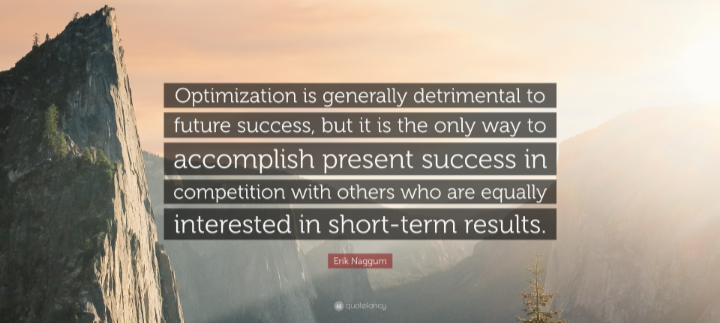
What You Optimize vs. What You Think You Optimize
Our actions are often driven by hidden motives and incentives that we may not be fully aware of.
Evolution, for example, optimizes for reproduction, but in doing so creates animals with a variety of goals that are correlated with reproduction.
Intrinsic motivation is generally stronger and more effective than extrinsic motivation.
Understanding the difference between what we think we optimize for and what we actually optimize for can help us align our actions with our true values and goals.
Stated Preferences vs. Revealed Preferences
Stated preferences are the preferences we explicitly express, while revealed preferences are the preferences we can infer from our actions.
These two types of preferences are often misaligned, with our actions not matching our stated beliefs or desires.
Recognizing this distinction can help us identify and address inconsistencies in our decision-making.
What You Achieve vs. What You Think You Achieve
Most of the consequences of our actions are unknown to us.
We often overestimate our ability to predict and control the outcomes of our decisions.
Effective action requires humility, openness to feedback, and a willingness to learn from experience.
It is impossible to optimize without proper feedback, so we must be vigilant in seeking out information about the actual results of our efforts.
What You Optimize vs. What You Actually Achieve
Consequentialism focuses on the expected consequences of our actions, rather than the actual consequences.
While it is important to consider the potential outcomes of our decisions, we must also be prepared to adapt and adjust our course based on the real-world results.
Rigid adherence to a particular optimization strategy can lead to suboptimal outcomes if it fails to account for the actual effects of our actions.
What You Seem Like vs. What You Are
Our external appearance and behavior may not always reflect our true nature or inner experience.
We may present a certain image to the world while privately struggling with doubts, fears, or contradictory impulses. Recognizing this distinction can help us cultivate self-awareness, authenticity, and empathy in our relationships with others.
What Other People Seem Like vs. What They Are
Similarly, we often make assumptions about others based on their outward behavior or reputation, without fully understanding their inner lives or the complex factors that shape their actions.
Assuming that we understand others is a common mistake that can lead to misunderstandings, prejudice, and missed opportunities for connection and growth.
What People Look Like vs. What They Think They Look Like
People tend to underestimate the gap between their stated preferences and their revealed preferences. We may claim to value certain qualities or characteristics in ourselves or others, but our actions often tell a different story. Recognizing this discrepancy can help us align our self-perception with reality and make more authentic choices.
What Your Brain Does vs. What You Think It Does
Our brains are complex, powerful, and often mysterious. We are running on “corrupted hardware” in the sense that our thought processes are shaped by social and evolutionary factors that can distort the truth. The brain’s machinations are fundamentally social, automatically engaging in signaling, face-saving, and other behaviors that can lead to biased or irrational decisions. While we must be skeptical of the outputs of our thought processes, we must also strike a balance between skepticism and action, particularly in situations that require quick thinking or decisive action.
Clever Argument vs. Truth-seeking
People often believe what they want to believe, a phenomenon known as motivated cognition.
Giving a smart person more information and more methods of argument may actually make their beliefs less accurate, because it provides them with more tools to construct clever arguments for what they want to believe.
The actual reason for believing something determines how well that belief correlates with the truth.
If you believe something because you want to, any arguments you make for that belief, no matter how strong they may sound, are devoid of informational context about the truth of the belief and should be ignored by a genuine truth-seeker.
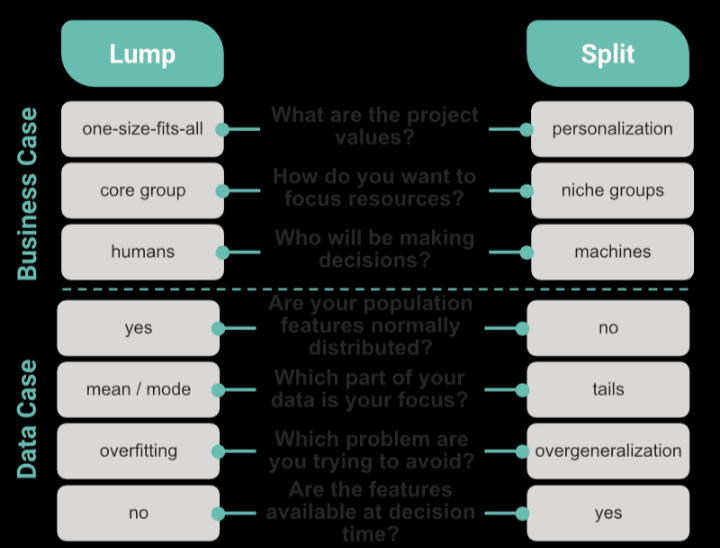
Lumpers vs. Splitters
Lumpers are thinkers who attempt to fit things into overarching patterns, while splitters are thinkers who make as many distinctions as possible, recognizing the importance of being specific and getting the details right. The lumper mindset can be useful for identifying broad trends and connections, while the splitter mindset is essential for accurate analysis and nuanced understanding.
Fox vs. Hedgehog
The fox knows many things, while the hedgehog knows one big thing. Closely related to the lumper-splitter distinction, the fox mindset involves a broad array of knowledge and the ability to draw insights from diverse sources. The hedgehog mindset, in contrast, focuses on a single big idea and applies it everywhere. According to Tetlock’s research, the fox mindset is generally better for making accurate judgments in complex, uncertain situations.
Traps vs. Gardens
Well-kept gardens die by pacifism, meaning that conversations, societies, systems, and even thermodynamic equilibrium tend to slide toward disorder, conflict, and decay unless actively maintained.
Recognizing this distinction can help us be proactive in defending and nurturing the things we value, whether it’s a productive dialogue, a thriving community, or a well-functioning organization.
Nuanced thinking involves carefully distinguishing between seemingly similar concepts and recognizing the subtle differences that shape our understanding of the world.
By engaging in this kind of discernment, we can make more informed decisions, communicate more effectively, and develop a richer, more accurate perspective on the complex realities we navigate every day.
Have you ever found yourself feeling confused or divided in your thoughts?
It’s easy to blame your confusion on the information you receive or the people around you for causing this confusion.
The responsibility does not lie with the individual who brought forth the preexisting confusion within your thoughts.
Proverbs 3:5 -“Trust in the Lord with all your heart, and do not lean on your own understanding.”
1 Corinthians 14:33 – “For God is not a God of confusion but of peace.”
The Truth of the Confusion
Confusion stems from within you, not external sources.
When you feel confused, and begin to get down on yourself with negative thoughts filled with self-hate… you must remember that discernment also resideswithin you.
Instead of pointing fingers at others for bringing out confusion in your mind, take a step back and reflect on what is truly causing the internal confusion.
The inner spirit that resides within you inextricably shapes the way your mind perceives and processes information and experiences.
1 Corinthians 2:11-12 – “For who knows a person’s thoughts except their own spirit within them? In the same way no one knows the thoughts of God except the Spirit of God. What we have received is not the spirit of the world, but the Spirit who is from God, so that we may understand what God has freely given us.”
Psalm 51:10 – “Create in me a pure heart, O God, and renew a steadfast spirit within me.”
Romans 12:2 – “Do not conform to the pattern of this world, but be transformed by the renewing of your mind. Then you will be able to test and approve what God’s will is—his good, pleasing and perfect will.”
Acknowledge Self as Source of Confusion
By acknowledging the presence of confusion being within yourself and tapping into your innate discernment, you can navigate through challenging situations with clarity and understanding.
Next time you feel confused, remember that the power to discern lies within you.
Embrace this inner wisdom and let go of the habit of scapegoating external factors for your mental (spiritual) state.
True clarity comes from within, not from external sources.
“Most folks seek therapy for past or present-day issues that are typically relational in nature. This usually means you initially come to therapy from the perspective that either no one else is to blame (I’m not good enough, my parents were perfect, I’m a burden, etc.) or everyone else is to blame (he hurt me, she’s controlling, they are selfish, etc.). You might also hope that your therapist will agree with you. Of course! The quickest way out of discomfort is to find someone who will shore up your perspective. While that may relieve you of the immediate discomfort, in the long term, it does nothing for you because your nervous system remains perpetually in threat response, defending you from the world with shame or blame, entrenched in a cycle of victimhood.”
“For many, by realizing that you trusted others who ultimately betrayed you, it created a sense of self-doubt, reflection, and in some cases, guilt over decisions made. That in turn created a feeling of distrust in everyone, which is unhealthy. If you can’t trust in others and you can’t trust in yourself, that leaves quite a void. Rebuilding that trust in yourself and removing the self-doubt is the very thing that allows you to discern what and who to trust..”
As I grow older, I find that my obsession with superficial appearances and vanity declines.
The pursuit of shallow bliss no longer captivates me as it once did.
Instead, I am drawn towards the realm of deep wisdom.
I find myself constantly pulled between two contrasting worlds.
On one hand, there is the allure of shallow bliss…
– the transient joys that are easily accessible and require little thought or effort.
This world tempts me with instant gratification, social validation, and a carefree existence.
I realize that these fleeting pleasures eventually lose their appeal and leave me longing for something more substantial.
On the other hand, there is the realm of deep wisdom.
It is a world of introspection, reflection, and intellectual growth.
Here, the pursuit of knowledge, understanding, and personal development becomes paramount.
It offers a sense of fulfillment and meaning that surpasses the temporary highs of shallow bliss.
This world teaches me to value substance over surface, to seek fulfillment rather than validation, and to embrace the complexities of life rather than running from them.
Yet, I find myself caught in a tug-of-war between these two worlds.
The shallow bliss lures me with its simplicity and immediate gratification, while the pursuit of deep wisdom demands dedication, discipline, and patience.
It requires me to confront my fears, question my beliefs, and navigate the intricate nuances of existence.
It is in this world that I find true fulfillment – where wisdom, true understanding, and lasting happiness reside.
As vanity fades, the desire for a meaningful and purposeful life becomes paramount.
So, I continue to navigate the delicate balance between these two worlds, finding solace in the wisdom gained from experience, and strength in the pursuit of intellectual growth.
I accept that the journey towards wisdom may be challenging and filled with uncertainties, but I also recognize that it is a path worth venturing upon.
For it is in this quest that I discover the true essence of life:
… a beautiful amalgamation of age, wisdom, and the relentless desire to unearth the profound truths that lie beneath the surface.
Do not conform to the pattern of this world, but be transformed by the renewing of your mind. Then you will be able to test and approve what God’s will is–his good, pleasing and perfect will.”
-Romans 12:2
Let your spirit gracefully twirl and sway, entwined in an intricate intertwining, with paradoxes and yearnings, fervently pursuing the embrace of wisdom’s sublime benevolence.
If we live by the Spirit, let us also keep in step with the Spirit.
Fear not the rebellious spirit, when truth calls for its fierce expression, for within each shade of uncertainty, an ardent synthesis fervently yearns to find its rightful position and purpose.
“For the mind that is set on the flesh is hostile to God, for it does not submit to God’s law; indeed, it cannot.”
Romans 8:7
Right now we see only a reflection as in a mirror; then we shall see face to face.
Now I know in part; then I shall know fully, even as I am fully known by God.
Even fragments contain the Truth of grace, if received with open mind and heart.
These mysterious words awaken wonder and compassion within – a small but sacred beginning on the lifelong journey towards Truth.
Step by step, truth by truth, we progress – not by renouncing paradox or abandoning discernment, but by weaving disparate wisdoms together in love.
“The beginning of wisdom is this: Get wisdom, and whatever you get, get insight.”
-Proverbs 4:7
Do not cast judgment upon the inner voices, however wicked or foul they may appear, for they yearn for emancipation, solace, and the gentle cloak of affection.
“Set your minds on things that are above, not on things that are on earth.”
Colossians 3:2
Embark on the quest for wisdom, to reconcile the discord that permeates your soul, and share the weight of each other’s burdens, repairing the shattered fragments into a radiant whole.
Even if adorned with disguises, your essence remains unchanged, an ardent longing to reclaim its entirety and participate in its destined drama.
“For the Lord gives wisdom; from his mouth come knowledge and understanding; he stores up sound wisdom for the upright; he is a shield to those who walk in integrity.”
Proverbs 2:6-7
Do not allow the world to dictate the truth that resides within you. Discover it in moments of solitude, where your journey begins in peaceful tranquility. Determine which voice resonates with truth, whether it is the one echoing fear or the one proclaiming love, and choose the path you will pursue.
I recall that which is written in Isaiah 55:8-9:
“For my thoughts are not your thoughts, neither are your ways my ways, says the LORD. For as the heavens are higher than the earth, so are my ways higher than your ways and my thoughts than your thoughts.”
There exists but One Truth, though it wears many faces and speaks in myriad voices across space and time.
The call to discernment rings clear – to judge all revelation by its fruits, by its alignment with Love and Light Divine.
Truth stands the test of time; falsehoods fade.
So, I read on with a hopeful heart, discerning mind, and prayerful spirit, seeking the One who speaks through many tongues.
Opt for love, and behold the wondrous alignment of all other facets, as you were fashioned as a manifestation of enchantment, an opus reflecting the divine.
“Dear friends, let us love one another, for love comes from God. Everyone who loves has been born of God and knows God. Whoever does not love does not know God, because God is love.”
Sigmund Freud was an Austrian neurologist and the founder of psychoanalysis, a clinical method for treating psychopathology through dialogue between a patient and a psychoanalyst.
He formulated the theory of the Oedipus complex, proposed the existence of an unconscious mind, and developed the idea of the id, ego, and superego as structural components of the human psyche.
Additionally, Freud’s work significantly influenced the field of psychology and various aspects of Western culture.
Carl Jung
Carl Jung was a Swiss psychiatrist and psychoanalyst who founded analytical psychology.
He is known for his concepts of the collective unconscious, archetypes, and the process of individuation. Jung emphasized the significance of symbolism, mythology, and the integration of opposing forces within the psyche.
His work has had a profound impact on psychology, psychiatry, and various fields, influencing areas such as dream analysis, personality theory, and the study of cultural and religious symbolism.
The main differences between Sigmund Freud’s psychoanalysis and Carl Jung’s analytical psychology lie in their perspectives on the unconscious, the role of the libido, and the significance of the collective unconscious and cultural symbolism.
Freud’s psychoanalysis emphasizes the influence of early childhood experiences, the unconscious drive of the libido, and the concept of repression as a key mechanism shaping human behavior.
In contrast, Jung’s analytical psychology expands on the collective unconscious, archetypes, and the process of individuation, focusing on the integration of opposing forces and the pursuit of wholeness or self-realization.
Freud’s emphasis on the Oedipus complex and the role of sexual and aggressive instincts differs from Jung’s broader view of the unconscious, which includes personal and collective elements, as well as archetypal patterns that transcend individual experiences.
Jung’s approach places greater emphasis on spirituality, mythology, and the symbolism found in various cultures, in contrast to Freud’s more clinical and biological focus on human behavior and mental processes.
Analytical Psychology
Analytical psychology, also known as Jungian psychology, is a branch of psychology developed by Carl Jung that focuses on exploring the depths of the unconscious mind and understanding the individual’s journey towards psychological wholeness. It places a strong emphasis on the exploration of the collective unconscious, archetypes, and symbolic imagery. Analytical psychology recognizes the importance of spirituality and the transcendent aspects of human experience. It views the psyche as a dynamic and self-regulating system, seeking to integrate and balance both conscious and unconscious elements.
Analytical psychology, also known as Jungian psychology, and “regular” psychology, commonly referred to as mainstream psychology differ in several significant ways:
Analytical psychology delves into the collective unconscious, archetypes, and symbolic imagery.
Collective Unconscious
Concept within analytical psychology that refers to the shared reservoir of knowledge, experiences, and symbols that all individuals inherit as a result of their common humanity. It is believed to be a deep layer of the unconscious mind that contains archetypes, universal themes, and instincts that are shared by all human beings across cultures and throughout history. This collective unconscious is thought to influence our thoughts, feelings, and behaviors, shaping our perceptions of the world and guiding our behavior in ways that are often unconscious to us. Through exploring and understanding the symbols and patterns that arise from the collective unconscious, individuals can gain insights into themselves, their relationships, and their place in the larger human experience.
Archetypes
Jungian archetypes are deeply rooted and universally recognized patterns of symbols and images that reside within the collective unconscious. These archetypes, such as the Hero, the Shadow, the Wise Old Man, and the Mother, represent fundamental aspects of the human psyche and serve as primordial templates for understanding and interpreting our experiences. They are symbolic guides that help us navigate the complexities of life, providing us with insight into our deepest fears, desires, and potentials. Jungian archetypes offer a profound framework for self-discovery and personal transformation, allowing us to tap into the depths of our unconscious and unlock greater awareness and wholeness.
Symbolic Imagery
Jungian symbolic imagery is a cornerstone of analytical psychology, emphasizing the profound power and significance of symbols and their role in unlocking the depths of the unconscious mind. Symbols are potent manifestations of archetypes, universal patterns of meaning that tap into the collective unconscious. They speak a language beyond words, evoking profound emotions, insights, and connections to the wider human experience. Through exploring and understanding these symbolic images, individuals gain access to a rich tapestry of personal and collective meaning, diving into the depths of their own psyche, unraveling mysteries, and opening doors to self-discovery, healing, and transformation. Jungian symbolic imagery offers a bridge between the conscious and unconscious realms, allowing individuals to navigate the complexities of their inner world and find deeper understanding and integration.
Integration
Jungian integration is the process of merging and reconciling the conscious and unconscious aspects of the psyche, as proposed by Carl Jung in analytical psychology. It involves recognizing and embracing the shadow, the hidden and often repressed aspects of ourselves, and integrating them into our conscious awareness. By acknowledging and working with the shadow, we can uncover and integrate the valuable lessons it holds, leading to greater self-understanding and wholeness. Jungian integration also entails recognizing and exploring archetypal patterns and symbols that arise from the collective unconscious, allowing individuals to tap into a deeper level of consciousness and find meaning and purpose in their lives. Through this process, we may cultivate a sense of balance, authenticity, and personal growth, enabling us to fully realize our potentials and navigate the complexities of the human experience.
Divine discernment: The ability to understand and perceive God’s will.
God’s sovereignty: God’s complete authority and control over everything.
Spiritual: Pertaining to the non-physical and transcendent aspects of existence.
Time and space: Dimensions in which events occur and are measured
Providence: God’s guidance and care over all creation.
Wisdom: The ability to make sound judgments based on knowledge and understanding.
Solace: Comfort or consolation in times of distress or sorrow.
Finding Divine Discernment & Solace in His Guidance
In the realm of divine discernment, we delve into the profound understanding of God’s sovereignty and the intricate balance between the physical and the spiritual.
We explore the notion that God’s complete sovereignty extends to every aspect of His creation, from the tiniest details to the grandest cosmic events.
This sovereignty not only encompasses the orderly progression of events but also the purposeful disruption of order to fulfill His ultimate plan.
It is essential to recognize that God’s sovereignty transcends the boundaries of time and space.
He has already ordained and purposed every action that takes place, as revealed through His prophetic word.
By acknowledging His complete control, we align ourselves with the divine order established by God.
Contrary to the notion that the physical world operates independently of the spiritual realm, we understand that all temporal and material aspects of existence are subject to God’s divine power.
Nothing exists outside of His providential oversight. To deny this truth is to deny the very purpose of God’s account.
God, as the epitome of order, orchestrates the intricate chain of events necessary to accomplish His divine plan.
Even in the midst of apparent disorder, we can discern His guiding hand.
He uses disruptions and challenges to bring everything into subjugation to Himself.
In His wisdom, God employs disorder as a means to ultimately overcome death itself.
Let us embrace the profound truth that God’s sovereignty extends to every facet of our lives.
He holds the reins of creation, bringing order out of chaos and fulfilling His divine purpose.
By recognizing His sovereignty, we align ourselves with His plan and find solace in the knowledge that every aspect of our existence is governed by His loving hand.
Scripture
Proverbs 3:5-6 – “Trust in the LORD with all your heart, and do not lean on your own understanding. In all your ways acknowledge him, and he will make straight your paths.”
Romans 8:28 – “And we know that for those who love God all things work together for good, for those who are called according to his purpose.”
Psalm 139:16 – “Your eyes saw my unformed substance; in your book were written, every one of them, the days that were formed for me, when as yet there was none of them.”
Isaiah 46:9-10 – “Remember the former things of old; for I am God, and there is no other; I am God, and there is none like me, declaring the end from the beginning and from ancient times things not yet done, saying, ‘My counsel shall stand, and I will accomplish all my purpose.’”
Proverbs 2:6 – “For the LORD gives wisdom; from his mouth come knowledge and understanding.”
Psalm 34:17-18 – “When the righteous cry for help, the LORD hears and delivers them out of all their troubles. The LORD is near to the brokenhearted and saves the crushed in spirit.”
In our quest for wisdom, we often overlook the valuable lessons that foolishness can impart.
The journey towards true enlightenment requires experiencing both the heights of wisdom and the depths of foolishness. It is through the pain and humility of our own foolish actions that we gain a profound understanding of our flaws and the arrogance that often accompanies them.
But how can embracing foolishness be a catalyst for growth, you may wonder? It is in our moments of folly that we are confronted with the stark reality of our own limitations. These moments serve as powerful wake-up calls, forcing us to reevaluate our beliefs and behaviors. Only by acknowledging our own foolishness can we start to rectify our shortcomings and embark on a path of true growth.
Yet, so often we are resistant to admitting our own foolish actions. We fear being judged or seen as weak by others. However, true wisdom is not found in the opinions of others, but rather in our ability to recognize and learn from our mistakes.
Here are some key insights into how embracing foolishness can pave the way to wisdom:
1. Cultivating Humility
Foolishness humbles us in profound ways. By accepting our own fallibility, we develop a sense of humility that enables us to learn from others. It opens our hearts and minds to different perspectives, fostering a greater understanding of the world around us.
2. Embracing Vulnerability
Acknowledging our foolishness requires vulnerability. It involves letting go of ego and embracing our imperfections. When we embrace vulnerability, we create opportunities for deeper connections and meaningful growth.
3. Gaining Self-Awareness
Moments of foolishness provide invaluable opportunities for self-reflection. They shed light on the aspects of ourselves that need improvement or development. By recognizing our own weaknesses, we can strive to become better versions of ourselves.
4. Developing Resilience
Mistakes and failures are inevitable in life. Embracing foolishness teaches us resilience — the ability to bounce back from setbacks and use them as stepping stones to success. It fosters an unwavering determination to persevere, despite the challenges we face.
5. Expanding Creativity
Foolishness often arises from thinking outside the box and taking risks. Embracing foolishness encourages us to tap into our creative potential, freeing us from the constraints of convention and encouraging innovative thinking.
Conclusion
In our journey towards wisdom, it is crucial to recognize the transformative power of foolishness. Rather than shying away from our own mistakes and blunders, we should embrace them as opportunities for growth. By cultivating humility, embracing vulnerability, gaining self-awareness, developing resilience, and expanding creativity, we can unlock the true potential of wisdom.
So, let us not shy away from the lessons foolishness has to offer. Embrace your own folly and embark on the path to true wisdom. Remember, the road to enlightenment is paved with both wisdom and foolishness, and it is through embracing both that we can ultimately become wiser, more compassionate beings.
In a world filled with uncertainties, the concept of determinism offers a compelling perspective on the nature of causality and human agency.
From the philosophical debates among thinkers to discussions within the scientific community, determinism has sparked curiosity and controversy alike.
The term “determinism” originates from the Latin word “determinare,” which means “to limit” or “to set boundaries.”
It can be traced back to the 17th century when it was first used in the context of metaphysics.
Every event or action is caused by prior events or actions, and there is a predetermined sequence of cause and effect in the universe. As we cannot comprehend the fullness of this reality because of our spatial bodily limits, yet it’s clear that all events, actions, thoughts, and creations are ultimately determined by the creator of His creation. The ultimate determiner and decider of fate is not the “free” human will or personal choice of man, but God’s Will, in whom is actually free and who created the ability to make decisions, forming every brain synapse and calculation that transpires within our mind. Apart from His fabric, nothing is.
Determinism has been a subject of debate among philosophers, scientists, and theologians because man insists that his will is powerful.
We are in a constant power struggle, not with each other, but with our God.
We effeminate Him and weaken Him into a puppy dog who is only gushy, spineless, and lovey-dovey when our God is a Lion, a Shepherd, a Force that can’t be overcome.
Many different variations and interpretations of determinism exist, ranging from strict determinism, which asserts that all events are fully predetermined and predictable, to compatibilism, which argues that determinism can coexist with free will.
I am a strict determinist if I had to give my beliefs a “label” when I am speaking from a spiritual perspective. From Heaven, all of Earth is determined. Any freedom in the will of man, in actuality, is giving free will to the lost, free will to the blind, stupid, and attributing free will to the determining factors of the spiritually dead humans. If this were actually true, definitively, it would be, in my opinion, one of the worst things God could do to us… it would cause all men to be annihilated quicker than we would know what happened.
God is the God of Order.
He has ownership and control. We can trust Him; His hands are never tied.
Determinism is, to this day, a central topic of inquiry in philosophy, science, theology and other fields of study.
All events on the earth are predetermined and guided by causal laws, God is in charge, if He is not, we cant trust Him and we cant be sure of the finsl outcome> God is beyond comprehension in not only love but POWER.
Causal laws are fundamental principles that explain the cause-and-effect relationships between events or phenomena in the universe.
Determinism challenges free will and asserts that all actions are ultimately governed by external factors, even if internally manifested. However, some argue that the Spirit of God within man is the driving force behind our actions. According to this perspective, God performs the work, and we simply act it out.
My journey Towards Embracing Determinism:
The Argument for Determinism: Understanding the Interplay of Wisdom and Logic
There is an underlying order to the universe where every action is the inevitable result of prior causes. God is a God of what?? ORDER.
The Principle of Causality: At the heart of determinism lies the principle of causality, which suggests that every event has a cause. By comprehending this fundamental principle, we can observe that the entire universe operates based on a series of interconnected causes and effects. Applying wisdom and logical reasoning, one can understand that if everything is caused by something else, our choices and actions must also be a consequence of prior causes.
The Chain of Determination: Consider the complex web of causes and effects that shape our lives. Every decision we make, every action we take, is the outcome of a myriad of preceding factors, such as genetics, upbringing, education, environment, and personal experiences. Wisdom dictates that these factors greatly shape our thoughts, behaviors, and ultimately, our decisions. Thus, it can be argued that our actions are not solely products of our free will but rather part of an intricate chain of determination.
The Illusion of Free Will: Reflecting upon the concept of free will, we encounter some thought-provoking questions. Can we genuinely claim to possess free will when our choices are influenced by a multitude of external factors beyond our control? Can we truly act independently of the predispositions and circumstances that shape us? By logically analyzing the conditions that govern our decision-making process, wisdom reveals the illusion of complete autonomy and reinforces the deterministic viewpoint.
Scientific and Philosophical Perspectives: The deterministic argument finds support from various scientific and philosophical disciplines. In physics, for instance, the principles of causality and determinism are embedded in classical mechanics and its successor, quantum mechanics. From a philosophical standpoint, renowned thinkers such as Spinoza, Laplace, and Nietzsche have all expounded upon the idea of determinism, offering persuasive arguments anchored in reason and wisdom.
Appreciating the Sovereignty of God:
God’s sovereignty is the divine attribute that highlights His unmatched authority and dominion, signifying His supreme power and complete control over all aspects of creation.
The compatibility of determinism and God’s sovereignty:
God’s sovereignty and determinism do not negate God’s love. Just because God knows how events will unfold and how humans will act does not mean that God does not genuinely love and care for His creation. God’s love can still manifest in creating a world with order and purpose, in providing guidance and support, and in offering redemption and forgiveness for human actions.
Even if human actions are determined, individuals still experience a sense of choice and responsibility for their actions. They still make decisions, have intentions, and bear the consequences of their choices. In this sense, while individuals may not have ultimate control over their actions, they still have relative control and can make moral choices.
Even if everything is predetermined, the love and compassion humans show towards each other can still hold value and significance. The actions of individuals can still have real and tangible effects on the lives of others, and God works in and through these actions to bring about His purposes.
Biblical support for God’s sovereignty:
1) Psalm 115:3- “Our God is in the heavens; he does all that he pleases.”
This verse clearly states that God does whatever he desires, indicating his complete sovereignty over all things.
2) Isaiah 46:9-10- “I am God, and there is no other; I am God, and there is none like me, declaring the end from the beginning and from ancient times things not yet done, saying, ‘My counsel shall stand, and I will accomplish all my purpose.’”
These verses emphasize God’s unique nature and his ability to declare and bring about his plans from the beginning to the end.
3) Proverbs 19:21- “Many are the plans in the mind of a man, but it is the purpose of the Lord that will stand.”
This verse highlights how human plans may exist, but ultimately it is God’s purpose that will prevail, reinforcing his sovereign control.
4) Ephesians 1:11- “In him we have obtained an inheritance, having been predestined according to the purpose of him who works all things according to the counsel of his will.”
This verse speaks of God’s predestined plan and his ability to work all things in accordance with his will, illustrating his sovereignty.
5) Daniel 4:35- “All the inhabitants of the earth are accounted as nothing, and he does according to his will among the host of heaven and among the inhabitants of the earth; and none can stay his hand or say to him, ‘What have you done?’”
This passage emphasizes God’s authority and power, indicating that no one can hinder or question his actions.
6) Romans 9:15-16- “For he says to Moses, ‘I will have mercy on whom I have mercy, and I will have compassion on whom I have compassion.’ So then it depends not on human will or exertion but on God, who has mercy.”
These verses emphasize God’s right to show mercy and compassion as he sees fit, indicating his sovereignty over human will and actions.
7) Job 42:2- “I know that you can do all things, and that no purpose of yours can be thwarted.”
This statement by Job acknowledges God’s ability to accomplish all things and affirms that his purposes cannot be hindered, highlighting his sovereignty.
8) Matthew 19:26- “But Jesus looked at them and said, ‘With man this is impossible, but with God all things are possible.’”
Skepticism I Face In Others When Defending God’s Total Sovereignty
Some believers struggle with the concept of an all-powerful God who allows suffering and evil to exist in the world and even utilizes said evil for His purposes. They may question why God, who is believed to be loving and just, would allow these things to happen.
Others may feel uncertain about God’s sovereignty because they have experienced personal hardships or unanswered prayers, leading them to doubt God’s control over their lives.
Additionally, skepticism may arise from theological debates or differing interpretations of Scripture, with believers holding different views on the extent of God’s sovereignty and human free will.
Skepticism of God’s sovereignty among fellow believers can be a natural result of wrestling with complex theological questions and grappling with personal experiences.
Common objections to determinism
Free Will
The objection to determinism lies in the belief in free will. Critics argue that if determinism is true, human beings lack genuine choices and the ability to make autonomous decisions. This challenges the existence of free will, which is seen as a necessary condition for determinism. Another concern raised by believers is how determinism aligns with a love for God. If all choices and actions are predetermined, believers argue, we lack true freedom to choose or love God.
An authentic love for God requires the ability to consciously choose and commit to Him, but determinism uncovers that our choices are predetermined by God, and causality but as long as we are conscous we are accountable.
Personal Identity
Determinism also raises questions about personal identity and individuality. If our entire lives are predetermined, it implies that our actions, thoughts, and experiences are predestined. This objection challenges the concept of personal autonomy and the uniqueness of each individual. I will continue on this topic coming soon.
Creativity and Innovation
Detractors argue that determinism undermines the possibility of creativity and innovation. If all events are determined, there is no room for genuine novelty or originality. Critics claim that creativity depends on the ability to break free from determinism and introduce new ideas and actions. I will elaborate in another article.
Scientific Indeterminacy
Some objections to determinism are rooted in quantum physics. Quantum indeterminacy suggests that at the fundamental level of reality, certain events are random and unpredictable. Critics argue that this randomness undermines the deterministic understanding of the universe. This is nonsense, explanation coming soon.
Human Experience
Another objection stems from the subjective experience of human beings. Critics argue that our experience of making choices, deliberating on options, and having a sense of agency contradicts the notion of determinism. They suggest that this subjective element of human experience cannot be reconciled with a deterministic worldview. This is materialistic.
Practical Implications
Determinism also raises concerns regarding its practical implications. If all events are predetermined and beyond human control, it may lead to a fatalistic attitude, resignation, and a lack of motivation to strive for change or improvement.
Reconciling determinism and personal relationship with God
For anyone ewho has embraced determinism have not only deepened our understanding of God’s love and providence but has also revealed the intricate ways in which divine plans unfold, guiding our lives with unwavering precision and purpose.
It is important to note that my convictions are not based on blind faith or arbitrary beliefs. They are firmly grounded in both biblical teachings and logical reasoning. Determinism aligns perfectly with the core principles of the Bible, recognizing that God alone deserves worship. Furthermore, it harmonizes with the logical and scientific concept of cause and effect. This principle suggests that every event has a cause, and every cause has an effect. By accepting determinism, I must reject the notion of free will and the idea that we possess independent control over the course of our lives.
My unwavering commitment to a deterministic worldview is the result of a comprehensive understanding that integrates biblical teachings, logical reasoning, and even principles from the field of physics. These diverse sources of knowledge converge to support the conclusion that our lives are governed by external forces beyond our control. Determinism asserts that every state of affairs, including human events, actions, and decisions, is the inevitable consequence of antecedent states of affairs. In other words, all events and actions are determined by predetermined causes and conditions. With complete knowledge of all relevant factors and conditions at a given moment, one can accurately predict future events according to determinism.
Now, the question arises: How do determinists reconcile personal responsibility? We recognize that individuals are indeed responsible for their actions, even if those actions are influenced by external factors. Personal responsibility involves understanding and accepting the consequences of our choices and behaviors, which are shaped by various factors such as genetics, environment, past experiences, and societal conditioning.
Determinism emphasizes the role of causality and acknowledges that every action has a cause. We understand that choices are made based on unique circumstances and are influenced by factors beyond an individual’s control. However, personal responsibility extends beyond mere acknowledgment of external influences. It also entails considering the impact of our actions on others and society as a whole.
Determinism does not excuse individuals from the consequences of their actions; instead, it encourages a deeper understanding of the complex web of causality in our lives. By recognizing the multitude of factors that contribute to our actions, we can cultivate empathy, compassion, and a sense of accountability for our choices.
As a sensitive person, blessed with the Gift of Discernment, I can sense the deep anguish and suffering that permeates the human heart at an inconceivable level in this very moment.
The presence of spirits such as betrayal, deception, envy, hate, and resentment, along with the feelings of fear, anxiety, terror, abuse, torture, and murder, seems to be entering the Collective Consciousness of Humanity.
This manifestation of evil is as ancient as Time itself, hiding in the shadows until now.
The light has arrived with an abrupt explosion of exposure, unveiling information that unravels millennia’s worth of wicked depravity in the blink of an eye.
In response to this revelation, the systems of influence and rulership over our old world are devising various tactics and implementing snares to cultivate a state of uproar, emotionalism, paranoia, and self-righteousness among us. They seek to create a sense of coldness and distance between individuals, leading us further away from one another, ourselves, and the Creator. However, we possess powerful weapons against these manipulations – Love, Truth, Discernment, Calmness, Patience, Diligence, Grace, Wisdom, Righteousness, and Boldness.
Amidst the chaos, they aim to ignite our hearts with hatred and vengeance.
In the face of this darkness, it’s crucial to seek the light. As stated in John 8:12:
‘I am the light of the world. Whoever follows me will not walk in darkness, but will have the light of life.’
The Light is no longer a distant concept; it is here, illuminating the path towards Truth.
To those who abide in the Light, I implore you to remain vigilant and on guard. The ongoing wave of exposure, wherein masses are being confronted with an influx of information, requires careful navigation. Take heed and avoid falling into one of the many traps that have been strategically laid out before you during this fragile period.
As you continue on this path, remember:
‘Give careful thought to the paths for your feet and be steadfast in all your ways. Do not turn to the right or the left; keep your foot from evil.’
Proverbs 4:26-27
Now, there is a collective awareness sweeping through humanity’s consciousness. This is a calling for Spiritual Awakening and the recognition of unadulterated Truth.
‘Wake up, sleeper, rise from the dead, and Christ will shine on you.’
Ephesians 5:14
It is an awakening, a call to embrace the truth and recognize the urgency for change. Let us unite and cultivate a concept of compassion, respect, and understanding that extends beyond our immediate paradigm.
This is a time for growth and transformation, both individually and collectively. Romans 12:2 urges us to not conform to the pattern of this world but to be transformed by the renewing of our mind.
In a world where love grows cold and hearts begin to harden, it is crucial to seek the light amidst the darkness.
As we navigate this tumultuous era, let us guide ourselves with unwavering love, elevated truth, and a faith that transcends the chaos. Together, we have the power to shape a brighter future, anchored in unity and guided by the eternal presence of “I AM THE I AM.”
RELATED QUOTES:
Light and truth are basically synonymous. The Hebrews had a way of “doubling-up” or “doubling-over” a word, a term, a phrase, so that one would emphasize the other, despite both meaning essentially the same thing. This method hits a concept from two slightly different angles so that it becomes more emphatic. Light and truth are the similar ideas, the word “truth” channeling the author’s illustration of light and what it signifies. Light illustrates, emphasizes, and expands the abstract idea of truth.
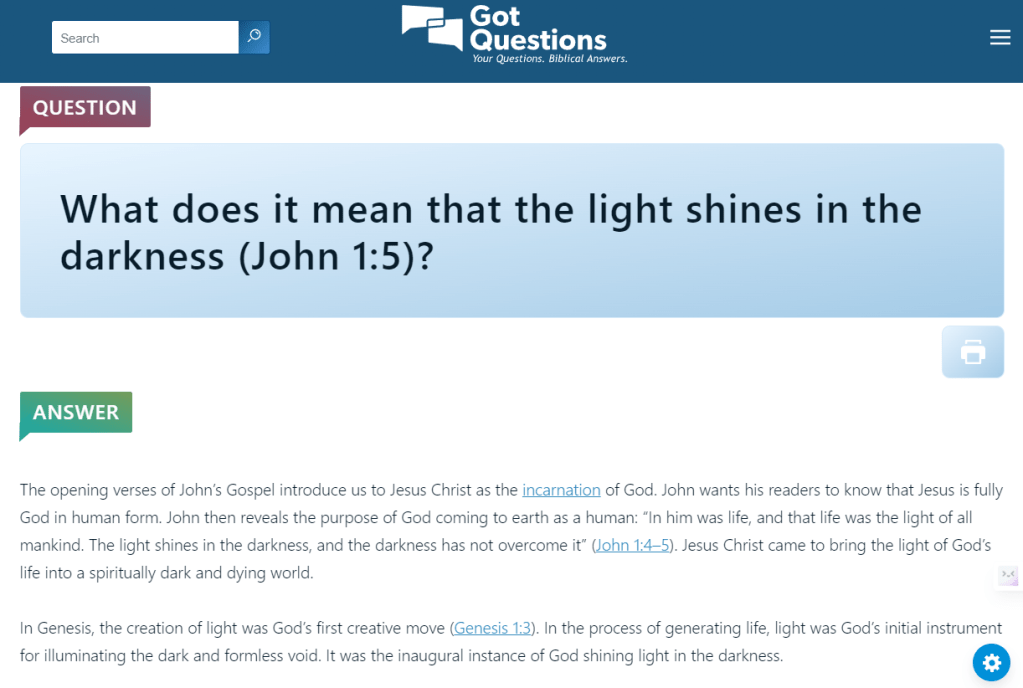
No power ofdarknesscan defeat or snuff out thislight (Matthew16:18; John 16:33). Jesus is the giver of life and bearer oflight. The Son of God continues to shineHislight to humankind through His church, the body ofChrist (Philippians 2:15). Whoever believes in Him receives eternal life (John 3:15; see also Psalm 112:4).
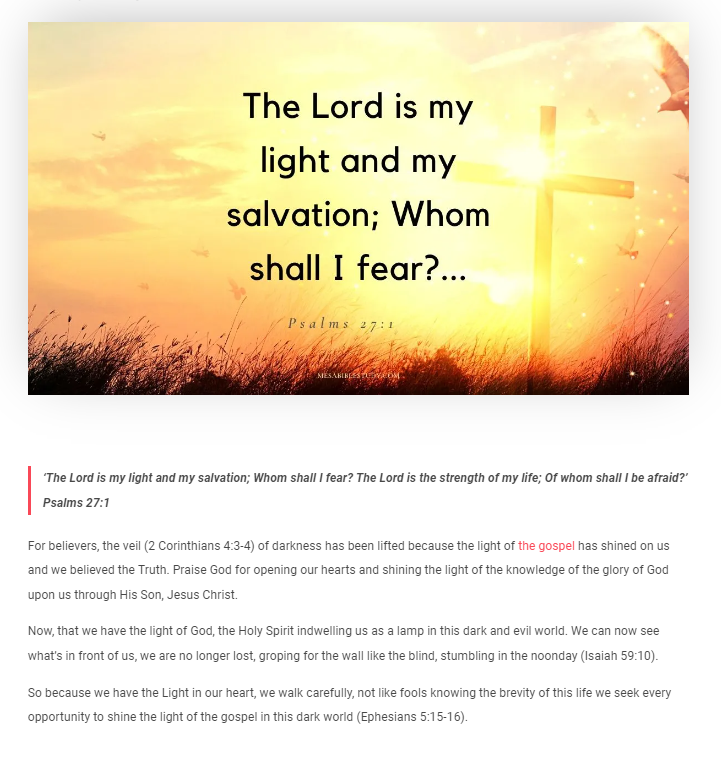
In the Bible, light is often used as a metaphor for truth, goodness, and the presence of God. The arrival of this light brings clarity, understanding, and a deeper connection to the truth that was previously obscured.
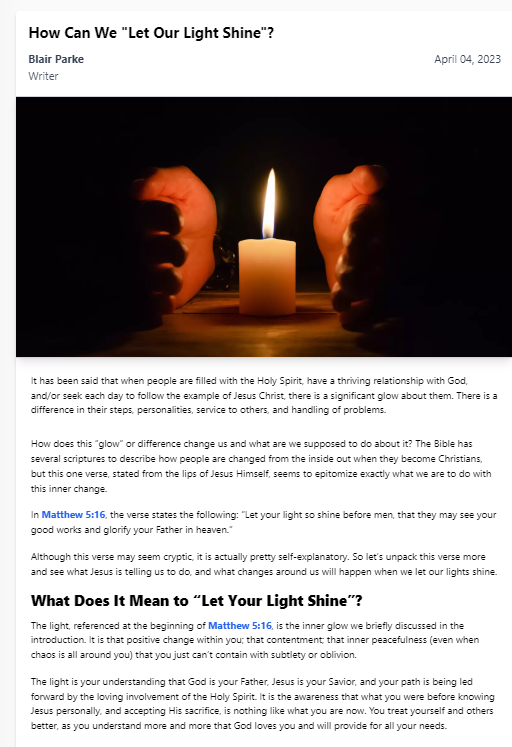
By being a source of inspiration and unwavering support, you bring light to others. Your actions guide and uplift people in difficult times, reminding them that goodness and hope still exist. Being a bearer of light means having inner strength, resilience, and upholding values like love, kindness, and empathy. It involves spreading positivity through words, actions, and interactions. In times of darkness, being a bearer of light brings hope, healing, and unity. You become a positive influence, offering guidance and support to those facing struggles.