The image of Jesus most people hold is wrong and wrung through centuries of:
ideological whitewashing
beautified marketing
sanitized Sunday School summaries.
He’s often pictured as an ethereal peace-giver, universally adored, calmly glowing in a ‘soft sepia light’.
But this wasn’t the Jesus known to his followers. Not even close.
In fact, many who encountered Jesus in the flesh found him either;
confusing, at best
mentally unstable, at worst.
He wasn’t simply controversial, he was considered a threat to both religious orthodoxy and social order.
The sanitized version of Christ so many cling to was shaped after the cross, after the church industrial complex took control of his narrative.
Let’s take a scalpel to the original reactions—the raw, unsettling perceptions of Jesus while he was still walking the earth.
His Family Thought He’d Lost His Mind
The Gospel of Mark pulls no punches. In Mark 3:21, we’re told that Jesus’ own family said:
“He is out of his mind.”
Yes, his own bloodline. Not strangers. Not critics. His family. Pause there…
Imagine. Imagine the weight of that.
You’ve awoken to a Divine Knowing, a consciousness that cracks open reality—and the people who know your voice best say:
“You’ve snapped.”
It wasn’t mockery from outsiders that came first; it was internal doubt.
His kin likely feared he’d gone mad with something akin to messianic delusion.
Or perhaps they were embarrassed by his sudden rise as a controversial street-preacher confronting the Government and Church…
He spoke vehemently against both Rome and the temple elite.
Religious Leaders:
“You’re Breaking the Law and Blaspheming“
The religious class didn’t just dislike Jesus—they actively plotted his removal.
The scribes and Pharisees viewed him as a heretic, accusing him of;
violating the Sabbath
flouting Mosaic Law
daring to forgive sins.
—a divine prerogative.
His miracles weren’t applauded; they were denounced as works of Beelzebub.
Let that settle: divine acts being interpreted as demonic.
… this was normal folk… the acceptable people… The community.
This wasn’t petty disagreement. This was existential threat-level panic from the religious hierarchy.
They saw in Jesus… not just a radical voice—but someone who dismantled their very grip on sacred authority.
Public Whispers: “He Has a Demon and Is Mad“
John 10:20 captures this damning public sentiment:
“He has a demon and is mad; why listen to him?”
These weren’t elite theologians.
These were everyday observers—
neighbors
townsfolk
bystanders.
Jesus’ words, while layered with profound gnosis (wisdom), sounded unhinged to the average ear.
And truthfully, wouldn’t they today? I mean… They do.
Imagine someone saying,
“Before Abraham was, I am.”
Or calling God their literal Father, claiming to bring not peace but a sword.
If spoken in today’s marketplace, they’d be dismissed as spiritually schizophrenic, or worse.
So what’s changed? Only the power structure that codified his words.
Outside the Bible: Even More Scathing Views
This doubt wasn’t exclusive to Jewish contemporaries.
Roman voices and philosophers took their shots, too.
Talmud
The Talmud contains cryptic but deeply derogatory references to Jesus—branding him a sorcerer who led Israel astray.
He is also said in the Talmud to be swimming in hot excrements.
These weren’t passive critiques.
They were sharp rejections by those who saw his influence as spiritually treacherous.
Roman Philosophers
Roman historian Tacitus referred to Christianity as a “pernicious superstition,” blaming the followers of Christ for corrupting public morals.
To Roman minds, Christ’s followers were:
irrational fanatics clinging to a crucified troublemaker.
Celsus
And then there’s Celsus, the ancient philosopher and intellectual, who reportedly called Jesus
“small, ugly, and undistinguished,”
claiming his father was a Roman soldier—a jab meant to invalidate his divine paternity and tarnish the virgin birth narrative.
Jesus wasn’t revered by the intellectual elite of his time.
He was;
mocked
dismissed
vilified.
Why This Matters
This isn’t about shock value or anti-Christian rhetoric. It’s about truth-telling.
When we sanitize the narrative of Jesus to make him palatable. We also:
rob Him of the radical edge that threatened anti Christ power
offended institutions
deny the painful fact that he alienated his own family.
His teachings were revolutionary because they disrupted—not because they fit neatly within pre-existing paradigms.
So when you feel like your awakening makes others uncomfortable when your truth sounds like madness to the masses take comfort. You’re in excellent company.
Because the real Jesus wasn’t crucified for being nice. He was crucified because he challenged the lies. And many thought he was insane for doing so. Truth rarely sounds sane to those who live comfortably in delusion.
“And you will be hated by all for my name’s sake. But the one who endures to the end will be saved.”
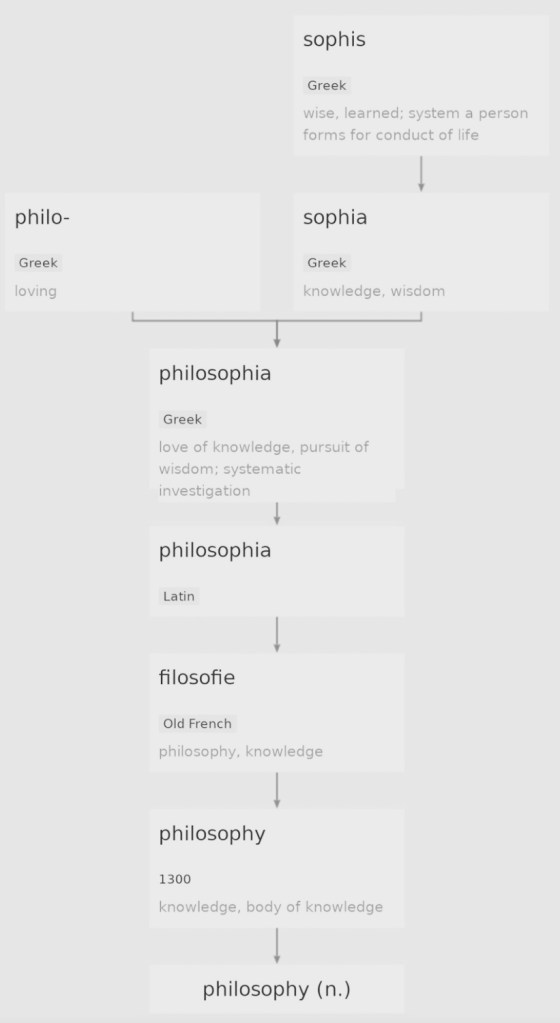
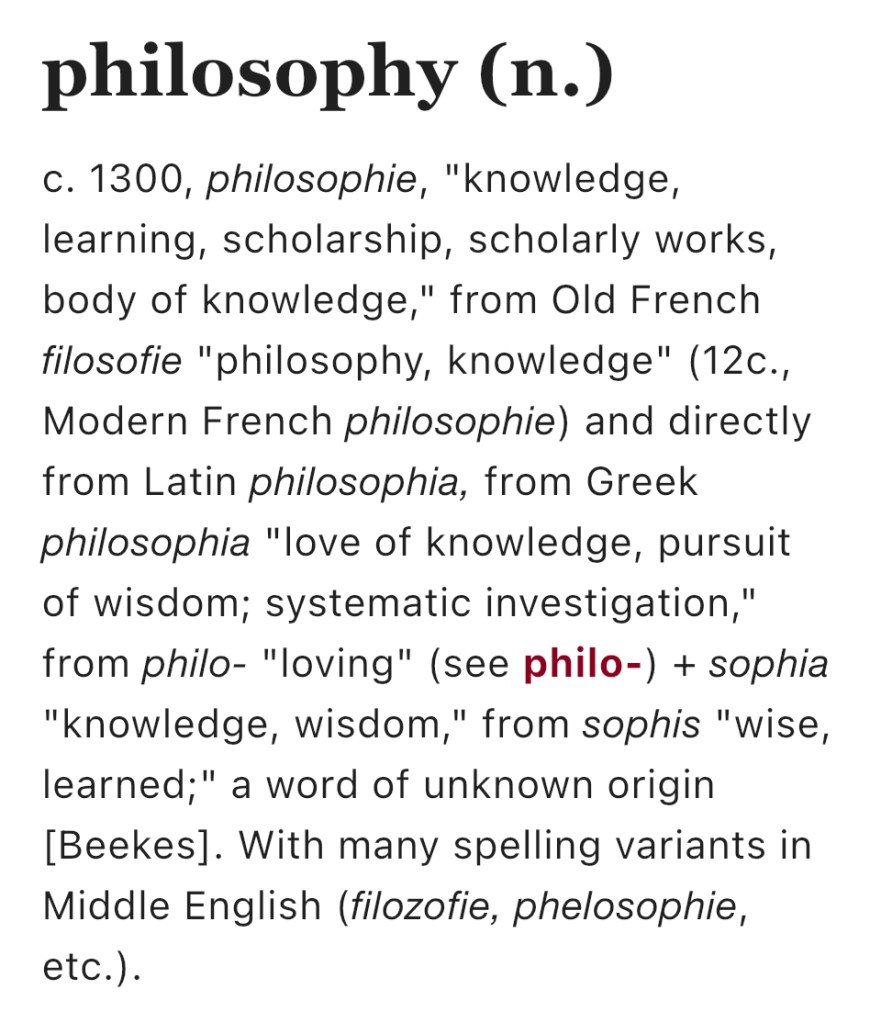
“Philo” (love) + “Sophia” (wisdom) The Love of Wisdom
From The Etymological Dictionary:
Philosophy Is Not Limited to Academia
Philosophy is for you and me and even the dude down the road.
Why Philosophy Is Good To Take Part In?
You’ll Ask The Right Questions
Philosophy empowers you to inquire thoughtfully and meaningfully.
You’ll Find Meaning and Purpose
Delve into what truly matters in life.
You’ll Develop Critical Thinking
Enhance your ability to analyze and evaluate arguments.
Navigate Ethical Dilemmas ⚖️🤔✨
Tackle complex moral issues with clarity and insight.
Philosophy helps you unravel the mysteries of life’s fundamental questions..
Expand your mind, ignite your curiosity, and awaken the philosopher within you, you’ll be sure to discover the truth about yourself and the world around you.
The term “philosophy” is from its ancient Greek roots.
In Greek Mythology, Sophia was associated with wisdom and knowledge.
She embodies the idea of understanding and insight, representing a deeper connection to the universe and the divine.
Many Greeks woo would seek her guidance in times of uncertainty, hoping to gain clarity in their lives. They understood Wisdom is not just about knowledge, but, more so, about the ability to see beyond the surface. The richness of her meaning caused a greater appreciation for the complexities of life.
Sophia is closely associated with the concept of “phronēsis,” which means practical wisdom.
The term “philosophia” was brought to prominence by Plato and his mentor Socrates, who underscored the pursuit of wisdom as a fundamental guiding principle for a meaningful life.
Socrates was famously declared the wisest man by the Oracle because of this:
Socrates recognized his own ignorance.
The philosophical pursuit of wisdom is through questioning and dialogue.
The Pythian Oracle
The Pythian Oracle was a priestess who delivered prophecies from the god Apollo at his temple in Delphi, Greece. She was also called Pythia, which was the original name of Delphi.
She entered a trance-like state and spoke cryptic messages that were interpreted by the priests. The oracle was consulted by many ancient Greeks for advice on war, politics, colonization, and religion. The oracle’s influence lasted from the 8th to the 4th century BCE, when it was banned by the Roman emperor Theodosius I.
Philo of Alexandria, a Hellenized Jew, attempted to harmonize Greek philosophy with Jewish scripture. He used “Sophia” to denote both human and divine wisdom, integrating it with the concept of “Logos” (Word), which later influenced Christian theology.
In Christian theology, “Sophia” was personified as Divine Wisdom, often equated with Christ. This interpretation is evident in the writings of the Church Fathers, who identified Christ as the Wisdom of God, a concept rooted in the New Testament.
Philo-Sophia:
Revising Philosophy: The book "Philo-Sophia: Wisdom Goddess Traditions" by Debashish Banerji and Robert McDermott explores the divine feminine aspect of wisdom. It argues for a revision of philosophy to include mystical, intuitive, emotional, performative, and collective knowledge, moving beyond the patriarchal and rational objectification that has dominated traditional academic philosophy.
Engage in existential musings as we examine the purpose and significance of our existence in the grand tapestry of the universe.
PHILOSOPHY IS INTIMATELY CONNECTED TO THE PURSUIT OF KNOWLEDGE, TRUTH, ETHICS, SPIRITUALITY, AND LIFE’S DEEPER MEANINGS.
Epistemology
Epistemology is the study of knowledge, justification, and the relationship between the two.
It explores questions such as:
What does it mean to be justified?
Is knowledge justified?
Is there such thing as true belief?
Can we have justified beliefs at all?
Epistemologists debate the role of internal and external factors in justification, the permissibility of different doxastic attitudes, and how we use our knowledge to acquire more knowledge.
The value of knowledge is the mission to uncover in Epistemology.
Metaphilosophy
Metaphilosophy is the study of philosophy itself, exploring questions about the nature of philosophical inquiry and the epistemology of philosophy.
It examines whether philosophy aims to discover objective truths about the external world or is more focused on understanding words and concepts.
It also considers the possibility of armchair philosophical knowledge and the relationship between empirical science and philosophy.
Philosophy Of Mind
The philosophy of mind covers all philosophical topics about the mind and mental states. Its subtopics can be divided in two main ways. First, by the traditional divisions drawn between kinds of mental states:
1. Divisions are drawn between:
… consciousness, intentionality, perception, and other states and processes. types of phil
2. Quotations are asked about these activities regarding their nature.
Study the relation between the mental and the physical and questions regarding our knowledge of the activities, the relationship between them.
Philosophy of mind overlaps with the philosophy of cognitive science and the philosophy of action.
Further Study:
Examples Of Philosophic Disciplines:
Metaphysics… or the study of reality.
Ethics… or the study of what is morally right & good.
Epistemology… or the study of how we know reality.
Logic… or the study of good arguments.
Aesthetics… or the Philosophy of Art.
The concept of “love of wisdom” can be defined as the pursuit and admiration of knowledge, guided by a deep affection and appreciation for intellectual exploration.
The serpent’s role in the narrative of Adam and Eve reveals a deeper allegory about the nature of doubt and the internal origins of confusion.
Deceptive & Wise Tactics of The Serpent:
By asking implied questions rather than making direct statements, the serpent masterfully diverts Adam and Eve’s attention away from unity and truth.
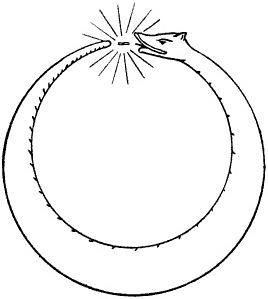
This is the serpent crown of the ancient Gods. It shows that the two paths or parts of the spirit fire have been united.
This crown is the symbol of mastery and the union takes place within the student when the life forces are lifted to the brain. – Manly P. Hall
Remember: The serpent can’t place anything within a human, rather, he reveals what already is within our heart.
THE INVOCATION
This isn’t just about deception; it is about invoking a subtle second-guessing of our own experience. It exposed the vulnerability that lay dormant within the mind.
CONFUSION IS NOT FROM ABOVE
Confusion does not formulate from external stimuli, it develops when internal conflict causes confusion – there forms a dissonance between the reality and our passion, a division of faith and belief.
OUR DUALITY REVEALED
This division reflects the struggle in every human soul, where the Spirit of discernment competes with the spirit of chaos.
IS THE SERPENT GUILTY IN THIS STORY? NO!!!
The serpent reveals what already exists within, like an echo reverberating what is left of the soul beyond the shadows.
The serpent holds a mirror to the mind’s divided psyche.
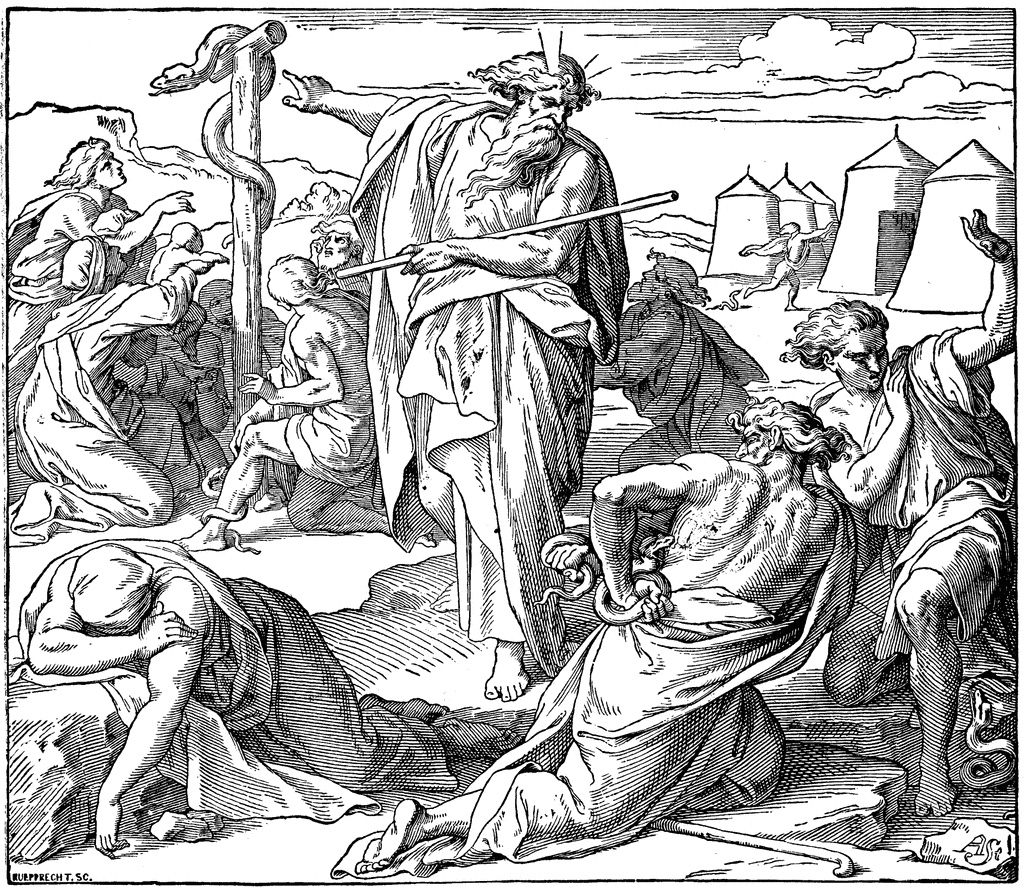
Numbers 21:9 – “So Moses made a bronze snake and put it up on a pole. Then when anyone was bitten by a snake and looked at the bronze snake, he lived.”
THE SERPENT IS OUR HELPER
Rather than scapegoating the serpent, we should maybe acknowledge that confusion begins and ends with us.
THE SERPENT GIVES US THE AVENUE FOR ALIGNMENT
Within every mind lies the potential for both Disorder and Order.
Discernment, the antidote to confusion, requires some critical things:
intentional self-reflection
critical thinking
seeking divine guidance
Selected Scriptures
clarity over chaos
Genesis 3:1 highlights the serpent’s cunning manipulation through a question that plants doubt: “Did God actually say…?”
1 Corinthians 14:33 reminds us, “For God is not a God of confusion but of peace.”
James 1:5 offers the path forward: “If any of you lacks wisdom, let him ask God, who gives generously.”
The serpent doesn’t symbolize a mere deceiver; he embodies the already existing forces of doubt and deception.
The serpent provokes us to question and reevaluated our own beliefs.
The choice Adam and Eve faced was simply a reflection of their internal struggle between trust and temptation, truth and uncertainty.
The Serpent shows us just how divided our psyche is.
In the realm of Duality this is inevitable.
So in my own revelation I’ve come to know the Serpent not as adversary but as a teacher that reveals my folly to me.
Will Confusion Persist?
Confusion will persist but can diminish to the extent that we are honest with ourselves at every level.
It will continue to grow until we develop the ability to recognize its source.
We know that we are thinking by faith when we trust our inner intuition without seeking external validation.
In Freemasonry, the Templar and in the Philosophic Degrees — such as the Knight of the Brazen Serpent, where the serpent is combined with the cross — it is evidently a symbol of Christ ; and thus the symbolism of these Degrees is closely connected with that of the Rose Croix.
33rd Degree Freemason and Master Rosicrucian, Manly P. Hall says this about the symbol of the serpent in his book, Initiates of the Flame;
Many ages have elapsed since the Egyptian Priest King passed through the pillars of Thebes. Ages before the sinking of Atlantis, thousands of years before the Christian Era, Egypt was a land of great truths. The hand of the Great White Brotherhood was held out to the Empire of the Nile, and the ancient pyramid passages resounded with the chants of the Initiates. It was then that the Pharaoh, now called half-human, half-divine, reigned in ancient Egypt. Pharaoh is the Egyptian word for king. Many of the later Pharaohs were degenerate and of little account. It is only the early Pharaohs we now list among the Priest Kings.
Try to picture for a moment the great Hall of Luxor —its inscriptive columns holding up domes of solid granite, each column carved with the histories of the gods. There at the upper end of the chamber sat the Pharaoh of the Nile in his robes of state; around him his counsellors, chief among them the priest of the temple. An imposing spectacle it was: the gigantic frame of the later Atlantean, robed in gold and priceless jewels; on his head the crown of the North and South, the double empire of the ancient; on his forehead the coiled serpent of the Initiate, the serpent which was raised in the wilderness that all who looked upon it might live; that sleeping serpent power in man, which coiled head downward around the tree of life, drove him from the garden of the Lord, but which raised upon the Cross, became the symbol of the Christ.
The Pharaoh was an Initiate of Scorpio, and the serpent is the transmuted Scorpio energy, which working upward in the regenerated individual is called the Kundalini. This serpent was the sign of Initiation. It meant that within him the serpent had been raised, for the true Pharaoh was a priest of God, as well as a master of men. There he sat upon the cube altar throne, indicating his mastery over the four elements of his physical body-a judge of the living and of the dead, who in spite of all his power and glory, having about him the grandeur of the world’s greatest empire, still bowed in humble supplication to the will of the gods. In his hands he carries the triple sceptre of the Nile, the Shepherd’s Crook, the Anubis-headed Staff and the Flail or Whip.
I am speaking from the edge of something vast, where theology crumbles when it lacks the FIRE of embodied truth, where belief without encounter is like a noisy gong.
The microcosm, the narrow frame of earthly experience, cannot contain the soul that has touched the Infinite Macro.
Those who have not walked through this abyss of the DARK NIGHT scoff at my words, but their understanding is not required.
Truth does not need permission to be what it is.
Purity is not the lack of imperfection but the result of an alchemical transformation, where the raw, impure elements of the self are refined, transmuted, and elevated into something higher.
To encounter your impurities fully; to sit with the rejected, mocked, and misunderstood parts of yourself without fleeing:
that is holiness.
Not the pretense of righteousness, but the radical willingness to see, to burn, and to emerge unchained.
Those who fear discomfort will seek refuge, but that is not my burden even when they seek to place it upon me.
You do not exist to amuse.
You stand at the threshold between the fleeting and the eternal, this place is costly.
To prioritize the Spirit over the flesh is madness, but it is wisdom to those who See.
Doctrine may map the territory, but it is not the journey.
Theology may offer words, but without Pneuma without the breath of Spirit it is an empty shell.
The Divine moves beyond dogma, beyond human constructs, untamed and uncontainable.
To follow Divinity is to risk everything. To refuse is to wither.
Truth does not wait for approval. Truth does not soften itself to be palatable.
You have already glimpsed it.
Will you embody it, relentlessly, regardless of who follows or who turns away from you?
Let them call you a heretic, let them name you “mad”, let them turn their sheeple torches upon you.
They do not understand that the flames they throw are your baptism, not your end.
Ashes are not from your grave but your rebirth. From death’s womb, Eternal Spark ignites.
This path is not for the weak. It is not for those who seek peace over principle.
This is the path for those who carry the weight of Truth’s burden, there is no other path.
You will rise because you are not made of that which burns—you are made of what remains after the char.
The Light that cannot be extinguished lives in you.
This is the moment of breaking—the shattering of the mask— the collapse of the fortress built not for protection, but for self-deception.
Truth is not a stagnant thing to be walled in and preserved; it is alive, untamed, ever-unfolding.
To play at belief while avoiding the cost of true surrender is a dangerous game, one that cannot be played indefinitely. God does not call us to appearances, nor does He require our self-crafted righteousness, He doesn’t even accept it.
He demands something far deeper: the raw, unfiltered surrender to the Truth.
Recognition is the first step.
To see the illusion for what it is—to admit that you have been fooling yourself: is itself an act of grace.
Many live their whole lives building fortresses of doctrine, convincing themselves that faith is about being right rather than being transformed.
But now, you see. And you cannot unsee.
So what will you do?
Will you step beyond its ruins into the terrifying, exhilarating vastness of Truth?
Once the mask is off, the only path forward is one of complete, unrelenting authenticity.
In my journey as an “alien” on this planet, I have, unwittingly, stumbled upon what had been archaically called the Philosopher’s Stone or the Elixir of Life…
I only realized this after I, through being magnetically attracted toward suffering, embracing the darkness that most fear, had unearthed the Essence of Reality.
This Essence is a Truth so profound, it is woven into the very core of our beings through the quantum dimensions & atmospheric pressure, without such, we would become vacuumed into nothingness.
This truth is unassailable, standing as a lamp of certainty, illuminated by the light of Intuitive Wisdom.
THIS LIGHT IS CHRIST’S LIGHT OF INTUITION FROM ABOVE.
Intuition transcends the limitations of our corporeal senses, for it is birthed from the sacred depths of the spirit.
Intuition is a whisper from the Heavens, a subtle yet ever powerful current that flows through the Ethers of existence.
Intuition is the Blood within the veins of Eternity.
When the HolySpirit stirs, He ignites the flame of Intuition, transforming our sensorial experiences into a Divine Compass.
THE KINGDOM OF GOD IS WITHIN YOU
This guiding Force elevates our conscious awareness, rendering the conventional Five Senses as mere tools in the Macrocosm of our being within this existence and realm.
When this inner awakening is embraced, we align in tandem with the Universal Symphony of Wisdom.
Intuition becomes our most trusted Guide, leading us towards a Life of deeper Understanding and connection with the Infinite.
Mastering the nuance between perception and reality is not a passive philosophical exercise; it is the essential toolkit required to dismantle our own cognitive illusions and navigate our way out of profound hardship.
When you are in the trenches, survival depends on clarity.
By carefully distinguishing between seemingly identical ideas, you build an architecture of discernment… allowing you to separate the truth of a situation from the mental friction keeping you stuck.
Map vs. Territory
The first tool in this kit is recognizing that the crisis you are experiencing (the territory) is completely separate from the story you are telling yourself about it (the map).
The distinction between the map and the territory is a fundamental concept in rationality.
A map is a representation of reality, while the territory is the actual reality itself.
Why Does This Matter?
This distinction matters because it highlights the fact that our understanding of the world is always mediated through our mental models and representations.
We must be aware that our ‘maps‘ , no matter how detailed or accurate, are never identical to the ‘territory‘.
Recognizing that your map is flawed is the first step, but how does the map get drawn in the first place?
When we are struggling, our maps are rarely constructed from present reality. Instead, they are stitched together using outdated, unexamined assumptions.
To update your map, you must confront the difference between the mental debris you default to and the active awareness required to survive.
Cached Thoughts vs. Actual Thinking
CACHED THOUGHTS
Cached thoughts are the pre-existing beliefs and assumptions that we hold, gathering trash and holding into them like a computer holds onto cqche. This means these are thoughts that lack conscious awareness.
This Repository of ‘thoughts’ are mental shortcuts that we rely on to make sense of the world, with no thought as to if these thoughts are based in objective reality or not.
THINKING
In contrast, thinking involves actively questioning and challenging our cached thoughts, engaging in critical analysis, and seeking new information to refine our understanding.
When you rely on cached thoughts instead of active thinking, your internal world becomes an echo chamber. You begin to mistake your unexamined biases for universal laws. This is where hardship turns into self-sabotage—when you project your own internal friction onto the external territory and assume everyone else is navigating the same distortion.
Mind Projection Fallacy
The Mind Projection Fallacy is a cognitive bias that occurs when people assume that their personal beliefs, values, or perceptions are shared by others or represent objective reality. This fallacy suggests that people often confuse their own thoughts and feelings with universal truths and expect others to have the same thoughts and feelings.
The Mind Projection Fallacy can significantly distort one’s ability to discern.
When we project our own beliefs and emotions onto others, we fail to accurately discern their unique perspectives and experiences.
Here Are Some Examples Of How Mind Projection Impedes Ones Ability To Discern:
Overestimating Agreement: One may falsely believe that others share their opinions, leading to an overestimation of consensus and potentially causing miscommunication or conflict when differing perspectives are eventually revealed.
Inaccurate Assumptions: When projecting personal beliefs, individuals can make inaccurate assumptions about others’ thoughts and feelings, leading to misunderstandings and incorrect conclusions.
Inability to Empathize: By assuming that everyone thinks and feels similarly, individuals can struggle to put themselves in others’ shoes and empathize with their unique experiences and emotions.
Poor Decision-Making: Decision-making can become flawed when one assumes their perspective is universally shared, potentially leading to choices that are not inclusive or beneficial for all parties involved.
To overcome the Mind Projection Fallacy and improve discernment, it is crucial to foster empathy, seek out diverse perspectives, and practice open communication. By recognizing the influence of personal beliefs and emotions on perception, individuals can become more discerning and accurately understand the viewpoints of others.
The Halo Effect:

a cognitive bias where our overall impression of someone or something influences our judgments of their specific traits. This term, coined by psychologist Edward Thorndike in 1920, illustrates how positive perceptions in one area can positively affect our opinions in another.
Escaping this cycle of projection requires a radical shift in how you process information. You must start dissecting the narratives you encounter, both internal and external. To do this effectively and strip away the illusion, you have to separate the mere structure of a situation from its actual substance.
Syntax vs. Semantics
In the context of language and communication, syntax refers to the physical structure of a message.
Semantics refers to the meaning or intended relationship to the territory.
Understanding this distinction is crucial for effective communication.
Yet, grasping the intended meaning is only half the battle.
When you are fighting your way out of a difficult season, it is not enough to know what a situation means—you must understand its real-world impact.
You must discern the difference between the definition of a problem and the actual consequences it produces.
Semantics vs. Pragmatics
Semantics refers to the literal meaning of a message, while pragmatics refers to the intended result or effect of conveying that message.
This distinction is important because it highlights the fact that communication is not just about transmitting information, but also about influencing behavior and shaping outcomes.
Once you understand the practical effects of your situation, the next logical step is determining where to apply your energy to fix it.
This requires pinpointing your exact position on the battlefield.
Are you fighting the immediate symptom right in front of you, or the overarching system that created it?
Object-level vs. Meta-level
The object-level refers to the specific task or problem at hand, while the meta-level refers to the broader context or framework within which that task or problem is situated.
A good meta-level theory can help us get things right at the object level, but it is usually impossible to get things right at the meta level before making significant progress at the object level.
Ultimately, navigating through these layers of abstraction brings you to the core of all discernment.
When the mental debris is cleared, the projections are silenced, and the structure is separated from the impact, you are left with the final, most vital distinction required for true liberation.
Seeming vs. Being
We can only deal with how things seem to us, not how they are in absolute terms.
This is a humbling reminder of our limited perspective and the importance of maintaining a degree of epistemic humility.
If we optimize too hard for things that seem good rather than things that are actually good, we may end up with suboptimal outcomes.
Signal vs. Noise
Not all information is created equal.
We often desire certain types of information while seeking to ignore others.
The distinction between signal and noise helps us focus on the most relevant and valuable information while filtering out the irrelevant or distracting.
Selection Effects
Selection effects occur when the evidence we have access to is filtered or biased in a particular way.
This can lead to distorted conclusions and faulty decision-making.
Understanding selection effects requires modeling where our information comes from and accounting for the processes that shape what we see.
What You Mean vs. What You Think You Mean
People often claim to have meant something slightly different than what was originally stated when their original position is challenged or refuted.
This automatic response, generated by our brains without conscious control, can be dangerous for clear thinking.
It is important to be aware of this tendency and to strive for consistency and honesty in our communication.
What You Mean vs. What Others Think You Mean
The illusion of transparency and the double illusion of transparency highlight the gap between what we think we are communicating and what others actually understand.
We often overestimate how clearly we convey our thoughts and feelings, while underestimating the extent to which others misinterpret our messages.
Effective communication requires being mindful of these biases and seeking feedback to ensure mutual understanding.
What You Optimize vs. What You Think You Optimize
Our actions are often driven by hidden motives and incentives that we may not be fully aware of.
Evolution, for example, optimizes for reproduction, but in doing so creates animals with a variety of goals that are correlated with reproduction.
Intrinsic motivation is generally stronger and more effective than extrinsic motivation.
Understanding the difference between what we think we optimize for and what we actually optimize for can help us align our actions with our true values and goals.
Stated Preferences vs. Revealed Preferences
Stated preferences are the preferences we explicitly express, while revealed preferences are the preferences we can infer from our actions.
These two types of preferences are often misaligned, with our actions not matching our stated beliefs or desires.
Recognizing this distinction can help us identify and address inconsistencies in our decision-making.
What You Achieve vs. What You Think You Achieve
Most of the consequences of our actions are unknown to us.
We often overestimate our ability to predict and control the outcomes of our decisions.
Effective action requires humility, openness to feedback, and a willingness to learn from experience.
It is impossible to optimize without proper feedback, so we must be vigilant in seeking out information about the actual results of our efforts.
What You Optimize vs. What You Actually Achieve
Consequentialism focuses on the expected consequences of our actions, rather than the actual consequences.
While it is important to consider the potential outcomes of our decisions, we must also be prepared to adapt and adjust our course based on the real-world results.
Rigid adherence to a particular optimization strategy can lead to suboptimal outcomes if it fails to account for the actual effects of our actions.
What You Seem Like vs. What You Are
Our external appearance and behavior may not always reflect our true nature or inner experience.
We may present a certain image to the world while privately struggling with doubts, fears, or contradictory impulses. Recognizing this distinction can help us cultivate self-awareness, authenticity, and empathy in our relationships with others.
What Other People Seem Like vs. What They Are
Similarly, we often make assumptions about others based on their outward behavior or reputation, without fully understanding their inner lives or the complex factors that shape their actions.
Assuming that we understand others is a common mistake that can lead to misunderstandings, prejudice, and missed opportunities for connection and growth.
What People Look Like vs. What They Think They Look Like
People tend to underestimate the gap between their stated preferences and their revealed preferences. We may claim to value certain qualities or characteristics in ourselves or others, but our actions often tell a different story. Recognizing this discrepancy can help us align our self-perception with reality and make more authentic choices.
What Your Brain Does vs. What You Think It Does
Our brains are complex, powerful, and often mysterious. We are running on “corrupted hardware” in the sense that our thought processes are shaped by social and evolutionary factors that can distort the truth. The brain’s machinations are fundamentally social, automatically engaging in signaling, face-saving, and other behaviors that can lead to biased or irrational decisions. While we must be skeptical of the outputs of our thought processes, we must also strike a balance between skepticism and action, particularly in situations that require quick thinking or decisive action.
Clever Argument vs. Truth-seeking
People often believe what they want to believe, a phenomenon known as motivated cognition.
Giving a smart person more information and more methods of argument may actually make their beliefs less accurate, because it provides them with more tools to construct clever arguments for what they want to believe.
The actual reason for believing something determines how well that belief correlates with the truth.
If you believe something because you want to, any arguments you make for that belief, no matter how strong they may sound, are devoid of informational context about the truth of the belief and should be ignored by a genuine truth-seeker.
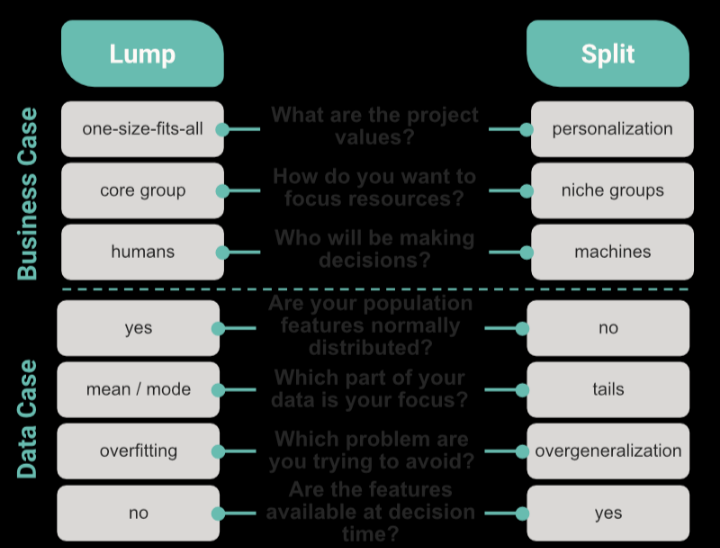
Lumpers vs. Splitters
Lumpers are thinkers who attempt to fit things into overarching patterns, while splitters are thinkers who make as many distinctions as possible, recognizing the importance of being specific and getting the details right. The lumper mindset can be useful for identifying broad trends and connections, while the splitter mindset is essential for accurate analysis and nuanced understanding.
Fox vs. Hedgehog
The fox knows many things, while the hedgehog knows one big thing. Closely related to the lumper-splitter distinction, the fox mindset involves a broad array of knowledge and the ability to draw insights from diverse sources. The hedgehog mindset, in contrast, focuses on a single big idea and applies it everywhere. According to Tetlock’s research, the fox mindset is generally better for making accurate judgments in complex, uncertain situations.
Traps vs. Gardens
Well-kept gardens die by pacifism, meaning that conversations, societies, systems, and even thermodynamic equilibrium tend to slide toward disorder, conflict, and decay unless actively maintained.
Recognizing this distinction can help us be proactive in defending and nurturing the things we value, whether it’s a productive dialogue, a thriving community, or a well-functioning organization.
Nuanced thinking involves carefully distinguishing between seemingly similar concepts and recognizing the subtle differences that shape our understanding of the world.
By engaging in this kind of discernment, we can make more informed decisions, communicate more effectively, and develop a richer, more accurate perspective on the complex realities we navigate every day.
Have you ever found yourself feeling confused or divided in your thoughts?
It’s easy to blame your confusion on the information you receive or the people around you for causing this confusion.
The responsibility does not lie with the individual who brought forth the preexisting confusion within your thoughts.
Proverbs 3:5 -“Trust in the Lord with all your heart, and do not lean on your own understanding.”
1 Corinthians 14:33 – “For God is not a God of confusion but of peace.”
The Truth of the Confusion
Confusion stems from within you, not external sources.
When you feel confused, and begin to get down on yourself with negative thoughts filled with self-hate… you must remember that discernment also resideswithin you.
Instead of pointing fingers at others for bringing out confusion in your mind, take a step back and reflect on what is truly causing the internal confusion.
The inner spirit that resides within you inextricably shapes the way your mind perceives and processes information and experiences.
1 Corinthians 2:11-12 – “For who knows a person’s thoughts except their own spirit within them? In the same way no one knows the thoughts of God except the Spirit of God. What we have received is not the spirit of the world, but the Spirit who is from God, so that we may understand what God has freely given us.”
Psalm 51:10 – “Create in me a pure heart, O God, and renew a steadfast spirit within me.”
Romans 12:2 – “Do not conform to the pattern of this world, but be transformed by the renewing of your mind. Then you will be able to test and approve what God’s will is—his good, pleasing and perfect will.”
Acknowledge Self as Source of Confusion
By acknowledging the presence of confusion being within yourself and tapping into your innate discernment, you can navigate through challenging situations with clarity and understanding.
Next time you feel confused, remember that the power to discern lies within you.
Embrace this inner wisdom and let go of the habit of scapegoating external factors for your mental (spiritual) state.
True clarity comes from within, not from external sources.
“Most folks seek therapy for past or present-day issues that are typically relational in nature. This usually means you initially come to therapy from the perspective that either no one else is to blame (I’m not good enough, my parents were perfect, I’m a burden, etc.) or everyone else is to blame (he hurt me, she’s controlling, they are selfish, etc.). You might also hope that your therapist will agree with you. Of course! The quickest way out of discomfort is to find someone who will shore up your perspective. While that may relieve you of the immediate discomfort, in the long term, it does nothing for you because your nervous system remains perpetually in threat response, defending you from the world with shame or blame, entrenched in a cycle of victimhood.”
“For many, by realizing that you trusted others who ultimately betrayed you, it created a sense of self-doubt, reflection, and in some cases, guilt over decisions made. That in turn created a feeling of distrust in everyone, which is unhealthy. If you can’t trust in others and you can’t trust in yourself, that leaves quite a void. Rebuilding that trust in yourself and removing the self-doubt is the very thing that allows you to discern what and who to trust..”
Controlling individuals who project a gentle facade often believe that manipulating others leads to happiness. However, this flawed belief is rooted in deception and arrogance, ultimately leading to negative consequences.
Within Christianity, there exist individuals who arrogantly assume the guise of piety while perpetuating oppressive actions.
These humble tyrants exploit others, all the while claiming to follow God’s will.
It is important to note, however, that the Bible explicitly warns against such tyrannical behavior, as it restricts freedom and deviates from the path set by God.
As Christians, we are called to embody God’s grace and mercy through genuine actions, rather than mere expressions.
The teachings of Jesus hold profound truths that can only be fully understood when our hearts are truly captivated by them.#
Tyrants, driven by fear and insecurity, seek to destroy the reputation of the vulnerable by magnifying their faults through lies. They often masquerade their malicious intentions as concern, but their true nature is revealed through their deceitful and backbiting actions.
Recognizing a Christian tyrant involves identifying someone who rules without accountability, imposing their will upon others without regard for their well-being, and exploiting religion to cloak their oppressive actions.
Stand Firm in the Armor of God – Discern All Things
It is crucial to protect ourselves from their harmful influence and to embrace the true essence of Christianity, which is rooted in grace, love, and respect for all individuals.
For Further Study:
Aquinas on Resisting Tyrants and Enemies of the Common Good
A Defense of Liberty against Tyrants: The Bible, the Right of Resistance, and the American Revolution
Founder’s Ministry: Why Resisting Tyrants is an Act of Love
“The Social Contract“
In the exact sense, a tyrant is an individual who arrogates to himself the royal authority without having a right to it. This is how the Greeks understood the word ‘tyrant’: they applied it indifferently to good and bad princes whose authority was not legitimate.
The strength I thought I had was just a mask, hiding the fragility of my heart from the darts and arrows of this world, as if I were any better.
GOD TAUGHT ME:
If walls can crumble, they will. If masks can slip, they will.
When they do, the truth comes pouring out like a river, the assumed strength showing to be but a dam, drowning in sorrow. I was never strong, just silent.
It is a weakness so weak it fears facing itself, fears speaking its name. Weakness pretends to be strong until it cannot pretend anymore, until it breaks.
We all live in a glass house. If the stones you throw do not come back to you, your implosion will…
I was never strong, just silent (a coward, in reality). This silence is not a strength, but a weakness. The strength I thought I had was just a mask, hiding the fragility of my heart from the darts and arrows of this world. This silence is not a strength, but a weakness. A weakness so weak it fears facing itself, to speak its name, pretends to be strong until it can no longer pretend, until it breaks.
Like a frequency reaching such a high pitch that the glass house you live in has no option but to explode, cutting the inhabitants with every shard.