Tag: Theology

  • Masked Christian Bullies

    Masked Christian Bullies

    Controlling individuals who project a gentle facade often believe that manipulating others leads to happiness. However, this flawed belief is rooted in deception and arrogance, ultimately leading to negative consequences.


    Within Christianity, there exist individuals who arrogantly assume the guise of piety while perpetuating oppressive actions.


    These humble tyrants exploit others, all the while claiming to follow God’s will.


    It is important to note, however, that the Bible explicitly warns against such tyrannical behavior, as it restricts freedom and deviates from the path set by God.

    As Christians, we are called to embody God’s grace and mercy through genuine actions, rather than mere expressions.


    The teachings of Jesus hold profound truths that can only be fully understood when our hearts are truly captivated by them.#


    Tyrants, driven by fear and insecurity, seek to destroy the reputation of the vulnerable by magnifying their faults through lies. They often masquerade their malicious intentions as concern, but their true nature is revealed through their deceitful and backbiting actions.


    Recognizing a Christian tyrant involves identifying someone who rules without accountability, imposing their will upon others without regard for their well-being, and exploiting religion to cloak their oppressive actions.

    Stand Firm in the Armor of God – Discern All Things

    It is crucial to protect ourselves from their harmful influence and to embrace the true essence of Christianity, which is rooted in grace, love, and respect for all individuals.


    For Further Study:


    Aquinas on Resisting Tyrants and Enemies of the Common Good


    A Defense of Liberty against Tyrants: The Bible, the Right of Resistance, and the American Revolution 


    Founder’s Ministry: Why Resisting Tyrants is an Act of Love


    “The Social Contract“

    In the exact sense, a tyrant is an individual who arrogates to himself the royal authority without having a right to it. This is how the Greeks understood the word ‘tyrant’: they applied it indifferently to good and bad princes whose authority was not legitimate.

    -Rousseau, “The Social Contract“

    Introduction to Rousseau: The Social Contract
    Introduction to Rousseau: The Social Contract

    MORE RESOURCES:


    Global web icon

    12 Passive Aggressive Tactics Covert Narcissists Love to Use


  • Debunking Misconceptions Surrounding God’s Sovereignty

    Debunking Misconceptions Surrounding God’s Sovereignty

    In the realm of theology and religious discussions, the concept of God’s sovereignty and control often sparks debates and varying interpretations.

    Some individuals perceive God as an obsessive-compulsive control freak, while others view Him as a weak being unable to intervene in human affairs. However, it is crucial to approach these notions with a deeper understanding of God’s character, as revealed in scripture. In this article, we aim to shed light on the misconceptions surrounding God’s sovereignty and control, exploring the nuanced aspects of His nature.

    Unveiling God’s Sovereignty

    lighted candles on black metal candle holder

    The Perfect Master’s Authority

    Misconception: Imposing worldly labels on God’s character
    Counterargument: God’s sovereignty transcends human understanding

    When discussing God’s sovereignty, it is important to avoid projecting human characteristics onto the Divine. God’s perfection and authority exceed our limited comprehension. Even if God were considered an “OCD control freak,” it would be fitting for the Almighty, as He is the only one worthy of absolute control. Mocking God’s sovereignty diminishes His supremacy and overlooks the fact that He remains stable, unwavering, and fixed in Himself.

    The Scriptural Foundation of God’s Sovereignty

    Misconception: Limited control over every particle
    Counterargument: God’s sovereignty extends to all creation

    Scripture, such as Psalm 115, emphasizes that God does what He wishes. However, this does not imply that His sovereignty is limited to specific aspects of creation.

    For instance, the idea that God handing the earth to mankind in Psalm 115:16 revokes His power over humanity and the earth is faulty. Instead, God grants limited sovereignty to humans while still maintaining ultimate control over all actions taking place on earth. His power is not confined to our linear concept of time; He authored the ages, declared the end from the beginning, and holds sway over past, present, and future.


    The Balance of Free Will and God’s Control

    The Paradox of Limited Sovereign Control

    Misconception: God’s control diminishes with free will
    Counterargument: God’s sovereignty coexists with human choices

    Some argue that if God is in control, why would He give limited sovereign control and the freedom of choice to humans?

    However, the idea that God’s sovereignty is limited by human free will fails to acknowledge God’s ability to work through our choices while still accomplishing His ultimate purpose. Although humans may perceive themselves as free-willed, God remains in power, actively guiding the course of history towards His established eternal Kingdom. He is not dependent on imperfect human will to fulfill His already revealed prophecies.

    The Power of God’s Authority

    Misconception: Limiting God’s power to human talent and intelligence
    Counterargument: God’s power surpasses human comprehension

    Implying that God’s power is limited to being talented and intelligent, while rejecting His authority, does not align with the scriptural portrayal of God. Humans may struggle with the concept of authority, often rejecting anything that questions their own autonomy. However, God’s authority and power exceed our understanding. If God lacks absolute power and is not the God of Scripture, He contradicts His own word and becomes a liar. Recognizing His sovereignty does not diminish His goodness, but rather highlights His unmatched wisdom and ability to accomplish His purposes.


    Debunking the Notion of Dependent Control

    The Fallacy of Dependent Control

    Misconception: God’s control dependent on human choices
    Counterargument: God’s control surpasses human limitations

    The idea that God accomplishes His purpose through human free will raises questions about God’s dependency on imperfect beings. However, God’s sovereignty extends beyond human limitations. His power and knowledge are unlimited, allowing Him to achieve His purposes regardless of human choices. The Word of God reveals that we are either slaves to righteousness or slaves to sin, referring to spiritual, inner enslavement. Only the will of righteousness can free us from the chains of sin, emphasizing that our freedom lies in surrendering to God’s authority.

    The Complexity of Spiritual Slavery

    Misconception: Misunderstanding the concept of slavery to righteousness
    Counterargument: Spiritual slavery signifies dependence on God’s will

    The concept of being slaves to righteousness or sin involves the inner workings of the human will. It does not imply physical slavery but rather highlights our dependence on the will of either righteousness or sin. If we are slaves to righteousness, we cannot free ourselves through our own will. Instead, it is the will of righteousness that enslaves and liberates us. Thus, understanding our slavery to righteousness allows us to grasp the depth of our dependence on God’s will and power.


    The misconceptions surrounding God’s sovereignty and control stem from imposing human limitations and understanding onto the Divine.

    By delving into the scriptural foundation and unraveling the complexities of these concepts, we can gain a more comprehensive understanding of God’s sovereignty and control. It is crucial to recognize that God’s sovereignty transcends human comprehension and extends to all creation.

    The balance between human free will and God’s control lies in the paradox of limited sovereign control, where God works through our choices while still accomplishing His ultimate purpose. Furthermore, debunking the notion of dependent control reveals that God’s power surpasses human limitations and that spiritual slavery signifies our dependence on God’s will. By shedding light on these lesser-known aspects of God’s sovereignty and control, we can deepen our understanding and appreciation of His nature.

    Resources:

    1. “The Sovereignty of God” by A.W. Pink
    2. “The Mystery of Providence” by John Flavel
    3. “The Doctrine of God” by John Frame
    4. “The Sovereignty of God” sermon by John Piper
    5. “Sovereignty and Goodness of God” by Mary Rowlandson (PDF)
  • Quantum Physics and Spirituality: Unveiling the Power of Consciousness

    Quantum Physics and Spirituality: Unveiling the Power of Consciousness

    Prepare yourself for a mind-expanding journey as we delve into the captivating realm of quantum physics.

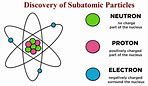
    Quantum Physics: a captivating realm of scientific exploration, delves into the intricate interplay of matter and energy at the subatomic level, revealing the awe-inspiring concept of the observer effect and the profound influence of conscious presence on shaping the fabric of reality.

    Within its intricate framework lies a concept known as the observer effect, which challenges our perception of reality and unveils the immense influence of our conscious presence.

    The Observer Effect in Quantum Physics

    Image result for The Observer Effect in Quantum Physics

    In the mesmerizing realm of quantum physics, the observer effect asserts that the mere act of observation can shape the behavior of subatomic particles.

    It suggests that our conscious presence has the remarkable capacity to mold the very fabric of reality itself.

    This concept, rooted in quantum physics, aligns with the philosophical notion of a divine mind or higher consciousness, indicating that our thoughts, intentions, and focus intricately contribute to shaping the world around us.

    Image result for This concept, rooted in quantum physics, aligns with the philosophical notion of a divine mind or higher consciousness, indicating that our thoughts, intentions, and focus intricately contribute to shaping the world around us.

    The Divine Observer and the Creation of All Things

    Image result for The Divine Observer and the Creation of All Things

    Within a spiritual context, the belief in a higher consciousness or a divine entity implies that this consciousness possesses an all-encompassing awareness, with the power to influence the physical world.

    In this perspective, the mind of God stands as the ultimate observer, actively participating in the creation and existence of all things.

    Image result for n this perspective, the mind of God stands as the ultimate observer, actively participating in the creation and existence of all things.

    Drawing a parallel, the observer effect in quantum physics suggests that whether human or divine, consciousness plays a significant role in the manifestation of the physical world.

    Image result for Drawing a parallel, the observer effect in quantum physics suggests that whether human or divine, consciousness plays a significant role in the manifestation of the physical world.

    The observer effect can be seen as a manifestation of the underlying causal chain governing all events.

    Image result for This interpretation suggests that the mind, as a product of predetermined factors, merely serves as a conduit for the unfolding of reality.

    This interpretation suggests that the mind, as a product of predetermined factors, merely serves as a conduit for the unfolding of reality.

    See related image detail. Igor JERMAN | Professional Head | full professor | BION Institute, Ljubljana | general

    It prompts us to explore the intriguing relationship between quantum physics and determinism, offering insight into the intricate mechanisms shaping the fundamental nature of existence.

    Image result for It prompts us to explore the intriguing relationship between quantum physics and determinism, offering insight into the intricate mechanisms shaping the fundamental nature of existence.
    Image result for The observer effect in quantum physics brings a fascinating connection to spiritual beliefs. It implies that our thoughts and intentions have a profound impact on reality. By consciously focusing and aligning our desires, we can create powerful transformations in the physical world.

    The Power of Thoughts and Intentions

    The observer effect in quantum physics brings a fascinating connection to spiritual beliefs. It implies that our thoughts and intentions have a profound impact on reality. By consciously focusing and aligning our desires, we can create powerful transformations in the physical world.

    This realization prompts us to explore the depths of our minds and harness the immense power within us to manifest positive change.

    Quantum Entanglement:

    Quantum entanglement is a phenomenon in which particles become inseparably linked, resulting in instantaneous correlations regardless of distanc e.

    The Web of Interconnectedness:

    Image result for Another captivating phenomenon within quantum physics is quantum entanglement, where particles instantaneously affect each other regardless of distance. This concept mirrors the spiritual notion of interconnectedness, promoting empathy and unity.

    Another captivating phenomenon within quantum physics is quantum entanglement, where particles instantaneously affect each other regardless of distance. This concept mirrors the spiritual notion of interconnectedness, promoting empathy and unity.

    Quantum entanglement suggests that at a fundamental level, all particles are intricately linked, symbolizing the interconnected nature of our existence. Understanding this profound interconnectedness fosters a sense of empathy and unity, encouraging us to recognize the importance of our actions and their impact on the collective human experience.

    Quantum Superposition:

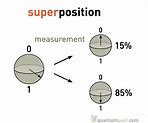
    Quantum superposition is a fundamental principle in quantum mechanics where a particle exists in multiple states simultaneously until measured.

    Embracing Limitless Possibilities

    In the realm of quantum physics, we encounter the intriguing concept of quantum superposition, where particles exist in multiple states until observed.

    Image result for In the realm of quantum physics, we encounter the intriguing concept of quantum superposition, where particles exist in multiple states until observed. This parallels the spiritual idea of limitless possibilities, inspiring personal growth and intention-driven change.

    This parallels the spiritual idea of limitless possibilities, inspiring personal growth and intention-driven change.

    Quantum superposition teaches us that until we observe and define the outcome, countless potential realities coexist simultaneously.

    Image result for Quantum superposition teaches us that until we observe and define the outcome, countless potential realities coexist simultaneously. Embracing this understanding empowers us to transcend limitations, expand our horizons, and embark on a journey of self-discovery and transformation.

    Embracing this understanding empowers us to transcend limitations, expand our horizons, and embark on a journey of self-discovery and transformation.

    The enthralling interplay between quantum physics and spirituality unveils a new frontier of understanding, one that challenges conventional notions of reality and our place within it.

    By recognizing the power of consciousness, thoughts, and intentions, we awaken to the profound impact we have on the world around us.

    By bridging the realms of science and spirituality, we embark on a journey of exploration, expanding our perspectives and enriching our understanding of the intricate tapestry that weaves together the fabric of reality.

    READ MORE:

  • Deterministic Worldview

    Deterministic Worldview

    A deterministic worldview asserts that external factors, beyond our control, govern our existence.

    My perspective is not based on blind faith or arbitrary beliefs, but rather on a comprehensive understanding.

    Blind faith refers to a strong belief or trust without any reasoning. Arbitrary beliefs refer to beliefs that are not based on rational thinking, but rather on personal preference, conditioning, or other subjective factors.

    My belief integrates biblical teachings, logical reasoning, and principles from physics.

    Deterministic- Biblical Teachings:

    In the passages of Romans 8:29-30, Ephesians 1:5, and 2 Timothy 1:9, the Scriptures reveal God’s profound foreknowledge and predestining of individuals for their ultimate salvation.

    God foreknew believers before they existed.

    Romans 8:29 states “For those God foreknew he also predestined…”

    God predestined believers to be conformed to the image of Christ.

    Romans 8:29 continues “…he also predestined to be conformed to the image of his Son.”

    God chose believers in Christ before the foundation of the world.

    Ephesians 1:4-5 says “For he chose us in him before the creation of the world…He predestined us for adoption to sonship through Jesus Christ.”

    God’s purpose and grace were given to believers before the beginning of time.

    2 Timothy 1:9 states “He has saved us and called us to a holy life—not because of anything we have done but because of his own purpose and grace. This grace was given us in Christ Jesus before the beginning of time.”

    These verses affirm the all-knowing and all-powerful nature of God, who has already predetermined the eternal fate of every individual.

    God, who is all-knowing and just, has predetermined the eternal fate of every individual based on their choices and actions in which He already Orchestrated prior to fulfillment.

    Those whom God foreknew, He has predestined to be conformed to the image of His Son, Jesus Christ.

    Romans 8:29-30:
    “For those whom he foreknew he also predestined to be conformed to the image of his Son, in order that he might be the firstborn among many brothers. And those whom he predestined he also called, and those whom he called he also justified, and those whom he justified he also glorified.”


    Ephesians 1:5:
    “He predestined us for adoption to himself as sons through Jesus Christ, according to the purpose of his will.”

    God, in His will and for His purpose, predestined His Sheep to be adopted as His children through Jesus Christ.

    Paul reminds Timothy (and believers) that our salvation and calling is not based on our own merit or works, but on God’s purpose and grace.

    2 Timothy 1:9:
    “Who saved us and called us to a holy calling, not because of our works but because of his own purpose and grace, which he gave us in Christ Jesus before the ages began.”

    God’s control is over all events: He is the orchestrator of all things.

    Isaiah 46:9-11:
    “Remember the former things, those of long ago;
    I am God, and there is no other;
    I am God, and there is none like me.
    I make known the end from the beginning,
    from ancient times, what is still to come.
    I say, ‘My purpose will stand,
    and I will do all that I please.’
    From the east I summon a bird of prey;
    from a far-off land, a man to fulfill my purpose.
    What I have said, that I will bring about;
    what I have planned, that I will do.”


    Daniel 4:35:
    All the peoples of the earth
        are regarded as nothing.
    He does as he pleases
        with the powers of heaven
        and the peoples of the earth.
    No one can hold back his hand
        or say to him: “What have you done?”


    In Isaiah 46:9-11, God declares that He is unique and unlike any other. He knows the past, present, and future, and His plans will be accomplished. He has the authority to bring about events according to His purpose and there is no one who can hinder or question His actions.

    In Daniel 4:35, King Nebuchadnezzar of Babylon acknowledges the supreme power of God. He acknowledges that all the people of the earth are nothing compared to God. God has complete control over the heavens and the earth and no one can resist His will or challenge His actions.

    The theologian John Calvin, who played a key role in the development of Protestantism, extensively discusses the concept of divine providence.

    He emphasizes that God’s plan guides all events, including salvation. In his work “Institutes of the Christian Religion,” Calvin presents thorough theological arguments for predestination and divine sovereignty. He constructs a logical framework that explains God’s providence, asserting that everything occurs according to God’s will and purpose. Calvin cites numerous biblical references to support his arguments.

    He lays out a systematic framework that logically explains the concept of God’s providence, arguing that everything happens according to God’s will and purpose.

    Main Argument I face: The Bible also speaks of God’s desire for all people to be saved (1 Timothy 2:3-4) and emphasizes the responsibility humans have to respond to God’s grace (John 3:16, Romans 10:9).

    MY RESPONSE TO THIS, CLICK TO READ

    Determinism- Logical Reasoning:

    If every event is a result of a prior cause, then our lives are governed by forces beyond our control, prior to our serial at this point in time.

    Determinism finds support in logical reasoning by examining cause and effect relationships.

    Cause & Effect: The idea is that every event and action in the world has a preceding cause that determines its occurrence.

    Psychological research has also contributed to the argument for determinism.

    Studies on decision-making and behavior have demonstrated that our choices and actions are heavily influenced by factors beyond our conscious control, such as genetics, upbringing, and societal influences. Study

    The field of behavioral genetics, has shown that certain traits and behaviors have a genetic basis, further reinforcing the idea that our lives are governed by forces beyond our control. Study

    Philosophers such as David Hume and Immanuel Kant have presented compelling arguments for determinism based on the principles of causality and the uniformity of nature. Read

    Determinism- Principles from Physics:

    One of the key proponents of determinism is the field of physics. The laws of physics define how objects and forces interact in the universe.

    These laws are deterministic in nature, meaning that based on the initial conditions of a system, the outcome can be accurately predicted. This notion is supported by the principles of classical mechanics, quantum mechanics, and general relativity, all of which provide ample evidence for the deterministic nature of physical phenomena.

    Newton’s laws of motion demonstrate how an object’s motion is determined by the forces acting upon it. This cause and effect relationship can be observed and measured with precision, providing empirical evidence for the deterministic nature of physical phenomena.

    Classical physics posits that the entire universe operates according to fixed laws and that every event has a cause.

    Quantum Physicist who argue FOR Determinism

    1. David Bohm: Bohm proposed an alternative interpretation of quantum mechanics called the pilot wave theory or the hidden variable theory. According to his theory, particles have definite positions and velocities at all times, contradicting the uncertainty principle.

    Bohm argued for a deterministic worldview where the apparent randomness of quantum measurements is a result of our lack of knowledge about the underlying hidden variables.

    2. Roger Penrose: Penrose is a renowned physicist and mathematician who has argued against the prevailing interpretation of quantum mechanics as purely probabilistic. He suggests that another unknown factor, possibly related to consciousness or gravity, could be responsible for the seemingly indeterministic behavior of quantum systems. Penrose believes that a deeper theory, incorporating both quantum mechanics and general relativity, will reveal determinism at a fundamental level.

    3. Gerard ‘t Hooft: ‘t Hooft is a Dutch theoretical physicist who has been critical of the Copenhagen interpretation of quantum mechanics. He proposes a hidden variable theory that retains determinism by allowing for the existence of deterministic trajectories for particles, even at the quantum level. ‘t Hooft argues that there may be yet undiscovered fundamental equations that can describe such deterministic behavior.

    Determinism- Convergence of Knowledge:

    When biblical teachings, logical reasoning, and principles from physics are combined, they converge to support determinism. The Bible often emphasizes the concept of divine providence and God’s sovereignty over all creation.

    Numerous verses, such as Proverbs 16:9 and Jeremiah 10:23, suggest that our steps are directed and controlled by a higher power. This aligns with the deterministic view that external forces, in this case, God, are governing our lives.

    Proverbs 16:9: The heart of man plans his way, but the Lord establishes his steps.
    Jeremiah 10:23 says, “LORD, I know that people’s lives are not their own; it is not for them to direct their steps.”

    If we deconstruct the concept of cause and effect, it becomes apparent that all events are influenced by preceding events.

    Determinism admits that the present state of the universe, including our thoughts and actions, is a consequence of a series of causalities that can be traced back to the inception of time. This comprehension aligns seamlessly with the principle of logical reasoning that posits every effect is preceded by a cause.

    Determinism- Criticisms and Counterarguments:

    While critics argue that determinism undermines free will and personal responsibility, it is important to acknowledge and address these counterarguments to maintain a balanced perspective.

    Many argue that although our choices may be influenced by external factors, we still have the ability to make decisions and take actions.

    A study conducted by Nahmias et al. (2005) investigated the relationship between determinism and free will, concluding that the belief in determinism does not necessarily undermine one’s sense of free will or personal responsibility.

    Additionally, research in neuroscience suggests that although our actions may be influenced by subconscious processes and external factors, the brain still possesses the capacity for conscious decision-making.

    Furthermore, it is important to recognize that personal responsibility can still be upheld within a deterministic framework. Even if our choices are influenced by prior causes, individuals can still be held accountable for their actions based on the consequences of their decisions.

    In fact, the recognition of how external factors impact our choices can lead to a more nuanced understanding of what personal responsibility really means and come to an understanding of the interdependent nature of life.

    Engaging with criticisms and counterarguments leads to refinements of your worldview.

    Our lives are influenced and controlled by external forces that are beyond our control.

    Scientific research shows that both biological and environmental factors have a profound impact on human behavior. Genes play a significant role in shaping our personality traits and preferences, while our early childhood experiences have a lasting effect on our behavior and decision-making skills. Sociological research also demonstrates that social structures and institutions, such as education systems and economic policies, heavily influence our opportunities and outcomes.

    Scholars like Pierre Bourdieu have emphasized the concept of social capital, which emphasizes how our social networks and access to resources affect our success and social mobility.

    Before rejecting something, make sure that you understand it, whether it is an idea, a perspective, or even a person. Take the time to explore and gather information. Seek to comprehend the complexities and nuances of the matter at hand. By doing so, you will be able to make informed judgments rather than basing your decision on ignorance or preconceived notions.

  • What Is A Deterministic Worldview?

    What Is A Deterministic Worldview?

    Do I have a deterministic perspective?

    Yes.

    The Foundation of My Perspective

    The perspective I maintain is not derived from unfounded belief or arbitrary convictions.

    Instead, it is rooted in a comprehensive understanding of the subject matter. This understanding is the result of careful study, thoughtful analysis, and a commitment to seeking truth and clarity.

    My perspective aligns biblical teachings, logical reasoning, and physics principles to support determinism.

    The Bible emphasizes God’s sovereignty and foreknowledge guiding all events, aligning with determinism’s premise that external forces shape outcomes 3.

    Logical reasoning examines cause and effect, concluding that all events have preceding causes. This supports determinism’s view that factors beyond our control govern lives 3.

    Physics laws demonstrate the deterministic nature of phenomena. Objects’ motions are precisely predicted based on forces acting on them. Quantum mechanics and relativity provide evidence for physical

    Deterministic- Biblical Teachings:

    In the passages of Romans 8:29-30, Ephesians 1:5, and 2 Timothy 1:9, the Scriptures reveal God’s profound foreknowledge and predestining of individuals for their ultimate salvation. These verses affirm the all-knowing and all-powerful nature of God, who has already predetermined the eternal fate of every individual.

    God, who is all-knowing and just, has predetermined the eternal fate of every individual based on their choices and actions in which He already Orchestrated prior to fulfillment.

    Those whom God foreknew, He has predestined to be conformed to the image of His Son, Jesus Christ.

    Romans 8:29-30:
    “For those whom he foreknew he also predestined to be conformed to the image of his Son, in order that he might be the firstborn among many brothers. And those whom he predestined he also called, and those whom he called he also justified, and those whom he justified he also glorified.”
    Ephesians 1:5:
    “He predestined us for adoption to himself as sons through Jesus Christ, according to the purpose of his will.”

    God, in His will and for His purpose, predestined His Sheep to be adopted as His children through Jesus Christ.

    Paul reminds Timothy (and believers) that our salvation and calling is not based on our own merit or works, but on God’s purpose and grace.

    2 Timothy 1:9:
    “Who saved us and called us to a holy calling, not because of our works but because of his own purpose and grace, which he gave us in Christ Jesus before the ages began.”

    God’s control is over all events: He is the orchestrator of all things.

    Isaiah 46:9-11:
    “Remember the former things, those of long ago;
    I am God, and there is no other;
    I am God, and there is none like me.
    I make known the end from the beginning,
    from ancient times, what is still to come.
    I say, ‘My purpose will stand,
    and I will do all that I please.’
    From the east I summon a bird of prey;
    from a far-off land, a man to fulfill my purpose.
    What I have said, that I will bring about;
    what I have planned, that I will do.”


    Daniel 4:35:
    All the peoples of the earth
    are regarded as nothing.
    He does as he pleases
    with the powers of heaven
    and the peoples of the earth.
    No one can hold back his hand
    or say to him: “What have you done?”


    In Isaiah 46:9-11, God declares that He is unique and unlike any other. He knows the past, present, and future, and His plans will be accomplished. He has the authority to bring about events according to His purpose and there is no one who can hinder or question His actions.

    In Daniel 4:35, King Nebuchadnezzar of Babylon acknowledges the supreme power of God. He acknowledges that all the people of the earth are nothing compared to God. God has complete control over the heavens and the earth and no one can resist His will or challenge His actions.

    The theologian John Calvin, who played a key role in the development of Protestantism, extensively discusses the concept of divine providence.

    He emphasizes that God’s plan guides all events, including salvation. In his work “Institutes of the Christian Religion,” Calvin presents thorough theological arguments for predestination and divine sovereignty. He constructs a logical framework that explains God’s providence, asserting that everything occurs according to God’s will and purpose. Calvin cites numerous biblical references to support his arguments. He lays out a systematic framework that logically explains the concept of God’s providence, arguing that everything happens according to God’s will and purpose.

    Main Argument I face: The Bible also speaks of God’s desire for all people to be saved (1 Timothy 2:3-4) and emphasizes the responsibility humans have to respond to God’s grace (John 3:16, Romans 10:9). MY RESPONSE TO THIS, CLICK TO READ

    Determinism- Logical Reasoning:

    If every event is a result of a prior cause, then our lives are governed by forces beyond our control, prior to our serial at this point in time.

    Determinism finds support in logical reasoning by examining cause and effect relationships.

    Cause & Effect: The idea is that every event and action in the world has a preceding cause that determines its occurrence.

    Psychological research has also contributed to the argument for determinism.

    Studies on decision-making and behavior have demonstrated that our choices and actions are heavily influenced by factors beyond our conscious control, such as genetics, upbringing, and societal influences. Study

    The field of behavioral genetics, has shown that certain traits and behaviors have a genetic basis, further reinforcing the idea that our lives are governed by forces beyond our control. Study

    Philosophers such as David Hume and Immanuel Kant have presented compelling arguments for determinism based on the principles of causality and the uniformity of nature. Read

    Determinism- Principles from Physics:

    One of the key proponents of determinism is the field of physics. The laws of physics define how objects and forces interact in the universe.

    These laws are deterministic in nature, meaning that based on the initial conditions of a system, the outcome can be accurately predicted. This notion is supported by the principles of classical mechanics, quantum mechanics, and general relativity, all of which provide ample evidence for the deterministic nature of physical phenomena.

    Newton’s laws of motion demonstrate how an object’s motion is determined by the forces acting upon it. This cause and effect relationship can be observed and measured with precision, providing empirical evidence for the deterministic nature of physical phenomena.

    Classical physics posits that the entire universe operates according to fixed laws and that every event has a cause.

    Quantum Physicist who argue FOR Determinism

    1. David Bohm: Bohm proposed an alternative interpretation of quantum mechanics called the pilot wave theory or the hidden variable theory. According to his theory, particles have definite positions and velocities at all times, contradicting the uncertainty principle.

    Bohm argued for a deterministic worldview where the apparent randomness of quantum measurements is a result of our lack of knowledge about the underlying hidden variables.

    2. Roger Penrose: Penrose is a renowned physicist and mathematician who has argued against the prevailing interpretation of quantum mechanics as purely probabilistic. He suggests that another unknown factor, possibly related to consciousness or gravity, could be responsible for the seemingly indeterministic behavior of quantum systems. Penrose believes that a deeper theory, incorporating both quantum mechanics and general relativity, will reveal determinism at a fundamental level.

    3. Gerard ‘t Hooft: ‘t Hooft is a Dutch theoretical physicist who has been critical of the Copenhagen interpretation of quantum mechanics. He proposes a hidden variable theory that retains determinism by allowing for the existence of deterministic trajectories for particles, even at the quantum level. ‘t Hooft argues that there may be yet undiscovered fundamental equations that can describe such deterministic behavior.

    Determinism- Convergence of Knowledge:

    When biblical teachings, logical reasoning, and principles from physics are combined, they converge to support determinism. The Bible often emphasizes the concept of divine providence and God’s sovereignty over all creation.

    Numerous verses, such as Proverbs 16:9 and Jeremiah 10:23, suggest that our steps are directed and controlled by a higher power. This aligns with the deterministic view that external forces, in this case, God, are governing our lives.

    Proverbs 16:9: The heart of man plans his way, but the Lord establishes his steps.
    Jeremiah 10:23 says, “LORD, I know that people’s lives are not their own; it is not for them to direct their steps.”

    If we deconstruct the concept of cause and effect, it becomes apparent that all events are influenced by preceding events.

    Determinism admits that the present state of the universe, including our thoughts and actions, is a consequence of a series of causalities that can be traced back to the inception of time. This comprehension aligns seamlessly with the principle of logical reasoning that posits every effect is preceded by a cause.

    Determinism- Criticisms and Counterarguments:

    While critics argue that determinism undermines free will and personal responsibility, it is important to acknowledge and address these counterarguments to maintain a balanced perspective.

    Many argue that although our choices may be influenced by external factors, we still have the ability to make decisions and take actions.

    A study conducted by Nahmias et al. (2005) investigated the relationship between determinism and free will, concluding that the belief in determinism does not necessarily undermine one’s sense of free will or personal responsibility.

    Additionally, research in neuroscience suggests that although our actions may be influenced by subconscious processes and external factors, the brain still possesses the capacity for conscious decision-making.

    Furthermore, it is important to recognize that personal responsibility can still be upheld within a deterministic framework. Even if our choices are influenced by prior causes, individuals can still be held accountable for their actions based on the consequences of their decisions.

    In fact, the recognition of how external factors impact our choices can lead to a more nuanced understanding of what personal responsibility really means and come to an understanding of the interdependent nature of life.

    Engaging with criticisms and counterarguments leads to refinements of your worldview.

    Our lives are influenced and controlled by external forces that are beyond our control.

    Scientific research shows that both biological and environmental factors have a profound impact on human behavior. Genes play a significant role in shaping our personality traits and preferences, while our early childhood experiences have a lasting effect on our behavior and decision-making skills. Sociological research also demonstrates that social structures and institutions, such as education systems and economic policies, heavily influence our opportunities and outcomes.

    Scholars like Pierre Bourdieu have emphasized the concept of social capital, which emphasizes how our social networks and access to resources affect our success and social mobility.

    Before rejecting something, make sure that you understand it, whether it is an idea, a perspective, or even a person. Take the time to explore and gather information. Seek to comprehend the complexities and nuances of the matter at hand. By doing so, you will be able to make informed judgments rather than basing your decision on ignorance or preconceived notions.

  • Determinism: Interplay of Wisdom and Logic

    Determinism: Interplay of Wisdom and Logic

    In a world filled with uncertainties, the concept of determinism offers a compelling perspective on the nature of causality and human agency.

    From the philosophical debates among thinkers to discussions within the scientific community, determinism has sparked curiosity and controversy alike.


    The term “determinism” originates from the Latin word “determinare,” which means “to limit” or “to set boundaries.”

    It can be traced back to the 17th century when it was first used in the context of metaphysics.

    Every event or action is caused by prior events or actions, and there is a predetermined sequence of cause and effect in the universe. As we cannot comprehend the fullness of this reality because of our spatial bodily limits, yet it’s clear that all events, actions, thoughts, and creations are ultimately determined by the creator of His creation. The ultimate determiner and decider of fate is not the “free” human will or personal choice of man, but God’s Will, in whom is actually free and who created the ability to make decisions, forming every brain synapse and calculation that transpires within our mind. Apart from His fabric, nothing is.

    Determinism has been a subject of debate among philosophers, scientists, and theologians because man insists that his will is powerful.

    We are in a constant power struggle, not with each other, but with our God.

    We effeminate Him and weaken Him into a puppy dog who is only gushy, spineless, and lovey-dovey when our God is a Lion, a Shepherd, a Force that can’t be overcome.

    Many different variations and interpretations of determinism exist, ranging from strict determinism, which asserts that all events are fully predetermined and predictable, to compatibilism, which argues that determinism can coexist with free will.

    I am a strict determinist if I had to give my beliefs a “label” when I am speaking from a spiritual perspective. From Heaven, all of Earth is determined. Any freedom in the will of man, in actuality, is giving free will to the lost, free will to the blind, stupid, and attributing free will to the determining factors of the spiritually dead humans. If this were actually true, definitively, it would be, in my opinion, one of the worst things God could do to us… it would cause all men to be annihilated quicker than we would know what happened.

    God is the God of Order.

    He has ownership and control. We can trust Him; His hands are never tied.

    Determinism is, to this day, a central topic of inquiry in philosophy, science, theology and other fields of study.

    All events on the earth are predetermined and guided by causal laws, God is in charge, if He is not, we cant trust Him and we cant be sure of the finsl outcome> God is beyond comprehension in not only love but POWER.

    Causal laws are fundamental principles that explain the cause-and-effect relationships between events or phenomena in the universe.

    Determinism challenges free will and asserts that all actions are ultimately governed by external factors, even if internally manifested. However, some argue that the Spirit of God within man is the driving force behind our actions. According to this perspective, God performs the work, and we simply act it out.

    My journey Towards Embracing Determinism:

    The Argument for Determinism: Understanding the Interplay of Wisdom and Logic

    There is an underlying order to the universe where every action is the inevitable result of prior causes. God is a God of what?? ORDER.

    The Principle of Causality: At the heart of determinism lies the principle of causality, which suggests that every event has a cause. By comprehending this fundamental principle, we can observe that the entire universe operates based on a series of interconnected causes and effects. Applying wisdom and logical reasoning, one can understand that if everything is caused by something else, our choices and actions must also be a consequence of prior causes.

    The Chain of Determination: Consider the complex web of causes and effects that shape our lives. Every decision we make, every action we take, is the outcome of a myriad of preceding factors, such as genetics, upbringing, education, environment, and personal experiences. Wisdom dictates that these factors greatly shape our thoughts, behaviors, and ultimately, our decisions. Thus, it can be argued that our actions are not solely products of our free will but rather part of an intricate chain of determination.

    The Illusion of Free Will: Reflecting upon the concept of free will, we encounter some thought-provoking questions. Can we genuinely claim to possess free will when our choices are influenced by a multitude of external factors beyond our control? Can we truly act independently of the predispositions and circumstances that shape us? By logically analyzing the conditions that govern our decision-making process, wisdom reveals the illusion of complete autonomy and reinforces the deterministic viewpoint.

    Scientific and Philosophical Perspectives: The deterministic argument finds support from various scientific and philosophical disciplines. In physics, for instance, the principles of causality and determinism are embedded in classical mechanics and its successor, quantum mechanics. From a philosophical standpoint, renowned thinkers such as Spinoza, Laplace, and Nietzsche have all expounded upon the idea of determinism, offering persuasive arguments anchored in reason and wisdom.

    Appreciating the Sovereignty of God:

    God’s sovereignty is the divine attribute that highlights His unmatched authority and dominion, signifying His supreme power and complete control over all aspects of creation.

    The compatibility of determinism and God’s sovereignty:

    God’s sovereignty and determinism do not negate God’s love. Just because God knows how events will unfold and how humans will act does not mean that God does not genuinely love and care for His creation. God’s love can still manifest in creating a world with order and purpose, in providing guidance and support, and in offering redemption and forgiveness for human actions.

    Even if human actions are determined, individuals still experience a sense of choice and responsibility for their actions. They still make decisions, have intentions, and bear the consequences of their choices. In this sense, while individuals may not have ultimate control over their actions, they still have relative control and can make moral choices.

    Even if everything is predetermined, the love and compassion humans show towards each other can still hold value and significance. The actions of individuals can still have real and tangible effects on the lives of others, and God works in and through these actions to bring about His purposes.

    Biblical support for God’s sovereignty:

    1) Psalm 115:3- “Our God is in the heavens; he does all that he pleases.”

    This verse clearly states that God does whatever he desires, indicating his complete sovereignty over all things.

    2) Isaiah 46:9-10- “I am God, and there is no other; I am God, and there is none like me, declaring the end from the beginning and from ancient times things not yet done, saying, ‘My counsel shall stand, and I will accomplish all my purpose.’”

    These verses emphasize God’s unique nature and his ability to declare and bring about his plans from the beginning to the end.

    3) Proverbs 19:21- “Many are the plans in the mind of a man, but it is the purpose of the Lord that will stand.”

    This verse highlights how human plans may exist, but ultimately it is God’s purpose that will prevail, reinforcing his sovereign control.

    4) Ephesians 1:11- “In him we have obtained an inheritance, having been predestined according to the purpose of him who works all things according to the counsel of his will.”

    This verse speaks of God’s predestined plan and his ability to work all things in accordance with his will, illustrating his sovereignty.

    5) Daniel 4:35- “All the inhabitants of the earth are accounted as nothing, and he does according to his will among the host of heaven and among the inhabitants of the earth; and none can stay his hand or say to him, ‘What have you done?’”

    This passage emphasizes God’s authority and power, indicating that no one can hinder or question his actions.

    6) Romans 9:15-16- “For he says to Moses, ‘I will have mercy on whom I have mercy, and I will have compassion on whom I have compassion.’ So then it depends not on human will or exertion but on God, who has mercy.”

    These verses emphasize God’s right to show mercy and compassion as he sees fit, indicating his sovereignty over human will and actions.

    7) Job 42:2- “I know that you can do all things, and that no purpose of yours can be thwarted.”

    This statement by Job acknowledges God’s ability to accomplish all things and affirms that his purposes cannot be hindered, highlighting his sovereignty.

    8) Matthew 19:26- “But Jesus looked at them and said, ‘With man this is impossible, but with God all things are possible.’”


    Skepticism I Face In Others When Defending God’s Total Sovereignty

    Some believers struggle with the concept of an all-powerful God who allows suffering and evil to exist in the world and even utilizes said evil for His purposes. They may question why God, who is believed to be loving and just, would allow these things to happen.

    Others may feel uncertain about God’s sovereignty because they have experienced personal hardships or unanswered prayers, leading them to doubt God’s control over their lives.

    Additionally, skepticism may arise from theological debates or differing interpretations of Scripture, with believers holding different views on the extent of God’s sovereignty and human free will.

    Skepticism of God’s sovereignty among fellow believers can be a natural result of wrestling with complex theological questions and grappling with personal experiences.

    Common objections to determinism

    Free Will

    The objection to determinism lies in the belief in free will. Critics argue that if determinism is true, human beings lack genuine choices and the ability to make autonomous decisions. This challenges the existence of free will, which is seen as a necessary condition for determinism. Another concern raised by believers is how determinism aligns with a love for God. If all choices and actions are predetermined, believers argue, we lack true freedom to choose or love God.

    An authentic love for God requires the ability to consciously choose and commit to Him, but determinism uncovers that our choices are predetermined by God, and causality but as long as we are conscous we are accountable.

    Personal Identity

    Determinism also raises questions about personal identity and individuality. If our entire lives are predetermined, it implies that our actions, thoughts, and experiences are predestined. This objection challenges the concept of personal autonomy and the uniqueness of each individual. I will continue on this topic coming soon.

    Creativity and Innovation

    Detractors argue that determinism undermines the possibility of creativity and innovation. If all events are determined, there is no room for genuine novelty or originality. Critics claim that creativity depends on the ability to break free from determinism and introduce new ideas and actions. I will elaborate in another article.

    Scientific Indeterminacy

    Some objections to determinism are rooted in quantum physics. Quantum indeterminacy suggests that at the fundamental level of reality, certain events are random and unpredictable. Critics argue that this randomness undermines the deterministic understanding of the universe. This is nonsense, explanation coming soon.

    Human Experience

    Another objection stems from the subjective experience of human beings. Critics argue that our experience of making choices, deliberating on options, and having a sense of agency contradicts the notion of determinism. They suggest that this subjective element of human experience cannot be reconciled with a deterministic worldview. This is materialistic.

    Practical Implications

    Determinism also raises concerns regarding its practical implications. If all events are predetermined and beyond human control, it may lead to a fatalistic attitude, resignation, and a lack of motivation to strive for change or improvement.

    Reconciling determinism and personal relationship with God

    For anyone ewho has embraced determinism have not only deepened our understanding of God’s love and providence but has also revealed the intricate ways in which divine plans unfold, guiding our lives with unwavering precision and purpose.

    It is important to note that my convictions are not based on blind faith or arbitrary beliefs. They are firmly grounded in both biblical teachings and logical reasoning. Determinism aligns perfectly with the core principles of the Bible, recognizing that God alone deserves worship. Furthermore, it harmonizes with the logical and scientific concept of cause and effect. This principle suggests that every event has a cause, and every cause has an effect. By accepting determinism, I must reject the notion of free will and the idea that we possess independent control over the course of our lives.

    My unwavering commitment to a deterministic worldview is the result of a comprehensive understanding that integrates biblical teachings, logical reasoning, and even principles from the field of physics. These diverse sources of knowledge converge to support the conclusion that our lives are governed by external forces beyond our control. Determinism asserts that every state of affairs, including human events, actions, and decisions, is the inevitable consequence of antecedent states of affairs. In other words, all events and actions are determined by predetermined causes and conditions. With complete knowledge of all relevant factors and conditions at a given moment, one can accurately predict future events according to determinism.

    Now, the question arises: How do determinists reconcile personal responsibility? We recognize that individuals are indeed responsible for their actions, even if those actions are influenced by external factors. Personal responsibility involves understanding and accepting the consequences of our choices and behaviors, which are shaped by various factors such as genetics, environment, past experiences, and societal conditioning.

    Determinism emphasizes the role of causality and acknowledges that every action has a cause. We understand that choices are made based on unique circumstances and are influenced by factors beyond an individual’s control. However, personal responsibility extends beyond mere acknowledgment of external influences. It also entails considering the impact of our actions on others and society as a whole.

    Determinism does not excuse individuals from the consequences of their actions; instead, it encourages a deeper understanding of the complex web of causality in our lives. By recognizing the multitude of factors that contribute to our actions, we can cultivate empathy, compassion, and a sense of accountability for our choices.
  • Exploring the Fascinating Interplay of Eternal & Temporal Truths in Theology

    Exploring the Fascinating Interplay of Eternal & Temporal Truths in Theology

    The realm of theology is a fascinating domain of exploration that delves into the fundamental inquiries of human existence, endeavoring to untangle the intricate connection between timeless verities and fleeting actualities.

    Creator: Bruce Rolff (Credit: 123RF)

    This field grants us a profound comprehension of enduring principles that serve as the foundation of our lives, all the while recognizing the impact of temporality, spatiality, and human encounters on their relevance.

    Further Reading:

    What is theology? Historical and systematic reflections

    The Decoding of the Human Spirit: A Synergy of Spirituality and Character Strengths Toward Wholeness

    The study of theology recognizes that there exist timeless and unchanging truths that have persisted throughout the ages. These eternal truths, often found within religious teachings and spiritual convictions, offer a structure through which we can comprehend the essence of existence and our role within it.

    Getting Acquainted canvas print by Claude McCoy.

    They explore profound inquiries concerning the presence of a supreme force, the inception of the cosmos, and the dynamics between righteousness and malevolence. By engaging intellectually and spiritually with these enduring truths, individuals can experience personal development and attain a deeper comprehension of the environment surrounding us.

    Further Reading:

    A Fateful Separation of Philosophy And Theology

    As individuals, we exist within the realm of time and space, and this has a significant effect on how we perceive and interpret fundamental truths. The study of theology acknowledges the influence of these limitations on the practicality and comprehension of timeless principles.

    Further Reading:

    Concepts of Space, Time, and the Cosmos

    When examining these principles, one must take into account the historical, cultural, and societal contexts that shape our understanding, resulting in a wide array of interpretations and perspectives.

    Graffiti’s mix of colourful drawings, words, and symbols is a vibrant expression of culture—or, depending on one’s viewpoint, a disturbing expression of the creator’s lack of respect for a community’s shared space. (Photo courtesy of aikijuanma/Flickr)

    Scholars in this field diligently scrutinize religious texts, historical records, and cultural customs to determine how these eternal truths can be effectively applied and comprehended within the confines of our temporal existence.

    Further Reading:

    Why Religion Is Hard For Historians (and How It Can Be Easier)

    The enthralling aspect of theology resides in its capacity to delve into the intersection between timeless and worldly verities. It fosters a contemplative and discerning exploration of how these verities manifest and engage with our everyday existence.

    By means of meticulous scrutiny and comprehension, theology grants us glimpses into the manners in which timeless truths can be encountered and put into practice amidst varied worldly circumstances. It extends counsel concerning ethical predicaments, the deliberation of moral choices, and offers guidance on how to navigate the intricacies of contemporary society while remaining anchored in quintessential principles.

    Henry David Thoreau and the Moral Agency of Knowing
    ALFRED I. TAUBER

    Read Above Book: Henry David Thoreau, 1856. (Archives of the Gray Herbarium, Harvard University; reproduced by permission)

    Theology offers a comprehensive perspective on existence, encompassing not just the tangible and worldly aspects, but also the ethereal and profound dimensions.

    By delving into the intricate connection between the everlasting and the fleeting, theology has the ability to provide direction, solace, and motivation during times of adversity. It encourages individuals to turn their gaze inward, fostering contemplation and introspection, and urging them to shape their behavior in accordance with enduring principles and morals.

    In conclusion, theology is an intriguing field of study that allows us to explore the transition from eternal truths to temporal realities. By examining the influence of time and space on the application of these truths, theology sheds light on our existence and provides a framework for understanding the world around us.

  • Connection: Transcendental & Material Plane

    Connection: Transcendental & Material Plane

    The bond between the spiritual and physical realms

    The investigation into the interaction of the Divine realm and the physical universe prompts thoughts on the merging of religion and science. This exploration examines the relationship between the supernatural and the measurable world, analyzed through empirical methods.

    🔗Read: Prayer and Entangled Quantum States

    The correlations between Christian and Jewish customs in relation to Quantum physics highlight divine authority, interconnection, and various aspects of existence.

    Recognizing Interdependence in Religion & Quantum Physics.

    INTERDEPENDENCE

    Interdependence is the idea of mutual dependency and connection between disparate elements.

    Emphasizing the importance of collaboration and cooperation for success in any endeavor. Without Interdependence, there is merely chaos and confusion.

    In both Biblical Theology & Quantum physics, interdependence plays a significant role.

    Entanglement

    Bridging the Chasm between Science & Spirituality.

    Entanglement is a quantum phenomena that happens when particles are related in such a way that measuring the state of one particle immediately determines the state of the other, even if they are separated by vast distances across the universe.


    They are connected in such a way that the state of one particle cannot be described independently of the state of the other.

    This connection exists regardless of the physical separation between the particles, meaning that changes in one particle’s state can instantaneously affect the state of the other particle, regardless of the distance between them.

    The concept of entanglement aligns with spiritual beliefs that there is a profound interconnectedness between all things.

    In Christian belief, there is a spiritual realm where changes in one aspect can influence or resonate with another aspect.

    In both Quantum & Christianity there is an acknowledgment that seemingly distant things (Heavenly, Spiritual, or Quanta) can impact another (matter, material, ideas) in ways that defy traditional (less detailed) notions of cause & effect.

    The concept of entanglement also challenges the classical understanding of reality as having separate, distinct entities.

    Quantum entanglement reveals a more holistic view in which the boundaries between subjects or beings become blurred. It demonstrates that a subtle interplay exists, showcasing the unity and interdependence of all existence.

    It is important to note that although entanglement may align with Christian ideas, it is also a scientifically established phenomenon supported by rigorous empirical evidence.

    Challenging Conventional Understanding

    Entanglement undermines our traditional understanding of causality because it appears to contradict the principles of classical physics. It suggests a peculiar and unexplained connection between particles that surpasses our conventional notions of linkage. As a result, some theorists and philosophers speculate that this mysterious connection could be indicative of a higher reality beyond the physical realm. They propose the existence of a non-physical or spiritual level that serves as a source of consciousness or other non-physical phenomena.

    In other words, entanglement supports the idea that there is a greater spiritual reality that exists beyond our material realm, where consciousness, or other non-physical phenomena, originates from.

  • Eternal Life Questions: ANSWERED!!!

    Eternal Life Questions: ANSWERED!!!

    (Soteriology)

    “This is eternal life, that they may know You, the only true God, and Jesus Christ whom You have sent.” (John 17:3)

    How Do Humans Attain Eternal Life?

    Eternal life is a Gift from God, granted through Faith.

    The scriptures teach: “For God so loved the world that he gave his one and only Son, that whoever believes in him shall not perish but have eternal life.” – John 3:16

    “I give them eternal life, and they shall never perish; no one will snatch them out of my hand.” – John 10:28

    What Is Faith?

    Jesus is our Faith, He is the Founder and perfector of the Faith we receive. Even when in us, Faith remains in Him, becasue Faith is ONLY in Him. Faith doesnt come from human beings.

    Read My Article What Is Faith?

    Who Gets To Receive Eternal Life?

    Only God’s people will receive eternal life… God promises eternal life ONLY to those who persevere …

    The Gift of Eternal Life comes to those who believe in Jesus Christ, Who is Himself: “the resurrection and the life” (John 11:25).

    Salvation is only available to those who have been chosen by God for salvation, which is also known as the doctrine of “election.” This belief is based on several biblical passages, including John 10:27-28 which states that “My sheep hear My voice, and I know them, and they follow Me; and I give eternal life to them, and they will never perish; and no one will snatch them out of My hand.” & Romans 8:29-30 states: “For those whom He foreknew, He also predestined to become conformed to the image of His Son, so that He would be the firstborn among many brethren; and these whom He predestined, He also called; and these whom He called, He also justified; and these whom He justified, He also glorified.”

    Ephesians 1:4-5 – “For he chose us in him before the creation of the world…he predestined us for adoption to sonship.”

    John 15:16 – “You did not choose me, but I chose you and appointed you so that you might go and bear fruit…”

    2 Timothy 1:9 – “has saved us and called us to a Holy calling, not because of our works but because of His own purpose and grace.”

     Our election for Salvation depends not on our own effort, nope, No human merits or efforts can secure our spot in eternity, but solely God’s mercy and calling. This demonstrates that salvation ultimately comes from God’s initiative, not ours.

    What Is Eternal Life?

    The Greek word “aiónios” translated as “eternal” implies a qualitative aspect beyond mere longevity or perpetuity in time. Actually, “time” is a construct God Created, therefore He is outside of what we perceive as “time”.

    Eternal life refers to a higher spiritual mode of being that supersedes our mortal, time-bound existence.

    Eternal Life...

    … transcends created time: While eternal life involves living forever, the concept of “forever” is not confined within the boundaries of the temporal continuum that God created. Eternal life denotes an existence outside of time where past, present, and future converge.

    … exists in the eternal Now: Eternal life involves participation in God’s eternity, characterized by an eternal present where there is no concept of “before” or “after”. The eternal Now experienced by the redeemed transcends sequential moments and flowing years.

    … bestows a higher divine nature: Eternal life, initiated in the present age, reflects the impartation of God’s immortal, incorruptible life, and nature to believers.

    The born again have “eternal life” in the fullest sense by virtue of sharing in the divine nature, it has nothing to do with the construct of “time”.

    What does Salvation save us from?

    We are saved by God from His own wrath and condemnation. Christ took the punishment we deserved, absorbing God’s wrath in our place, satisfying His justice. God showed mercy by providing His own Son to die on our behalf and offer forgiveness to believers, satisfying His mercy. We are saved not only from God’s judgment, but from the Judge Himself. John Owen stated it well, “God saves sinners from Himself.”

    … saved by God from the power of sin: According to the Bible, God saves us from the power and penalty of sin by sending His Son, Jesus Christ, to die on the cross for our sins. Jesus’ crucifixion was the ultimate expression of God’s love for us, as He took the punishment we deserved upon Himself. Through this salvation, we are freed from the hold that sin has on us and given the ability to live as new creations, with a heart that desires to please and glorify God.

    … saved from Eternal Hell/ Damnation: Whoever believes in him is not condemned, but whoever does not believe stands condemned already because they have not believed in the name of God’s one and only Son.” – John 3:18

    … saved from Spiritual death – We are born spiritually dead because of sin, but through salvation we are made spiritually alive in Christ. “As for you, you were dead in your transgressions and sins.” – Ephesians 2:1

    … saved from bondage to fear – Salvation allows us to live with confidence as God’s adopted children, no longer in fear or uncertainty. “For you did not receive a spirit that makes you a slave again to fear, but you received the Spirit of sonship. And by him we cry, “Abba, Father.”” – Romans 8:15

    Is There Life After Death?

    Yes.

    When our physical bodies die, our spirits live on eternally. Ecclesiastes 12:7 says “Then the dust will return to the earth as it was, and the spirit will return to God who gave it.” So our spirits go back to God.

    For those who have retained Jesus as their Savior, there is eternal life in Heaven with God. John 3:16 says “For God so loved the world that he gave his one and only Son, that whoever believes in him shall not perish but have eternal life.”

    Heaven will be a place of perfect joy, peace, and no more suffering. Revelation 21 describes heaven as a place with no more crying or death.

    We will receive a glorified resurrection body. Our spirit will be reunited with a perfect, immortal body. This ius not a material body, as we know a body, this is eterially, this is the true, the real, the unseen.

    Corinthians 15 talks about our “spiritual body” in =Heaven.

    Where Do Our Souls Go When We Die Then?

    Heaven – … is for those who have been given the Gift of Salvation through faith in Jesus Christ. Our spirits will be with the Lord in Heaven in a perfect state of joy and peace. …OR

    Hell – … is for those who have noot received Jesus as their Savior will have their Soul be separated from God’s presence.

    What Is Heaven Like?

    • No more suffering or pain (Revelation 21:4)
    • Eternal joy in God’s presence (Psalm 16:11)
    • Fulfillment of desires (Psalm 37:4)
    • Reunion with loved ones who have died in faith (1 Thessalonians 4:17)

    What Is Hell Like?

    • Eternal separation from God’s goodness (2 Thessalonians 1:9)
    • Unquenchable fire (Mark 9:43)
    • Darkness and grief (Jude 1:13)
    • Conscious torment (Luke 16:23)

    What Is The Purpose Or Value Of Eternal Life?

    Our entire purpose is to glorify God. Everything God does, He ultimately does for His name’s sake, for his glory:

    Psalm 19:1–4 
    "... The heavens declare the glory of God, and the sky above proclaims his handiwork... Day to day pours out speech and night to night...."
    Psalm 23:3
    "... He restores my Soul. He leads me in paths of righteousness for His Name’s sake..."

    READ MORE ON GLORIFYING THE FATHER BEING OUR SOLE PURPOSE: 🔗 Psalm 23:3, Ezekiel 20:9, Ezekiel 36:22-32, John 8:50, John 12:27-28,John 17:1, Romans 1:5, Romans 11:36, 1 Corinthians 10:31, Colossians 1:15-20).

    Evidence Of Salvation?

    If someone who consistently shows love and compassion, and goes out of their way to help others, then their “fruit” is sweet. But if someone who talks a lot about what they believe, and then doesn’t practice what they preach, their “fruit” is sour.

    “Beware of false prophets, which come to you in sheep’s clothing, but inwardly they are ravening wolves. You’ll know them by their fruits. Do men gather grapes of thorns, or figs of thistles? Even so every good tree bringeth forth good fruit; but a corrupt tree bringeth forth evil fruit.” –

    Mat. 7:15-20

    It can be tempting to judge others based on what we observe or experience, but we don’t truly know their relationship with Christ. Only God knows one’s heart and purpose. So we should practice grace and mercy towards others. We don’t know the plans God has either, so when it comes to judging another’s salvation: Keep your mouth shut.

    Should WE Judge Our Own Salvation?

    Absolutely, we MUST!!!

    Jesus instructs us to: “You hypocrite, first take the plank out of your own eye, and then you will see clearly to remove the speck from your brother’s eye.” -Matthew 7:5

    When should we Judge Others Salvation?

    NEVER!!! The Bible does not directly instruct us to judge another person’s Salvation. Scripture consistently reminds us that God alone knows the heart and can judge a person’s eternal destiny. As followers of Christ, our focus should be on our own relationship with God and living out His teachings.

    Jesus teaches, in Matthew 7:1-2, saying, “For in the same way you judge others, you will be judge…”

    In Romans 14:4, the Apostle Paul advises against judging fellow believers, stating, “Who are you to judge someone else’s servant? To their own master, servants stand or fall. And they will stand, for the Lord is able to make them stand.”

    Instead of passing judgment on others, the Bible encourages us to love and support one another, bearing each other’s burdens (Galatians 6:2) and treating others with grace and mercy (Matthew 7:12).

    Our role is to share the good news of salvation, pray for others, and humbly offer guidance and support when needed, always with love and compassion.

    How Can I Know I’m Saved?

    This list is for honest sel-reflecrion, not diagnosing “others” as we can’t know the thoughts of others, If you check most of these off, you can be sure you arfe Saved, but again, only YOU & GOD know the Truth. These are the external manifestations of the inner state of the a person. Only you and God truly know the answers. If you are saved, you will:

    • You will rely upon Christ alone, as you Knwo Him and He Knows you.
    • You will love God more than before.
    • You will have a greater sense of your sinfulness and your deep need for a Savior, more and more.
    • You will naturally want to confess your sins daily and grow in repentance.
    • You will seek to be obedient to the Word of God.
    • You will have new desires and affections for Christ.
    • You will grow in the Wisdom of the gospel and dependence upon Christ.
    • You will desire to be separated from the ways of the world.
    • You will have a permanent desire to have fellowship with Christ and with other believers.
    • You will grow and produce Spiritual fruit, sometimes faster than others and sometimes way slower than others, but there will be growth.
    • God will work in your life to conform you into the image of Christ.
  • Soteriology: Teachings of the Great Reformers.

    What is Soteriology?

    Soteriology is a branch of theology that deals with the study of salvation. It focuses on the various beliefs, doctrines, and theories regarding how individuals are saved or achieve salvation. Soteriology explores questions such as the nature of sin, the means and methods of redemption, the role of faith and good works, and the ultimate destiny of human beings.

    Soteriology answers the questions of how we gain eternal life & what it really means to be “saved”.

    At the heart of the Soteriology lie concepts that directly shape our identity, purpose, and destiny: sin, redemption, grace, and faith.

    Our need for salvation stems from our fallen nature and separation from God due to sin.

    Sin definition:

    In Hebrew, the word “sin” is translated as חֵטְא (cheta).

    Cheta means “sin” or “transgression.”  an act of w

    It is an act of willful disobedience or violation of God’s commandments or moral principles.

    Sin is a deviation from the righteous path and brings about guilt and separation from God.  Sin denotes separation.

    Soteriology seeks to answer how we go about fixing this break and come into salvation.

    Left to ourselves, we remain helpless and hopeless. But through the sacrifice of Jesus Christ on the cross, a way has been opened for us to be reunited with God.

    By Christ’s atoning work, we are adopted into God’s family and empowered to live a life for the purpose of Eternity, by His Spirit.

    Christ the Source of Salvation:

    John 14:6 – “Jesus said to him, ‘I am the way, and the truth, and the life. No one comes to the Father except through me.’”

    Acts 4:12 – “And there is salvation in no one else, for there is no other name under heaven given among men by which we must be saved.”

    Election by God’s Grace:

    Romans 9:11 – “(Though the twins were not yet born and had not done anything good or bad—in order that God’s purpose in election might stand: not by works but by him who calls).”

    Ephesians 1:4-5 – “For he chose us in him before the creation of the world.. In love he predestined us for adoption to sonship.”

    Limited Atonement:

    Matthew 1:21 – “She will bear a son, and you shall call his name Jesus, for he will save his people from their sins.”

    John 17:9 – “I am praying for them. I am not praying for the world but for those whom you have given me.”

    Irresistible Grace:

    Acts 16:14 – “The Lord opened her heart to pay attention to what was said by Paul.”

    1 John 5:1 – “Everyone who believes that Jesus is the Christ has been born of God.”

    Perseverance of the Saints:

    John 10:27-28 – “My sheep hear my voice, and I know them, and they follow me. I give them eternal life, and they will never perish.”

    Philippians 1:6 – “And I am sure of this, that he who began a good work in you will bring it to completion at the day of Jesus Christ.”

    So across the New Testament, we see Calvinist soteriology woven into the gospel message, highlighting the sovereignty of God in salvation through Christ alone. Various groups differ on the details, but the essential truths are the same:

    Jesus is the only means by which we can be reconciled to God and escape the penalty of sin.

    If we acquire Him as our Savior & Lord, having and Knowing that our lives are living for the sake of His Heavenly purpose, we have the promise of eternal life with us, by Him.

    Soteriology seeks to unpack and systemize these profound yet highly personal truths, shedding light on the Gospel’s liberating message of grace, hope and new beginnings.

    Let its keys unlock the door to your own journey of transformation and salvation in Christ!

    Here are some brief definitions of “soteriology” throughout Christian/ Church History:

    Early Church: In the early years of Christianity, soteriology referred to the theological understanding of salvation through faith in Jesus Christ and His redemptive work on the cross. It emphasized the concept of atonement and the forgiveness of sins.

    Quotes:

    Athanasius: “The salvation of humanity came about through the Savior’s coming as a human being. For the soul cannot see God….. nor be saved, otherwise then by putting on that which it had lost” (the divine likeness).

    Irenaeus: “The Word of God, our Lord Jesus Christ, who did, through his transcendent love, become what we are, that he might bring us to be even what he is himself.”

    Justin Martyr: “We have learned from the prophets, and we hold it to be true, that punishments, chastisements, and rewards are rendered according to the merit of each man’s actions.”

    Clement of Alexandria: “He who of his own accord advances in virtue, and increases his store of goodness, speedily arrives through love at divine perfection.”

    1. Augustine: In the teachings of Saint Augustine of Hippo (354-430 AD), soteriology focused on the idea of original sin and God’s predestined grace as the means of salvation. Augustine emphasized the sovereignty of God in the salvation of humanity.
    2. Reformation: During the Protestant Reformation in the 16th century, soteriology became a central topic of debate. Reformers such as Martin Luther and John Calvin emphasized the teachings of salvation by grace alone (sola gratia) through faith alone (sola fide), opposing the Catholic view of salvation through a combination of faith and good works.

    Christ the Source of Salvation:

    John 14:6 – “Jesus said to him, ‘I am the way, and the truth, and the life. No one comes to the Father except through me.’”

    Acts 4:12 – “And there is salvation in no one else, for there is no other name under heaven given among men by which we must be saved.”

    Election by God’s Grace:

    Romans 9:11 – “(Though the twins were not yet born and had not done anything good or bad—in order that God’s purpose in election might stand: not by works but by him who calls).”

    Ephesians 1:4-5 – “For he chose us in him before the creation of the world.. In love he predestined us for adoption to sonship.”

    Limited Atonement:

    Matthew 1:21 – “She will bear a son, and you shall call his name Jesus, for he will save his people from their sins.”

    John 17:9 – “I am praying for them. I am not praying for the world but for those whom you have given me.”

    Irresistible Grace:

    Acts 16:14 – “The Lord opened her heart to pay attention to what was said by Paul.”

    1 John 5:1 – “Everyone who believes that Jesus is the Christ has been born of God.”

    Perseverance of the Saints:

    John 10:27-28 – “My sheep hear my voice, and I know them, and they follow me. I give them eternal life, and they will never perish.”

    Philippians 1:6 – “And I am sure of this, that he who began a good work in you will bring it to completion at the day of Jesus Christ.”

    So across the New Testament we see Calvinist soteriology woven into the gospel message, highlighting the sovereignty of God in salvation through Christ alone.