The Nature of Suffering: A Necessary Element of Existence
As much as we may wish otherwise, the reality is that suffering is an inescapable part of the human experience.
The age-old philosophical and religious observation that “life is suffering” points to a fundamental truth about the human condition.
Embracing Uncertainty and Impermanence
In the face of uncertainty and impermanence, we cultivate the qualities of empathy, humility, and inner strength that are vital for navigating the complexities of life.
It is through our struggles that we learn and grow, transforming our experiences into avenues for personal development.
Seeking Meaning in Suffering
Perhaps, in the end, it is not a life devoid of suffering that we should seek, but rather a life where suffering serves a purpose.
As Viktor Frankl articulated, fulfillment cannot be stripped of struggle; it is through confronting our darkest moments that we can truly experience the richness of life.
“My sacrifice, O God, is a broken spirit; a broken and contrite heart you, God, will not despise.”
Psalm 51:17
Being used and broken by God is the only way we are fit to be within His presence, growing in Christ’s faith.
Suffering is not a sign of God’s displeasure or punishment on us, but rather a way of refining our character and preparing us for His Domain… it’s out of Love.
“Can I not do with you, Israel, as this potter does?” declares the LORD. “Like clay in the hand of the potter, so are you in my hand, Israel.”
Jeremiah 18:6
God uses broken people and things to accomplish His Will, because He is transforming us, like He did in Genesis, akin to the clay (although this is the Spiritual equivalent). We aren’t being “fixed”, He doesn’t “mend” us, He makes us New– this means death, first.
He does not look at our outward appearance or abilities, but at our obedience to Him, from the heart. The heart is only obedient be His decree.
He chooses the weak, the flawed, the broken, and the contrite to display His power and grace, revealing His Glory. Those who are already strong have no desire to forfeit their own strength.
“Man looks at the outward appearance, but the Lord looks at the heart.”
1 Samuel 16:7
God breaks us in different ways, such as through trials, temptations, failures, losses, disappointments, or persecution.
God Takes Away
God shapes us through the experiences of loss.
Many people reject this aspect of God. They believe that God would never subject us to such hardship, but in reality, He not only has the capacity to do so but actually does.
“Who has made man’s mouth? Who makes him dumb, or deaf, or seeing, or blind? Is it not the Lord?”
Exodus 4:11
God is inherently good, He is what literally defines the word “good” and he acts according to His own Will. Even Jesus said: “Why do you call me good? No one is good but the Father.”
Exposing Our Shame Reveals His Glory
The painful situations uncovers our inherent sinfulness, emphasizing our deep dependence on Him & His unwavering Grace.
This leaves us with only two options:
Succumb to wrath…
Faithfully entrust ourselves to His absolute sovereignty.
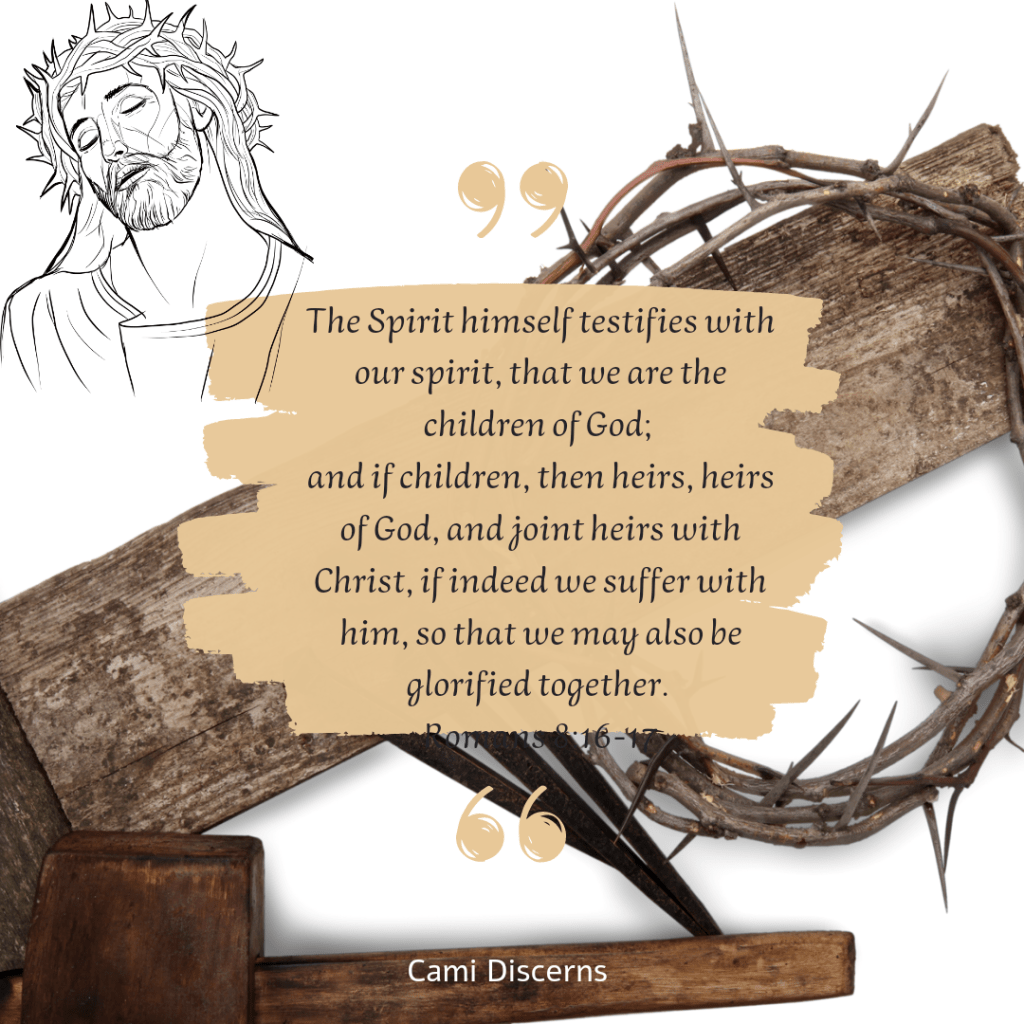
Furthermore, suffering serves as a means for us to identify with the pain endured by Christ, who was shattered for our sake on the cross.
Our Purpose: Reveal God’s Glory
God uses us in different ways, such as through our gifts, talents, passions, etc. These opportunities are only worthy if they glorify Him: from the heart.
He is worshipped when we bless others, because our hearts See God’s image in all people, even if we are in no position to help, our new nature just desires to do so.. This doesn’t mean it is of obligation, but of the heart of God’s Spirit within. Anything done out of duty is a sin.
Our purpose is to advance His kingdom.
Suffering increase the experience of joy, as the contrast increases the intensity.
Being used & broken by God is a cyclical process that never ends in this life.
When I say “broken by God,” I mean by His will and decree, though He uses multiple tools like the Adversary, demons, angels, and other humans…
God Is Still Fashioning You
We are constantly being shaped and molded by His hand, as He works in us and through us.
We are continually challenged and pushed to grow under His guidance, as He guides us through life like a shepherd, and rescues us from the dark forces of the world like a lifeguard saving us from treacherous waves.
The Uniqueness of His Flock
While God equips those He calls & chooses, the tools and timing may not match our expectations. As Isaiah 48:10 states:
God tests us..
“in the furnace of affliction… ”
… not leaving our metal impure but rather purifying our souls like fine gold.
The Refinement Process
Seeing our lives as a refining ritual provides perspective. Just as heat separates useful metal from dross, trials burn away our flaws.
Charles Spurgeon rightly said:
… hardships “dig up the soil, & let us see what we are made of.”
God uses troubles to chip away pride, selfishness, and reliance on human strength alone. This preparation perfects our nature for His service.
God Smashes Ego and Pride
It’s dangerously easy to wrongly claim credit for our skills rather than giving all glory to the power working through us.
When God calls out our weakness, we remember that our completeness depends on Him.
He wants spiritual brokenness, the kind of brokenness He can use. He wants godly sorrow that leads to repentance.
2 Corinthians 7:10
Suffering Builds Character
Embracing suffering makes us strong yet sympathetic to others’ struggles
Praise be to the God and Father of our Lord Jesus Christ, the Father of compassion and the God of all comfort, who comforts us in all our troubles, so that we can comfort those in any trouble with the comfort we ourselves receive from God.
2 Corinthians 1:3-4
Our scars enable us to identify with mankind’s anguish in a way comfortable lives cannot.
This empathy is crucial to authentically reach those in pain.
Refinement Shapes our Faith
Though dark valleys may confuse our finite perspective, abandoning ourselves to God’s plans develops trust in Him.
In this fearful surrender, true faith and spiritual maturity take root.
We’ve become Seekers of Comfort, Security, & Material Possessions
To a society stooped in materialism, the idea of suffering as a gift may seem counterintuitive.
However, as believers in Christ, we are called to a higher purpose. We are called to be willing to suffer for Him.
Suffering can take many forms in our lives.
It can be the loss of loved ones, physical or mental illnesses, financial struggles, or even persecution for our faith. These experiences can be incredibly painful and challenging. Yet, when we shift our perspective and view suffering through the lens of Christ, we can begin to see it as a gift.
When we love and treasure Christ above all else, our focus shifts from the temporary pleasures of this world to the eternal joy found in Him. Everything else becomes secondary.
In suffering, we have the opportunity to draw closer to our Savior, to depend on Him more fully, and to experience His presence in a deeper way.
Suffering also has a unique way of shaping our character and conforming us to the image of Christ. It humbles us, teaching us to rely on God’s strength and not our own. It deepens our empathy and compassion for the brokenness and struggles of others. It refines our faith, purging away the impurities and strengthening our trust in God’s sovereignty.
Suffering can serve as a powerful testimony of His Faith in us, to the world around us. When we face trials with an unwavering hope and joy in Christ, despite our losses, it is a testimony of His faithfulness. It speaks volumes to those who may be watching and wondering how we can have peace in the midst of suffering. Our lives become a living testament to the transformative power of the Gospel.
In the book of Philippians, the apostle Paul writes,
“For it has been granted to you on behalf of Christ not only to believe in Him but also to suffer for Him”
Philippians 1:29
This verse reminds us that suffering is not a punishment but a privilege. It is a privilege to suffer for the sake of Christ and to share in His sufferings.
Believing in Christ means being willing to embrace suffering as a gift.
It means understanding that our ultimate goal is to glorify Christ, whether in life or in death.
It means being willing to let go of the temporary comforts and securities of this world, in order to gain the eternal joy and peace found in Him.
To summarize: suffering can indeed be seen as a gift for the sake of Christ.
Suffering can bring us closer to Him, shape our character, and serve as a powerful testimony to the world.
Let us remain steadfast in the undeniable fact that even in the midst of losing everything, we retain the invaluable merit of wholeheartedly loving Christ and receiving His divine love. May our willingness to endure hardship for Him and our unwavering devotion to Him supersede all other priorities, for it is solely in Him that we discover genuine life and meaning.
Epistemology is a philosophical discipline that concerns itself with investigating the nature of knowledge, belief, and justification. Its primary aim is to establish reliable methods that can assist us in distinguishing between true and false beliefs, regardless of our emotional responses.
The Role of Emotions in Knowledge Acquisition
However, emotions do play a significant role in both knowledge and belief acquisition, and it’s essential to understand how they impact our thinking.
Although emotions can shape our beliefs and influence our reactions to discovering truths, they alone are insufficient to justify our beliefs. Epistemology seeks to establish precise criteria for evidence and reasoning to validate our beliefs, rather than relying on intuition or emotional responses.
The Importance of Evidence and Reasoning
Therefore, it’s critical to recognize the role of evidence-based reasoning in validating our beliefs over our emotional responses to ensure that our beliefs are true and justified.
The Role of Emotions in Epistemology: Beyond Rational Inquiry
Despite the emphasis on rational inquiry in epistemology, emotions play a pivotal role in shaping our understanding of the world. Emotions add depth and richness to our experiences, providing us with a profound insight into the human condition.
Emotional Connection: Gaining a Deeper Understanding of Others
By engaging with others on an emotional level, we develop a deeper understanding of their experiences and perspectives. This empathic connection can lead to profound insights into the nature of suffering, resilience, and hope. It enables us to transcend our own limitations and connect with something larger than ourselves.
Shared Sorrow: A Gateway to Connection and Empathy
In moments of shared sorrow, we confront the fundamental realities of life. We realize that we are all fragile, we all struggle, and we all need love and support. Through these moments of vulnerability, we find connection and meaning in our lives. We are inspired to be better, to do more for one another, and to empathize with those who are hurting.
Insights Born in Empathy
Insights born in empathy are more profound and illuminating than any attained through education. By bearing witness to the suffering of others, we touch upon mysteries that unite all souls – the oneness inherent in our ability to suffer together and the light that can dawn even in our darkest nights.
In conclusion, emotions and epistemology should be seen as complementary forces rather than opposing ones. By recognizing the value of emotional intelligence and empathetic inquiry, we can broaden our intellectual horizons and deepen our human connections, leading to a more fulfilling and meaningful life.
“The sacrifice you desire is a broken spirit. You will not reject a broken and repentant heart, O God”.
Psalm 51:17
How We Should Think Of Our Suffering Is Opposed To How We Feel
Our pain may result from God’s Decision for our ultimate benefit, even if we cannot perceive it in the present moment.
Despite Paul’s prayers for his ‘thorn’ to be removed, God did not take it away, but instead told Paul, “My grace is sufficient for you, for my power is made perfect in weakness.”
God’s power is most evident in our moments of weakness.
And He has said to me, “My grace is sufficient for you, for power is perfected in weakness.” Most gladly, therefore, I will rather boast about my weaknesses, so that the power of Christ may dwell in me. 2 Corinthians 12:9
God keeps track of our sorrows and collects our tears in a bottle.
“You keep track of all my sorrows. You have collected all my tears in your bottle. You have recorded each one in your book.” -Psalm 56:8
God is on our side if we are His and He is our shelter from danger.
“God is our refuge and strength, an ever-present help in trouble. Therefore we will not fear, though the earth gives way and the mountains fall into the heart of the sea, though its waters roar and foam and the mountains quake with their surging.” Psalm 46:1-3
The Lord supports and lifts those who are struggling and stumbling bowed low.
The Lord sustains all who fall And raises up all who are bowed down. Psalm 145:14
“When he falls, he will not be hurled headlong, Because the Lord is the One who holds his hand.” Psalm 37:24
God grants the requests of those who revere Him, He listens to their pleas, and He rescues them, according to His Will.
He will fulfill the desire of those who fear Him; He will also hear their cry and will save them. Psalm 145:19
Why A Broken And Contrite Spirit?
God is not impressed by outward shows of religiosity or ritualistic sacrifices unless they are accompanied by genuine repentance and a humble heart. Rather, God is concerned with the inner state of a person’s heart, seeking a contrite and humble spirit that is committed to living according to His will.
We Will Be Filled With Joy And Peace
Remaining is a state of humility enables us to draw near to Him, worship Him, and turn away from our sins, allowing us to align our hearts with God and be filled with joy and peace in Him.
Hone In On It
What A Contrite Heart Looks Like
Is characterized by deep regret and sorrow. Seeks absolution and reconciliation. Exhibits compassion and mercy. Abandons arrogance and self-importance. Manifests authentic humility and meekness. Is genuinely penitent. Ready and willing to renounce sinful behavior.
So to keep me from becoming conceited because of the surpassing greatness of the revelations, a thorn was given me in the flesh, a messenger of Satan to harass me, to keep me from becoming conceited. Three times I pleaded with the Lord about this, that it should leave me. But he said to me, “My grace is sufficient for you, for my power is made perfect in weakness.” Therefore, I will boast all the more gladly of my weaknesses, so that the power of Christ may rest upon me. For the sake of Christ, then, I am content with weaknesses, insults, hardships, persecutions, and calamities. For when I am weak, then I am strong.
2 Corinthians 12:7-10
Why Does God Give A Thorn In The Flesh?
God uses the “thorn in the flesh” to test and humble us, just like He did with Paul.
He knows that without it, many of us would stray from Him.
Therefore, He allows us to face trials, tribulations, and pain to keep us close to Himself. God
The thorn in the flesh is a symbol of the sufferings and afflictions we experience in life.
These trials are meant to purify and refine us, helping us to grow in faith and dependence on God.
They also serve as a reminder of our own weakness and mortality, as well as our need for the redeeming work of Christ.
Enduring suffering with patience and trust in God is crucial for developing a deeper relationship with Him and growing in spiritual maturity.
The thorn in the flesh can be seen as a means of drawing us closer to God and allowing us to experience His transformative power in our lives.
How Is God’s Power Made Perfect In Weakness?
God’s power is made perfect in weakness because it is in our moments of weakness that we recognize our complete dependence on Him. When we are weak, we are humbled and acknowledge that our own strength is insufficient. It is in this state of humility that we allow God to work in us and through us.
When we surrender our weaknesses to God, He can demonstrate His strength and power in our lives. He can transform our weaknesses into opportunities for His glory to be revealed. When we rely on God’s strength rather than our own, His power becomes evident in our words, actions, and the way we navigate challenges.
God’s power is not limited by our limitations. In fact, it is often through our weaknesses that His power is most clearly displayed. When we are weak, God’s strength sustains us, strengthens us, and enables us to persevere. Our weaknesses provide the opportunity for God to showcase His power, which goes beyond what we could ever achieve on our own.
By acknowledging our weaknesses and relying on God’s strength, we invite His power to work in us and through us. We become vessels through which God’s power is manifested, and His power is made perfect in our weakness.
God’s power is most evident in our moments of weakness and vulnerability. When we are weak and unable to rely on our strength, we depend on God’s power and provision.
When we recognize our impediments and deficiencies and trust in God’s strength, we can experience His power working in and through us.
Why Did Paul Boast In His Afflictions?
In Paul’s perspective, boasting in weakness is an important aspect of Christian discipleship. It signifies his understanding of the gospel and his recognition of his own limitations. Paul believed that his weaknesses were not a hindrance to the church, but an opportunity for God’s power to be demonstrated. By embracing his weaknesses, he directed attention to the true source of his strength, which is God. This humility and reliance on God’s grace are vital for all Christian disciples. Paul’s boasting in weakness was not an act of pride but a profound understanding of the gospel.
What does it mean that God counts and keeps our tears in a jar?
A Little Bit Of History
The concept of God caring about our pain and collecting our tears showcases His profound intimacy and involvement in our lives.
In ancient Jewish thought, tears held significance as a potent medium for spiritual connection with God. Different types of tears were believed to possess their own spiritual meanings and purposes. Grateful tears of joy symbolized our deep appreciation towards God, while tears of sorrow served as a cathartic release of negative emotions and a way to seek solace in God during times of anguish.
Psalm 56:8 beautifully captures this sentiment as it implores, “Record my misery; list my tears on your scroll – are they not in your record?” This verse emphasizes the belief that God acknowledges and takes note of our sufferings, assuring us that our tears are not in vain.
Hence, tears held a remarkable reverence in ancient Jewish faith, being seen as a bridge between humanity and the divine. They were regarded as a means to beseech divine blessings and mercy, and served as a profound method of communication with God, particularly in moments of distress.
How Do Our Enemies Retreat When We Call Out To God?
When we humbly seek God’s assistance, His divine intervention can bring about remarkable outcomes, akin to the inspiring episodes recounted in the Bible. Take, for instance, the legendary account of David and Goliath. Empowered by God’s unwavering support, David fearlessly confronted the formidable giant, triumphing against all odds. In our own lives, beseeching God for aid can result in similar victories, manifesting as the disarmament or weakening of our adversaries. These triumphs can unfold through both natural means—a surprising turn of events favoring our cause—and supernatural interventions, wherein God’s miraculous touch alters the course of events. Furthermore, when we petition God for assistance and extend forgiveness towards our enemies, we may witness a transformative change of heart, leading to reconciliation and restoration.
Assuredly, we can place our unwavering trust in God’s unfathomable power, knowing that He is capable of orchestrating triumphs in ways that surpass our comprehension.
The Lord Upholds Those Who Are Bowed Down
The Lord is compassionate and merciful, upholding those who are bowed down with burden and adversity. Here are a few examples that demonstrate His faithfulness:
Job: Despite enduring immense suffering and loss, Job remained faithful and humble. The Lord upheld him through his trials, restoring and blessing him abundantly in the end.
Hannah: Hannah was a woman who longed for a child but faced the constant torment of infertility. In her distress, she poured out her heart to God and He heard her cry. The Lord blessed her with a son, Samuel, who played a significant role in Israel’s history.
Joseph: Joseph experienced betrayal and injustice at the hands of his brothers, being sold into slavery and enduring imprisonment. Through it all, God was with Joseph, upholding him even in the darkest moments. Eventually, Joseph rose to a position of power and was able to save his family and his people from famine.
Ruth: Ruth was a foreigner who faced numerous hardships, including the loss of her husband. Despite her difficult circumstances, Ruth remained loyal and faithful. God blessed her with a new family and a place in the lineage of Jesus Christ.
David: David faced many trials throughout his life, including persecution from King Saul and personal failures. Yet, God upheld David, protecting him from harm and establishing him as a great king of Israel.
Revealing God’s compassionate care for those facing adversity. He upholds and raises them, providing strength and hope.
This encourages us to trust in God’s unchanging love and find comfort in His guidance. It is a testament to His enduring grace and calls us to serve with compassion and rest confidently in His care.
Fearfully Call On God With Love, In Truth & He Will Hear You & Will Be Near To You, Fulfilling Your Desires, Preserving You
“The Lord is near to all who call on him, to all who call on him in truth. He fulfills the desires of those who fear him; he hears their cry and saves them. The Lord watches over all who love him, but all the wicked he will destroy.”
Psalm 145:18-20
We can trust that He will answer our prayers in His perfect timing and way. REMEMBER; His ways are not our ways.
PRAYER FOR THE SUFFRING:
Heavenly Father,
We humbly come before You, seeking Your boundless mercy and grace to pour upon all those who are suffering.
As a loving and compassionate God, we know that You deeply care for Your children and their pain and sorrow.
We implore You to reveal Your comfort and peace to those who are hurting, guiding them to find hope and strength in You, according to Your perfect will.
Grant them the courage to persevere through difficult times and empower them to trust in Your goodness and faithfulness. Help them to open their hearts and minds to the assurance of Your presence.
Provide for their eternal needs and instill in them the resilience needed to face their fears with unwavering faith.
May they find their strength in You, knowing that You are the source of their hope and joy.
We express our gratitude for Your loving-kindness and boundless compassion.
We ask that You continue to bless those who are suffering, bringing them comfort, peace, and healing.
In the mighty name of Jesus, we pray. Amen.
“You keep track of all my sorrows. You have collected all my tears in your bottle. You have recorded each one in your book. My enemies will retreat when I call to you for help. This I know: God is on my side!”
As a sensitive person, blessed with the Gift of Discernment, I can sense the deep anguish and suffering that permeates the human heart at an inconceivable level in this very moment.
The presence of spirits such as betrayal, deception, envy, hate, and resentment, along with the feelings of fear, anxiety, terror, abuse, torture, and murder, seems to be entering the Collective Consciousness of Humanity.
This manifestation of evil is as ancient as Time itself, hiding in the shadows until now.
The light has arrived with an abrupt explosion of exposure, unveiling information that unravels millennia’s worth of wicked depravity in the blink of an eye.
In response to this revelation, the systems of influence and rulership over our old world are devising various tactics and implementing snares to cultivate a state of uproar, emotionalism, paranoia, and self-righteousness among us. They seek to create a sense of coldness and distance between individuals, leading us further away from one another, ourselves, and the Creator. However, we possess powerful weapons against these manipulations – Love, Truth, Discernment, Calmness, Patience, Diligence, Grace, Wisdom, Righteousness, and Boldness.
Amidst the chaos, they aim to ignite our hearts with hatred and vengeance.
In the face of this darkness, it’s crucial to seek the light. As stated in John 8:12:
‘I am the light of the world. Whoever follows me will not walk in darkness, but will have the light of life.’
The Light is no longer a distant concept; it is here, illuminating the path towards Truth.
To those who abide in the Light, I implore you to remain vigilant and on guard. The ongoing wave of exposure, wherein masses are being confronted with an influx of information, requires careful navigation. Take heed and avoid falling into one of the many traps that have been strategically laid out before you during this fragile period.
As you continue on this path, remember:
‘Give careful thought to the paths for your feet and be steadfast in all your ways. Do not turn to the right or the left; keep your foot from evil.’
Proverbs 4:26-27
Now, there is a collective awareness sweeping through humanity’s consciousness. This is a calling for Spiritual Awakening and the recognition of unadulterated Truth.
‘Wake up, sleeper, rise from the dead, and Christ will shine on you.’
Ephesians 5:14
It is an awakening, a call to embrace the truth and recognize the urgency for change. Let us unite and cultivate a concept of compassion, respect, and understanding that extends beyond our immediate paradigm.
This is a time for growth and transformation, both individually and collectively. Romans 12:2 urges us to not conform to the pattern of this world but to be transformed by the renewing of our mind.
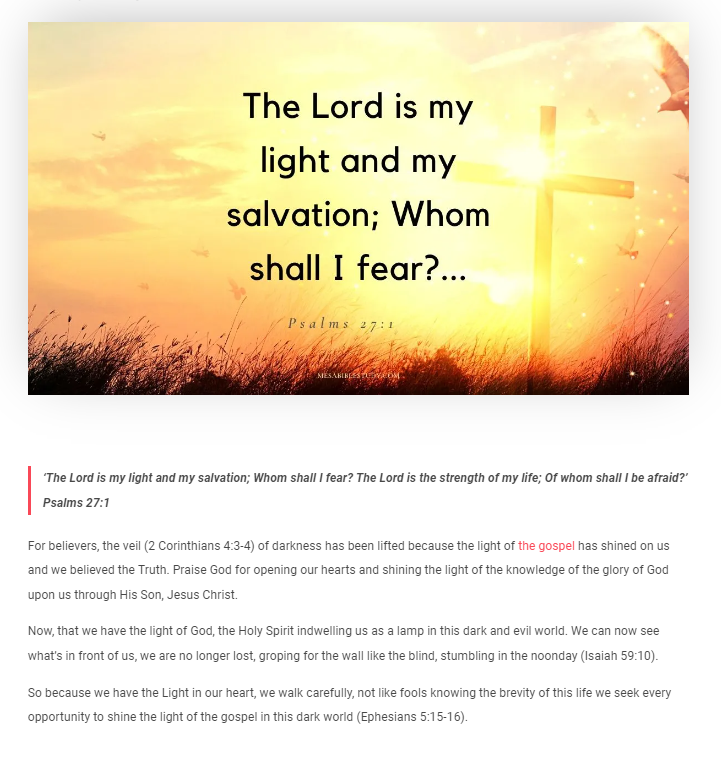
In a world where love grows cold and hearts begin to harden, it is crucial to seek the light amidst the darkness.
As we navigate this tumultuous era, let us guide ourselves with unwavering love, elevated truth, and a faith that transcends the chaos. Together, we have the power to shape a brighter future, anchored in unity and guided by the eternal presence of “I AM THE I AM.”
RELATED QUOTES:
Light and truth are basically synonymous. The Hebrews had a way of “doubling-up” or “doubling-over” a word, a term, a phrase, so that one would emphasize the other, despite both meaning essentially the same thing. This method hits a concept from two slightly different angles so that it becomes more emphatic. Light and truth are the similar ideas, the word “truth” channeling the author’s illustration of light and what it signifies. Light illustrates, emphasizes, and expands the abstract idea of truth.
No power ofdarknesscan defeat or snuff out thislight (Matthew16:18; John 16:33). Jesus is the giver of life and bearer oflight. The Son of God continues to shineHislight to humankind through His church, the body ofChrist (Philippians 2:15). Whoever believes in Him receives eternal life (John 3:15; see also Psalm 112:4).
In the Bible, light is often used as a metaphor for truth, goodness, and the presence of God. The arrival of this light brings clarity, understanding, and a deeper connection to the truth that was previously obscured.
By being a source of inspiration and unwavering support, you bring light to others. Your actions guide and uplift people in difficult times, reminding them that goodness and hope still exist. Being a bearer of light means having inner strength, resilience, and upholding values like love, kindness, and empathy. It involves spreading positivity through words, actions, and interactions. In times of darkness, being a bearer of light brings hope, healing, and unity. You become a positive influence, offering guidance and support to those facing struggles.
 The Nature of Suffering: A Necessary Element of Existence