Tag: Strength

  • Mind Trap

    Mind Trap

    We like to think of our minds as tools of clarity, but more often than not, they are cages.

    Cognitive Rigidity and Perceptual Limitations

    Cognitive rigidity and perceptual limitations are not abstract ideas—they are the invisible bars that confine how we see, think, and act in the world.
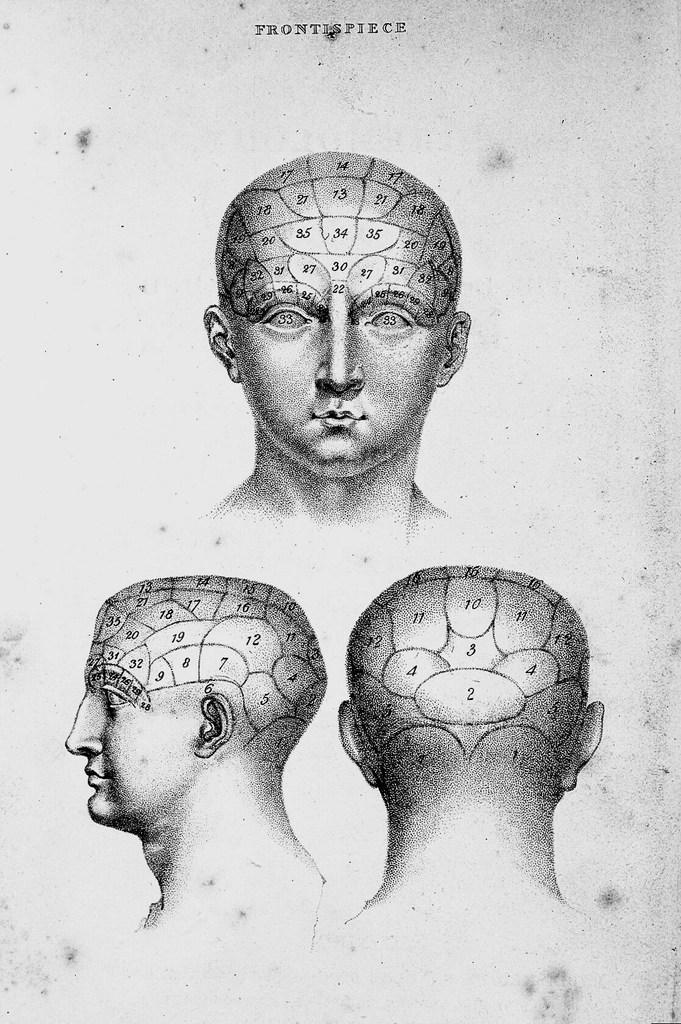
    Phrenology, doctrine mind : relations“/ CC0 1.0

    CAGE OF THE MIND

    Cognitive rigidity is the stubborn insistence that our way of thinking is the only way.

    It shows up in small, everyday ways:

    • refusing to consider another perspective
    • dismissing evidence that challenges our beliefs
    • or sticking to habitual responses when flexibility is required.

    It is mental inflexibility masquerading as certainty.

    This rigidity is rarely neutral. It filters experience, allowing only what aligns with our preconceptions to pass through.

    What we notice and refuse to notice is determined less by reality and more by the contours of our existing beliefs. The mind becomes its own jailer.

    FILTERED VISION

    Perceptual limitations compound this problem. Our senses, our expectations, and our biases shape what we perceive.

    Two people can witness the same event and walk away with entirely different “realities,” each convinced theirs is the truth.

    Culture, language, upbringing, and personal trauma all function like lenses, coloring everything we see.

    When cognitive rigidity meets these perceptual filters, the feedback loop begins: our beliefs dictate what we perceive, and our perceptions reinforce our beliefs.

    We become prisoners of our own limited frameworks, blind to the complexity—and often the truth—of the world around us.

    Breaking the Loop

    Escaping this loop is not about acquiring more information. It is about retraining the mind to see what it usually ignores:

    Observe without judgment. Watch your thought patterns and notice when you shut down possibilities automatically.

    Seek what challenges you. Engage with ideas and perspectives that make you uncomfortable.

    Question your perception. Ask yourself what you might be missing, what biases are filtering your experience.

    Embrace intellectual humility. Accept that your understanding is provisional, incomplete, and subject to correction.

    The moment we recognize that perception is always partial, and thought is always provisional, the bars of the cage begin to loosen.

    Clarity is not a gift; it is a discipline.

    The Work of Liberation

    This is the work of liberation: not avoiding rigidity, but confronting it; not denying perceptual limits, but piercing them.

    The mind can be trained to perceive more, think more flexibly, and respond more intelligently.

    It is uncomfortable, but truth always is.

    We cannot see everything, but we can see more than we did yesterday.

    And that is where freedom begins.

  • My Glass House

    My Glass House


    The strength I thought I had was just a mask, hiding the fragility of my heart from the darts and arrows of this world, as if I were any better.

    GOD TAUGHT ME:

    If walls can crumble, they will. If masks can slip, they will.

    When they do, the truth comes pouring out like a river, the assumed strength showing to be but a dam, drowning in sorrow. I was never strong, just silent.

    It is a weakness so weak it fears facing itself, fears speaking its name. Weakness pretends to be strong until it cannot pretend anymore, until it breaks.

    We all live in a glass house. If the stones you throw do not come back to you, your implosion will…

    I was never strong, just silent (a coward, in reality). This silence is not a strength, but a weakness. The strength I thought I had was just a mask, hiding the fragility of my heart from the darts and arrows of this world. This silence is not a strength, but a weakness. A weakness so weak it fears facing itself, to speak its name, pretends to be strong until it can no longer pretend, until it breaks.

    Like a frequency reaching such a high pitch that the glass house you live in has no option but to explode, cutting the inhabitants with every shard.

  • Break the Chains of Political Correctness: Embrace Authenticity & the Strength of Emotion

    Break the Chains of Political Correctness: Embrace Authenticity & the Strength of Emotion


    In today’s society, political correctness has become a controversial topic that has sparked intense debates and conversations. while simultaneously silencing others. While proponents argue that it promotes ‘inclusivity’ and combats ‘discrimination’ {among other buzz words}.

    There is, thankfully, a growing concern about its impact on open dialogue, intellectual growth, and authentic expression. ~To say the least.

    In this blog post, we delve into the idiotically controversial aspects of political correctness, challenging the status quo and advocating for embracing true emotions and thoughts above adhering and obeying the politically correct nonsense.

    Suppressing Honest Conversations and Diverse Perspectives


    Political correctness has inadvertently created a culture of self-censorship, where individuals fear expressing their thoughts and opinions. This suppression of open and honest conversations prevents the exploration of different perspectives, hindering intellectual growth and limiting the diversity of ideas. By stifling dissenting viewpoints, we risk conforming to a perception of ideological norms driven by a minority, rather than fostering a society built on robust dialogue and healthy debate.

    Manipulation, Selective Application, and the Silencing of Dissent


    One of the concerns surrounding political correctness is its potential for manipulation and selective application. In today’s easily influenced climate, individuals can be coerced into enforcing a particular narrative, leading to the silencing of dissenting viewpoints and the marginalization of those with differing opinions. This creates an environment of fear and conformity, where people are afraid to challenge prevailing narratives or engage in meaningful discussions. Such an environment limits our growth as individuals and as a society.

    The Cost of Suppressed Authenticity


    Political correctness encourages individuals to feign altruism and suppress their authenticity, creating an artificial façade that hampers genuine connections and personal growth. By prioritizing societal conformity over internal values and beliefs, we lose touch with our true selves and become disconnected from others. The fear of judgment and public scrutiny prevents us from sharing our authentic emotions and thoughts, leading to isolation and a lack of meaningful connections.

    The Power of Emotion and Artistic Expression


    While political correctness may discourage the expression of certain emotions, we should not underestimate the power and importance of genuine emotion in human creativity. Throughout history, works of art inspired by strong emotions, including hate speech, have challenged societal norms and pushed the boundaries of creativity. From Beethoven’s Symphony No.5 to Harper Lee’s To Kill a Mockingbird, these works have sparked conversations, shaped culture, and contributed to intellectual and artistic growth. By embracing all emotions as potential sources of creativity and inspiration, we allow for a richer and more authentic artistic expression.

    Embracing Constructive Dialogue and Connection


    To overcome the limitations imposed by political correctness, we must prioritize open and respectful dialogue. It is through these conversations that we can explore different viewpoints, foster mutual understanding, and find a balance between promoting inclusivity and preserving free expression. Constructive dialogue allows us to challenge our own perspectives, learn from others, and contribute to a society that values diverse ideas and genuine connections.

    In a society where political correctness has become a dominant force, it is crucial to question its impact on open dialogue, intellectual growth, and authentic expression. By breaking the chains of political correctness, we can reclaim our authentic selves, embrace the power of genuine emotions, and foster meaningful connections. Through constructive dialogue and a willingness to explore diverse perspectives, we can create a society that values both inclusivity and free expression, leading to a stronger and more unified future.