Tag: spiritual realm

  • Are There Different Realms?

    Are There Different Realms?

    In the world of philosophy and metaphysics, the concept of “various realms” has long been a subject of fascination and debate.
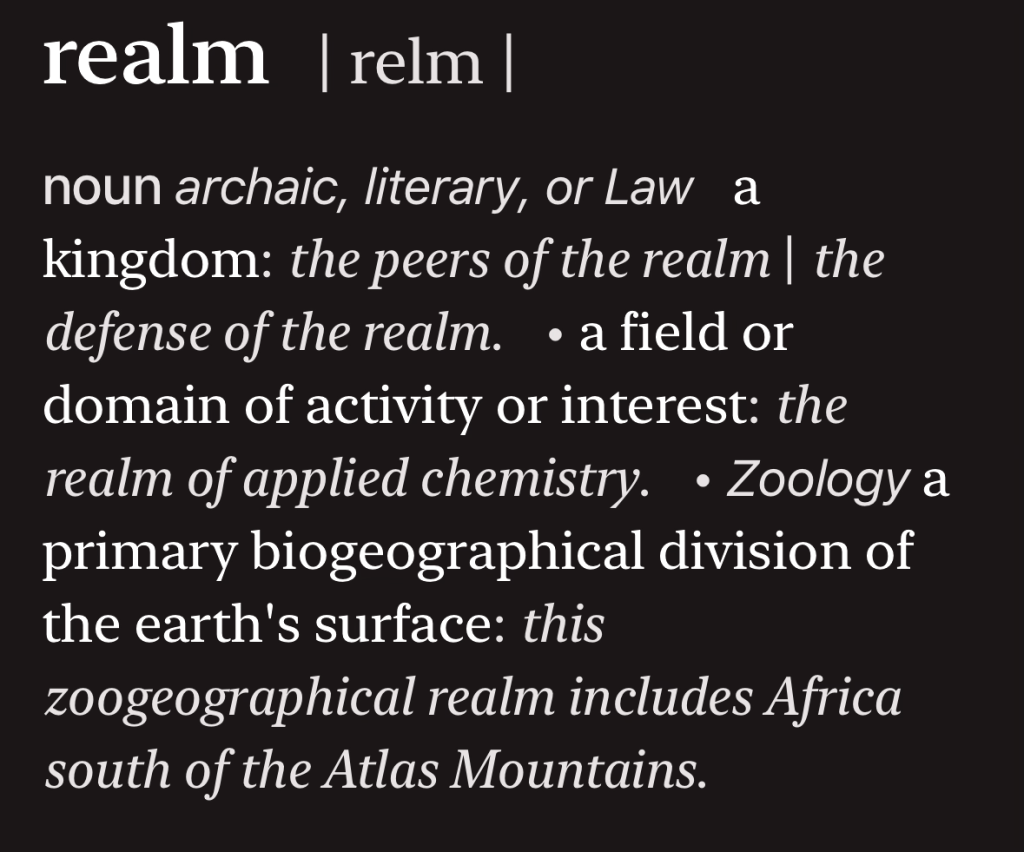
    From ancient times to the present day, thinkers have grappled with the idea of multiple realms of existence, each with its own unique properties and characteristics. But what does it really mean for these realms to be “rooted in logic”?

    EXAMPLES

    Beginning with Leucippus and Democritus in the 5th century BCE, the concept was later expanded upon by Epicurus (341-270 BCE) and Lucretius (1st century BCE), who suggested the existence of multiple universes across time. In the 3rd century BCE, Chrysippus proposed the idea of an eternally regenerative world


    Unpacking the Notion of Various Realms

    When we speak of various realms, we are venturing into the realm of abstract thinking.

    These realms may encompass different dimensions, planes of existence, or levels of reality.

    They could be purely theoretical, as in the case of philosophical concepts, or they could be related to metaphysical or spiritual beliefs.

    Dimension Definition

    In the realm of mathematics and physics, a dimension refers to a measurable extent of a particular kind, such as length, breadth, height, or time. In a broader context, it can also denote a conceptual space or parameter within which events or phenomena occur and are measured.

    In the field of metaphysics and philosophy, the concept of dimensions extends to encompass additional aspects of reality beyond those perceived through sensory experience, often exploring the potential existence of higher or alternative planes of being.

    Planes of Existence

    Planes of existence represent distinct levels or states of reality that are postulated to exist beyond the physical world apprehended through our ordinary senses. These planes may be conceived as alternative dimensions or realms inhabited by beings and energies different from those encountered in our everyday experience. In various spiritual and philosophical traditions, the idea of planes of existence is often intertwined with metaphysical concepts and cosmological theories, offering a framework for understanding the complexities of existence beyond the material realm.


    The Role of Logic

    Logic, as the study of reasoning and argumentation, plays a vital role in establishing the foundation of these diverse domains.

    The application of logical principles enables us to scrutinize and comprehend the interconnections between different domains.

    It facilitates the identification of patterns, the assessment of idea coherence, and the evaluation of the validity of claims related to these domains.

    ROOTED IN LOGIC

    Within this context, the expression “rooted in logic” conveys the idea that these diverse domains are not arbitrary or disordered, but rather possess a coherent structure.

    Instead of being disjointed and haphazard, they are interconnected in a manner that is rational and comprehensible through logical frameworks.


    Implications and Applications

    Understanding the meaningful connection between various realms and logic has broad implications.

    It can inform our philosophical inquiries, guide scientific exploration, and inspire creative endeavors.

    By recognizing the logical underpinnings of these realms, we gain insights into the nature of reality, knowledge, and the human mind.


    So, what are your thoughts on the idea of various realms rooted in logic?

    How do you perceive their significance in our understanding of the world and our place within it?

    Remember, the exploration of these realms is not just a philosophical quest, but an invitation to expand our cognitive horizons and embrace the wonder of existence.

    RESOURCES

    Exploring the Core of Western Philosophy: Metaphysical

    Two branches of philosophy have wrestled with them most directly: metaphysics, which investigates the nature of being, existence, substance, and the fundamental structure of reality; and epistemology, which examines the nature, scope, and limits of human knowledge.

  • God’s Breath

    God’s Breath

    The Supreme Power of God’s Will and Breath: Shaping the Earth and Influencing Spiritual Realms

    In the Greek language, the term for “God’s breath” is “πνεῦμα τοῦ Θεοῦ” (pneuma tou Theou).

    The word “πνεῦμα” (pneuma) refers to breath, wind, or spirit, and it is often used to denote the Holy Spirit in the New Testament.

    In the Hebrew language, the term for “God’s breath” is “רוח אלוהים” (ruach Elohim).

    The word “רוח” (ruach) means wind, breath, or spirit. It is used to describe the Spirit of God throughout the Old Testament.

    Both in Greek and Hebrew, the concept of “God’s breath” signifies the life-giving force and divine presence of God, which brings forth and sustains life, animates creation, and imparts wisdom and power.

    Earth, absent God’s foundational decree of transcendent transmittance, would exist in a state of non-functionality, shapelessness, and utter emptiness, much as it did prior to His proclamation, where His Will and breath held supreme power.

    How did God’s Will and breath hold supreme power over the Earth before His proclamation?

    As the Creator of all things, God’s Will represented His desires, intentions, and plans for the Earth. It was through His Will that the Earth was shaped and governed according to His divine purpose.

    God’s breath symbolizes the life-giving force that sustains and animates all creation. Just as God breathed life into Adam, His breath carries the power to bring forth and sustain life. Before His proclamation, God’s breath permeated the Earth, infusing it with vitality and order.

    The divine regulation of God extends its influence over both material and spiritual realms, providing the essential impetus for movement and the fundamental flow of existence.

    Material Realm; From Gravity To Cellular Biology

    In the material realm, God’s divine regulation establishes the laws and principles that govern the physical world.

    It is through His divine wisdom and knowledge that the intricate workings of the universe operate in perfect harmony.

    From the gravitational forces that hold celestial bodies in place to the intricate mechanisms of cellular processes, God’s divine regulation guides and sustains every aspect of the material world.

    Spiritual Realm

    God establishes principles and commandments that serve as beacons of righteousness and moral conduct.

    These moral guidelines provide a compass for beings to navigate their journey.

    Each individual is endowed with unique abilities, aptitudes, and talents that are Divinely ordained.

    These gifts are not merely random occurrences but are intricately woven into the tapestry of God’s divine plan.

    Through these gifts, individuals are empowered to serve a higher purpose, contribute to the well-being of others, and bring glory to God.

    God’s divine regulation influences the spiritual realm through the establishment of moral principles, the bestowment of spiritual gifts, and the facilitation of spiritual transformation.

    Moral Principles

    These principles act as a moral compass, guiding individuals towards actions that are aligned with God’s will and promoting harmonious relationships with others. By adhering to these moral principles, individuals cultivate a sense of virtue and righteousness, fostering spiritual growth and deepening their connection with the divine realm.

    Spiritual Gifts

    God bestows spiritual gifts upon individuals, which are unique abilities and talents that enable them to serve a higher purpose in the spiritual realm. These gifts are not only bestowed for personal benefit but also for the collective well-being of the spiritual community. Through the utilization of these gifts, individuals contribute to the advancement of God’s divine plan, spreading love, compassion, and wisdom to others. This interaction between spiritual gifts and the spiritual realm creates a dynamic exchange of energy, enhancing the overall spiritual landscape.

    Spiritual Transformation

    It is through divine intervention and guidance that individuals are able to transcend their limitations, overcome challenges, and evolve spiritually. God’s presence and influence permeate every aspect of their spiritual journey, nurturing their souls, and leading them towards a deeper understanding of themselves, the world, and their relationship with the divine.

    Without the holy static of His divine influence, the critical conductivity necessary for being and the basic energy required for biological motion would be absent.

    The very breath of God serves as a direct conduit for these fundamental abilities, emanating from the ultimate Source and bestowing vitality from the higher realms, sprinkling Grace into our lower dimension.

    In the words of Jesus in Greek, “whatever you bind on earth will have already been bound in heaven, and whatever you loose on earth will have already been released in heaven” (Matthew 18:18).

    As we pray, “may Your kingdom come (arrive), and your Will be done, on earth just as it is in Heaven” (Matthew 6:10), we acknowledge that Heaven not only influences but also orchestrates and regulates all activities on Earth.