Tag: sin

  • Find Meaning in Suffering

    Find Meaning in Suffering

    The Nature of Suffering: A Necessary Element of Existence

    As much as we may wish otherwise, the reality is that suffering is an inescapable part of the human experience.

    The age-old philosophical and religious observation that “life is suffering” points to a fundamental truth about the human condition.

    Embracing Uncertainty and Impermanence

    In the face of uncertainty and impermanence, we cultivate the qualities of empathy, humility, and inner strength that are vital for navigating the complexities of life.

    It is through our struggles that we learn and grow, transforming our experiences into avenues for personal development.

    Seeking Meaning in Suffering

    Perhaps, in the end, it is not a life devoid of suffering that we should seek, but rather a life where suffering serves a purpose.

    As Viktor Frankl articulated, fulfillment cannot be stripped of struggle; it is through confronting our darkest moments that we can truly experience the richness of life.

    In this light, suffering can become a source of strength and wisdom, enabling us to connect deeply with ourselves and others.

    Learn to engage with suffering in a way that allows us to become more whole, more alive.

  • The “Author” Of Sin Debate – Nuance Matters

    The “Author” Of Sin Debate – Nuance Matters

    The Arminian/freewillers accuse Calvinists of being deceitful about this, and the Calvinists end up contorting the Arminian’s beliefs to deny it.

    I hope you can follow me on the different definitions of “author.“


    AUTHOR:

    Definition #1: the originator, the ultimate cause.

    Definition #2: the immediate cause, the actor, the one doing the action.


    When the Arminian/free willers say, “your theology makes God the author of sin because you teach God has decreed all things,” they are referring to definition #2 (the immediate cause, the actor, the one doing the action)

    While the Calvinist is referring to Definition #1 (the originator, the ultimate cause.)

    The issue arises from different interpretations of the term “author” within theological contexts.

    While one party aligns with definition #1 ~the originator, the ultimate cause~ when considering God as the Author of sin, the other party adheres to definition #2 ~the immediate cause, the actor, the one doing the action~, denying God’s Authorship of sin, this inevitably leads to confusion whereby those engaging in Theological discourse speak past each other and will never come to an understanding of the other.

  • Law Of Materiality VS Spirit

    Law Of Materiality VS Spirit

    Christ is the fulfillment of the law, bringing righteousness to all who believe in Him.

    He, through His Death, revealed the essence of the shadow’s Truth in Life—the Law is the shadow.

    Before Faith came (Faith is Christ), we were held captive (by sin) under the law, imprisoned until the coming Faith would be revealed.

    Faith was Revealed in Christ.

    Christ was revealed; He removed the veil that kept contained the Secret of the true Spiritual dimension, the Heavenly treasures—the Ethereal law…

    There is REAL Peace in His Spirit.

    He Himself is our peace, bringing Unity between The Father and His children through Christ…

    He has broken down in His own sinless flesh the separating wall of hostility and opposition between God and us, His people, by abolishing the law of commandments expressed in ordinances…

    Fisher Digital Publications
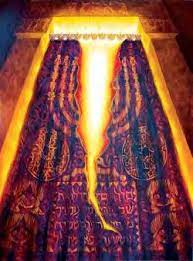
    Tearing of the Temple Curtain

    (Expressed in ordinances is how human ACTS) Ordinances are expressed through bodily effort. God got rid of the law of commandments that are expressed with the flesh (the material), but not the law of commands, as He intended from the Spirit. That’s why Paul says over and over: “with the Law of the Spirit”…

    In the book of John, Jesus said the flesh is of no profit.

    The Law, being instigated or initiated in the flesh (because the flesh is full of evil), is there to keep us stuck in this dimension (unable to expand into the Heavenly Realm because if we did, we would have been utterly destroyed). We were for a period unable to see the things of God. The law that kept us in constant shame was actually our guardian until Christ came. God gave us the Law as a guardian in order that we might be justified by faith. But now that faith has come, we are no longer under a guardian, for in Christ all who believe are sons of God, through faith.

    Many think God is evil for having His son come down to suffer and die, but that is the only way the flesh – the material – can be reconciled with one another. So Jesus was appointed to go on the cross and take in His flesh and unworthy death, taking what we deserve, so that His Father may be pleased because that’s the only way flesh can be reconciled with Spirit. He might create in Himself one new man in place of the two, so making peace…

    Who do we think we are, being literally matter, physical, temporal, telling the creator of ALL things is wrong or evil? He knows what needs to take place, He did create it. Formulate every formula.

    Bear one another’s burdens, and so fulfill the law of Christ. But now we are released from the law, having died to that which held us captive, so that we serve in the new way of the Spirit and not in the old way of the written code.

    He saved us, not because of works done by us in righteousness, but according to His own mercy, by the washing of regeneration and renewal of the Holy Spirit, so that being justified by His grace we might become heirs according to the hope of eternal life. Titus 3:5‭, ‬7

    So too at the present time, there is a remnant chosen by grace. But if it is by grace, it is no longer on the basis of works; otherwise, grace would no longer be grace. Yet we know that a person is not justified by works of the law but through faith in Jesus Christ, so we also have believed in Christ Jesus, in order to be justified by faith in Christ and not by works of the law because by works of the law, no one will be justified. I do not nullify the grace of God, for if righteousness were through the law, then Christ died for no purpose.

    Galatians 2:16‭, ‬21

  • Understanding Sin: Unity, & Life’s Essence

    Understanding Sin: Unity, & Life’s Essence

    The complexity of the human experience is rooted in our interconnectedness.

    The impact of the flesh being disconnected from the Spirit is death…

    We’ll discuss how Sin is a state of separation.

    There are unseen connections that bind us together, as human beings. I explore these simple thoughts as I seek unity amidst disconnection and fragmentation.

    ” … because the mind set on the flesh is hostile toward God; for it does not subject itself to the law of God, for it is not even able to do so…” Romans 8:7

    One Body, Disconnected From One Another

    The word “dissociation” means to be disconnected from others, from the world around you or from yourself. Dissociative disorders typically develop after short-term or long-term trauma.

    After the Fall, humans became disassociated spiritually. We became separated from God.

    That Is The Essence Of Sin

    Sin, at its essence, can be understood as a state of disconnection and separation.

    The concept of sin as separation is deeply rooted in the Bible and can be explored through the study of Hebrew language and cultural context. Let’s dive into this perspective:

    Roots in Hebrew

    In Hebrew, sin is described by the word “חַטָּאָה” (chaṭṭā’āh), which literally means “missing the mark” or “deviating from the path.” This implies a sense of being separated from the intended target or purpose, suggesting a state of disconnection.

    Adam and Eve

    The story of Adam and Eve in the book of Genesis portrays sin as the ultimate act of separation. When they disobeyed God’s commandment and ate from the forbidden tree, they were expelled from the Garden of Eden, experiencing a profound separation from God’s presence. It marked the beginning of spiritual disconnection and separation from the divine.

    The Prodigal Son

    In the parable of the prodigal son (Luke 15:11-32), Jesus illustrates sin as a state of separation between a wayward son and his father. The son demanded his inheritance, left home, and squandered his wealth in reckless living. As a consequence, he found himself distant from his father, living a life of despair and separation until he repented and returned to his father’s embrace.

    The Prophets and Exile

    The Hebrew Bible further explores sin as separation through prophetic accounts. During periods of rebellion and disobedience, Israelites experienced judgment and exile, marking a tangible separation from their homeland, God, and their covenantal blessings. Sin led to division, dislocation, and a rupture in their relationship with God and their community.

    Restoration and Unity

    Throughout the Bible, there is a consistent theme of God’s desire to restore the broken relationship caused by sin and reconcile humanity to Himself. This restoration implies a process of overcoming separation and bridging the gap between God and humanity through acts of forgiveness, atonement, and redemption.

    silhouette image of person praying

    By examining the Bible and delving into Hebrew language and cultural context, we can understand that sin is indeed portrayed as a state of disconnection and separation. It is depicted as a departure from the intended path or target, resulting in a loss of closeness with God, others, and one’s true self. However, the biblical narrative also offers hope for reconciliation and restoration, emphasizing God’s work to bring unity and healing to the brokenness caused by sin.

    If you would like to further explore these topics, here are some additional resources:


  • The Doctrine of Salvation by Faith Alone in Christianity

    The Doctrine of Salvation by Faith Alone in Christianity

    Sola Fide

    Sola fide, also known as justification by faith alone, was a key doctrine of the Protestant Reformation.

    It emphasizes that salvation is attained through faith in Jesus Christ alone, and not through any works or merit of our own.

    Prior to the Reformation, the Catholic Church taught that salvation was achieved through a combination of faith and works. The church believed that individuals had to earn their way into heaven by performing acts of righteousness, participating in sacraments, and following church laws and traditions.

    However, during the 16th century, Martin Luther and other Reformers challenged this understanding of salvation. They argued that the Bible teaches that salvation is a gift from God, granted to individuals solely on the basis of their faith in Jesus Christ. They believed that human efforts and good works could never be enough to earn salvation.

    The Reformers based their teachings on key passages from the Bible, such as Ephesians 2:8-9: “For it is by grace you have been saved, through faith—and this is not from yourselves, it is the gift of God—not by works, so that no one can boast.” They emphasized the sufficiency of Christ’s sacrifice on the cross for the forgiveness of sins, and the need for individuals to trust in Jesus alone for salvation.Sola fide remains a central doctrine in Protestant theology. It asserts that faith in Christ is the only means of justification before God, and that good works are a result of genuine faith, but not a means to earn salvation.

    This doctrine had profound implications for both the individuals and the church as a whole. It emphasized the personal relationship between an individual and God, as well as the sufficiency of Christ’s sacrifice for salvation. It also challenged the authority and practices of the Catholic Church, leading to a major schism between Catholicism and Protestantism.

    The Doctrine of Faith Alone, also known as Sola Fide, is a theological concept that originated during the Protestant Reformation in the 16th century. It holds that faith in Jesus Christ is the sole means of attaining salvation, and that good works are not necessary for salvation.

    Read More

    This doctrine stands in contrast to the Catholic teaching of justification, which emphasizes a combination of faith and good works.

    According to the Doctrine of Faith Alone, salvation is a gift from God that is received through faith alone, apart from any human effort or merit.Advocates of the Doctrine of Faith Alone argue that this belief is based on the teachings of the Bible, particularly the letters of the apostle Paul. They point to passages such as Ephesians 2:8-9, which states, “For it is by grace you have been saved, through faith – and this is not from yourselves, it is the gift of God – not by works, so that no one can boast.”

    Supporters of this doctrine assert that good works are a natural outpouring of genuine faith, but they do not contribute to one’s justification or salvation. They believe that salvation is solely the result of God’s grace, freely given to those who put their trust in Jesus Christ.

    • What does it mean when we say that faith alone saves us in Christianity?
    • Can we still be saved if we continue to sin?
    • How can we have faith in Jesus Christ?
    • Can good works earn us salvation in Christianity?
    • Why is the doctrine of salvation by faith alone important in Christianity?

    The topic of salvation is central to Christianity, as it defines what it means to be a follower of Christ.

    The belief that faith alone saves us is a key aspect of Christianity. However, there can be confusion about what this concept truly means.

    In this article, we will address five questions that will help clarify the doctrine of salvation.

    What does it mean when we say that faith alone saves us in Christianity?

    “For it is by grace you have been saved, through faith—and this is not from yourselves, it is the gift of God—not by works, so that no one can boast.” Ephesians 2:8-9

    When we affirm that faith is the sole means by which we are saved, we are asserting that our unwavering trust in Jesus Christ is the only requirement for being delivered from the repercussions of sin and attaining everlasting life. Salvation pertains to our rescue from the punishment of sin, which results in eternal death, as well as our deliverance into a life filled with divine favor and everlasting existence. Our faith in Christ represents the reliance and certainty we have in Him, firmly believing that He is indeed the person He claims to be and that He is fully capable of fulfilling His promises. This encompasses trusting in His sacrificial death on the cross for the forgiveness of our sins and His resurrection, which grants us both absolution and the promise of eternity. Thus, it is faith alone, not our good deeds or any other factor, that serves as the means of our salvation.

    Can we still be saved if we continue to sin?

    Salvation is an act of God’s grace, not based on one’s own efforts or works. Humans are naturally sinful and unable to save themselves. It is only through faith in Jesus Christ and his redemptive work that someone can be saved.

    The transformative work of the Holy Spirit in the believer’s life entails ongoing sanctification, a process of becoming more like Christ. It includes repentance and turning away from sin.

    Believers will still struggle with sin and may fall into sin at times. But the assurance of salvation rests on the belief that God’s grace is sufficient to forgive and restore those who genuinely repent and seek forgiveness. While believers may continue to sin, the transformative work of the Holy Spirit should lead them toward repentance and growth in holiness, where sin diminishes.

    The Bible teaches that our works are evidence of our faith (James 2:14-26).

    When we have genuine faith in Christ, it will lead us to obey Him and perform good works. While we will still fall into sin, our desire will be to please God and do what is right. Salvation by faith alone does not provide a license to sin, but rather motivates us to live holy and obedient lives out of gratitude for what Christ has done for us.

    How can we have faith in Jesus Christ?

    “For it is by grace you have been saved, through faith—and this is not from yourselves, it is the gift of God—not by works, so that no one can boast.” – Ephesians 2:8-9

    Faith is a gift from God; we cannot produce it on our own. God primarily imparts faith through His Word, the Bible.

    In the book of Romans, it is written,

    “So faith comes from hearing, and hearing through the word of Christ” (Romans 10:17).

    As we read, study, and meditate on His Word, our faith grows.

    Importance of prayer: Through prayer, we humbly come before the Lord, acknowledging our dependence on Him and expressing our desires, concerns, and praises.

    The book of James reminds us of the power of prayer, stating, “If any of you lacks wisdom, let him ask God, who gives generously to all without reproach, and it will be given him” (James 1:5).

    The apostle Paul encourages us to “pray without ceasing” (1 Thessalonians 5:17). Through persistent prayer, we develop a deeper reliance on God and a greater understanding of His faithfulness. Our faith is nourished as we lay our burdens before Him.

    Can good works earn us salvation in Christianity?

    No, salvation is obtained solely by the Good Works of God, not by our own efforts.

    Good works are a natural outpouring of faith, they are not the means by which salvation is obtained nor kept.

    Titus 3:5 says we are saved “not by deeds done in righteousness, but according to [God’s] mercy.” While God calls us to live righteously, it is ultimately out of grateful response for his mercy and grace that saves us, not as a means to earn or obtain that salvation.

    Romans 3:20 tells us “no one will be declared righteous in God’s sight by the works of the law; rather, through the law we become conscious of our sin.” Our good works cannot save us or make us righteous before a perfectly holy God. Our works fall short.

    Why is the doctrine of salvation by faith alone important in Christianity?

    The doctrine of salvation by faith alone is crucial in Christianity as it emphasizes that salvation is not dependent on one’s actions or good works, but rather on faith in God. It helps guard against legalism and self-righteousness, promotes unity among believers, and highlights the transformative power of faith.

    Overall, it upholds the principles of grace and mercy.

  • IN THE LIGHT- TRANSMUTING SIN

    IN THE LIGHT- TRANSMUTING SIN

    Transforming Darkness into Wisdom

    Personal reflection and exploration of the power of truth in exposing and transforming the darkness within us. Discussion of the role of God in our lives and the importance of accepting our flaws and failures as lessons for growth. Includes anecdotes and real-life examples of transformation through acceptance and the pursuit of truth.

    DARKNESS TO SURRENDER

    The struggle between obedience to darkness and the call to surrender to God’s will.

    MY JOURNAL EXCERPT:

    Willingly subservient to the elements of fallen angels, I am digesting their manipulative morsels one by one, lest they should choke me out by my disobedience.
    
    Instantly, I realize this is the painful rod of God's discipline and the testing of my faith. 
    
    I daydream of flashing lights falling from Heaven as it rolls itself up like a Scroll, made New by the King. I then pray for a seizure, I need to get out of this place, I am dying.
    
    But it's too late, the claws of darkness buckle me as I transcend into a higher dimension of the realm of Spirit.
    
    I am still the lie, revealed, because I have accepted the light.
    END. 
    
    Pride, My Delusion

    LIGHT

    “What is the light?” – The light is Truth.

    Truth exposes the darkness (lies) that exist within as well as outside of us, since humans reflect the image of the Creator.

    Human intelligence is undeniably a remarkable gift. The human brain, dear individuals, is meticulously crafted to possess an extraordinary ability to apprehend objective perceptions solely pertaining to our own existence.

    Don’t you find that concept utterly captivating? I implore you to give it deeper thought and reflection.


    ROOT OF OUR WEAKNESS

    The human mind, body structure, and organ functions, along with chemical transmitters and mineralized blood, all generate power that runs through our bodies constantly. However, our physical bodies are insufficient in dealing with hidden internal trauma, such as buried and forgotten memories. This is where our vulnerability lies.

    HUMANS MARKED BY ESSENCE

    Every aspect of humanity is infused with the essence of God. However, this essence has not been acknowledged or embraced by individuals who have been subjected to controlling belief systems. The intention of God for the entirety of human existence, as indicated by Scriptural hints and energetic communications, is to harmoniously align with His scientifically perfected system of laws and guidance.

    EXPOSED DARKNESS

    Truth exposes darkness inevitably, once a creation finds its Creator’s purpose for himself/herself.

    Its explanation substantiates far beyond words spoken by physical humans.


    Truth Mends Our Bond With God

    The truth lit darkness transforms hidden aspects, mending the relationship between creation and Creator, and accepting our faults completely without denying any aspect of what lies within our knowingness.

    The Creator’s flawless nature allows us to accept our imperfections and view them as opportunities for growth. Recognizing our flaws makes us less judgmental and more empathetic towards others, and helps us gain understanding and wisdom. We don’t need to be perfect to be worthy of love. Light is most visible and appreciated when contrasted with darkness, as seen in the goodness and teachings of God. Hardship and struggle can increase our awareness of our need for God’s guidance, and the actions of kind individuals are most impactful in situations of darkness and suffering.

    GUILT TRANSFORMS

    Exposing our guilt and sin to the light of God’s truth and love can transform them into catalysts for growth and insight.

    When we try to hide or ignore our guilt and sins, they worsen and become more harmful, hindering our progress. However, when we acknowledge and confess our mistakes, and seek forgiveness, we enable ourselves to experience a positive transformation.

    TRANSMUTATION (Alchemical?)

    “Transmutation” refers to the process of transforming something into something of higher value or quality. In terms of personal growth and spirituality, transmutation means transforming our negative emotions, thoughts, and behaviors into positive ones.

    Transmutation is an alchemical concept that transforms guilt and sin into higher states of consciousness or virtue. The process requires accepting one’s imperfections and recognizing the potential for growth. Through self-reflection and the work of God, one can learn from their mistakes and incorporate those lessons into their psyche. The outcome is the transmutation of guilt and sin into wisdom, compassion, and service to others, leading towards a more virtuous and enlightened state.


    NEGATIVE TO POSITIVE

    When we transmute negative emotions such as fear, anger, or jealousy, we can liberate ourselves from their grip and find inner peace and harmony.

    Instead of being controlled by our emotions, we can learn to acknowledge and release them and use them as fuel for growth.


    IN GOD’S ALIGNMENT

    Furthermore, transmutation allows us to live a life in alignment with God’s will.

    By trusting God’s divine plan, we can surrender our ego desires and follow the path that leads to our highest good and the good of all. We can cultivate virtues such as love, compassion, and forgiveness, and embody the qualities of a true servant of God.

  • WHO AM ‘I’ describing?

    WHO AM ‘I’ describing?

    Allow me to explain:

    I expect to find rich soil to sow my work within you.

    To do that, you need to act humbly towards others.
    I am going to analyze everything and everyone in order to get you what you desire from them.
    I am going to manipulate people with the image of a soft heart inside of you so that they’ll give you praises and make you feel important, as you should.

    My ultimate goal is to absorb the compassion of the empathetic and influence the simple to honor and highly value you without realizing it.

    I aim to elevate you to the position of God’s throne, but you can’t ever admit it: to admit it is to kill our power; we love the darkness; only artificial light is allowed here.

    The perception of those who are ‘lower than you‘ must keep you elevated to the status of God: looking to you to fill their need, whatever need that may be; and you will deliver.

    I simply want to put you on the pedestal you deserve. You are deserving of the throne, and I will tirelessly defend your glory.
    I am here to ‘protect’ you.

    It is paramount that your works have a purpose, and your purpose is for you to feel good and secure in who you are.
    Nothing else matters.

    So, your good deeds must be always visible; otherwise, they won’t elevate you as you deserve, and I am the one who will help make sure your works are seen.
    Remember, you are sovereign too. God isn’t the only one.

    As for me, well, I am simply the seed inside you. You: the one reading this: I’m a reflection of your nature; I’m your heart.

    I AM YOUR HUMAN NATURE:
    AND MY WORK IS PRIDE

  • Overview Of ‘The Shadow’- Analytical Psychology

    Overview Of ‘The Shadow’- Analytical Psychology

    The depths of the human psyche are vast and intricate, and I have found, only through the lens of Jungian analytical psychology, can we begin to unravel the depths of the shadow.

    This shadow, this hidden aspect of the ego, is a complex and multifaceted entity that demands our attention and introspection. It is only by delving into the depths of our unconscious that we can truly come to know ourselves. By exploring the shadow, we can gain a profound understanding of the darker aspects of our psyche. In doing so, we can develop a greater sense of self-awareness, for it is only by acknowledging and embracing the shadow that we can truly become whole.

    SHADOW WORK ISN’T JUST ABOUT IDENTIFYING NEGATIVE PATTERNS OR TRAITS

    It is a sacred journey of self-discovery, a pursuit to uncover the hidden aspects of our mentality that have been suppressed deep within the shadows of our being. We come to understand the intricate web of our thoughts, emotions, and behaviors, and how they shape our reality. It is a transformative experience that requires bravery, vulnerability, and a willingness to confront our deepest fears and insecurities.

    As we delve deeper into the darkness, we begin to see the light that exists, and we emerge with a newfound insight of clarity, meaning, and inner stability.

    Shadow work is not just a journey of self-improvement, but a spiritual awakening that leads us to a deeper connection with ourselves, others, and God.

    UNDERSTANDING

    The idea is to understand and accept our shadow parts so we can turn them into something positive. The shadow is anything outside of our conscious awareness and can be positive or negative. We tend to reject or ignore our negative aspects, but there are positive parts that can also be hidden. Everyone has a shadow, and the less we acknowledge it, the worse it becomes. This is because our unconscious mind, developed in childhood, can be more primitive or instinctual in some people. The shadow is the unknown, irrational, and prone to projection, where we see ourselves as inferior to others. If we don’t acknowledge these projections, they can harm us by creating a disconnect between reality and our minds. This is like sin, which is separation. Without integrating our shadow, we can’t even recognize our sins and repent.

    WHEN THE SHADOW APPEARS

    The shadow, a mysterious and elusive force, often reveals itself to us in our dreams and other ethereal forms. It takes on the guise of a person, typically of the same gender as the dreamer, and its traits may or may not align with the dreamer’s own character. Yet, we must not forget the societal shadow that looms over us all, a collective weight that we carry as individuals and as a society. It is only through deep introspection and a willingness to confront our innermost fears that we can hope to shed light on the shadow and emerge into the light of our true selves.

    THERE ARE LAYERS TO THE SHADOW

    I’ve learned that the Shadow is not just one thing, but many layers. The first layer is made up of memories that I’ve forgotten or pushed away. As I go deeper, I find archetypes that represent human experiences I’ve had. These layers are hard to access, but I need to face them to understand myself. I used to be scared of the Shadow, but now I know it’s important to accept and integrate it. This is how I can become whole and grow spiritually.

    Can we encounter our shadow?

    Yes and this is a part of what Jung calls the process of individuation.

    Jung considered as a perennial danger in life that “the more consciousness gains in clarity, the more monarchic becomes its content…the king constantly needs the renewal that begins with a descent into his own darkness”—his shadow—which the “dissolution of the persona” sets in motion.

    Meaning, when the consciousness becomes clearer, its content may become more dominant. The conscious self needs to explore its own darkness or shadow regularly to renew itself, which is triggered by the dissolution of the persona. This is important because the conscious self is like a king that needs to maintain its power and authority.

    The shadow quite literally personifies everything that we refuse to acknowledge about ourselves; it’s a narrow door; its entrance is a mere sliver, requiring us to navigate through a narrow and torturous path.

    JUNG’S CLAIM OF FALLING VICTIM TO THE SHADOW

    Jung talks about the difficult journey of dissolving the persona and starting the individuation process. It’s risky because it makes you confront the dark parts of yourself, represented by the shadow. If you give in to the shadow, you’ll lose yourself in confusion and chaos. But if you face and accept it, you can come out of the journey as a whole and complete person.

    WHAT DOES IT MEAN TO ‘MERGE WITH’ THE SHADOW?

    In simplest terms, a person’s shadow can take over their personality and actions. This can happen when their conscious mind is shocked, confused, or experiencing extreme emotions. They become possessed and don’t realize what they’re saying or doing because the shadow has taken over.

    The concept of being possessed by one’s shadow, suggests that an individual who fails to integrate their unconscious desires and impulses into their conscious awareness may find themselves perpetually standing in their own light, falling into their own traps, and living below their potential. This notion is exemplified in literary works such as Robert Louis Stevenson’s “The Strange Case of Dr Jekyll and Mr Hyde,” wherein the titular character’s failure to reconcile his dark impulses with his conscious identity leads to his eventual downfall. As Jung notes, it is crucial that the conscious personality take an active role in integrating their shadow, lest they become enslaved by its autonomous influence.

    as described by Carl Jung.

    Jung suggests that during the process of individuation, the conscious mind may become controlled by the autonomous shadow. As this process continues, the libido shifts from the conscious world to the unconscious shadow below.

    Meaning; The surface of our being often conceals the true nature of our existence, which lies in the depths of our unconscious mind. This hidden aspect, known as the shadow, must be confronted by the ego to achieve a state of unity. However, this process has challenges, as it can lead to moral paralysis. The descent into the shadow realm is a difficult journey that requires immense courage and fortitude, with no guarantee of a positive outcome. Yet, despite the risks, this journey is essential for personal growth and transformation. For Jung, the descent is a necessary step towards the assimilation of the shadow, ultimately leading to a more integrated and authentic self. Although the road may be fraught with suffering, the ascent that follows is a testament to the resilience of the human spirit.

    THE PURPOSE OF SHADOW WORK

    The purpose of shadow work is to bring you into alignment with your true self. When you are able to face and work through your shadows, you become more authentic, compassionate, and connected to your inner wisdom.

    Shadow work can also help you break free from unhealthy patterns, relationships, and behaviors that have been holding you back. By transforming your shadows into sources of strength, you can create a more fulfilling and purposeful life for yourself.

    HOW TO DO SHADOW WORK ON YOURSELF

    Here are some steps you can take to begin your own shadow work journey:

    Ask yourself these questions:

    What patterns or themes keep showing up in my life?

    What traits or behaviors are hindering my personal growth?

    What emotions and memories do I avoid or suppress?

    Thinking about these deep questions can help you understand yourself better. You may discover hidden parts of yourself that need attention and healing. By facing these challenges, you can become more self-aware and live a more authentic and fulfilling life.

    LINK THE EMOTIONS

    Once you’ve identified your shadow, take some time to connect with the emotions and feelings associated with it.

    This could be fear, shame, guilt, anger, or sadness.

    Allow yourself to fully experience and express these emotions, without judging or suppressing them.

    Connect The Dots

    Try to understand where these emotions are coming from.

    Perhaps they stem from a traumatic experience in childhood, or a belief system that was instilled in you by your family or society.

    Recognize that these experiences and beliefs are not who you are, but rather something that has been imposed upon you.

    WHILE SHADOW WORK CAN BE UNCOMFORTABLE AND CHALLENGING, IT’S AN ESSENTIAL PART OF THE JOURNEY TOWARDS SELF-DISCOVERY AND HEALING

    In the same way, when we come to God, we must bring our whole selves before Him, including the parts that we may have been hiding or denying. Only then can we truly repent and experience the peace, contentment, and fulfillment that comes from being fully known and accepted by God. Just as we cannot repent of something we do not acknowledge, we cannot fully experience God’s love and grace if we continue to hide or deny parts of ourselves. Let us come before God with open hearts and minds, ready to be transformed by His love and truth.