Tag: Reason

  • Mind Trap

    Mind Trap

    We like to think of our minds as tools of clarity, but more often than not, they are cages.

    Cognitive Rigidity and Perceptual Limitations

    Cognitive rigidity and perceptual limitations are not abstract ideas—they are the invisible bars that confine how we see, think, and act in the world.
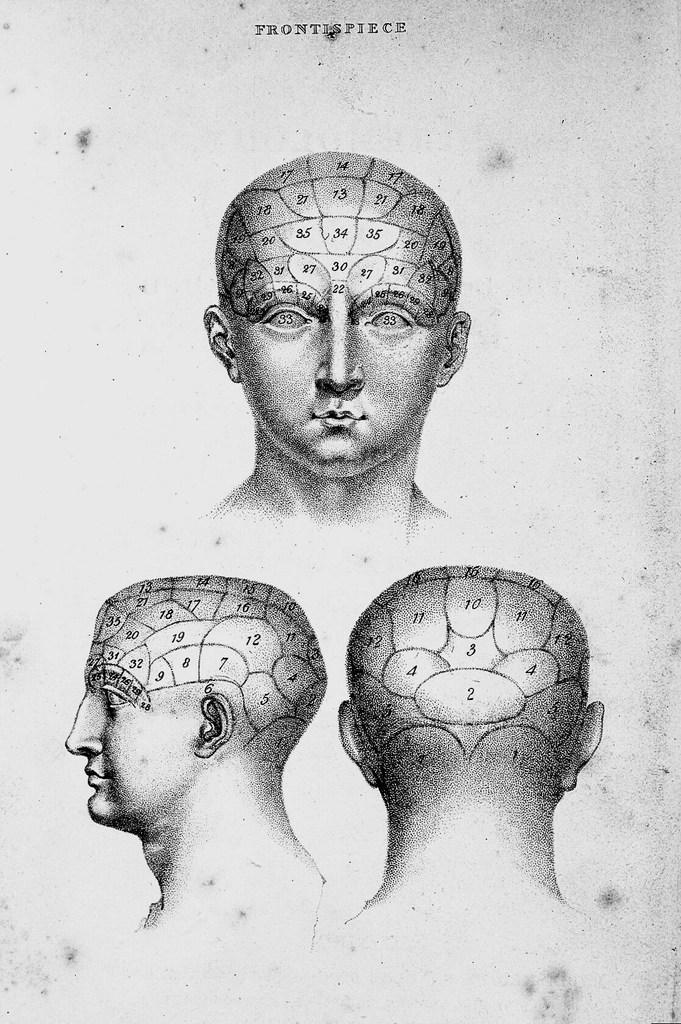
    Phrenology, doctrine mind : relations“/ CC0 1.0

    CAGE OF THE MIND

    Cognitive rigidity is the stubborn insistence that our way of thinking is the only way.

    It shows up in small, everyday ways:

    • refusing to consider another perspective
    • dismissing evidence that challenges our beliefs
    • or sticking to habitual responses when flexibility is required.

    It is mental inflexibility masquerading as certainty.

    This rigidity is rarely neutral. It filters experience, allowing only what aligns with our preconceptions to pass through.

    What we notice and refuse to notice is determined less by reality and more by the contours of our existing beliefs. The mind becomes its own jailer.

    FILTERED VISION

    Perceptual limitations compound this problem. Our senses, our expectations, and our biases shape what we perceive.

    Two people can witness the same event and walk away with entirely different “realities,” each convinced theirs is the truth.

    Culture, language, upbringing, and personal trauma all function like lenses, coloring everything we see.

    When cognitive rigidity meets these perceptual filters, the feedback loop begins: our beliefs dictate what we perceive, and our perceptions reinforce our beliefs.

    We become prisoners of our own limited frameworks, blind to the complexity—and often the truth—of the world around us.

    Breaking the Loop

    Escaping this loop is not about acquiring more information. It is about retraining the mind to see what it usually ignores:

    Observe without judgment. Watch your thought patterns and notice when you shut down possibilities automatically.

    Seek what challenges you. Engage with ideas and perspectives that make you uncomfortable.

    Question your perception. Ask yourself what you might be missing, what biases are filtering your experience.

    Embrace intellectual humility. Accept that your understanding is provisional, incomplete, and subject to correction.

    The moment we recognize that perception is always partial, and thought is always provisional, the bars of the cage begin to loosen.

    Clarity is not a gift; it is a discipline.

    The Work of Liberation

    This is the work of liberation: not avoiding rigidity, but confronting it; not denying perceptual limits, but piercing them.

    The mind can be trained to perceive more, think more flexibly, and respond more intelligently.

    It is uncomfortable, but truth always is.

    We cannot see everything, but we can see more than we did yesterday.

    And that is where freedom begins.

  • Faith is Not Contrary to Understanding or Reason – Faith Gives Understanding

    Faith is Not Contrary to Understanding or Reason – Faith Gives Understanding

    Faith and reason are often viewed as conflicting concepts, as if they exist on opposite ends of a spectrum. However, this notion fails to acknowledge the profound relationship between faith and understanding.

    In fact, faith can be seen as a pathway to true understanding, just like the eye that allows light to illuminate the world. For believers, their understanding of the universe’s origin is not rooted in speculation or guesswork; rather, it is grounded in the divine revelation that God has graciously bestowed upon them.

    My Aim

    This blog post aims to explore how faith and understanding are intertwined, emphasizing that faith can provide deep insights into the mysteries of existence.

    Faith

    A Source of Understanding

    The idea that faith is opposed to understanding or reason is a fallacy. Faith is not blind acceptance or irrationality; rather, it is a deeply rooted confidence and trust in something beyond our immediate comprehension. By embracing faith, believers open themselves to a higher realm of understanding, where divine revelation can shed light on the deepest questions of existence.

    God’s Revelation and Creation

    According to biblical accounts, God’s revelation offers believers a profound understanding of how the universe came into being. In the book of Genesis, we read that God spoke, and creation began. “In the beginning, God created the heavens and the earth” (Genesis 1:1). Through His divine word, God brought order out of chaos, initiating the magnificent tapestry of the universe.

    The Power of God’s Word

    The power and authority of God’s word are further echoed throughout the Scriptures. In Psalm 33:6, we are reminded, “By the word of the Lord, the heavens were made, and all their host by the breath of his mouth.” This verse emphasizes that God’s spoken word has the creative power to bring the universe into existence. Similarly, Isaiah 40:26 declares, “Lift up your eyes on high and see: who created these? He who brings out their host by number, calling them all by name; by the greatness of his might and because he is strong in power, not one is missing.” These passages highlight the majesty and wisdom inherent in God’s act of creation.

    The Divine Logos

    In the New Testament, the Gospel of John proclaims that Jesus Christ, the Son of God, played a pivotal role in creation. John 1:3 states, “All things were made through him, and without him was not anything made that was made.” This verse unveils the profound connection between Jesus, the divine Logos, and the act of creation. Moreover, Colossians 1:16 affirms, “For by him all things were created, in heaven and on earth, visible and invisible, whether thrones or dominions or rulers or authorities—all things were created through him and for him.” These verses reinforce the idea that faith in Christ as the creative force behind the universe leads to a deeper understanding of our place within it.

    Faith and Speculation

    Unlike unbelievers who must rely on speculation and theories regarding the origin of the universe, believers possess the invaluable gift of divine revelation. Faith liberates them from the limitations of human understanding, allowing them to embrace the profound truth that God is the ultimate source and sustainer of all things. By grounding their understanding in God’s revealed word, believers can explore the intricacies of creation with awe and reverence, recognizing that they are glimpsing the beauty of their Creator.

    Faith and understanding are not mutually exclusive but rather intricately connected.

    Faith enables believers to perceive the world through a lens illuminated by divine revelation. The understanding gained through faith surpasses mere human speculation, allowing believers to comprehend the origins and intricacies of the universe. Just as the eye receives light and grants vision, faith opens the door to profound insights.

  • Rationality, Why It Matters For The Christian?

    Rationality, Why It Matters For The Christian?

    To read what it means to be rational, read my blog, What Is Rationality?

    Rationality brings the clarity of Scripture to the reader:

    The Bible is the inspired and inerrant Word of God. Despite what many claim, I maintain Its teachings are clear and comprehensible. Rationality is a necessary tool to interpret Scripture correctly. Rationality aids in understanding the meaning and intent of the biblical authors.

    God’s nature and character:

    Because God is a rational being, humans, being created in God’s image, are also rational. This shared rationality allows for us humans to understand the nature and character of God, as well as the content of His revelation. Ration is a must in order to grasp theological concepts as well as spiritual. Without it, we couldn’t discern truth from falsehood, and we would never grow in our knowledge of God.

    The orderly structure of the universe:

    God created an orderly and structured universe, which can be studied and clearly understood through the standard of logic and reason.

    To understands what Logic and Reason really means, read my blog: What is Logic And Reason?

    Rationality is necessary to make sense of the complex relationships and patterns found in creation, providing a solid foundation for theological understanding and application.