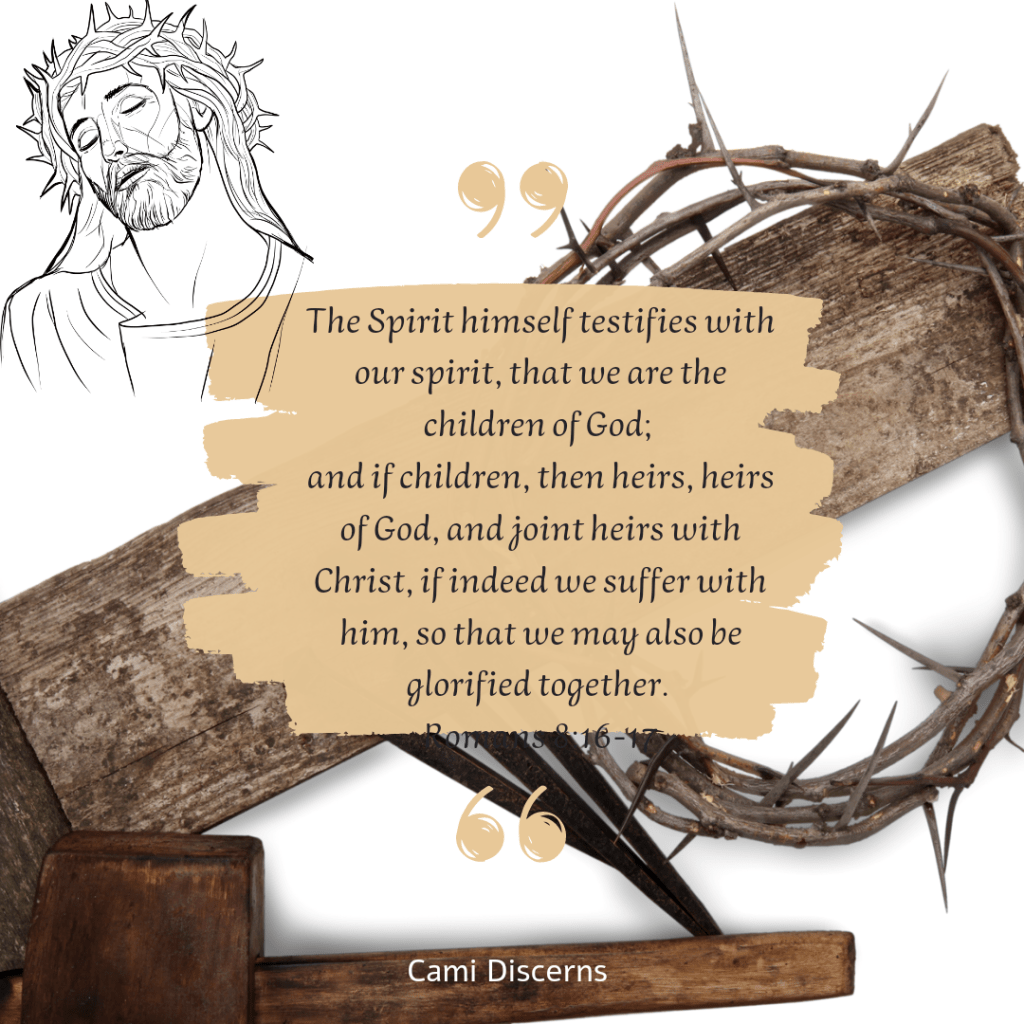
“The sacrifice you desire is a broken spirit. You will not reject a broken and repentant heart, O God”.
Psalm 51:17
How We Should Think Of Our Suffering Is Opposed To How We Feel
Our pain may result from God’s Decision for our ultimate benefit, even if we cannot perceive it in the present moment.
Despite Paul’s prayers for his ‘thorn’ to be removed, God did not take it away, but instead told Paul, “My grace is sufficient for you, for my power is made perfect in weakness.”
God’s power is most evident in our moments of weakness.
And He has said to me, “My grace is sufficient for you, for power is perfected in weakness.” Most gladly, therefore, I will rather boast about my weaknesses, so that the power of Christ may dwell in me. 2 Corinthians 12:9
God keeps track of our sorrows and collects our tears in a bottle.
“You keep track of all my sorrows. You have collected all my tears in your bottle. You have recorded each one in your book.” -Psalm 56:8
God is on our side if we are His and He is our shelter from danger.
“God is our refuge and strength, an ever-present help in trouble. Therefore we will not fear, though the earth gives way and the mountains fall into the heart of the sea, though its waters roar and foam and the mountains quake with their surging.” Psalm 46:1-3
The Lord supports and lifts those who are struggling and stumbling bowed low.
The Lord sustains all who fall And raises up all who are bowed down. Psalm 145:14
“When he falls, he will not be hurled headlong, Because the Lord is the One who holds his hand.” Psalm 37:24
God grants the requests of those who revere Him, He listens to their pleas, and He rescues them, according to His Will.
He will fulfill the desire of those who fear Him; He will also hear their cry and will save them. Psalm 145:19
Why A Broken And Contrite Spirit?
God is not impressed by outward shows of religiosity or ritualistic sacrifices unless they are accompanied by genuine repentance and a humble heart. Rather, God is concerned with the inner state of a person’s heart, seeking a contrite and humble spirit that is committed to living according to His will.
We Will Be Filled With Joy And Peace
Remaining is a state of humility enables us to draw near to Him, worship Him, and turn away from our sins, allowing us to align our hearts with God and be filled with joy and peace in Him.
Hone In On It
What A Contrite Heart Looks Like
Is characterized by deep regret and sorrow. Seeks absolution and reconciliation. Exhibits compassion and mercy. Abandons arrogance and self-importance. Manifests authentic humility and meekness. Is genuinely penitent. Ready and willing to renounce sinful behavior.
So to keep me from becoming conceited because of the surpassing greatness of the revelations, a thorn was given me in the flesh, a messenger of Satan to harass me, to keep me from becoming conceited. Three times I pleaded with the Lord about this, that it should leave me. But he said to me, “My grace is sufficient for you, for my power is made perfect in weakness.” Therefore, I will boast all the more gladly of my weaknesses, so that the power of Christ may rest upon me. For the sake of Christ, then, I am content with weaknesses, insults, hardships, persecutions, and calamities. For when I am weak, then I am strong.
2 Corinthians 12:7-10
Why Does God Give A Thorn In The Flesh?
God uses the “thorn in the flesh” to test and humble us, just like He did with Paul.
He knows that without it, many of us would stray from Him.
Therefore, He allows us to face trials, tribulations, and pain to keep us close to Himself. God
The thorn in the flesh is a symbol of the sufferings and afflictions we experience in life.
These trials are meant to purify and refine us, helping us to grow in faith and dependence on God.
They also serve as a reminder of our own weakness and mortality, as well as our need for the redeeming work of Christ.
Enduring suffering with patience and trust in God is crucial for developing a deeper relationship with Him and growing in spiritual maturity.
The thorn in the flesh can be seen as a means of drawing us closer to God and allowing us to experience His transformative power in our lives.
How Is God’s Power Made Perfect In Weakness?
God’s power is made perfect in weakness because it is in our moments of weakness that we recognize our complete dependence on Him. When we are weak, we are humbled and acknowledge that our own strength is insufficient. It is in this state of humility that we allow God to work in us and through us.
When we surrender our weaknesses to God, He can demonstrate His strength and power in our lives. He can transform our weaknesses into opportunities for His glory to be revealed. When we rely on God’s strength rather than our own, His power becomes evident in our words, actions, and the way we navigate challenges.
God’s power is not limited by our limitations. In fact, it is often through our weaknesses that His power is most clearly displayed. When we are weak, God’s strength sustains us, strengthens us, and enables us to persevere. Our weaknesses provide the opportunity for God to showcase His power, which goes beyond what we could ever achieve on our own.
By acknowledging our weaknesses and relying on God’s strength, we invite His power to work in us and through us. We become vessels through which God’s power is manifested, and His power is made perfect in our weakness.
God’s power is most evident in our moments of weakness and vulnerability. When we are weak and unable to rely on our strength, we depend on God’s power and provision.
When we recognize our impediments and deficiencies and trust in God’s strength, we can experience His power working in and through us.
Why Did Paul Boast In His Afflictions?
In Paul’s perspective, boasting in weakness is an important aspect of Christian discipleship. It signifies his understanding of the gospel and his recognition of his own limitations. Paul believed that his weaknesses were not a hindrance to the church, but an opportunity for God’s power to be demonstrated. By embracing his weaknesses, he directed attention to the true source of his strength, which is God. This humility and reliance on God’s grace are vital for all Christian disciples. Paul’s boasting in weakness was not an act of pride but a profound understanding of the gospel.
What does it mean that God counts and keeps our tears in a jar?
A Little Bit Of History
The concept of God caring about our pain and collecting our tears showcases His profound intimacy and involvement in our lives.
In ancient Jewish thought, tears held significance as a potent medium for spiritual connection with God. Different types of tears were believed to possess their own spiritual meanings and purposes. Grateful tears of joy symbolized our deep appreciation towards God, while tears of sorrow served as a cathartic release of negative emotions and a way to seek solace in God during times of anguish.
Psalm 56:8 beautifully captures this sentiment as it implores, “Record my misery; list my tears on your scroll – are they not in your record?” This verse emphasizes the belief that God acknowledges and takes note of our sufferings, assuring us that our tears are not in vain.
Hence, tears held a remarkable reverence in ancient Jewish faith, being seen as a bridge between humanity and the divine. They were regarded as a means to beseech divine blessings and mercy, and served as a profound method of communication with God, particularly in moments of distress.
How Do Our Enemies Retreat When We Call Out To God?
When we humbly seek God’s assistance, His divine intervention can bring about remarkable outcomes, akin to the inspiring episodes recounted in the Bible. Take, for instance, the legendary account of David and Goliath. Empowered by God’s unwavering support, David fearlessly confronted the formidable giant, triumphing against all odds. In our own lives, beseeching God for aid can result in similar victories, manifesting as the disarmament or weakening of our adversaries. These triumphs can unfold through both natural means—a surprising turn of events favoring our cause—and supernatural interventions, wherein God’s miraculous touch alters the course of events. Furthermore, when we petition God for assistance and extend forgiveness towards our enemies, we may witness a transformative change of heart, leading to reconciliation and restoration.
Assuredly, we can place our unwavering trust in God’s unfathomable power, knowing that He is capable of orchestrating triumphs in ways that surpass our comprehension.
The Lord Upholds Those Who Are Bowed Down
The Lord is compassionate and merciful, upholding those who are bowed down with burden and adversity. Here are a few examples that demonstrate His faithfulness:
Job: Despite enduring immense suffering and loss, Job remained faithful and humble. The Lord upheld him through his trials, restoring and blessing him abundantly in the end.
Hannah: Hannah was a woman who longed for a child but faced the constant torment of infertility. In her distress, she poured out her heart to God and He heard her cry. The Lord blessed her with a son, Samuel, who played a significant role in Israel’s history.
Joseph: Joseph experienced betrayal and injustice at the hands of his brothers, being sold into slavery and enduring imprisonment. Through it all, God was with Joseph, upholding him even in the darkest moments. Eventually, Joseph rose to a position of power and was able to save his family and his people from famine.
Ruth: Ruth was a foreigner who faced numerous hardships, including the loss of her husband. Despite her difficult circumstances, Ruth remained loyal and faithful. God blessed her with a new family and a place in the lineage of Jesus Christ.
David: David faced many trials throughout his life, including persecution from King Saul and personal failures. Yet, God upheld David, protecting him from harm and establishing him as a great king of Israel.
Revealing God’s compassionate care for those facing adversity. He upholds and raises them, providing strength and hope.
This encourages us to trust in God’s unchanging love and find comfort in His guidance. It is a testament to His enduring grace and calls us to serve with compassion and rest confidently in His care.
Fearfully Call On God With Love, In Truth & He Will Hear You & Will Be Near To You, Fulfilling Your Desires, Preserving You
“The Lord is near to all who call on him, to all who call on him in truth. He fulfills the desires of those who fear him; he hears their cry and saves them. The Lord watches over all who love him, but all the wicked he will destroy.”
Psalm 145:18-20
We can trust that He will answer our prayers in His perfect timing and way. REMEMBER; His ways are not our ways.
PRAYER FOR THE SUFFRING:
Heavenly Father,
We humbly come before You, seeking Your boundless mercy and grace to pour upon all those who are suffering.
As a loving and compassionate God, we know that You deeply care for Your children and their pain and sorrow.
We implore You to reveal Your comfort and peace to those who are hurting, guiding them to find hope and strength in You, according to Your perfect will.
Grant them the courage to persevere through difficult times and empower them to trust in Your goodness and faithfulness. Help them to open their hearts and minds to the assurance of Your presence.
Provide for their eternal needs and instill in them the resilience needed to face their fears with unwavering faith.
May they find their strength in You, knowing that You are the source of their hope and joy.
We express our gratitude for Your loving-kindness and boundless compassion.
We ask that You continue to bless those who are suffering, bringing them comfort, peace, and healing.
In the mighty name of Jesus, we pray. Amen.
“You keep track of all my sorrows. You have collected all my tears in your bottle. You have recorded each one in your book. My enemies will retreat when I call to you for help. This I know: God is on my side!”
What does it mean for God to oppose the proud, and why is it such a significant concept?
Before one falls from the Grace of God, Scripture says Pride comes.
Before his downfall a man’s heart is proud, but humility comes before honor.
Proverbs 18:12
This speaks to the relationship between pride, humility, and righteousness.
The verse begins by stating that before a person’s downfall, their heart is proud.
This tells us that pride is a dangerous and destructive way to be and will lead to our downfall.
The verse then goes on to say that humility comes before honor; suggesting that humility is a favorable and desirable weight to bear because it leads to honor.
Proud Heart
The word “heart” in this passage refers to a person’s innermost being, including their thoughts, emotions, and desires. Why is our thoughts, emotions and desires comebefore his downfall? Why is the proud person headed for failure?
PRIDE BLINDS
This is because pride blinds a person to their own weaknesses and shields them from perceiving their flaws, making it difficult to see truth about self so they never have to feel guilt.
The second half of the verse suggests that humility is the key to success and honor.
Humility is the inverse of pride, involving a willingness to acknowledge limitations and weaknesses we have within our flesh.
This kinda attitude also allows a person to increase in wisdom because then we can learn from others, becoming open to feedback and correction.
Pride is dangerous and will lead to our downfall if we let it set ablaze within, we ought to learn to cultivate a humble attitude and avoid the pitfalls of pride.
Serving God Is Done With Humility
I served the Lord with great humility and with tears, especially in the trials that came upon me through the plots of the Jews.
Acts 20:19
The apostle Paul is speaking to the elders of the church in Ephesus, recounting his ministry among them.
“Especially in the trials that came upon me through the plots of the Jews” highlights the opposition and persecution that Paul faced in his ministry.
Despite these challenges, he remained faithful to God and continued to serve Him with humility and tears.
This passage reveals Paul’s deep commitment to serving God and his willingness to endure hardship and opposition in order to do so.
Importance Of Modesty And Humility
Pride goes before destruction, and an arrogantly superior and disdainful (haughty) spirit before a fall. It is better to be lowly in spirit among the humble than to divide the spoil with the proud.
Proverbs 16:18-19
The first part of this proverb states that pride is a forerunner to destruction.
When we are too proud and overconfident, we are likely to make errors and missteps that will lead to our downfall.
The expression “an arrogantly superior and disdainful (haughty) spirit before a fall” emphasizes the danger of prideful behavior.
The second part of the proverb means that it is better to be modest and humble, even if it means not receiving as much recognition or reward, than to be proud and boastful, and risk losing everything.
The phrase “to divide the spoil with the proud” refers to sharing in the rewards of victory, but doing so with the proud and arrogant will ultimately lead to destruction.
This displays the importance of humility and warns against the dangers of pride and arrogance.
It encourages us to be modest and humble and to avoid the pitfalls of prideful behavior that can lead to our downfall.
The Importance Of Our Brokenness and Humility Before God
God says: “I dwell in the high and holy place, and also with him who is of a contrite and lowly spirit, to revive the spirit of the lowly, and to revive the heart of the contrite.”
Isaiah 57:15
This is a proclamation from God about His nature and character. He is referring to God’s transcendence and His holiness. The phrase “high and holy place” emphasizes that God is above all things and is separate from the world.
This is a common theme in the book of Isaiah, where God is often portrayed as holy and righteous above all things.
The second part of the verse states that God also dwells with him, who is of a contrite and lowly spirit. This refers to God’s immanent grace.
The phrase “contrite and lowly spirit” emphasizes the concept of humility and brokenness before God.
God favors those humble and contrite in spirit. The purpose of God’s dwelling with those who are humble and contrite is to revive their soul and heart. This emphasizes the restorative and transformative power of God.
The word “revive” means to bring back to life or restore. This shows that God can repair and renew the hearts and spirits of those who are broken and humble before Him.
This highlights the importance of humility and brokenness before God, as well as the restorative and transformative power of God in the lives of His people.
Importance Of Having A Genuine Relationship With God
“With what shall I come before the Lord when I bow before the God on high? Should I come to Him with burnt offerings, with year-old calves? Would the Lord be pleased with thousands of rams, with ten thousand rivers of oil? Shall I present my firstborn for my transgression, the fruit of my body for the sin of my soul? He has shown you, O man, what is good. And what does the Lord require of you but to act justly, to love mercy, and to walk humbly with your God?
Micah 6:6-8
The point of this passage is that God is not interested in empty religious rituals or grandiose displays of wealth and power.
Instead, He desires His people to live justly, show mercy, and walk humbly with Him.
This means treating others fairly, showing compassion to those in need, and having a humble and obedient heart towards God.
In essence, this passage teaches that true worship of God is not about outward displays of holiness or material offerings, but rather about living a life that reflects God’s character and values.
It emphasizes the importance of a genuine relationship with God and a commitment to following His ways in all aspects of our lives.
Stay In The Present
Do not boast about tomorrow, for you do not know what a day may bring. Let another praise you, and not your own mouth— a stranger, and not your own lips.
Proverbs 27:1-2
This passage warns against the dangers of boasting about the future and promoting oneself, advising against making plans and bragging about them, as one cannot predict what will happen.
The passage also emphasizes the importance of humility and modesty. It suggests that it is better to have others praise you than to praise yourself. The author suggests that it is more meaningful to receive praise from someone not close to you, such as a stranger, as this is a more genuine form of recognition.
This passage teaches that humility is a valuable character trait we should cultivate.
It warns against the dangers of pride and self-promotion and encourages us to be modest and let our actions speak for themselves.
It reminds us that we cannot control the future and that it is better to focus on the present and live with humility and gratitude.