Aristotle claimed that time is dependent on motion, meaning that time only exists in relation to and as a consequence of change occurring in the world.
Muller, a physicist at the University of California, Berkeley, posits that the expansion of the universe, starting with the Big Bang, constantly creates new space and, consequently, new time.
“Now” as the Leading Edge
He argues that the “now” is the boundary, the shock front, or the leading edge of time, where new time is constantly being created.
Implications for Time Travel
This theory has implications for our understanding of time travel, suggesting that the future is not predetermined, and that the “now” is the only reality that truly exists.
This concept contrasts with the block universe or eternalism, which suggests that all moments in time exist equally, and the presentism, which holds that only the present moment is real.
Aristotle argued that time, as a concept, depends on the soul’s ability to perceive and count it.
He suggested that if there were no souls to “count” time, there might still be change, but not time itself.
This view implies that time is not just countable but also essentially counted, meaning it requires a conscious entity to exist as a measurable concept.
Plato’s theory of the soul, influenced by Socrates, considered the soul (psyche) as the essence of a person, an incorporeal and eternal entity.
He believed the soul exists even after death and is able to think, and that as bodies die, the soul is continually reborn (metempsychosis) in subsequent bodies.
Some philosophical traditions, like Neo-Platonism, explored the concept of a world soul (anima mundi) or soul of the world,suggesting an intrinsic connection between all living beings and that the world is animated by a soul.
This concept posits that the world is animated by a soul much like the human body.
This perspective suggests that the soul is not limited by space or time.
Some theories, like the Quantum Theory of Soul, propose that the soul, as defined as information stored in the quantum field, can extend over space and time, potentially transcending the limitations of the physical body.
Time as a Number
Aristotle describes time as a “number of motion with respect to the before and after,” suggesting that we can count or measure time by counting instances of change.
Descartes on Time
Time as a Foundation for Diversity and Motion
Descartes’s mechanistic view of the world, where diversity and motion are fundamental, requires time for these phenomena to occur.
Time as Proof for God’s Existence
Descartes uses the concept of “parts of time” in his Meditation III proof for God’s existence, emphasizing the role of time in our understanding of God’s attributes.
Time as a “Mode of Thought”
In his Principles of Philosophy, Descartes also states that time is a mere attribute and “mode of thought”.
Time & Duration
Descartes distinguishes between time as the measure of motion and duration as an attribute of things.
Time & the Span of Life
Descartes sees no differentiation between the span of a life and the span of time itself.
Descartes introduced the concept of dualism, which argued that reality or existence is divided into two parts.
He argued that humanity could be divided into two parts as well: the mind and the body.
TIME AS MOMENTS
Time as a Series of Moments
This perspective suggests that time can be broken down into a sequence of unique, distinct moments, each representing a specific point in the timeline.
Kairos refers to an opportune or significant moment, while chronos refers to a specific amount of time, such as a day or an hour.
Examples of “Moments in Time”
Think of memorable events, like a wedding, a birth, or a historical turning point.
These are all “moments in time” that stand out as distinct points in the flow of time.
Time as Absolute
Newtonian Time
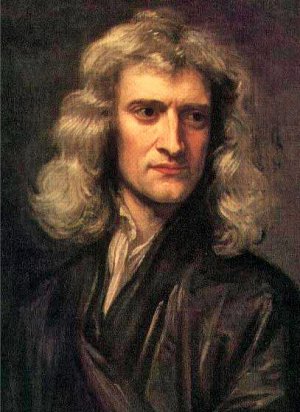
According to its most famous proponent, Sir Isaac Newton, for example, absolute time (which is also sometimes known as “Newtonian time”) exists independently of any perceiver, progresses at a consistent pace throughout the universe, is measurable but imperceptible, and can only be truly understood mathematically.
For Newton, absolute time and space were independent and separate aspects of objective reality, and not dependent on physical events or on each other.
Time as a Product of the Mind
Whitehead | Heidegger—Time as the Form of Becoming
Whitehead and Heidegger described time as the process of things changing and becoming.
They believed that time is essential for things to happen and transform.
Theory of Relativity
SPACETIME
According to modern science, particularly the theories of relativity and quantum mechanics, time is considered a part of a larger concept called spacetime.
Spacetime includes all the events in the past, present, and future, and is interconnected with space.
Philosophy breaks down into several domains that shed light on different aspects of existence.
“Philosophy is not a mere intellectual pursuit or a collection of abstract concepts; it is a way of life, a constant questioning and exploration of the fundamental truths and mysteries of existence.” – Friedrich Nietzsche
Aesthetics contemplates the essence of beauty in nature and art and what qualifies something as having artistic or creative worth.
Delving into these branches unveils endless layers of insight on essential topics.
For beginners, even surface-level awareness broadens understanding across diverse areas.
Getting Started
Resources and Methods:
Read introductory textbooks on general histories, key ideas, and pioneers in the field to build foundational knowledge.
Browse collections of short works by great philosophers like Plato, Aristotle, Descartes and Confucius to sample diverse perspectives.
Follow philosophy podcasts and YouTube channels that simplify complex concepts for newcomers through visual aids.
Join philosophy groups and forums to pose questions, learn from others and share thoughts.
Write notes or journals reflecting on what sparks curiosity or challenges beliefs for continued personal growth.
With dedication and an open mind, philosophy empowers novices to not only comprehend various perspectives but craft their own mature worldviews. Approaching this study with patience and enthusiasm ensures a rewarding start to the journey.
lFor any beginner interested in strengthening critical skills, broadening perspectives or simply satisfying curiosity – the philosophical journey provides endless opportunities for enrichment.
I hope this overview has inspired you to delve deeper through diligent study of history’s greatest minds, rigorous self-reflection and respectful dialog with other seekers of truth.
Philosophy’s bounties are yours to uncovered – may your adventure be filled with wonder!
Immersed in the realms of philosophy, my soul awakens to the allure of unraveling life’s most profound enigmas. With fervent curiosity, I delve into the labyrinth of existence, enticed by the mesmerizing intricacies that await my exploration. – Camille
Love of Wisdom [Philos – Sophia]
The word “philosophy” has its roots in ancient Greece, where it emerged from the combination of two Greek words: “philos” meaning “love” and “sophia” meaning “wisdom” or “knowledge.” Thus, philosophy can be understood as the love or pursuit of wisdom.
Socrates
It was the renowned philosopher Socrates, along with his disciples Plato and Aristotle, who solidified the foundations of philosophy as a distinct field of study.
During the time of Socrates, philosophy encompassed a wide range of topics, including ethics, metaphysics, epistemology, and politics. It was a holistic discipline that sought to understand the nature of reality, the principles of knowledge, the foundations of morality, and the structures of society.
Over the centuries, philosophy evolved and branched out into various philosophical schools and movements, each with its own unique perspectives and areas of focus.
From the Stoics and Epicureans of ancient Rome to the rationalists and empiricists of the Enlightenment era, philosophers have delved into different philosophical traditions and schools of thought.
The Stoics & Epicureans of ancient Rome
The philosophy of the Stoics originated in ancient Rome and is rooted in the teachings of prominent philosophers such as Zeno of Citium, Epictetus, and Marcus Aurelius.
Stoicism emphasizes the importance of living in accordance with nature and accepting the things that are beyond our control. Central to Stoic philosophy is the belief that virtue is the highest good and that wisdom, courage, justice, and temperance are essential virtues to cultivate in order to live a fulfilling and virtuous life. Stoics also emphasize the importance of developing resilience and inner tranquility in the face of adversity, teaching that true happiness comes from within and is independent of external circumstances. Through their teachings, the Stoics sought to provide a practical philosophy that offers guidance for leading a meaningful life in harmony with the natural order of the universe.
The philosophy of the Epicureans, originating in ancient Rome and influenced by the teachings of the Greek philosopher Epicurus, champions the pursuit of pleasure as the ultimate goal of life.
However, this pursuit of pleasure goes beyond mere hedonism, as Epicureans emphasize the importance of attaining a state of tranquility and freedom from pain, both physical and mental. They advocate for a life of moderation, simplicity, and a focus on the present moment. Epicureans believe that true pleasure is found in the absence of fear, anxiety, and unnecessary desires. By cultivating a sense of gratitude, cultivating friendships, and engaging in intellectual pursuits, the Epicureans aimed to live a life of contentment and inner peace.
Wide Array
Philosophy explores a wide array of subjects, from logic and aesthetics to philosophy of science and philosophy of mind. Philosophers engage in rigorous analysis, critical thinking, and logical reasoning to unravel the complexities of human existence and the mysteries of the universe.
Logic & Aesthetics
Logic is a branch of philosophy that deals with the principles of valid reasoning and sound argumentation. It examines the structure and patterns of reasoning, aiming to provide clear and coherent methods for evaluating the truth or falsehood of statements. Through the study of logic, philosophers seek to uncover the rules that govern rational thought, enabling us to distinguish between valid and fallacious arguments, identify common logical fallacies, and engage in deductive and inductive reasoning. By understanding the principles of logic, we can navigate the complexities of philosophical inquiry and enhance our ability to critically analyze and evaluate information in various domains of knowledge.
“Be diligent to present yourself approved to God, a worker who does not need to be ashamed, rightly dividing the word of truth.” – 2 Timothy 2:15
Philosophy of Science
The philosophy of science is a branch of philosophy that examines the nature, methods, and implications of scientific knowledge. It explores fundamental questions about the nature of scientific theories, the role of observation and experimentation, and the relationship between science and other areas of knowledge.
“For since the creation of the world God’s invisible qualities—his eternal power and divine nature—have been clearly seen, being understood from what has been made, so that people are without excuse.” – Romans 1:20
Aesthetics philosophy is a branch of philosophy that explores beauty, art, and the nature of our aesthetic experiences. It seeks to understand the principles and criteria underlying our judgments of what is aesthetically pleasing. Aesthetics philosophers ask questions about the nature of artistic expression, the role of emotions in our aesthetic responses, and the relationship between art and morality. By delving into the complexities of aesthetics, philosophers aim to unravel the subjective and objective aspects of beauty, enhancing our understanding and appreciation of the artistic creations that enrich our lives.
“Finally, brothers and sisters, whatever is true, whatever is noble, whatever is right, whatever is pure, whatever is lovely, whatever is admirable—if anything is excellent or praiseworthy—think about such things.” – Philippians 4:8
Philosophy of Mind
The philosophy of mind is a branch of philosophy that seeks to understand the nature of the mind, consciousness, and mental phenomena. It investigates questions such as the relationship between the mind and the body, the nature of subjective experiences, and the possibility of artificial intelligence.
“Do not conform to the pattern of this world, but be transformed by the renewing of your mind. Then you will be able to test and approve what God’s will is—his good, pleasing and perfect will.” – Romans 12:2
Philosophy Is Inescapable
Philosophy, as the pursuit of fundamental questions about existence, knowledge, ethics, and reality, is inescapable. It underlies the very fabric of human thought and actions, shaping our worldview and influencing our decisions. Whether consciously or subconsciously, we all engage in philosophical inquiries, reflecting on our purpose in life, the nature of truth, and the values we hold. Even when we are not explicitly discussing philosophical ideas, our beliefs and assumptions about the world are rooted in philosophical frameworks. Thus, while one may try to evade or disregard philosophy, its presence remains ubiquitous, pervading every aspect of our lives and the questions we ask about the nature of our existence.
How philosophy can be applied in practical situations, illuminating its transformative power in our daily lives:
Ethical Decision-Making: Philosophy equips us with ethical frameworks and moral reasoning tools to navigate complex dilemmas. When faced with an ethical decision, we can draw upon philosophical principles such as utilitarianism, deontology, or virtue ethics to weigh the consequences, consider our values, and make informed choices that align with our moral compass.
Critical Thinking and Problem Solving: Philosophy nurtures critical thinking skills, enabling us to analyze and evaluate information objectively. In practical situations, this ability allows us to assess arguments, identify logical fallacies, and make sound judgments. Whether it is evaluating the credibility of a news source or solving a complex problem, philosophical training enhances our ability to think critically and make well-informed decisions.
Personal Development and Self-Reflection: Philosophy encourages introspection and self-examination. By engaging with philosophical concepts such as existentialism or Stoicism, we gain insights into our values, purpose, and personal growth. Through philosophical practices like journaling, meditation, or philosophical counseling, we can cultivate self-awareness, resilience, and emotional well-being.
Constructive Dialogue and Conflict Resolution: Philosophy fosters skills necessary for engaging in meaningful dialogue and resolving conflicts. By applying principles of argumentation and logical reasoning, we can navigate disagreements with intellectual rigor and respect for diverse perspectives. Philosophical techniques such as the Socratic Method promote open-mindedness, active listening, and the exploration of shared values, facilitating constructive dialogue and conflict resolution.
Philosophical Compatibility with Christianity
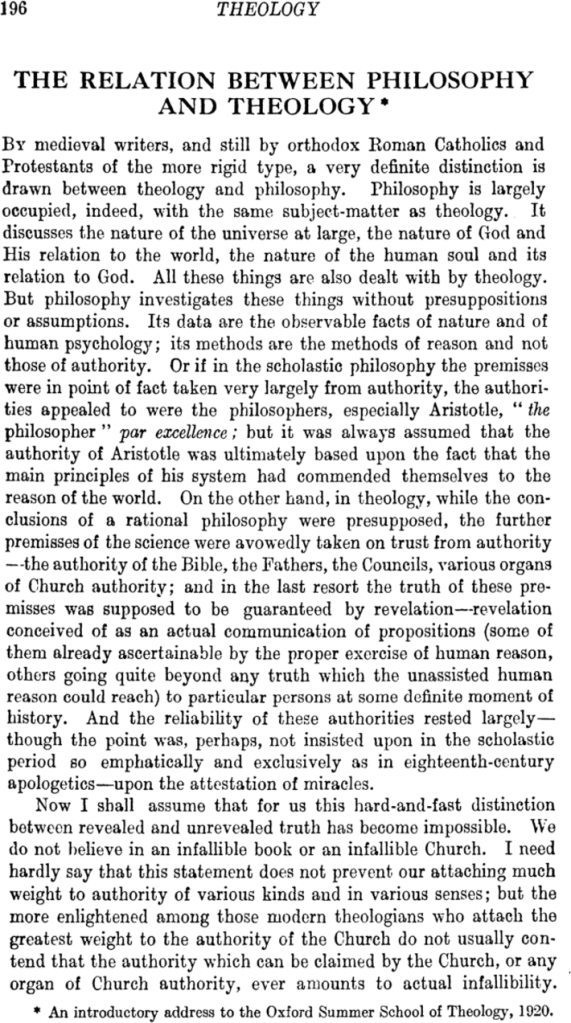
In the early centuries of the Christian era, theology and philosophy were inseparable disciplines.
Christian thinkers, such as Origen, Augustine of Hippo, and Thomas Aquinas, sought to reconcile the teachings of Christianity with the philosophical traditions of their time, particularly the works of ancient Greek philosophers like Plato and Aristotle.
During this period, theology was not conceived as a separate field of study but rather as a branch of philosophy.
It was known as “Christian philosophy” or “sacred philosophy” and aimed to explore the nature of God, the relationship between faith and reason, and the philosophical underpinnings of Christian doctrine.
Christian philosophers of the time drew upon the philosophical tools and concepts available to them to articulate and defend Christian beliefs. They engaged in profound philosophical inquiries, such as the nature of God, the problem of evil, the immortality of the soul, and the nature of divine revelation. These philosophical explorations formed the foundation of early Christian theology.
Thomas Aquinas
One notable example of the fusion of Christian philosophy and theology is the work of Thomas Aquinas, who sought to synthesize the teachings of Christianity with the philosophy of Aristotle.
Aquinas’s magnum opus, the Summa Theologica, exemplifies the integration of philosophical reasoning and theological doctrine.
In this monumental work, he utilized Aristotelian concepts and logic to expound upon Christian theology, addressing topics such as the existence of God, ethics, and the nature of the soul.
Philosophical inquiries foster deeper understanding of Biblical texts.
What are some specific biblical texts that are often studied in the context of biblical philosophy?
The Book of Genesis:
The opening chapters of Genesis offer profound philosophical reflections on creation, the nature of humanity, and the relationship between God and the world. These texts invite philosophical contemplation on topics such as the origin of the universe, the existence of God as the ultimate creator, and the moral implications of the human will.
“In the beginning, God created the heavens and the earth…God created humankind in his own image, in the image of God he created them; male and female he created them…And God saw everything that he had made, and behold, it was very good.” – Genesis 1:1, 27, 31
The Book of Job:
This book engages in a profound exploration of human suffering, theodicy, and the nature of divine justice. It raises philosophical questions regarding the problem of evil, the limits of human understanding, and the complexities of divine providence. The dialogue between Job, his friends, and God offers deep philosophical insights into the human condition and the mysteries of existence.
“Where were you when I laid the earth’s foundation? Tell me, if you understand. Who marked off its dimensions? Surely you know! Who stretched a measuring line across it?…Will the one who contends with the Almighty correct him? Let him who accuses God answer him!” – Job 38:4-5, 40:2
The Sermon on the Mount (Matthew 5-7):
In this renowned sermon, Jesus presents a series of ethical teachings and moral principles that have profound implications for philosophical contemplation. The teachings on love, forgiveness, and the pursuit of righteousness prompt philosophical reflections on ethics, virtue, and the nature of a just society.
“Blessed are the pure in heart, for they shall see God. Blessed are the peacemakers, for they shall be called sons of God. Blessed are those who are persecuted for righteousness’ sake, for theirs is the kingdom of heaven.” – Matthew 5:8-10
The Gospel of John:
This gospel contains profound philosophical themes, particularly in its prologue (John 1:1-18) where the concept of the Logos (Word) is presented. The Logos, understood as the divine reason or wisdom, invites philosophical contemplation on the relationship between God and the world, the nature of truth, and the possibility of divine revelation.
“In the beginning was the Word, and the Word was with God, and the Word was God. He was with God in the beginning. Through him all things were made; without him nothing was made that has been made…The Word became flesh and made his dwelling among us. We have seen his glory, the glory of the one and only Son, who came from the Father, full of grace and truth.” – John 1:1-3, 14
The Book of Ecclesiastes:
This introspective book reflects on the meaning and purpose of life, the nature of human striving, and the transient nature of worldly pursuits. It raises philosophical questions about the nature of happiness, the pursuit of wisdom, and the existential challenges of the human experience.
“Vanity of vanities, says the Preacher, vanity of vanities! All is vanity. What does man gain by all the toil at which he toils under the sun?…I have seen everything that is done under the sun, and behold, all is vanity and a striving after wind.” – Ecclesiastes 1:2, 14
In conclusion, philosophy, with its timeless pursuit of wisdom, offers us a profound journey of intellectual exploration. From the ancient Greeks to the modern day, philosophers have grappled with humanity’s most profound enigmas, seeking to understand the nature of existence, knowledge, ethics, and reality.
Philosophy permeates every facet of our lives, shaping our decision-making, enhancing our critical thinking skills, nurturing personal growth, fostering constructive dialogue, and guiding our ethical conduct. With its compatibility with scripture and its ability to foster deeper understanding within religious communities, philosophy continues to provoke thought and inspire meaningful contemplation. As we delve into the realms of philosophy, we awaken to the allure of unraveling life’s mysteries and embark on a transformative quest for wisdom and enlightenment.
Embracing philosophy, we empower ourselves to navigate the complexities of existence with clarity, curiosity, and a deeper understanding of the world around us.