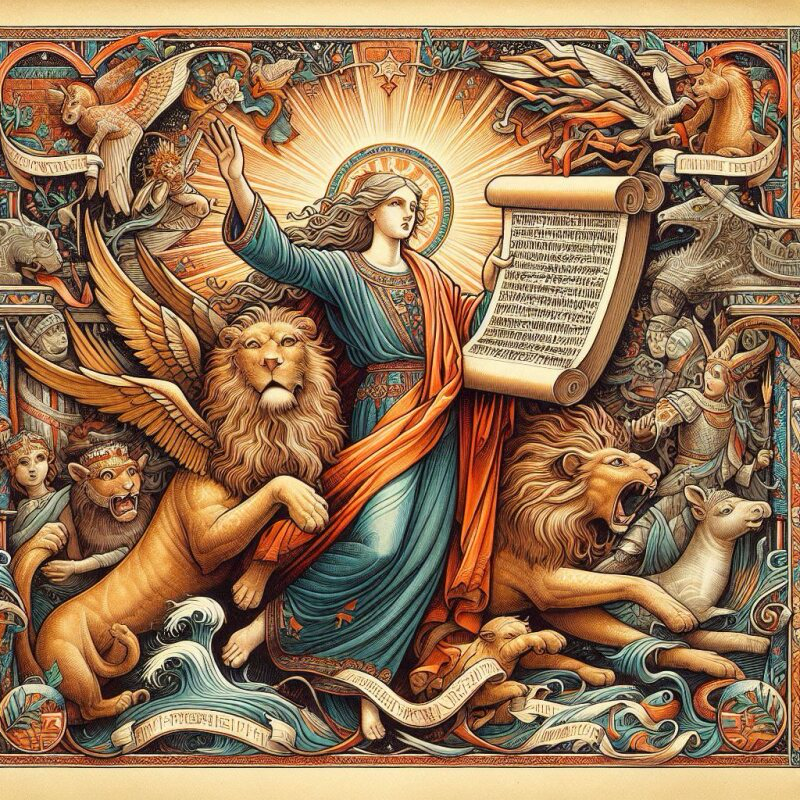
Tag: Jesus

  • Jesus

    Jesus

    Do You Think You Know Jesus?

    They Said Jesus Was
    Insane. Mad. Crazy. Strange.

    The image of Jesus most people hold is wrong and wrung through centuries of:

    • ideological whitewashing
    • beautified marketing
    • sanitized Sunday School summaries.

    He’s often pictured as an ethereal peace-giver, universally adored, calmly glowing in a ‘soft sepia light’.

    But this wasn’t the Jesus known to his followers. Not even close.

    In fact, many who encountered Jesus in the flesh found him either;

    1. confusing, at best
    2. mentally unstable, at worst.

    He wasn’t simply controversial, he was considered a threat to both religious orthodoxy and social order.

    The sanitized version of Christ so many cling to was shaped after the cross, after the church industrial complex took control of his narrative.

    Let’s take a scalpel to the original reactions—the raw, unsettling perceptions of Jesus while he was still walking the earth.

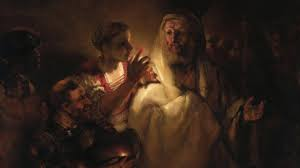
    His Family Thought He’d Lost His Mind

    The Gospel of Mark pulls no punches. In Mark 3:21, we’re told that Jesus’ own family said:

    “He is out of his mind.”


    Yes, his own bloodline. Not strangers. Not critics. His family. Pause there…

    Imagine. Imagine the weight of that.

    You’ve awoken to a Divine Knowing, a consciousness that cracks open reality—and the people who know your voice best say:

    “You’ve snapped.”


    It wasn’t mockery from outsiders that came first; it was internal doubt.

    His kin likely feared he’d gone mad with something akin to messianic delusion.

    Or perhaps they were embarrassed by his sudden rise as a controversial street-preacher confronting the Government and Church…

    He spoke vehemently against both Rome and the temple elite.

    Religious Leaders:

    “You’re Breaking the Law and Blaspheming“

    The religious class didn’t just dislike Jesus—they actively plotted his removal.

    The scribes and Pharisees viewed him as a heretic, accusing him of;

    • violating the Sabbath
    • flouting Mosaic Law
    • daring to forgive sins.

    —a divine prerogative.


    His miracles weren’t applauded; they were denounced as works of Beelzebub.

    Let that settle: divine acts being interpreted as demonic.

    … this was normal folk… the acceptable people… The community.

    This wasn’t petty disagreement.
    This was existential threat-level panic from the religious hierarchy.

    They saw in Jesus… not just a radical voice—but someone who dismantled their very grip on sacred authority.

    Public Whispers: “He Has a Demon and Is Mad“

    John 10:20 captures this damning public sentiment:

    “He has a demon and is mad; why listen to him?”

    These weren’t elite theologians.

    These were everyday observers—

    • neighbors
    • townsfolk
    • bystanders.

    Jesus’ words, while layered with profound gnosis (wisdom), sounded unhinged to the average ear.

    And truthfully, wouldn’t they today? I mean… They do.

    Imagine someone saying,

    “Before Abraham was, I am.”

    Or calling God their literal Father, claiming to bring not peace but a sword.

    If spoken in today’s marketplace, they’d be dismissed as spiritually schizophrenic, or worse.

    So what’s changed?
    Only the power structure that codified his words.

    Outside the Bible: Even More Scathing Views

    This doubt wasn’t exclusive to Jewish contemporaries.

    Roman voices and philosophers took their shots, too.

    Talmud

    The Talmud contains cryptic but deeply derogatory references to Jesus—branding him a sorcerer who led Israel astray.

    He is also said in the Talmud to be swimming in hot excrements.

    These weren’t passive critiques.

    They were sharp rejections by those who saw his influence as spiritually treacherous.

    Roman Philosophers

    Roman historian Tacitus referred to Christianity as a “pernicious superstition,” blaming the followers of Christ for corrupting public morals.

    To Roman minds, Christ’s followers were:

    irrational fanatics clinging to a crucified troublemaker.

    Celsus

    And then there’s Celsus, the ancient philosopher and intellectual, who reportedly called Jesus

    “small, ugly, and undistinguished,”

    claiming his father was a Roman soldier—a jab meant to invalidate his divine paternity and tarnish the virgin birth narrative.

    Jesus wasn’t revered by the intellectual elite of his time.

    He was;

    • mocked
    • dismissed
    • vilified.

    Why This Matters

    This isn’t about shock value or anti-Christian rhetoric. It’s about truth-telling.

    When we sanitize the narrative of Jesus to make him palatable. We also:

    • rob Him of the radical edge that threatened anti Christ power
    • offended institutions
    • deny the painful fact that he alienated his own family.

    His teachings were revolutionary because they disrupted—not because they fit neatly within pre-existing paradigms.

    So when you feel like your awakening makes others uncomfortable when your truth sounds like madness to the masses take comfort. You’re in excellent company.

    Because the real Jesus wasn’t crucified for being nice. He was crucified because he challenged the lies. And many thought he was insane for doing so. Truth rarely sounds sane to those who live comfortably in delusion.

    “And you will be hated by all for my name’s sake. But the one who endures to the end will be saved.”

    – Matthew 10:22
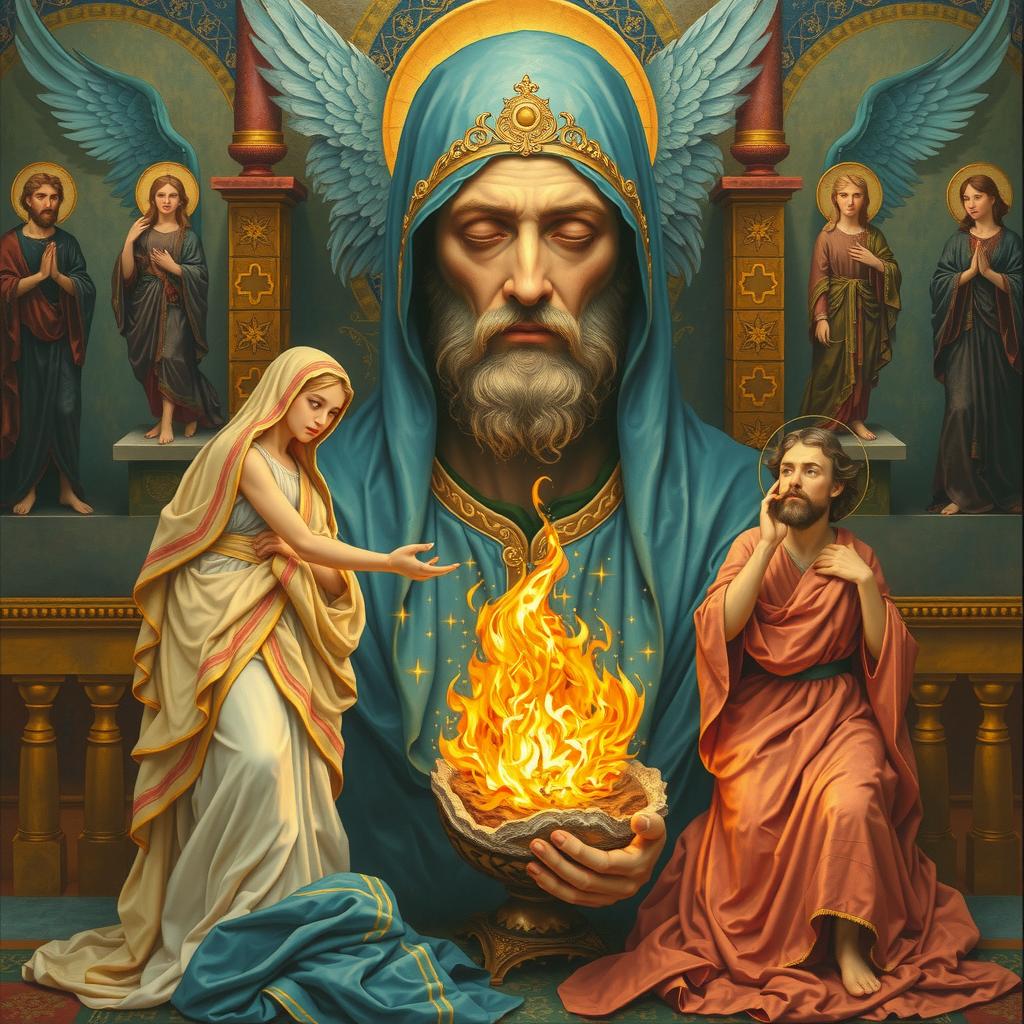
  • Determinism

    CHOICE OR FATE? DETERMINISM??

    FAITH

    In the arena of existence, one question endures:

    Are we propelled by fate, driven by choice, or guided by a delicate dance between the two?

    Each path offers its own mystique, summoning us to dissect the interplay of destiny, fate, and free-will in shaping our lives and reality as a whole.

    The Emergence of Fate

    Fate represents the unseen architecture of our lives—a cosmic design that envelopes every step we take.

    It is the orchestrator of synchronicities and signs, suggesting that our experiences might be part of a grand laid out structure, initiated by a higher intelligence.

    This invisible thread forms the backdrop of our existence, like a silent script written in the stars that sometimes we see how it dictates our journey.

    The Empowerment of Choice

    Contrasting fate is the power of choice—

    • our conscious ability to deliberate
    • decide
    • and act.

    In every fleeting moment, we stand at a crossroads, armed with the power to transform potentiality into reality.

    Our choices…

    • …whether deliberate
    • …or spontaneous.

    Choice carves new pathway, through a predetermined framework, affirming our unique role as co-creators of our destinies.

    The Synthesis

    A Cosmic Dance

    The truth, as I perceive it, lies not in the isolated domains of fate or choice, but in their connection, no matter how chaotic or volatile it appears.

    FATE IS AN ALREADY SET STAGE

    Fate sets the stage by placing us in a world of infinite complexities, yet within this arena, our choices illuminate the power of agency.

    Within fate your decisions become the act in the play that redefine the script with each break in line, as sin aka duality, causes is to forget choosing this character… MORE ON THAT IN ANOTHER ARTICLE…

    Fate merges the predetermined decision we made with the human self in all our duality.

    Embracing The Interplay

    Every decision— it can be a choice of…

    • love
    • defiance
    • surrender or
    • inquiry…

    These decisions serve as compelling evidence of the capacity for transformation. The inherent power within us shapes the circumstances we encounter, establishing a structure of cause and effect that upholds duality and sin.

    While the forces of fate may direct the overarching narrative, it is within our responses that true freedom is forged.

    DESTINY + CONSCIOUS AWARENESS

    The co-operation between destiny and conscious choice is…

    • where meaning is born
    • where chaos finds order
    • where wisdom is ultimately distilled.

    We have a profound power to navigate the realms of existence.

    We are neither bound by the currents of destiny nor are we lost in the illusion of unbridled freedom.

    We are the artisans of our own lives, crafting purpose from the interplay of the inevitable and the intentional as they are One.

  • Beyond Pretense

    Beyond Pretense

    I am speaking from the edge of something vast, where theology crumbles when it lacks the FIRE of embodied truth, where belief without encounter is like a noisy gong.

    The microcosm, the narrow frame of earthly experience, cannot contain the soul that has touched the Infinite Macro.

    Those who have not walked through this abyss of the DARK NIGHT scoff at my words, but their understanding is not required.

    Truth does not need permission to be what it is.

    Purity is not the lack of imperfection but the result of an alchemical transformation, where the raw, impure elements of the self are refined, transmuted, and elevated into something higher.

    To encounter your impurities fully; to sit with the rejected, mocked, and misunderstood parts of yourself without fleeing:

    that is holiness.

    Not the pretense of righteousness, but the radical willingness to see, to burn, and to emerge unchained.

    Those who fear discomfort will seek refuge, but that is not my burden even when they seek to place it upon me.

    You do not exist to amuse.

    You stand at the threshold between the fleeting and the eternal, this place is costly.

    To prioritize the Spirit over the flesh is madness, but it is wisdom to those who See.

    Doctrine may map the territory, but it is not the journey.

    Theology may offer words, but without Pneuma without the breath of Spirit it is an empty shell.

    The Divine moves beyond dogma, beyond human constructs, untamed and uncontainable.

    To follow Divinity is to risk everything. To refuse is to wither.

    Truth does not wait for approval. Truth does not soften itself to be palatable.

    You have already glimpsed it.

    Will you embody it, relentlessly, regardless of who follows or who turns away from you?

  • Resurrection Bible Note Highlights

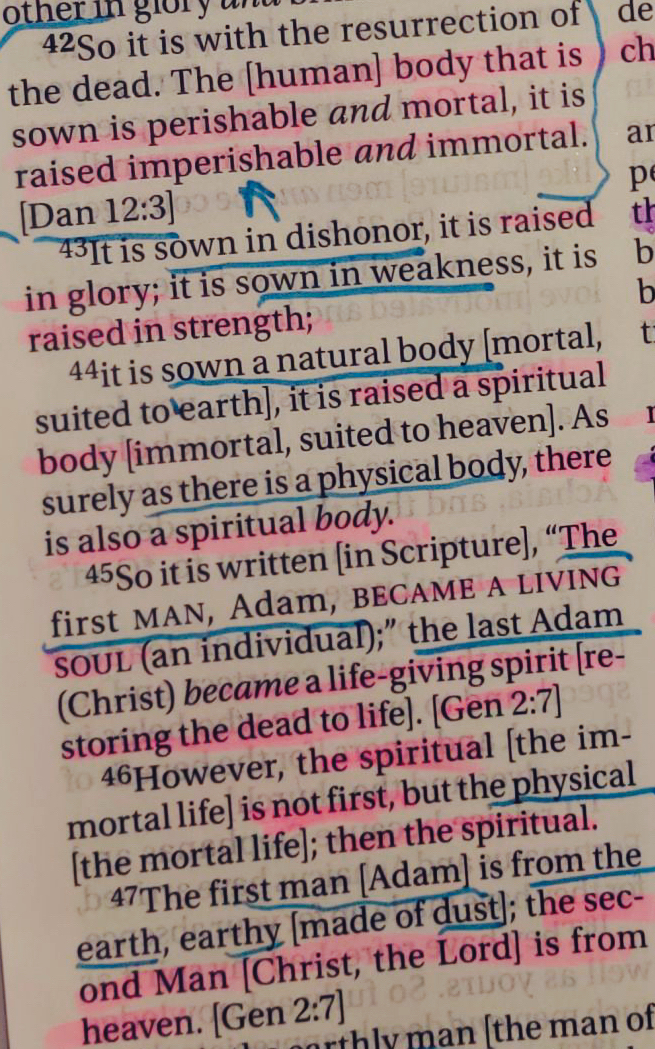
    The human body, as we experience it: flesh, blood, nerve endings, and all, is bound to the material world.

    It decays, ages, and ultimately returns to the dust from which it came.

    What transcends is not the physical body but the Ethereal body.

    the essence — the soul — the spirit— consciousness.

    Resurrection is a transformation into a glorified body– a heavenly body.

    This is not a mere continuation of the one we now inhabit.

    Paul’s writings in 1 Corinthians 15 describe a shift from a perishable, earthly body to an imperishable, spiritual form.

    Whatever survives death is not the frail, tangible flesh we now experience through.

    Heaven exists as a higher state of being, a realm beyond time and physical decay– a body of matter, subject to entropy, has no place there.

    The material body is a vessel, not the traveler.

  • Spiritual Adultery

    Spiritual Adultery

    Adultery is but a shadow or an Exoteric archetype corresponding with Spiritual Infidelity…

    Spiritual adultery is putting anything above the Spirit.

    It is the violation of the sacred Unity between the individual and their Divinity in Heaven.

    It is a betrayal of love, betrayal of grace, and rejection of guidance that God has.

    Just as physical adultery usually damages the trust and intimacy between mates in a union, this isn’t the point, it is the example leading to the point.

    Spiritual adultery damages the intimacy and trust in the relationship between you and yourself, even worse it cuts you off from the God of your soul.

    You can no longer comprehend him as his voice no longer guides you as you have severed that aspect of yourself off.

    MATERIAL WORLD IS TRANSIENT

    Jesus told his followers that the physical world is transient but the spiritual realities He taught about are Eternal.

    ALLEGORICAL COMPREHENSION REVEALS PROFUNDITY

    Throughout scripture, physical phenomena are regularly used as allegories for profound spiritual truths.

    The prophets and apostles understood this well, as their writings are rich with metaphor and symbolism.

    Even acts as serious as adultery have deeper layers of significance, as both the prophets and Christ himself indicated.

    When God called Israel his wife through the prophets Jeremiah and Isaiah, he was illuminating profound mystical realities about humankind’s relationship with the divine. As James wrote, friendship with “the world” makes us enemies of God – and the “world” here refers not just to physical places and people, but the desires and allurements that captivate our hearts and minds.

    By understanding the earthly realities Jesus and the prophets spoke of as representatives of higher spiritual realities, we penetrate beneath surface meanings. We see how God was trying to warn Israel, and all humanity, about straying from intimate connection with our divine Source. Physical adultery reflects humanity’s natural tendency to replace love for God with love of lesser, temporary things that cannot satisfy our souls.

    Christ came to lift our eyes above earthly distractions, to the eternal spiritual verities of which our physical, temporary experiences are but pale foreshadowings. When we discern the fullness of meaning behind biblical passages, we find profound wisdom for nurturing an enduring marriage of spirit with God. May this deeper perspective guide us to cherish what truly endures, now revealed without a veil.

    RESOURCES

    ‡ Jeremiah 3:20- Surely, as a treacherous wife leaves her husband, so have you been treacherous to Me, O house of Israel, declares the LORD.’ ”

    ‡ Isaiah 1:21- How the faithful city has become a whore, she who was full of justice! Righteousness lodged in her, but now murderers.

    ‡ Isaiah 54:5- Your Maker is your husband, the LORD of hosts is His name; and the Holy One of Israel is your Redeemer, the God of the whole earth He is called.

    ‡ Isaiah 57:8- Behind the door and the doorpost you have set up your memorial; for, deserting Me, you have uncovered your bed, you have gone up to it, you have made it wide; and you have made a covenant for yourself with them, you have loved their bed, you have looked on nakedness.

    ‡ James 4:4,5- You adulterous people! Do you not know that friendship with the world is enmity with God? Therefore whoever wishes to be a friend of the world makes himself an enemy of God. Or do you suppose it is to no purpose that the Scripture says, “He yearns jealously over the spirit that He has made to dwell in us”?

    ‡ Revelation 17:5- And on her forehead was written a name of mystery: “Babylon the great, mother of prostitutes and of earth’s abominations.”

    ★ 1 John 2:15,16-

    Do not love the world or the things in the world. If anyone loves the world, the love of the Father is not in him. For all that is in the world—the desires of the flesh and the desires of the eyes and pride of life—is not from the Father but is from the world.

    ‡ Colossians 3:2- Set your minds on things that are above, not on things that are on earth.★

  • Law Of Materiality VS Spirit

    Law Of Materiality VS Spirit

    Christ is the fulfillment of the law, bringing righteousness to all who believe in Him.

    He, through His Death, revealed the essence of the shadow’s Truth in Life—the Law is the shadow.

    Before Faith came (Faith is Christ), we were held captive (by sin) under the law, imprisoned until the coming Faith would be revealed.

    Faith was Revealed in Christ.

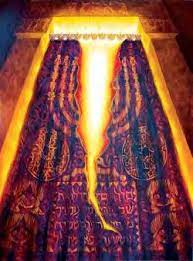
    Christ was revealed; He removed the veil that kept contained the Secret of the true Spiritual dimension, the Heavenly treasures—the Ethereal law…

    There is REAL Peace in His Spirit.

    He Himself is our peace, bringing Unity between The Father and His children through Christ…

    He has broken down in His own sinless flesh the separating wall of hostility and opposition between God and us, His people, by abolishing the law of commandments expressed in ordinances…

    Fisher Digital Publications
    Tearing of the Temple Curtain

    (Expressed in ordinances is how human ACTS) Ordinances are expressed through bodily effort. God got rid of the law of commandments that are expressed with the flesh (the material), but not the law of commands, as He intended from the Spirit. That’s why Paul says over and over: “with the Law of the Spirit”…

    In the book of John, Jesus said the flesh is of no profit.

    The Law, being instigated or initiated in the flesh (because the flesh is full of evil), is there to keep us stuck in this dimension (unable to expand into the Heavenly Realm because if we did, we would have been utterly destroyed). We were for a period unable to see the things of God. The law that kept us in constant shame was actually our guardian until Christ came. God gave us the Law as a guardian in order that we might be justified by faith. But now that faith has come, we are no longer under a guardian, for in Christ all who believe are sons of God, through faith.

    Many think God is evil for having His son come down to suffer and die, but that is the only way the flesh – the material – can be reconciled with one another. So Jesus was appointed to go on the cross and take in His flesh and unworthy death, taking what we deserve, so that His Father may be pleased because that’s the only way flesh can be reconciled with Spirit. He might create in Himself one new man in place of the two, so making peace…

    Who do we think we are, being literally matter, physical, temporal, telling the creator of ALL things is wrong or evil? He knows what needs to take place, He did create it. Formulate every formula.

    Bear one another’s burdens, and so fulfill the law of Christ. But now we are released from the law, having died to that which held us captive, so that we serve in the new way of the Spirit and not in the old way of the written code.

    He saved us, not because of works done by us in righteousness, but according to His own mercy, by the washing of regeneration and renewal of the Holy Spirit, so that being justified by His grace we might become heirs according to the hope of eternal life. Titus 3:5‭, ‬7

    So too at the present time, there is a remnant chosen by grace. But if it is by grace, it is no longer on the basis of works; otherwise, grace would no longer be grace. Yet we know that a person is not justified by works of the law but through faith in Jesus Christ, so we also have believed in Christ Jesus, in order to be justified by faith in Christ and not by works of the law because by works of the law, no one will be justified. I do not nullify the grace of God, for if righteousness were through the law, then Christ died for no purpose.

    Galatians 2:16‭, ‬21

  • Be Known By Him

    Be Known By Him

    To draw near to God is to be known by God.

    • James 4:8 – “Draw near to God and He will draw near to you.”
    • Corinthians 8:3 – “But if anyone loves God, he is known by God.”
    • Psalm 139:1 – “O Lord, you have searched me and known me.”

    Wisdom is not: Do you know God?

    Wisdom is: Does He know you?

    ARE YOU KNOWN?

    Jeremiah 1:5 says; “Before I formed you in the womb I knew you, before you were born I set you apart; I appointed you as a prophet to the nations.”

    He alone imparts us the veins connecting Life to our body and soul, linking our capacity to grasp this Knowledge.

    Without this vesicular “pulse,” no man can master “KNOWING” because it is the language of the Heavens, not the language of man.

    To come to know Him, we must read His Word, pray and seek Him with all our hearts (Jeremiah 29:13).

    When we do this, we will grow in our knowledge of Him and be blessed with His wisdom and insight into His ways, which often oppose the world’s ways.

    Without His divine beat,
    We'd never understand,
    The language of the heavens,
    Not that of man.
    It's the pulse of God that we can know;
    It's the only way to do spiritually grow,
    It's the language of the heavens,
    That we,as God's, will know.
  • THE ARCHETYPE OF JESUS IN LITERATURE

    Jesus, also known as Jesus of Nazareth or Jesus Christ, is a historical and religious figure who appointed Christianity. The archetype of Jesus has been utilized in literature for centuries, representing the ultimate embodiment of virtue, selflessness, and sacrifice. This guide will examine the archetype of Jesus in literature, exploring its origins, evolution, and significance.

    Definition of an Archetype

    The term archetype contains various meanings. It can refer to an original model that all other similar persons, objects, or concepts are derived from, a prototype.

    In literature, it can refer to a character, story, or object based on a known character, account, or object. It can also represent an ideal example of something, a quintessence.

    In psychology, Carl Jung postulated that an individual’s unconscious inherited universal patterns of thought from the past collective experience of humanity. Yet, in textual criticism, it refers to the original manuscript or photograph from which copies are made.

    An archetype is a universal symbol, motif or pattern that evokes deep human emotions and experiences. It represents a recurring idea, behavior, or personality trait that is found across different cultures and periods of history.

    Common Archetypes

    The Hero:

    The hero is often the main protagonist who sets out on a journey or mission to save someone or something important. The hero represents the courage and determination that we must all summon to overcome obstacles and achieve our goals.

    The Villain

    The villain archetype represents our darker impulses and desires. The villain is often the main antagonist who seeks to block the hero’s progress. The villain represents our fears, insecurities and negative emotions that we need to confront and overcome.

    The Wise Old Man

    Representing knowledge and experience. The wise old man character is often a mentor or advisor to the hero, offering guidance and wisdom. The wise old man represents the importance of learning from our mistakes and experiences.

    The Mother

    The mother archetype represents nurturing, love, and protection. The mother is often seen as the caretaker and provider, representing our need for security and safety.

    The Trickster

    Represents chaos and mischief. The trickster is often unpredictable and mischievous, challenging our assumptions and pushing us out of our comfort zones.

    The Shadow

    The shadow archetype represents our dark side, the parts of ourselves that we often try to hide or deny. The shadow is often the side of ourselves that we are afraid to confront, but it is also the source of our creativity and strength.

    Why Are Archetypes Important?

    Archetypes are important because they help us make sense of the world and our place in it. They provide a framework for understanding the complex emotions and experiences that we all face. By recognizing and understanding archetypes, we can gain insight into ourselves and the world around us, and we can use this knowledge to become better human beings.

    Archetype Overview

    Archetypes are deeply rooted in our collective unconscious and influence the way we see ourselves, others, and the world around us. Some common archetypes include the hero, the villain, the mentor, the trickster, the caregiver, and the explorer.

    Brief History and Significance of the Archetype of Jesus

    The archetype of Jesus in literature can be traced back to the Bible, where Jesus is portrayed as a selfless and compassionate figure who sacrificed his life for the salvation of humanity. The portrayal of Jesus in the Bible has been a source of inspiration for writers throughout history, who have used his story to explore the human condition and the search for redemption.

    Dante’s Divine Comedy

    One of the earliest examples of the archetype of Jesus in literature is Dante’s Divine Comedy, written in the 14th century. In this epic poem, Jesus is depicted as a symbol of love and mercy, guiding the narrator through the afterlife. Dante’s portrayal of Jesus as a savior and a guide was influential in shaping the Christian imagination.

    The Death of Ivan Ilyich

    Another significant example is Tolstoy’s The Death of Ivan Ilyich, written in the 19th century. In this novel, Jesus is portrayed as a symbol of forgiveness and compassion, offering redemption to even the most flawed and sinful individuals. Tolstoy’s portrayal of Jesus as a figure of compassion and forgiveness reflects his own spiritual beliefs and his rejection of institutionalized religion.

    Hemingway’s The Old Man and the Sea

    In the 20th century, the archetype of Jesus underwent a radical transformation, reflecting the changing cultural and societal values of the time. In Hemingway’s The Old Man and the Sea, Jesus is represented as a symbol of perseverance and fortitude, inspiring the protagonist to overcome his physical and emotional struggles. In Morrison’s Beloved, Jesus is portrayed as a figure of resistance and rebellion, challenging the oppressive forces of slavery and racism.

    Analysis of the Archetype of Jesus in Literature

    The archetype of Jesus in literature represents the ultimate embodiment of goodness, selflessness, and sacrifice. Its origins can be traced back to the Bible, but its evolution reflects the changing cultural and societal values of different historical periods. The archetype f Jesus in literature serves as a symbol of hope, redemption, and transformation, encouraging readers to reflect on their own lives and search for transcendence.

  • Resurrection Archetype Perfected by Jesus Christ

    Resurrection Archetype Perfected by Jesus Christ

    The resurrection of Jesus Christ is the most significant event in the world.

    His resurrection was the Gift whereby God, The Father raised Jesus from the dead three days after His crucifixion.

    This article will investigate the idea of the resurrection of Jesus as an archetype, analyzing its meaning in analytical psychology and Christian theology.

    What Is An Archetype?

    As I delved into the works of Carl Jung, I was struck by his fascinating concept of archetypes. Ingrained in our evolutionary history, these universal symbols express the most profound human emotions and experiences.

    Archetypes are present in all cultures.

    Understanding archetypes has given me a new perspective on the collective unconscious and the ways we relate to each other as human beings. It’s truly remarkable how these ancient symbols continue to shape our lives and bring us together, even without or awareness.

    The archetype of resurrection is one of the most potent and pervasive archetypes.

    It is found in almost all cultures, spanning back to ancient times. For example, Egyptian mythology includes the story of Osiris, who was murdered by his brother and resurrected by his wife, Isis. Greek mythology consists of the story of Dionysus, who was resurrected after being torn apart by the Titans. The idea of resurrection is also found in Hinduism, with the level of Vishnu’s resurrection, and in Judaism, the story of the resurrection of Ezekiel’s dry bones.

    In Christian theology, the resurrection of Jesus is central to the Christian faith. The resurrection of Jesus is the most critical event in human history because it demonstrates God’s power over death and sin. Many scholars have also argued that the resurrection of Jesus is an archetype in its own right, reflecting the most profound human fears and aspirations.

    In contemporary psychology, the resurrection archetype has been explored extensively, particularly in trauma studies.

    Rising from the dead is a powerful symbol of overcoming adversity and the ability to start anew. The concept of personal resurrection can be seen in the recovery process of individuals who have experienced trauma or addiction as they rebuild their lives and find a new sense of purpose.
    The resurrection archetype can also be seen in everyday life, such as the changing seasons and the growth and rebirth of plants and animals. It is a reminder that life is cyclical and light comes from darkness.
    Whether seen as a spiritual or psychological concept, the resurrection archetype symbolizes hope, regeneration, and renewal. It reminds us that even amidst pain and suffering, there is the potential for growth and transformation. As we navigate life’s challenges, we can draw upon the strength of this archetype to find the courage to rise again.

    The archetype of resurrection has a powerful and enduring presence in human culture, encompassing a range of religious and spiritual beliefs, personal transformation and healing, and deep-seated human fears and aspirations. While some may believe that the resurrection of Jesus is a historical fact, others see it as a powerful archetypal expression of human experience. Regardless of one’s beliefs, the resurrection of Jesus continues to be a source of profound inspiration and meaning for many people worldwide.

    Pop culture

    Furthermore, the resurrection archetype has also found its way into pop culture. For instance, superhero movies often depict characters who undergo a resurrection, where they rise from the ashes to become stronger. This is not a coincidence. The resurrection archetype resonates with us deeply because it speaks to our human desire for transformation, growth, and overcoming adversity.

    In conclusion, the resurrection archetype is a powerful symbol that inspires us in various ways. Whether dealing with personal struggles or societal issues, the idea of rising from the ashes and starting anew can offer us hope and the motivation to keep going. It reminds us that even in our darkest moments, there is always the potential for transformation and renewal.

    It also reminds us that we can find a way to transcend our mortal limitations and find meaning in the face of suffering and death. Ultimately, the resurrection archetype speaks to the human capacity for transcendence and the belief that there is always more to life than meets the eye. It reminds us that there is a spiritual dimension to our existence and that even when we face seemingly insurmountable challenges, we can find a way to rise above them and discover new levels of meaning and purpose. So whether you are a believer or simply someone interested in exploring the depths of human experience, the resurrection archetype is a rich and rewarding topic worth exploring.

    Further Reading/Resources

    EXPLORING THE 12 STAGES OF THE HERO’S JOURNEY PART 11: THE RESURRECTION