Tag: information

  • Mind Trap

    Mind Trap

    We like to think of our minds as tools of clarity, but more often than not, they are cages.

    Cognitive Rigidity and Perceptual Limitations

    Cognitive rigidity and perceptual limitations are not abstract ideas—they are the invisible bars that confine how we see, think, and act in the world.

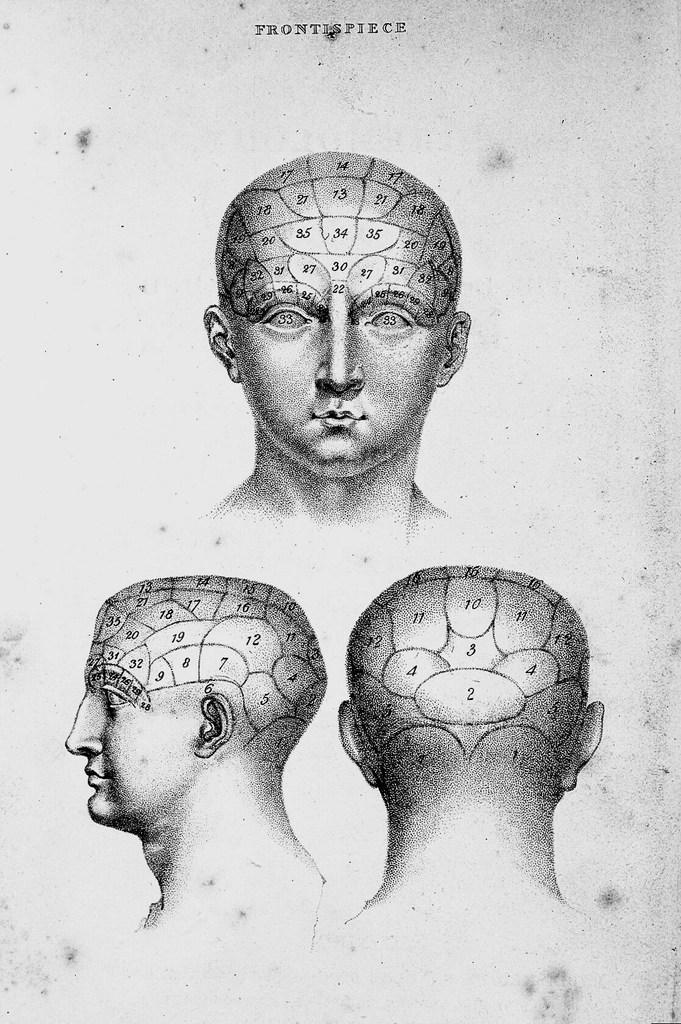
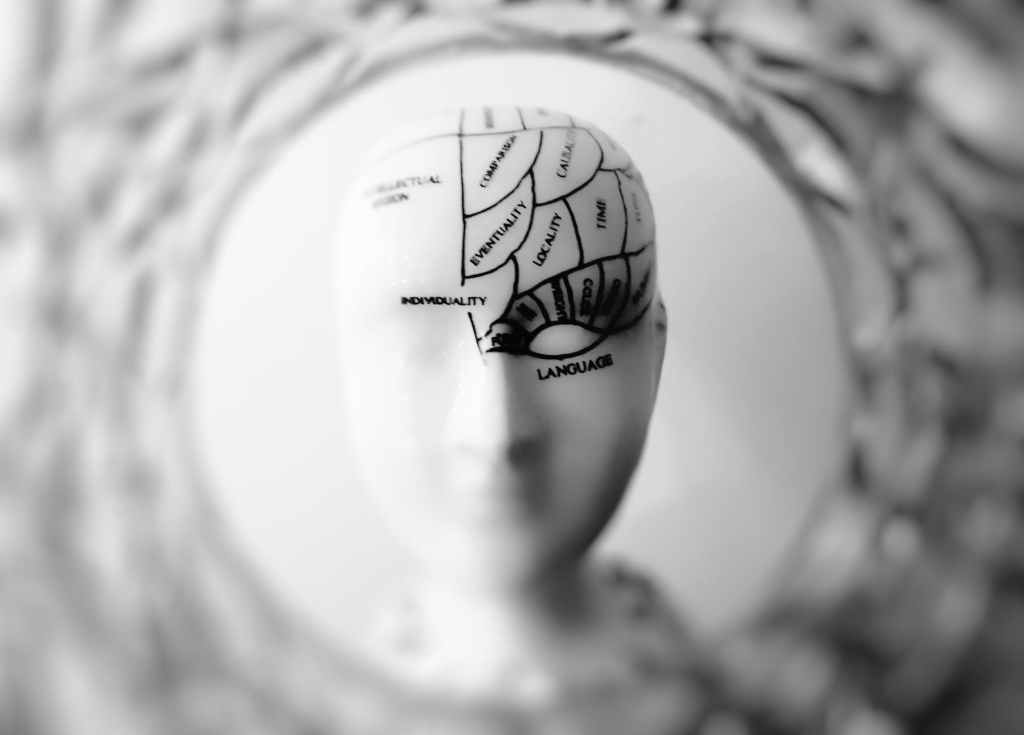
    Phrenology, doctrine mind : relations“/ CC0 1.0

    CAGE OF THE MIND

    Cognitive rigidity is the stubborn insistence that our way of thinking is the only way.

    It shows up in small, everyday ways:

    • refusing to consider another perspective
    • dismissing evidence that challenges our beliefs
    • or sticking to habitual responses when flexibility is required.

    It is mental inflexibility masquerading as certainty.

    This rigidity is rarely neutral. It filters experience, allowing only what aligns with our preconceptions to pass through.

    What we notice and refuse to notice is determined less by reality and more by the contours of our existing beliefs. The mind becomes its own jailer.

    FILTERED VISION

    Perceptual limitations compound this problem. Our senses, our expectations, and our biases shape what we perceive.

    Two people can witness the same event and walk away with entirely different “realities,” each convinced theirs is the truth.

    Culture, language, upbringing, and personal trauma all function like lenses, coloring everything we see.

    When cognitive rigidity meets these perceptual filters, the feedback loop begins: our beliefs dictate what we perceive, and our perceptions reinforce our beliefs.

    We become prisoners of our own limited frameworks, blind to the complexity—and often the truth—of the world around us.

    Breaking the Loop

    Escaping this loop is not about acquiring more information. It is about retraining the mind to see what it usually ignores:

    Observe without judgment. Watch your thought patterns and notice when you shut down possibilities automatically.

    Seek what challenges you. Engage with ideas and perspectives that make you uncomfortable.

    Question your perception. Ask yourself what you might be missing, what biases are filtering your experience.

    Embrace intellectual humility. Accept that your understanding is provisional, incomplete, and subject to correction.

    The moment we recognize that perception is always partial, and thought is always provisional, the bars of the cage begin to loosen.

    Clarity is not a gift; it is a discipline.

    The Work of Liberation

    This is the work of liberation: not avoiding rigidity, but confronting it; not denying perceptual limits, but piercing them.

    The mind can be trained to perceive more, think more flexibly, and respond more intelligently.

    It is uncomfortable, but truth always is.

    We cannot see everything, but we can see more than we did yesterday.

    And that is where freedom begins.

  • The Three Realms of The Human Mind

    The Three Realms of The Human Mind

    The Conscious, the Subconscious, and the Unconscious.

    Each plays a pivotal role in shaping our thoughts, emotions, and actions, contributing to the complexity of our cognitive landscape.

    1. Conscious

    In a state of consciousness, heightened awareness allows us to discern and differentiate our thoughts, feelings, and actions with precision.

    This heightened state of alertness enables a focused engagement with the present moment.

    2. Subconscious

    The subconscious, akin to a nuanced filter, operates beyond immediate awareness.

    It harbors both adaptive and maladaptive coping frameworks, influencing our reactions and actions.

    This hidden domain holds the key to deciphering events and emotions, with manifestations surfacing in both conscious and subconscious realms.

    It serves as a reservoir housing memory banks, thought and emotion generators, sensory input control, and a repository for habitual patterns.

    3. Unconscious

    Delving into the deep recesses of our past, the unconscious constitutes a reservoir of automatic mental processes.

    Within its depths lie repressed interpretations, decoding the thoughts and feelings associated with past events, including psychological trauma.

    The unconscious mind intricately weaves these elements into the fabric of our eveyday conscious and subconscious frameworks.

    FOREFATHERS OF MIND SCIENCES

    Sigmund Freud

    Sigmund Freud was an Austrian neurologist and the founder of psychoanalysis, a clinical method for treating psychopathology through dialogue between a patient and a psychoanalyst.

    He formulated the theory of the Oedipus complex, proposed the existence of an unconscious mind, and developed the idea of the id, ego, and superego as structural components of the human psyche.

    Additionally, Freud’s work significantly influenced the field of psychology and various aspects of Western culture.

    Carl Jung

    Carl Jung was a Swiss psychiatrist and psychoanalyst who founded analytical psychology.

    He is known for his concepts of the collective unconscious, archetypes, and the process of individuation. Jung emphasized the significance of symbolism, mythology, and the integration of opposing forces within the psyche.

    His work has had a profound impact on psychology, psychiatry, and various fields, influencing areas such as dream analysis, personality theory, and the study of cultural and religious symbolism.

    The main differences between Sigmund Freud’s psychoanalysis and Carl Jung’s analytical psychology lie in their perspectives on the unconscious, the role of the libido, and the significance of the collective unconscious and cultural symbolism.

    Freud’s psychoanalysis emphasizes the influence of early childhood experiences, the unconscious drive of the libido, and the concept of repression as a key mechanism shaping human behavior.

    In contrast, Jung’s analytical psychology expands on the collective unconscious, archetypes, and the process of individuation, focusing on the integration of opposing forces and the pursuit of wholeness or self-realization.

    Freud’s emphasis on the Oedipus complex and the role of sexual and aggressive instincts differs from Jung’s broader view of the unconscious, which includes personal and collective elements, as well as archetypal patterns that transcend individual experiences.

    Jung’s approach places greater emphasis on spirituality, mythology, and the symbolism found in various cultures, in contrast to Freud’s more clinical and biological focus on human behavior and mental processes.

    Analytical Psychology

    Analytical psychology, also known as Jungian psychology, is a branch of psychology developed by Carl Jung that focuses on exploring the depths of the unconscious mind and understanding the individual’s journey towards psychological wholeness. It places a strong emphasis on the exploration of the collective unconscious, archetypes, and symbolic imagery. Analytical psychology recognizes the importance of spirituality and the transcendent aspects of human experience. It views the psyche as a dynamic and self-regulating system, seeking to integrate and balance both conscious and unconscious elements.

    Analytical psychology, also known as Jungian psychology, and “regular” psychology, commonly referred to as mainstream psychology differ in several significant ways:

    Analytical psychology delves into the collective unconscious, archetypes, and symbolic imagery.

    Collective Unconscious

    Concept within analytical psychology that refers to the shared reservoir of knowledge, experiences, and symbols that all individuals inherit as a result of their common humanity. It is believed to be a deep layer of the unconscious mind that contains archetypes, universal themes, and instincts that are shared by all human beings across cultures and throughout history. This collective unconscious is thought to influence our thoughts, feelings, and behaviors, shaping our perceptions of the world and guiding our behavior in ways that are often unconscious to us. Through exploring and understanding the symbols and patterns that arise from the collective unconscious, individuals can gain insights into themselves, their relationships, and their place in the larger human experience.

    Archetypes

    Jungian archetypes are deeply rooted and universally recognized patterns of symbols and images that reside within the collective unconscious. These archetypes, such as the Hero, the Shadow, the Wise Old Man, and the Mother, represent fundamental aspects of the human psyche and serve as primordial templates for understanding and interpreting our experiences. They are symbolic guides that help us navigate the complexities of life, providing us with insight into our deepest fears, desires, and potentials. Jungian archetypes offer a profound framework for self-discovery and personal transformation, allowing us to tap into the depths of our unconscious and unlock greater awareness and wholeness.

    Symbolic Imagery

    Jungian symbolic imagery is a cornerstone of analytical psychology, emphasizing the profound power and significance of symbols and their role in unlocking the depths of the unconscious mind. Symbols are potent manifestations of archetypes, universal patterns of meaning that tap into the collective unconscious. They speak a language beyond words, evoking profound emotions, insights, and connections to the wider human experience. Through exploring and understanding these symbolic images, individuals gain access to a rich tapestry of personal and collective meaning, diving into the depths of their own psyche, unraveling mysteries, and opening doors to self-discovery, healing, and transformation. Jungian symbolic imagery offers a bridge between the conscious and unconscious realms, allowing individuals to navigate the complexities of their inner world and find deeper understanding and integration.

    Integration

    Jungian integration is the process of merging and reconciling the conscious and unconscious aspects of the psyche, as proposed by Carl Jung in analytical psychology. It involves recognizing and embracing the shadow, the hidden and often repressed aspects of ourselves, and integrating them into our conscious awareness. By acknowledging and working with the shadow, we can uncover and integrate the valuable lessons it holds, leading to greater self-understanding and wholeness. Jungian integration also entails recognizing and exploring archetypal patterns and symbols that arise from the collective unconscious, allowing individuals to tap into a deeper level of consciousness and find meaning and purpose in their lives. Through this process, we may cultivate a sense of balance, authenticity, and personal growth, enabling us to fully realize our potentials and navigate the complexities of the human experience.

    Related Work:

    Carl Jung –Art – Archetypes

    Carl Jung Was An Alchemist

    set of shiny transparent amethysts grown together
  • What Is Rationality?

    What Is Rationality?

    Do you ever find yourself making impulsive decisions based on your emotions, rather than taking a step back and logically evaluating the situation?

    Well, you’re not alone.

    It’s a crucial behavior that allows us to make sound judgments and decisions, free from the influence of our emotions or biases.

    Rationality is not just about logic, but it’s also about analyzing different options and making informed decisions based on evidence. It enables us to consider multiple perspectives before reaching a conclusion. Rationality is an integral part of our cognition and behavior, shaping our beliefs, attitudes, and actions. In this post, we’ll explore the different facets of rationality and discover what it means to make rational decisions.

    Rationality entails employing logical reasoning and factual evidence to ascertain truth and determine effective strategies for achieving desired objectives.

    I believe that God has given us the gift of reason to help guide us through life. Rationality is a medium for discerning the truth.

    Without the guidance of reason by the Holy Spirit, we become lost in a sea of confusion and uncertainty.

    The capacity for logical, rational, and analytic thought; the ability to think abstractly and solve problems is the basis for sound decision-making and the foundation of knowledge.

    Thank God for reason.

  • How Should Christians View Rationality?

    How Should Christians View Rationality?

    Have you thought about how your emotions can make you act impulsively without considering the bigger picture? It’s important to recognize this and take a moment to reflect before making decisions. This allows us to tap into our intuition and make choices that align with our higher purpose.

    Christians are encouraged to use reason and contemplation to guide their actions instead of letting their emotions lead them.

    No Rationality, No Discernment

    It’s important to strive for rationality if we want to make wise decisions and differentiate between truth and our emotional biases. Removing biases helps us see reality more clearly and make better judgments.

    Transcends Logic, Broadens Vision

    Being rational goes beyond just using deductive reasoning. It involves a complete process of evaluating options and making informed decisions based on evidence. This strategy helps us consider different philosophies and expand our worldview. It also improves our capacity to make wise choices.

    What are the fundamentals of Rationality?

    • Reasoning: Rationality is based on the principle of reasoning. It involves the ability to think logically and rationally, without any emotional biases or influences.
    • Evidence: Rationality requires evidence as a basis for decision making or beliefs. Rationality requires that beliefs and actions are grounded upon reason, observation, and evidence.
    • Consistency: Rationality requires coherence and consistency in thinking, decision making and actions. It requires consistency in applying reasoning principles.
    • Objectivity: Rationality requires objectivity. It requires one to evaluate evidence without being swayed by personal opinions, beliefs, biases or prejudice.
    • Critical thinking: Critical thinking is the ability to analyse, evaluate, and critique information and arguments in order to form accurate judgments or make sound decisions.
    • Open-mindedness: Rationality requires open-mindedness, the ability to consider alternative perspectives and ideas, and willingness to change one’s beliefs and thinking based on new evidence.
    • Clarity: Rationality requires clarity in thought, language and decision making. It requires that one’s thoughts and communication are understandable and clear.
    • Scepticism: Rationality requires a healthy level of scepticism. It involves a critical approach to accepting claims and evidence that likely warrant further inquiry.

    Beyond Ability; Rationally Gives Capacity For Ability

    Rationality is not just the ability to think logically and solve problems, but it is also the capacity to understand the world around us and make sense of it. At its core, rationality is the capacity in which we attain the ability to reason and make judgments based on evidence and logic, void of subjectivity.

    Foundation For Comprehending Truth

    It is the foundation of knowledge and the basis for sound decision-making.
    Without rationality, we would be unable to distinguish truth from falsehood or make informed choices about our lives.

    Rationality Is Not Simply Something To Do; But Something To BE

    Rationality isn’t just about solving problems and making decisions. It’s also a way of life that helps us connect with God on a deeper level. By using reason and logic, we can overcome our biases and assumptions and see the world more clearly. This spiritual path of rationality allows us to seek out greater truths and understand the mysteries of existence.

    Rationality Is Akin To Truth

    The quest for truth is a sacred journey that requires us to transcend the limitations of our subjective perceptions and embrace the objective reality that lies beyond.

    The Need For Children To Be Taught How To Think

    Reason is a gift, granted to us by God. As such, it is our responsibility to encourage and nurture rationally within ourselves and the upcoming generation of children.

    The shaping of young souls is a sacred duty, and the cultivation of reason is a crucial factor of this noble task. Reason, as a cornerstone of cognitive growth, has the power to shape our very essence, influencing our beliefs, attitudes, and actions. As such, it is essential to delve deeply into the profound significance of reason in the development of critical thinking skills in children. Yet, regrettably, the existing educational paradigm seems to neglect the vital function of reason in the formative years of childhood.

    Seeking The Very Substance Of Rationality

    Reason & Faith

    I believe that rationality involves using both reason and faith to determine what is true and find effective ways to achieve our goals. This approach recognizes that human intelligence has limits and that divine guidance is important in gaining understanding and wisdom.

    By reflecting on our thoughts, studying religious texts, and praying, we can go beyond the limitations of the physical world and connect with the ultimate source of truth and goodness. Rationality is a spiritual practice that helps us gain a deeper understanding of reality and our purpose in life according to God’s plan. It involves using logical reasoning and evidence to discover truth and make fair decisions.

    God has given us the gift of rationality to guide us through life’s complexities. It is like a beacon that illuminates our path and helps us navigate the challenges we face. Ultimately, rationality helps us grasp the truth about reality.

    Reason Alone Is Useless

    Reason is important for understanding the world, but it has limitations and biases, and must be complemented by other forms of knowledge to achieve true enlightenment.

    Rationality Without The Spirit Of Rationality Is Disorder & Chaos

    Without the Holy Spirit’s light, our human reasoning is not enough. We need the Holy Spirit’s spiritual enlightenment to understand life’s mysteries. Without it, we can’t fully understand things beyond the surface. The Holy Spirit helps us unlock our hidden wisdom and knowledge, leading us to true spiritual enlightenment and transcendence.

    A Stumbling Block

    Without the Holy Spirit, our reasoning is a hindrance and leads us astray. It causes confusion and doubt, making our judgments unreliable. We become vulnerable to the world’s whims, and our convictions become shaky. But with the Holy Spirit, our reasoning is elevated, and we can discern truth from falsehood with confidence. Our convictions become steadfast, and we can navigate life with grace and wisdom. The Holy Spirit unlocks our minds and hearts’ full potential, and without it, we’re lost in uncertainty and doubt.

    Faith & Reason Are to be Unified

    Faith and reason work together to help us understand life’s mysteries. They are not enemies, but partners. Reason helps us analyze and understand the world, while faith gives us access to spiritual and metaphysical aspects of existence.

    What Metaphysics?

    Metaphysics is a philosophy that studies the nature of reality. It explores the relationship between the mind and matter, substance and attribute, and potentiality and actuality.

    The Holy Spirit acts as a mediator between the divine and human, helping people connect the physical and spiritual realms.

    Epistemological Enlightenment

    The Holy Spirit’s illumination is seen as a type of epistemological enlightenment in philosophy. Epistemology deals with the nature of knowledge and how it is obtained.

    Holy Spirit Transcends Limitations

    The Holy Spirit’s light helps us understand the world better. It lets us see beyond our physical senses and minds to get a glimpse of reality. This spiritual insight helps us understand our purpose and existence from a heavenly perspective. We also become more aware of how everything is connected and can see patterns in the universe. This gift is priceless and allows us to see the world divinely.

    Blessed be the Almighty for gifting us with the power of reason, for it is a divine tool that every follower of Christ should embrace and utilize to its fullest potential.

  • UNDERSTANDING HUMAN WILL

    UNDERSTANDING HUMAN WILL

    Before we determine the extent of our influence in God’s creation, it is essential to comprehend the power of human will.

    Defined As The World Defines “Human Will”
    1. The human will is a mental faculty that allows individuals to make choices and decisions.
    2. It is responsible for determining or resolving issues and conflicts.
    3. The will is closely tied to a person's intentions, desires, and temperament.
    4. It is an active process of desire and choosing.

    The formation of a person’s will is a fascinating and intricate process that is shaped by a myriad of external factors.

    How is the human’s will formed?

    The formation of the will is a complex process that begins with the development of cognitive abilities.

    As humans grow, they learn to think critically, form opinions, and make decisions based on their own experiences and values. This allows them to form their will and to make choices that reflect their beliefs and preferences.

    External Influence

    The will is also shaped by external influences, such as the values and beliefs of family, friends, and society. These external influences can shape our beliefs, values, and decisions, and can even lead us to make choices that we wouldn’t have made on our own.

    Ultimately, the will of humans is formed through a combination of cognitive development, personal experience, and external influences.

    Biological Influence

    From a biological perspective, the development of the will can be influenced by genetic factors that shape a person’s temperament and personality. The prefrontal cortex, for instance, is responsible for executive functions such as decision-making, planning, and self-control, all of which are essential for forming and executing one’s will.

    Environmental Factors

    Environmental factors also play a significant role in shaping the will. The upbringing and cultural background of an individual can influence their values, beliefs, and attitudes, which in turn shape their decision-making processes.

    For example, children who are raised in environments that prioritize self-discipline and delayed gratification may be more likely to develop strong willpower and the ability to resist temptation.

    Personal Experiences

    Personal experiences, both positive and negative, can also influence the formation of one’s will. Trauma, adversity, and challenges can either weaken or strengthen an individual’s will, depending on how they are processed and coped with.

    Cultural Values

    Cultural values can also shape an individual’s will, as they provide a framework for what is considered desirable or acceptable behavior. Beliefs and values, whether religious, philosophical, or personal, also play a significant role in shaping one’s will, as they provide a sense of purpose and direction.

    The Beliefs of a Christian Regarding the Will of God.

    Proverbs 16:9 – “A man’s heart plans his way, but the Lord directs his steps.” This passage suggests that humans can make plans and decisions, but ultimately, God is in control and can guide their path.

    John 1:12-13 – “But as many as received Him, to them He gave the right to become children of God, to those who believe in His name: who were born, not of blood, nor of the will of the flesh, nor of the will of man, but of God.” This passage suggests that human will is not the sole determining factor in one’s relationship with God, but that it is God who enables people to become His children.