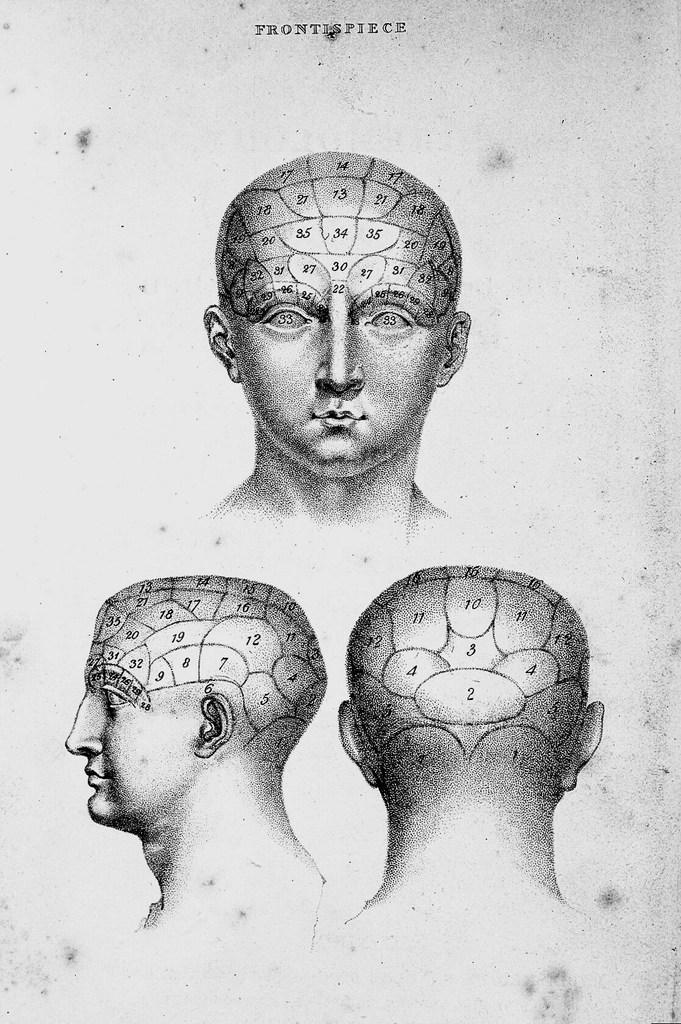
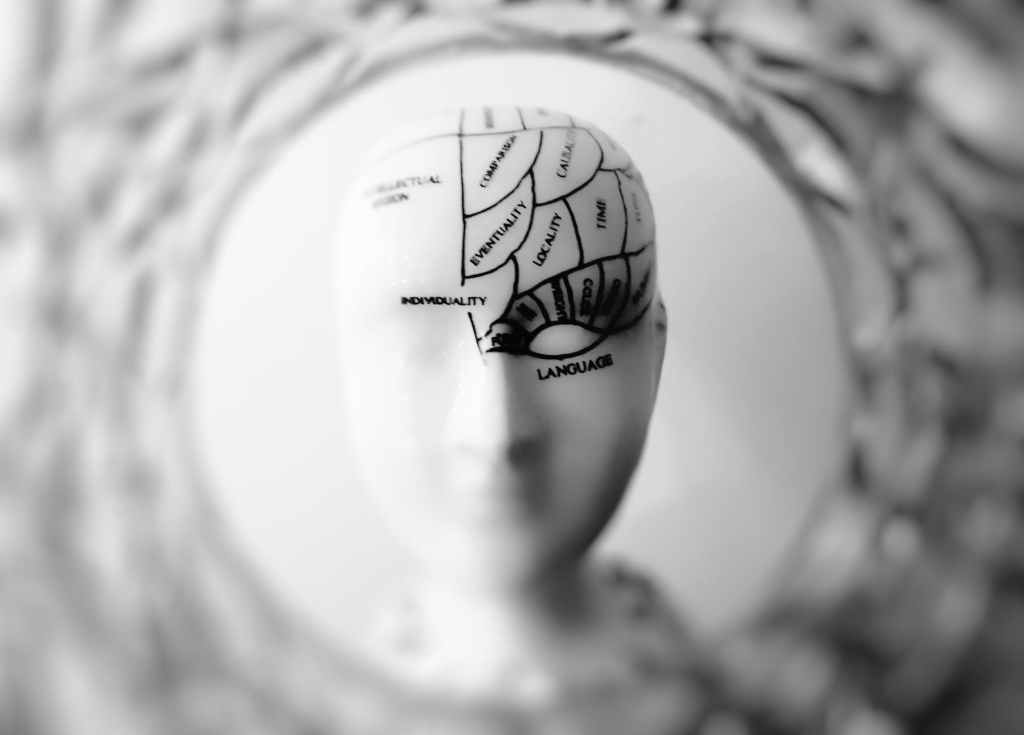
There is a kind of knowing that does not ask permission from the mind.
It does not build a case.
It does not cite its sources.
It arrives already finished — and you are left, afterward, trying to reverse-engineer a reasoning process that never actually happened, because there wasn’t one.
There was only recognition.
THIS IS INTUITION
And I want to be precise about what it is, because the word gets used carelessly — as a synonym for ‘hunch’, for ‘gut feeling’, for whatever unexamined impulse happens to walk through the door.
It is more disciplined than that.
It is older than that.
What the Word Actually Says
Intuitive: from the 1640s, meaning to perceive directly and immediately.
French intuitif. Medieval Latin intuitivus.
Beneath that, Latin intueri — to look at, to consider — built from in- (into) and the Proto-Indo-European root tueri, to look at, to watch over.
Sit with that construction for a second— TO LOOK INTO.
Not to look at something from the outside, the way the analytical mind does when it studies a thing and holds it at arm’s length.
TO LOOK INTO
Intuition was never framed, at its root, as a shortcut around understanding.
It was framed as a more direct route to the same place, perception without the detour through argument.
By 1833 the word had picked up its second meaning: self-evident.
Which tells you something about how intuitive knowledge behaves once it arrives.
It doesn’t feel like a conclusion you reached.
It feels like a fact you always had.
INTUITION’S ESSENCE
Intuition is knowledge acquired without recourse to conscious reasoning.
It costs little apparent effort, and it often arrives beneath the threshold of awareness. —you didn’t notice yourself knowing it, you just discovered that you already did.
I’ll say what I am convinced is objective reality and the rationalist minds reading this will resist:
Intuition is not knowledge in spite of the unconscious. It is knowledge because of it.
Subconscious Intuition
Somewhere beneath the noise of deliberate thought, pattern and truth are being recognized continuously, without your permission and without your effort.
Intuition is what it sounds like when that recognition finally surfaces loud enough to hear.
Call it whatever you want— Gnosis, Pattern Recognition …
Call it pattern-recognition if the word “gnosis” makes you nervous. I won’t argue about the name. I will insist on the thing.
The analytical mind — the part of you that constructs arguments, weighs pros and cons, wants everything justified before it’s trusted — is not the enemy of intuition.
But the analytical mind is not its source, either.
It is downstream.
It is the part of you that shows up afterward, translating a knowing into language, dressing it in reasons it can defend at a dinner party.
The knowing came first.
Four Intuitive Types Moving Through People
Not everyone’s intuition operates the same way.
I’ve watched these four show up distinctly enough, in myself and in the people I’ve cared about enough to study.
I think of these types less as a typology and more as four different instruments the same instinct can be played on.
1. ADAPTIVE INTUITION
Adaptive intuition moves fast, and it moves on experience — not analysis, experience, the kind that’s been lived through the body enough times to have left a residue.
It shows up when a situation is too time-compressed for deliberation, and it’s the one people instinctively turn to for guidance in a crisis, because it doesn’t destabilize when the ground does.
This is the intuition of someone who’s been through the fire enough times to recognize the smell of smoke before the alarm goes off.
2. OBSERVANT INTUITION
Observant intuition is quieter and more patient. It’s built on close attention — visual, sensory, environmental.
It notices the cue nobody else caught:
1. the tone that shifted & 2. the detail that doesn’t match the story being told.
People who carry this type tend to move cautiously, because they’re gathering before they’re deciding, and it often coexists with real artistic ability — the same faculty that reads a room can read a canvas, or make one.
3. ANALYTICAL INTUITION
Analytical intuition looks, from the outside, almost like its opposite — deliberate, unhurried, unwilling to move until every possibility has been turned over.
But it’s still intuition, not pure logic, because the “considering” isn’t a formal process; it’s a felt need to hold the question longer, even when it produces something that looks like indecision.
This is the instinct behind good lawyers and good detectives — not faster knowing, but knowing that refuses to close early.
4. QUESTIONING INTUITION
Questioning intuition is analytical intuition’s more skeptical cousin — the same refusal to rush, but anchored harder in fact and evidence rather than felt pattern.
It doesn’t trust a recognition until it can also verify it.
This is the instinct behind good accountants:
the sense that something’s off, followed immediately by the demand to prove it.
Why This Matters
None of these four are “more intuitive” than the others.
They’re the same faculty filtered through different relationships to time, evidence, and trust.
What they share is the thing the word has meant since the 1640s: direct perception.
A way of looking into something rather than only at it.
CULTURAL CONDITIONING
We’ve been trained — by a culture that worships the analysis it can show its work for — to distrust the knowing that arrives without a paper trail.
I’d ask you to consider the opposite: that the paper trail is the translation, not the source.
That the fastest, oldest, least defensible-sounding knowledge you have might also be the least corrupted.
It hasn’t been argued into a shape that’s convenient.
It’s just true, the way a self-evident thing is true — because you looked directly at it, and it looked back.
Cognitive rigidity is the stubborn insistence that our way of thinking is the only way.
It shows up in small, everyday ways:
refusing to consider another perspective
dismissing evidence that challenges our beliefs
or sticking to habitual responses when flexibility is required.
It is mental inflexibility masquerading as certainty.
This rigidity is rarely neutral. It filters experience, allowing only what aligns with our preconceptions to pass through.
What we notice and refuse to notice is determined less by reality and more by the contours of our existing beliefs. The mind becomes its own jailer.
FILTERED VISION
Perceptual limitations compound this problem. Our senses, our expectations, and our biases shape what we perceive.
Two people can witness the same event and walk away with entirely different “realities,” each convinced theirs is the truth.
Culture, language, upbringing, and personal trauma all function like lenses, coloring everything we see.
When cognitive rigidity meets these perceptual filters, the feedback loop begins: our beliefs dictate what we perceive, and our perceptions reinforce our beliefs.
We become prisoners of our own limited frameworks, blind to the complexity—and often the truth—of the world around us.
Breaking the Loop
Escaping this loop is not about acquiring more information. It is about retraining the mind to see what it usually ignores:
Observe without judgment. Watch your thought patterns and notice when you shut down possibilities automatically.
Seek what challenges you. Engage with ideas and perspectives that make you uncomfortable.
Question your perception. Ask yourself what you might be missing, what biases are filtering your experience.
Embrace intellectual humility. Accept that your understanding is provisional, incomplete, and subject to correction.
The moment we recognize that perception is always partial, and thought is always provisional, the bars of the cage begin to loosen.
Clarity is not a gift; it is a discipline.
The Work of Liberation
This is the work of liberation: not avoiding rigidity, but confronting it; not denying perceptual limits, but piercing them.
The mind can be trained to perceive more, think more flexibly, and respond more intelligently.
It is uncomfortable, but truth always is.
We cannot see everything, but we can see more than we did yesterday.
Sigmund Freud was an Austrian neurologist and the founder of psychoanalysis, a clinical method for treating psychopathology through dialogue between a patient and a psychoanalyst.
He formulated the theory of the Oedipus complex, proposed the existence of an unconscious mind, and developed the idea of the id, ego, and superego as structural components of the human psyche.
Additionally, Freud’s work significantly influenced the field of psychology and various aspects of Western culture.
Carl Jung
Carl Jung was a Swiss psychiatrist and psychoanalyst who founded analytical psychology.
He is known for his concepts of the collective unconscious, archetypes, and the process of individuation. Jung emphasized the significance of symbolism, mythology, and the integration of opposing forces within the psyche.
His work has had a profound impact on psychology, psychiatry, and various fields, influencing areas such as dream analysis, personality theory, and the study of cultural and religious symbolism.
The main differences between Sigmund Freud’s psychoanalysis and Carl Jung’s analytical psychology lie in their perspectives on the unconscious, the role of the libido, and the significance of the collective unconscious and cultural symbolism.
Freud’s psychoanalysis emphasizes the influence of early childhood experiences, the unconscious drive of the libido, and the concept of repression as a key mechanism shaping human behavior.
In contrast, Jung’s analytical psychology expands on the collective unconscious, archetypes, and the process of individuation, focusing on the integration of opposing forces and the pursuit of wholeness or self-realization.
Freud’s emphasis on the Oedipus complex and the role of sexual and aggressive instincts differs from Jung’s broader view of the unconscious, which includes personal and collective elements, as well as archetypal patterns that transcend individual experiences.
Jung’s approach places greater emphasis on spirituality, mythology, and the symbolism found in various cultures, in contrast to Freud’s more clinical and biological focus on human behavior and mental processes.
Analytical Psychology
Analytical psychology, also known as Jungian psychology, is a branch of psychology developed by Carl Jung that focuses on exploring the depths of the unconscious mind and understanding the individual’s journey towards psychological wholeness. It places a strong emphasis on the exploration of the collective unconscious, archetypes, and symbolic imagery. Analytical psychology recognizes the importance of spirituality and the transcendent aspects of human experience. It views the psyche as a dynamic and self-regulating system, seeking to integrate and balance both conscious and unconscious elements.
Analytical psychology, also known as Jungian psychology, and “regular” psychology, commonly referred to as mainstream psychology differ in several significant ways:
Analytical psychology delves into the collective unconscious, archetypes, and symbolic imagery.
Collective Unconscious
Concept within analytical psychology that refers to the shared reservoir of knowledge, experiences, and symbols that all individuals inherit as a result of their common humanity. It is believed to be a deep layer of the unconscious mind that contains archetypes, universal themes, and instincts that are shared by all human beings across cultures and throughout history. This collective unconscious is thought to influence our thoughts, feelings, and behaviors, shaping our perceptions of the world and guiding our behavior in ways that are often unconscious to us. Through exploring and understanding the symbols and patterns that arise from the collective unconscious, individuals can gain insights into themselves, their relationships, and their place in the larger human experience.
Archetypes
Jungian archetypes are deeply rooted and universally recognized patterns of symbols and images that reside within the collective unconscious. These archetypes, such as the Hero, the Shadow, the Wise Old Man, and the Mother, represent fundamental aspects of the human psyche and serve as primordial templates for understanding and interpreting our experiences. They are symbolic guides that help us navigate the complexities of life, providing us with insight into our deepest fears, desires, and potentials. Jungian archetypes offer a profound framework for self-discovery and personal transformation, allowing us to tap into the depths of our unconscious and unlock greater awareness and wholeness.
Symbolic Imagery
Jungian symbolic imagery is a cornerstone of analytical psychology, emphasizing the profound power and significance of symbols and their role in unlocking the depths of the unconscious mind. Symbols are potent manifestations of archetypes, universal patterns of meaning that tap into the collective unconscious. They speak a language beyond words, evoking profound emotions, insights, and connections to the wider human experience. Through exploring and understanding these symbolic images, individuals gain access to a rich tapestry of personal and collective meaning, diving into the depths of their own psyche, unraveling mysteries, and opening doors to self-discovery, healing, and transformation. Jungian symbolic imagery offers a bridge between the conscious and unconscious realms, allowing individuals to navigate the complexities of their inner world and find deeper understanding and integration.
Integration
Jungian integration is the process of merging and reconciling the conscious and unconscious aspects of the psyche, as proposed by Carl Jung in analytical psychology. It involves recognizing and embracing the shadow, the hidden and often repressed aspects of ourselves, and integrating them into our conscious awareness. By acknowledging and working with the shadow, we can uncover and integrate the valuable lessons it holds, leading to greater self-understanding and wholeness. Jungian integration also entails recognizing and exploring archetypal patterns and symbols that arise from the collective unconscious, allowing individuals to tap into a deeper level of consciousness and find meaning and purpose in their lives. Through this process, we may cultivate a sense of balance, authenticity, and personal growth, enabling us to fully realize our potentials and navigate the complexities of the human experience.
A deterministic worldview asserts that external factors, beyond our control, govern our existence.
My perspective is not based on blind faith or arbitrary beliefs, but rather on a comprehensive understanding.
Blind faith refers to a strong belief or trust without any reasoning. Arbitrary beliefs refer to beliefs that are not based on rational thinking, but rather on personal preference, conditioning, or other subjective factors.
My belief integrates biblical teachings, logical reasoning, and principles from physics.
Deterministic- Biblical Teachings:
In the passages of Romans 8:29-30, Ephesians 1:5, and 2 Timothy 1:9, the Scriptures reveal God’s profound foreknowledge and predestining of individuals for their ultimate salvation.
God chose believers in Christ before the foundation of the world.
Ephesians 1:4-5 says “For he chose us in him before the creation of the world…He predestined us for adoption to sonship through Jesus Christ.”
God’s purpose and grace were given to believers before the beginning of time.
2 Timothy 1:9 states “He has saved us and called us to a holy life—not because of anything we have done but because of his own purpose and grace. This grace was given us in Christ Jesus before the beginning of time.”
These verses affirm the all-knowing and all-powerful nature of God, who has already predetermined the eternal fate of every individual.
God, who is all-knowing and just, has predetermined the eternal fate of every individual based on their choices and actions in which He already Orchestrated prior to fulfillment.
Those whom God foreknew, He has predestined to be conformed to the image of His Son, Jesus Christ.
Romans 8:29-30: “For those whom he foreknew he also predestined to be conformed to the image of his Son, in order that he might be the firstborn among many brothers. And those whom he predestined he also called, and those whom he called he also justified, and those whom he justified he also glorified.”
Ephesians 1:5: “He predestined us for adoption to himself as sons through Jesus Christ, according to the purpose of his will.”
God, in His will and for His purpose, predestined His Sheep to be adopted as His children through Jesus Christ.
Paul reminds Timothy (and believers) that our salvation and calling is not based on our own merit or works, but on God’s purpose and grace.
2 Timothy 1:9: “Who saved us and called us to a holy calling, not because of our works but because of his own purpose and grace, which he gave us in Christ Jesus before the ages began.”
God’s control is over all events: He is the orchestrator of all things.
Isaiah 46:9-11: “Remember the former things, those of long ago; I am God, and there is no other; I am God, and there is none like me. I make known the end from the beginning, from ancient times, what is still to come. I say, ‘My purpose will stand, and I will do all that I please.’ From the east I summon a bird of prey; from a far-off land, a man to fulfill my purpose. What I have said, that I will bring about; what I have planned, that I will do.”
Daniel 4:35: All the peoples of the earth are regarded as nothing. He does as he pleases with the powers of heaven and the peoples of the earth. No one can hold back his hand or say to him: “What have you done?”
In Isaiah 46:9-11, God declares that He is unique and unlike any other. He knows the past, present, and future, and His plans will be accomplished. He has the authority to bring about events according to His purpose and there is no one who can hinder or question His actions.
In Daniel 4:35, King Nebuchadnezzar of Babylon acknowledges the supreme power of God. He acknowledges that all the people of the earth are nothing compared to God. God has complete control over the heavens and the earth and no one can resist His will or challenge His actions.
The theologian John Calvin, who played a key role in the development of Protestantism, extensively discusses the concept of divine providence.
He emphasizes that God’s plan guides all events, including salvation. In his work “Institutes of the Christian Religion,” Calvin presents thorough theological arguments for predestination and divine sovereignty. He constructs a logical framework that explains God’s providence, asserting that everything occurs according to God’s will and purpose. Calvin cites numerous biblical references to support his arguments.
He lays out a systematic framework that logically explains the concept of God’s providence, arguing that everything happens according to God’s will and purpose.
Main Argument I face:The Bible also speaks of God’s desire for all people to be saved (1 Timothy 2:3-4) and emphasizes the responsibility humans have to respond to God’s grace (John 3:16, Romans 10:9).
If every event is a result of a prior cause, then our lives are governed by forces beyond our control, prior to our serial at this point in time.
Determinism finds support in logical reasoning by examining cause and effect relationships.
Cause & Effect: The idea is that every event and action in the world has a preceding cause that determines its occurrence.
Psychological research has also contributed to the argument for determinism.
Studies on decision-making and behavior have demonstrated that our choices and actions are heavily influenced by factors beyond our conscious control, such as genetics, upbringing, and societal influences. Study
The field of behavioral genetics, has shown that certain traits and behaviors have a genetic basis, further reinforcing the idea that our lives are governed by forces beyond our control. Study
Philosophers such as David Hume and Immanuel Kant have presented compelling arguments for determinism based on the principles of causality and the uniformity of nature. Read
Determinism- Principles from Physics:
One of the key proponents of determinism is the field of physics. The laws of physics define how objects and forces interact in the universe.
These laws are deterministic in nature, meaning that based on the initial conditions of a system, the outcome can be accurately predicted.This notion is supported by the principles of classical mechanics, quantum mechanics, and general relativity, all of which provide ample evidence for the deterministic nature of physical phenomena.
Newton’s laws of motion demonstrate how an object’s motion is determined by the forces acting upon it. This cause and effect relationship can be observed and measured with precision, providing empirical evidence for the deterministic nature of physical phenomena.
Classical physics posits that the entire universe operates according to fixed laws and that every event has a cause.
Quantum Physicist who argue FOR Determinism
1. David Bohm: Bohm proposed an alternative interpretation of quantum mechanics called the pilot wave theory or the hidden variable theory. According to his theory, particles have definite positions and velocities at all times, contradicting the uncertainty principle.
Bohm argued for a deterministic worldview where the apparent randomness of quantum measurements is a result of our lack of knowledge about the underlying hidden variables.
2. Roger Penrose: Penrose is a renowned physicist and mathematician who has argued against the prevailing interpretation of quantum mechanics as purely probabilistic. He suggests that another unknown factor, possibly related to consciousness or gravity, could be responsible for the seemingly indeterministic behavior of quantum systems. Penrose believes that a deeper theory, incorporating both quantum mechanics and general relativity, will reveal determinism at a fundamental level.
3. Gerard ‘t Hooft: ‘t Hooft is a Dutch theoretical physicist who has been critical of the Copenhagen interpretation of quantum mechanics. He proposes a hidden variable theory that retains determinism by allowing for the existence of deterministic trajectories for particles, even at the quantum level. ‘t Hooft argues that there may be yet undiscovered fundamental equations that can describe such deterministic behavior.
Determinism- Convergence of Knowledge:
When biblical teachings, logical reasoning, and principles from physics are combined, they converge to support determinism. The Bible often emphasizes the concept of divine providence and God’s sovereignty over all creation.
Numerous verses, such as Proverbs 16:9 and Jeremiah 10:23, suggest that our steps are directed and controlled by a higher power. This aligns with the deterministic view that external forces, in this case, God, are governing our lives.
Proverbs 16:9: The heart of man plans his way, but the Lord establishes his steps.Jeremiah 10:23 says, “LORD, I know that people’s lives are not their own; it is not for them to direct their steps.”
If we deconstruct the concept of cause and effect, it becomes apparent that all events are influenced by preceding events.
Determinism admits that the present state of the universe, including our thoughts and actions, is a consequence of a series of causalities that can be traced back to the inception of time. This comprehension aligns seamlessly with the principle of logical reasoning that posits every effect is preceded by a cause.
Determinism- Criticisms and Counterarguments:
While critics argue that determinism undermines free will and personal responsibility, it is important to acknowledge and address these counterarguments to maintain a balanced perspective.
Many argue that although our choices may be influenced by external factors, we still have the ability to make decisions and take actions.
Additionally, research in neuroscience suggests that although our actions may be influenced by subconscious processes and external factors, the brain still possesses the capacity for conscious decision-making.
Furthermore, it is important to recognize that personal responsibility can still be upheld within a deterministic framework. Even if our choices are influenced by prior causes, individuals can still be held accountable for their actions based on the consequences of their decisions.
In fact, the recognition of how external factors impact our choices can lead to a more nuanced understanding of what personal responsibility really means and come to an understanding of the interdependent nature of life.
Engaging with criticisms and counterarguments leads to refinements of your worldview.
Our lives are influenced and controlled by external forces that are beyond our control.
Scientific research shows that both biological and environmental factors have a profound impact on human behavior. Genes play a significant role in shaping our personality traits and preferences, while our early childhood experiences have a lasting effect on our behavior and decision-making skills. Sociological research also demonstrates that social structures and institutions, such as education systems and economic policies, heavily influence our opportunities and outcomes.
Scholars like Pierre Bourdieu have emphasized the concept of social capital, which emphasizes how our social networks and access to resources affect our success and social mobility.
Before rejecting something, make sure that you understand it, whether it is an idea, a perspective, or even a person. Take the time to explore and gather information. Seek to comprehend the complexities and nuances of the matter at hand. By doing so, you will be able to make informed judgments rather than basing your decision on ignorance or preconceived notions.
The perspective I maintain is not derived from unfounded belief or arbitrary convictions.
Instead, it is rooted in a comprehensive understanding of the subject matter. This understanding is the result of careful study, thoughtful analysis, and a commitment to seeking truth and clarity.
My perspective aligns biblical teachings, logical reasoning, and physics principles to support determinism.
The Bible emphasizes God’s sovereignty and foreknowledge guiding all events, aligning with determinism’s premise that external forces shape outcomes 3.
Logical reasoning examines cause and effect, concluding that all events have preceding causes. This supports determinism’s view that factors beyond our control govern lives 3.
Physics laws demonstrate the deterministic nature of phenomena. Objects’ motions are precisely predicted based on forces acting on them. Quantum mechanics and relativity provide evidence for physical
Deterministic- Biblical Teachings:
In the passages of Romans 8:29-30, Ephesians 1:5, and 2 Timothy 1:9, the Scriptures reveal God’s profound foreknowledge and predestining of individuals for their ultimate salvation. These verses affirm the all-knowing and all-powerful nature of God, who has already predetermined the eternal fate of every individual.
God, who is all-knowing and just, has predetermined the eternal fate of every individual based on their choices and actions in which He already Orchestrated prior to fulfillment.
Those whom God foreknew, He has predestined to be conformed to the image of His Son, Jesus Christ.
Romans 8:29-30: “For those whom he foreknew he also predestined to be conformed to the image of his Son, in order that he might be the firstborn among many brothers. And those whom he predestined he also called, and those whom he called he also justified, and those whom he justified he also glorified.” Ephesians 1:5: “He predestined us for adoption to himself as sons through Jesus Christ, according to the purpose of his will.”
God, in His will and for His purpose, predestined His Sheep to be adopted as His children through Jesus Christ.
Paul reminds Timothy (and believers) that our salvation and calling is not based on our own merit or works, but on God’s purpose and grace.
2 Timothy 1:9: “Who saved us and called us to a holy calling, not because of our works but because of his own purpose and grace, which he gave us in Christ Jesus before the ages began.”
God’s control is over all events: He is the orchestrator of all things.
Isaiah 46:9-11: “Remember the former things, those of long ago; I am God, and there is no other; I am God, and there is none like me. I make known the end from the beginning, from ancient times, what is still to come. I say, ‘My purpose will stand, and I will do all that I please.’ From the east I summon a bird of prey; from a far-off land, a man to fulfill my purpose. What I have said, that I will bring about; what I have planned, that I will do.”
Daniel 4:35: All the peoples of the earth are regarded as nothing. He does as he pleases with the powers of heaven and the peoples of the earth. No one can hold back his hand or say to him: “What have you done?”
In Isaiah 46:9-11, God declares that He is unique and unlike any other. He knows the past, present, and future, and His plans will be accomplished. He has the authority to bring about events according to His purpose and there is no one who can hinder or question His actions.
In Daniel 4:35, King Nebuchadnezzar of Babylon acknowledges the supreme power of God. He acknowledges that all the people of the earth are nothing compared to God. God has complete control over the heavens and the earth and no one can resist His will or challenge His actions.
The theologian John Calvin, who played a key role in the development of Protestantism, extensively discusses the concept of divine providence.
He emphasizes that God’s plan guides all events, including salvation. In his work “Institutes of the Christian Religion,” Calvin presents thorough theological arguments for predestination and divine sovereignty. He constructs a logical framework that explains God’s providence, asserting that everything occurs according to God’s will and purpose. Calvin cites numerous biblical references to support his arguments. He lays out a systematic framework that logically explains the concept of God’s providence, arguing that everything happens according to God’s will and purpose.
Main Argument I face:The Bible also speaks of God’s desire for all people to be saved (1 Timothy 2:3-4) and emphasizes the responsibility humans have to respond to God’s grace (John 3:16, Romans 10:9). MY RESPONSE TO THIS, CLICK TO READ
Determinism- Logical Reasoning:
If every event is a result of a prior cause, then our lives are governed by forces beyond our control, prior to our serial at this point in time.
Determinism finds support in logical reasoning by examining cause and effect relationships.
Cause & Effect: The idea is that every event and action in the world has a preceding cause that determines its occurrence.
Psychological research has also contributed to the argument for determinism.
Studies on decision-making and behavior have demonstrated that our choices and actions are heavily influenced by factors beyond our conscious control, such as genetics, upbringing, and societal influences. Study
The field of behavioral genetics, has shown that certain traits and behaviors have a genetic basis, further reinforcing the idea that our lives are governed by forces beyond our control. Study
Philosophers such as David Hume and Immanuel Kant have presented compelling arguments for determinism based on the principles of causality and the uniformity of nature. Read
Determinism- Principles from Physics:
One of the key proponents of determinism is the field of physics. The laws of physics define how objects and forces interact in the universe.
These laws are deterministic in nature, meaning that based on the initial conditions of a system, the outcome can be accurately predicted.This notion is supported by the principles of classical mechanics, quantum mechanics, and general relativity, all of which provide ample evidence for the deterministic nature of physical phenomena.
Newton’s laws of motion demonstrate how an object’s motion is determined by the forces acting upon it. This cause and effect relationship can be observed and measured with precision, providing empirical evidence for the deterministic nature of physical phenomena.
Classical physics posits that the entire universe operates according to fixed laws and that every event has a cause.
Quantum Physicist who argue FOR Determinism
1. David Bohm: Bohm proposed an alternative interpretation of quantum mechanics called the pilot wave theory or the hidden variable theory. According to his theory, particles have definite positions and velocities at all times, contradicting the uncertainty principle.
Bohm argued for a deterministic worldview where the apparent randomness of quantum measurements is a result of our lack of knowledge about the underlying hidden variables.
2. Roger Penrose: Penrose is a renowned physicist and mathematician who has argued against the prevailing interpretation of quantum mechanics as purely probabilistic. He suggests that another unknown factor, possibly related to consciousness or gravity, could be responsible for the seemingly indeterministic behavior of quantum systems. Penrose believes that a deeper theory, incorporating both quantum mechanics and general relativity, will reveal determinism at a fundamental level.
3. Gerard ‘t Hooft: ‘t Hooft is a Dutch theoretical physicist who has been critical of the Copenhagen interpretation of quantum mechanics. He proposes a hidden variable theory that retains determinism by allowing for the existence of deterministic trajectories for particles, even at the quantum level. ‘t Hooft argues that there may be yet undiscovered fundamental equations that can describe such deterministic behavior.
Determinism- Convergence of Knowledge:
When biblical teachings, logical reasoning, and principles from physics are combined, they converge to support determinism. The Bible often emphasizes the concept of divine providence and God’s sovereignty over all creation.
Numerous verses, such as Proverbs 16:9 and Jeremiah 10:23, suggest that our steps are directed and controlled by a higher power. This aligns with the deterministic view that external forces, in this case, God, are governing our lives.
Proverbs 16:9: The heart of man plans his way, but the Lord establishes his steps.Jeremiah 10:23 says, “LORD, I know that people’s lives are not their own; it is not for them to direct their steps.”
If we deconstruct the concept of cause and effect, it becomes apparent that all events are influenced by preceding events.
Determinism admits that the present state of the universe, including our thoughts and actions, is a consequence of a series of causalities that can be traced back to the inception of time. This comprehension aligns seamlessly with the principle of logical reasoning that posits every effect is preceded by a cause.
Determinism- Criticisms and Counterarguments:
While critics argue that determinism undermines free will and personal responsibility, it is important to acknowledge and address these counterarguments to maintain a balanced perspective.
Many argue that although our choices may be influenced by external factors, we still have the ability to make decisions and take actions.
Additionally, research in neuroscience suggests that although our actions may be influenced by subconscious processes and external factors, the brain still possesses the capacity for conscious decision-making.
Furthermore, it is important to recognize that personal responsibility can still be upheld within a deterministic framework. Even if our choices are influenced by prior causes, individuals can still be held accountable for their actions based on the consequences of their decisions.
In fact, the recognition of how external factors impact our choices can lead to a more nuanced understanding of what personal responsibility really means and come to an understanding of the interdependent nature of life.
Engaging with criticisms and counterarguments leads to refinements of your worldview.
Our lives are influenced and controlled by external forces that are beyond our control.
Scientific research shows that both biological and environmental factors have a profound impact on human behavior. Genes play a significant role in shaping our personality traits and preferences, while our early childhood experiences have a lasting effect on our behavior and decision-making skills. Sociological research also demonstrates that social structures and institutions, such as education systems and economic policies, heavily influence our opportunities and outcomes.
Scholars like Pierre Bourdieu have emphasized the concept of social capital, which emphasizes how our social networks and access to resources affect our success and social mobility.
Before rejecting something, make sure that you understand it, whether it is an idea, a perspective, or even a person. Take the time to explore and gather information. Seek to comprehend the complexities and nuances of the matter at hand. By doing so, you will be able to make informed judgments rather than basing your decision on ignorance or preconceived notions.