Tag: enlightenment

  • Mind Trap

    Mind Trap

    We like to think of our minds as tools of clarity, but more often than not, they are cages.

    Cognitive Rigidity and Perceptual Limitations

    Cognitive rigidity and perceptual limitations are not abstract ideas—they are the invisible bars that confine how we see, think, and act in the world.
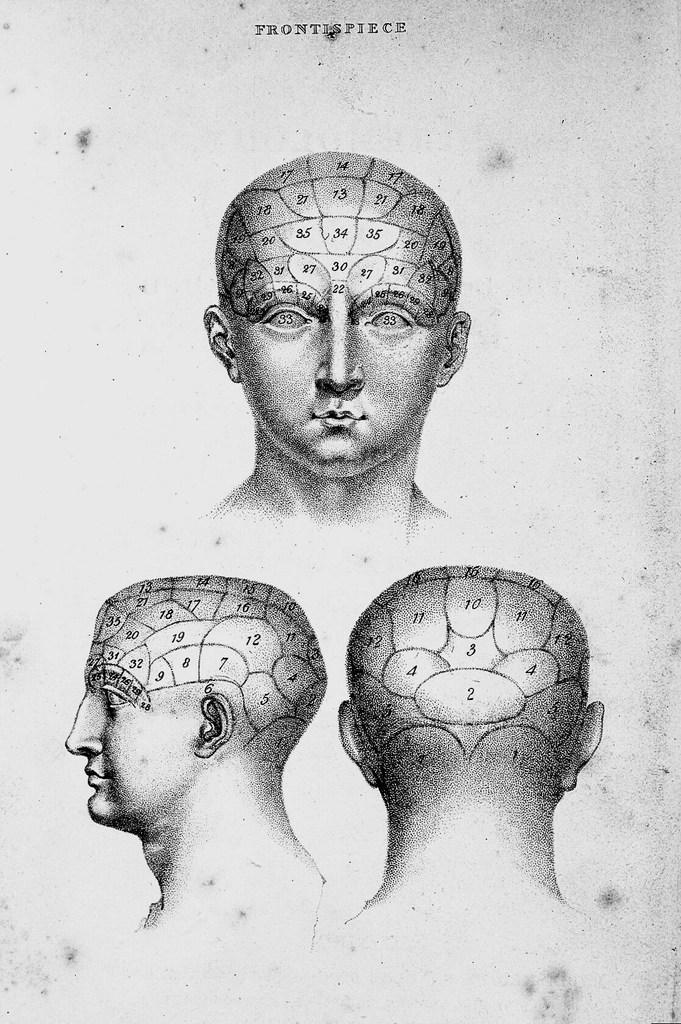
    Phrenology, doctrine mind : relations“/ CC0 1.0

    CAGE OF THE MIND

    Cognitive rigidity is the stubborn insistence that our way of thinking is the only way.

    It shows up in small, everyday ways:

    • refusing to consider another perspective
    • dismissing evidence that challenges our beliefs
    • or sticking to habitual responses when flexibility is required.

    It is mental inflexibility masquerading as certainty.

    This rigidity is rarely neutral. It filters experience, allowing only what aligns with our preconceptions to pass through.

    What we notice and refuse to notice is determined less by reality and more by the contours of our existing beliefs. The mind becomes its own jailer.

    FILTERED VISION

    Perceptual limitations compound this problem. Our senses, our expectations, and our biases shape what we perceive.

    Two people can witness the same event and walk away with entirely different “realities,” each convinced theirs is the truth.

    Culture, language, upbringing, and personal trauma all function like lenses, coloring everything we see.

    When cognitive rigidity meets these perceptual filters, the feedback loop begins: our beliefs dictate what we perceive, and our perceptions reinforce our beliefs.

    We become prisoners of our own limited frameworks, blind to the complexity—and often the truth—of the world around us.

    Breaking the Loop

    Escaping this loop is not about acquiring more information. It is about retraining the mind to see what it usually ignores:

    Observe without judgment. Watch your thought patterns and notice when you shut down possibilities automatically.

    Seek what challenges you. Engage with ideas and perspectives that make you uncomfortable.

    Question your perception. Ask yourself what you might be missing, what biases are filtering your experience.

    Embrace intellectual humility. Accept that your understanding is provisional, incomplete, and subject to correction.

    The moment we recognize that perception is always partial, and thought is always provisional, the bars of the cage begin to loosen.

    Clarity is not a gift; it is a discipline.

    The Work of Liberation

    This is the work of liberation: not avoiding rigidity, but confronting it; not denying perceptual limits, but piercing them.

    The mind can be trained to perceive more, think more flexibly, and respond more intelligently.

    It is uncomfortable, but truth always is.

    We cannot see everything, but we can see more than we did yesterday.

    And that is where freedom begins.
  • Plato’s Cave

    Plato’s Cave

    Lesson Allegory of the Republic

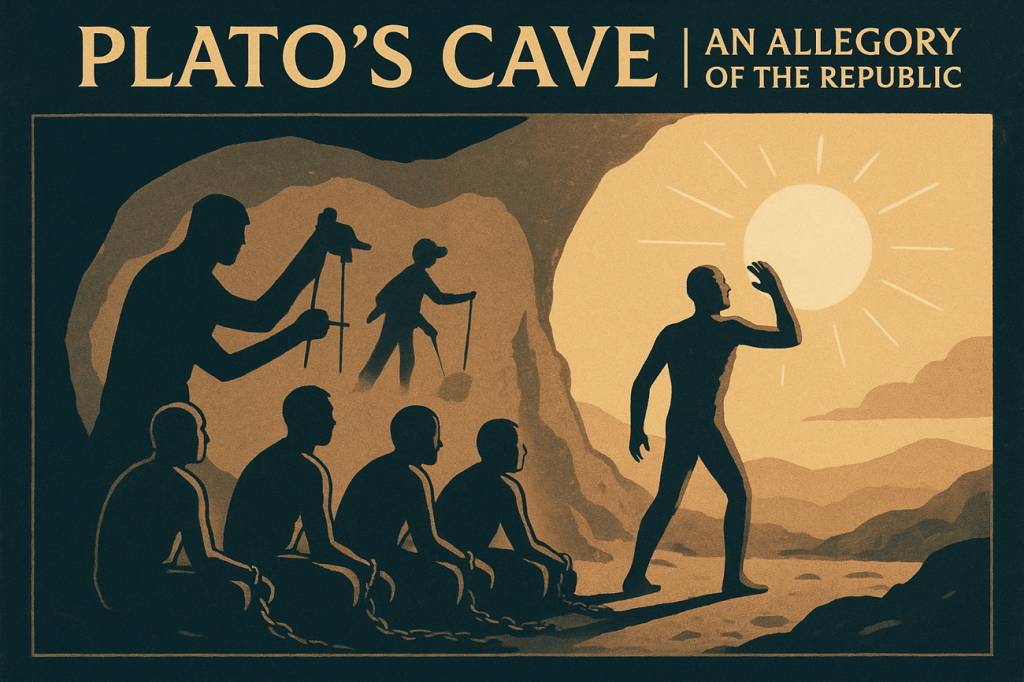
    The Allegory of the Cave from Plato’s Republic is one of those perfect metaphors.

    I think about it’s truth over and over again, even more so in today’s societal atmosphere.

    The Cave depicts our tendency to mistake perception for truth.

    THE STORY

    In the story, these prisoners are chained inside a cave, they’re facing a wall where they watched these shadows dancing and moving.

    These shadows were cast by puppeteers, covertly hiding behind them.

    They were manipulating objects to create a shadow that gave the illusion of a fire’s flame.

    The prisoners named the shadows, studied them, and even built hierarchies around who interpreted the shadows most accuratel.

    To them, this was reality, and they took it very seriously.
    We’re not so different.

    Most people live confined within their own perceptual cave.

    We’re inevitably going to be shaped by our emotional connection to our belief systems, cultural roots, educational indoctrination, and familial conditioning.

    Too often we’re caught mistaking projection for truth.

    Yes, we’ve been conditioned, but this isn’t the problem per se. We can see past all the programs if we have a fully functioning brain.

    The resistance to confronting the possibility of a constructed reality is understandable.

    The idea that memories, identity, and perceptions might not be as solid as they seem can feel like an existential threat.

    Letting go of deeply held beliefs, even if they are illusions, requires confronting discomfort, uncertainty, and the fear of losing oneself.

    It’s easier to cling to familiarity, even if it’s flawed, than to face the unknown. But growth often begins where certainty ends.

    Freedom is admitting that you have been deluded and under an illusory story of your own making. Then you’ll break free.

    CONSIDER THE PUPPETEERS

    The puppeteers are those who shape the narratives we consume.

    They are the gatekeepers of knowledge and power:

    the donors, financiers, and elites who we likely will never know the true name of.

    By controlling the information and communication, they can and do shape what a society perceives as “real.

    Propaganda, entertainment, and social pressure all became tools of control through illusions.

    The Awakening

    Then comes the moment of liberation. One prisoner is freed.

    At first, he’s blinded by the fire’s light.

    His eyes, accustomed to shadows, can’t handle the truth so suddenly.

    But as they adjust, he begins to see clearly: the shadows were never real.

    They were only echoes of something greater.

    He’s led outside the cave into the sunlight, another painful adjustment.

    Yet when vision returns, he beholds the true world in all its beauty and realizes that the cave was only a prison of perception.

    Why Can’t They Turn Their Heads?

    CHAINS OF IGNORANCE

    Because they are chained. Not just physically, but mentally.

    The chains represent ignorance, the invisible grip of conformity and belief.

    Most never question the nature of their own bondage.

    To break these chains requires courage. It requires unlearning.

    It requires the willingness to endure the pain of seeing clearly for the first time.

    The Philosopher’s Task

    For Plato, this story points to his Theory of Forms.

    Theory of Forms is the idea that the physical world is but a shadow of a higher, more perfect reality.

    The philosopher’s role is to turn toward that higher truth, to step into the light and understand what truly is true.

    EXPECT STRUGGLE

    But enlightenment is not a comfortable process.

    When the freed prisoner returns to the cave to tell the others what he has seen, they mock him.

    They reject him. To them, his truth sounds like madness, because it threatens the foundation of their world.

    QUESTION YOUR OWN BELIEFS

    The Allegory of the Cave calls us to question our own shadows, to notice what we’ve been taught to believe and think: who benefits from those beliefs?

    It asks us to endure the blinding light of truth, no matter how uncomfortable, and to choose freedom over comfort.

    To break the chains of ignorance is to step into the light, not to escape the world, but to finally see it.

  • Recognize Jesus

    Recognize Jesus

    Through history, Jesus’ teachings have been twisted.

    His message has been distorted by worldly authorities, repackaged and sold to the masses in 66 Books, not only branded as Divine, but also proclaimed to be the only divinely inspired text in the world that we could trust.

    False doctrine dressed as truth.

    The true simplicity of His words and depth of His message has been concealed beneath centuries of misinterpretations, some on accident due to error… others with malicious intent.

    HOW JESUS TAUGHT

    Jesus spoke from a place of gnosis.

    GOSPEL OF THOMAS

    Gospel of Thomas (Lambdin Translation) — The Nag Hammadi Library – Gnosis

    The Gospel of Thomas in multiple translations, along with a vast collection of material about the Thomas tradition. This site includes the entire Hammadi Library, as well as a large collection of other primary Gnostic scriptures and documents.


    What is Gnosis?
    Gnosis is knowledge that transcends what society was able to grasp.

    Canonized doctrine has obscured this inner wisdom.

    The true path, He revealed, was not in compliance with man’s laws or constructed hierarchies.

    Gnosis is awakening.

    Awakening to the divine potential already living within, it is intimate exploration, not institutional obedience.

    Know Christ. Be Known by Him.

    Pride.

    Self-righteousness.

    The need to assert control.

    These are the antithesis of Jesus’ way.

    He would have overturned the tables of those clinging to materialistic delusion, worshipping the god of society instead of the truth.

    He taught through stories, parables designed to open hearts, spark insight, and reveal reality to those ready to see.

    The False Jesus of the Mainstream

    Over time, His teachings have been distorted.

    I do not see this as an accident.

    Deception is a natural habit of the human heart.

    Many will come in His name and mislead others, as He warned in Matthew 24:5.

    Lies will be spun. Truth will be hidden. The path to understanding will be obscured. & it has.

    His guidance is simple: stay vigilant. Seek truth. Seek God. Do not lean on man. Lean on the Spirit. Open your heart.

    Discernment is the key. Through connection with the Holy Spirit, the true meaning of His teachings will be revealed.

    In God’s eyes, all souls are equal. Hierarchy, power, wealth—they hold no weight in the light of Heaven.

    We are spiritual beings inhabiting human bodies. Our essence is love.

    Our value is inherent. In His presence, there is no superiority, only unity and grace.

    Open the Bible. See for yourself.

    Jesus’ message aligns with the deeper structures of the human psyche—the archetypes that Carl Jung described.

    LEARN MORE

    The Four Psychological Functions and the Gospel Drama

    Jung had much to say about the gospel drama. His reading was largely literary and symbolic, avoiding what he considered misguided attempts by scholars of his day to extract the human figure of Jesus from what they presumed to be fictional accounts


    Jesus’ purpose was not to educate superficially but to illuminate within our minds and hearts the principles of love, compassion, and divine order.

    He took on the burden of our failures, showing us that we could not ascend alone in our ego.

    He bore the weight of what we could not bear, saying, in essence, “You are weak, but I am here. I carry this for you.”

    He demonstrated what it means to embody the divine because He is the Divine.

    He did not expect us to imitate Him blindly.

    Through understanding Him, we find salvation—not through effort, but through alignment with His mind and heart.

    To truly grasp His teachings, our hearts and minds must be open.

    Wisdom resides within us, waiting.

    When we integrate the external world with our inner essence, when we allow the Spirit to guide us, Jesus’ teachings become alive.

    The divine does not reside in walls, pulpits, or rituals—it resides within. Limiting Christianity to buildings, to man-made constructs, stifles spiritual evolution.

    The shadows of false guidance hide behind piety.

    But if you engage scripture, cultivate the Divine within, and surrender to the Spirit, there are no barriers.

    God’s presence lives in every faithful heart, guiding, illuminating, and giving purpose.

    Know this presence within yourself and others. Your mind will sharpen. Your intuition will deepen. Wisdom will anchor you.

    Chaos dissolves when you align with Him. True freedom is forgetting yourself and finding yourself lost in Him.

    Get lost in Him.

  • The Path to Wisdom: Embracing Foolishness as a Catalyst for Growth

    The Path to Wisdom: Embracing Foolishness as a Catalyst for Growth

    In our quest for wisdom, we often overlook the valuable lessons that foolishness can impart.

    The journey towards true enlightenment requires experiencing both the heights of wisdom and the depths of foolishness. It is through the pain and humility of our own foolish actions that we gain a profound understanding of our flaws and the arrogance that often accompanies them.

    But how can embracing foolishness be a catalyst for growth, you may wonder? It is in our moments of folly that we are confronted with the stark reality of our own limitations. These moments serve as powerful wake-up calls, forcing us to reevaluate our beliefs and behaviors. Only by acknowledging our own foolishness can we start to rectify our shortcomings and embark on a path of true growth.

    Yet, so often we are resistant to admitting our own foolish actions. We fear being judged or seen as weak by others. However, true wisdom is not found in the opinions of others, but rather in our ability to recognize and learn from our mistakes.

    Here are some key insights into how embracing foolishness can pave the way to wisdom:

    1. Cultivating Humility

    Foolishness humbles us in profound ways. By accepting our own fallibility, we develop a sense of humility that enables us to learn from others. It opens our hearts and minds to different perspectives, fostering a greater understanding of the world around us.

    2. Embracing Vulnerability

    Acknowledging our foolishness requires vulnerability. It involves letting go of ego and embracing our imperfections. When we embrace vulnerability, we create opportunities for deeper connections and meaningful growth.

    3. Gaining Self-Awareness

    Moments of foolishness provide invaluable opportunities for self-reflection. They shed light on the aspects of ourselves that need improvement or development. By recognizing our own weaknesses, we can strive to become better versions of ourselves.

    4. Developing Resilience

    Mistakes and failures are inevitable in life. Embracing foolishness teaches us resilience — the ability to bounce back from setbacks and use them as stepping stones to success. It fosters an unwavering determination to persevere, despite the challenges we face.

    5. Expanding Creativity

    Foolishness often arises from thinking outside the box and taking risks. Embracing foolishness encourages us to tap into our creative potential, freeing us from the constraints of convention and encouraging innovative thinking.

    Conclusion

    In our journey towards wisdom, it is crucial to recognize the transformative power of foolishness. Rather than shying away from our own mistakes and blunders, we should embrace them as opportunities for growth. By cultivating humility, embracing vulnerability, gaining self-awareness, developing resilience, and expanding creativity, we can unlock the true potential of wisdom.

    So, let us not shy away from the lessons foolishness has to offer. Embrace your own folly and embark on the path to true wisdom. Remember, the road to enlightenment is paved with both wisdom and foolishness, and it is through embracing both that we can ultimately become wiser, more compassionate beings.