Tag: Creator

  • Who Is God?

    Who Is God?

    The concept of God is a complex and multifaceted one, explored across various cultures, philosophies, and religious traditions. At its core, God is often described as the Supreme Being, the Creator, and the Sustainer of all existence.

    • The Almighty – Emphasizing His unlimited power.
    • The Creator – Originator of all existence.
    • The Divine – Denotes His sacred and transcendent nature.
    • Supreme Being – The highest entity above all.
    • Heavenly Father – The nurturing and paternal aspect.
    • Lord – Sovereign authority over all things.
    • Deity – A general term for a divine being.
    • The Most High – Unrivaled supremacy.
    • The Eternal – Timeless, without beginning or end.
    • Providence – His protective and guiding care.

    God Across Cultures

    • Allah – Islam.
    • Yahweh (YHWH) – Judaism.
    • Jehovah – Christian derivation from YHWH.
    • Brahman – Hinduism’s absolute reality.
    • Waheguru – Sikhism.
    • The Great Spirit – Various Native American traditions.

    Descriptive Titles of God

    • Omnipotent One – All-powerful.
    • All-Knowing – Omniscient.
    • Alpha and Omega – The Beginning and the End.
    • King of Kings – Supreme Ruler.
    • Light of the World – Illuminator and Guide.
    • The Way, the Truth, and the Life – Christian designation of Jesus Christ.

    Philosophical Concepts of God

    • Prime Mover – The initial cause of motion and existence.
    • First Cause – The uncaused cause of all.
    • Absolute – Ultimate reality.
    • The One – Singular source of all being.
    • Ultimate Reality – The ground of all existence.

    God in Poetry + Literature

    • The Divine Architect – Designer of the cosmos.
    • Author of Creation – Literary framing of His creative work.
    • Master of the Universe – Sovereign over existence.
    • The Great I Am – Biblical self-revelation (Exodus 3:14).

    God’s Eternality + Self-Nature

    • “I am the Alpha and the Omega,” says the Lord God, “who is, and who was, and who is to come, the Almighty.” (Revelation 1:8)
    • “Before the mountains were born or you brought forth the whole world, from everlasting to everlasting you are God.” (Psalm 90:2)

    Spirit and Formlessnessness of God

    • “God is spirit, and his worshipers must worship in the Spirit and in truth.” (John 4:24)

    God as Omnipotent, Omniscient, and Omnipresent

    • “Ah, Sovereign Lord, you have made the heavens and the earth by your great power and outstretched arm. Nothing is too hard for you.” (Jeremiah 32:17)
    • “Nothing in all creation is hidden from God’s sight.” (Hebrews 4:13)
    • “Where can I go from your Spirit? Where can I flee from your presence?” (Psalm 139:7-8)

    God as Creator and Sustainer

    • “In the beginning God created the heavens and the earth.” (Genesis 1:1)
    • “For in him all things were created… all things have been created through him and for him.” (Colossians 1:16-17)

    God’s Desire for Relationship

    • “Here I am! I stand at the door and knock. If anyone hears my voice and opens the door, I will come in and eat with that person, and they with me.” (Revelation 3:20)

    Early Christian Beliefs of God

    Monotheistic

    Affirmed one true God, inherited from Jewish tradition.

    Trinitarian

    God as Father, Son, and Holy Spirit — a concept that developed early but rooted in scripture.

    Personal and Relational

    God as one who desires communion with humanity.

    Transcendent yet Immanent: Beyond comprehension, yet intimately involved.

    Source of Love, Justice, and Holiness: God’s character is the foundation of moral order.

    Gnostic Perspective of God

    • Hidden
    • Unknowable
    • Speaker of emanation
    • Source

    Gnostic Christians emphasized a hidden, unknowable supreme God, often speaking of emanations (“aeons”) descending from the ultimate Source.

    God is The Supreme Being

    Creator, Sustainer, and Sovereign of all existence.

    God is Eternal and Self-Existent

    Beyond time, space, and change.

    God is Spirit

    Invisible, formless, omnipresent.

    God is Relational

    Seeks love, communion, and redemption of humanity.

    God is The Absolute Reality

    The foundation and purpose behind all that is.

    As scripture declares:

    “As the heavens are higher than the earth, so are my ways higher than your ways and my thoughts than your thoughts.”

    -Isaiah 55:9

    GOD IS— I AM

  • Storms Are Creators Of Change

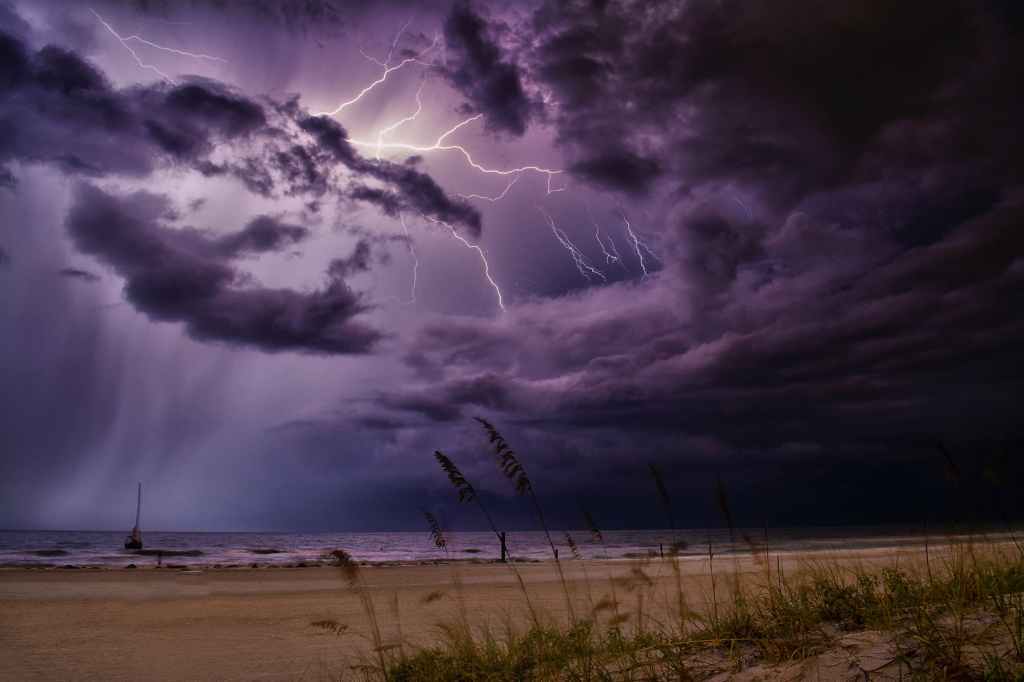
    Storms Are Creators Of Change

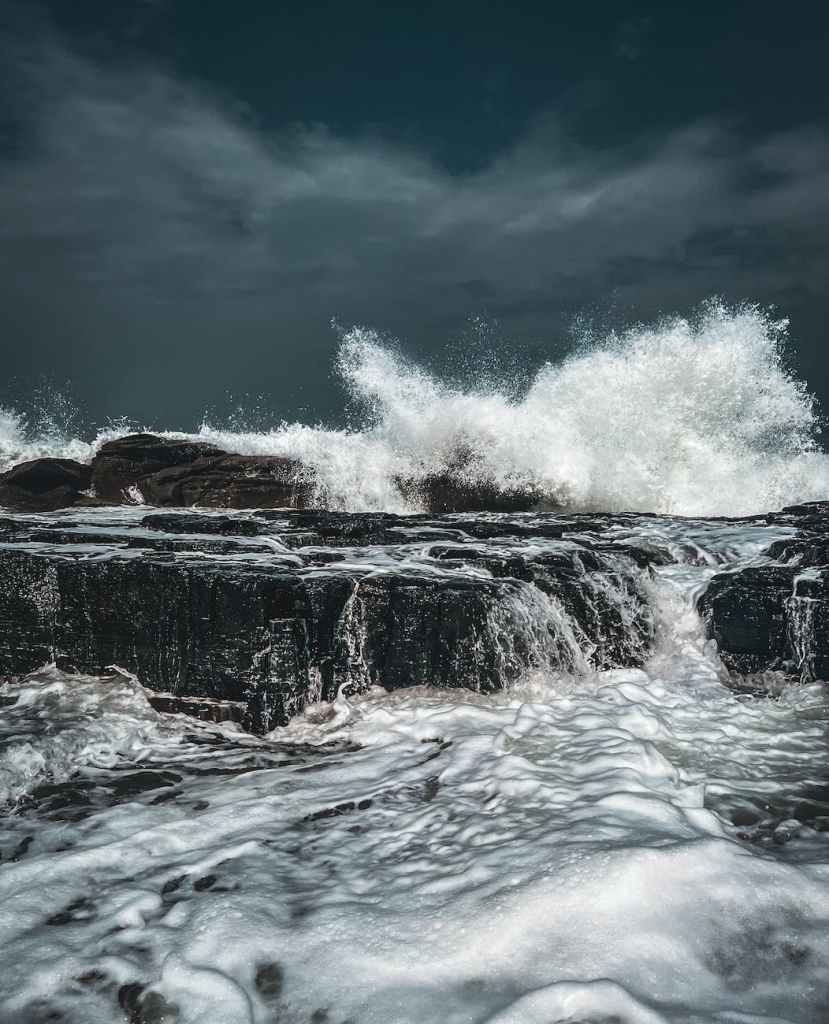
    In the grand symphony of life, storms emerge as tumultuous creators, releasing pent-up tension and primal energy upon the Earth’s canvas. They roar with a ferocity unmatched, an unyielding force of nature that commands attention and respect. And in their wake, they leave us with a profound reminder of our own insignificance in the vast expanse of the universe.

    Caught within the tempest’s grasp, we are confronted with the raw power that exists beyond our control. It is a humbling experience, reminding us that we are but mere specks in the cosmic dance. Yet, paradoxically, in the face of such overwhelming might, we find liberation.

    Forced to confront our thoughts and emotions, we are stripped bare, laid bare before the storm’s wrath. It is in this moment of vulnerability that we are given the chance to surrender. To surrender our worries, our fears, and our burdens to the tempest’s fury. There is a strange sense of freedom that comes from letting go, a release that can only be found when we abandon ourselves to nature’s will.

    And as the storm rages on, thunderclaps echoing through the sky, we are gifted with a moment of catharsis. The torrential downpour washes away the accumulation of our daily trials, granting us a cathartic release. It is a cleansing, a purging of the soul, as if nature herself is whispering, “Let go and be reborn.”

    Yet, it is not solely the storms that hold the key to personal growth. In the aftermath, when the clouds part and tranquility settles over the land, we find ourselves presented with a different opportunity. An opportunity for introspection.

    In the calm that follows the chaos, we are given the space to reflect upon our experiences. The stillness invites us to delve into the depths of our beings, to scrutinize our thoughts and emotions. It is here that we discover the seeds of personal growth, nurtured by our willingness to confront our innermost selves.

    Both storms and calmness play their part in the beautiful tapestry of life. Each offers its own unique contribution to our journey of self-discovery. While storms provide us with the chance to surrender and find solace in nature’s embrace, calmness grants us the introspection necessary for personal growth.

    So, let us not shy away from the storms that come our way. Let us embrace their ferocity, their power, and their ability to humble us. For amidst the chaos, amidst the crashing thunder and driving rain, lies an opportunity for catharsis and liberation.

    And through it all, we emerge stronger, wiser, and more attuned to the magnificent dance of existence.

  • God’s Breath

    God’s Breath

    The Supreme Power of God’s Will and Breath: Shaping the Earth and Influencing Spiritual Realms

    In the Greek language, the term for “God’s breath” is “πνεῦμα τοῦ Θεοῦ” (pneuma tou Theou).

    The word “πνεῦμα” (pneuma) refers to breath, wind, or spirit, and it is often used to denote the Holy Spirit in the New Testament.

    In the Hebrew language, the term for “God’s breath” is “רוח אלוהים” (ruach Elohim).

    The word “רוח” (ruach) means wind, breath, or spirit. It is used to describe the Spirit of God throughout the Old Testament.

    Both in Greek and Hebrew, the concept of “God’s breath” signifies the life-giving force and divine presence of God, which brings forth and sustains life, animates creation, and imparts wisdom and power.

    Earth, absent God’s foundational decree of transcendent transmittance, would exist in a state of non-functionality, shapelessness, and utter emptiness, much as it did prior to His proclamation, where His Will and breath held supreme power.

    How did God’s Will and breath hold supreme power over the Earth before His proclamation?

    As the Creator of all things, God’s Will represented His desires, intentions, and plans for the Earth. It was through His Will that the Earth was shaped and governed according to His divine purpose.

    God’s breath symbolizes the life-giving force that sustains and animates all creation. Just as God breathed life into Adam, His breath carries the power to bring forth and sustain life. Before His proclamation, God’s breath permeated the Earth, infusing it with vitality and order.

    The divine regulation of God extends its influence over both material and spiritual realms, providing the essential impetus for movement and the fundamental flow of existence.

    Material Realm; From Gravity To Cellular Biology

    In the material realm, God’s divine regulation establishes the laws and principles that govern the physical world.

    It is through His divine wisdom and knowledge that the intricate workings of the universe operate in perfect harmony.

    From the gravitational forces that hold celestial bodies in place to the intricate mechanisms of cellular processes, God’s divine regulation guides and sustains every aspect of the material world.

    Spiritual Realm

    God establishes principles and commandments that serve as beacons of righteousness and moral conduct.

    These moral guidelines provide a compass for beings to navigate their journey.

    Each individual is endowed with unique abilities, aptitudes, and talents that are Divinely ordained.

    These gifts are not merely random occurrences but are intricately woven into the tapestry of God’s divine plan.

    Through these gifts, individuals are empowered to serve a higher purpose, contribute to the well-being of others, and bring glory to God.

    God’s divine regulation influences the spiritual realm through the establishment of moral principles, the bestowment of spiritual gifts, and the facilitation of spiritual transformation.

    Moral Principles

    These principles act as a moral compass, guiding individuals towards actions that are aligned with God’s will and promoting harmonious relationships with others. By adhering to these moral principles, individuals cultivate a sense of virtue and righteousness, fostering spiritual growth and deepening their connection with the divine realm.

    Spiritual Gifts

    God bestows spiritual gifts upon individuals, which are unique abilities and talents that enable them to serve a higher purpose in the spiritual realm. These gifts are not only bestowed for personal benefit but also for the collective well-being of the spiritual community. Through the utilization of these gifts, individuals contribute to the advancement of God’s divine plan, spreading love, compassion, and wisdom to others. This interaction between spiritual gifts and the spiritual realm creates a dynamic exchange of energy, enhancing the overall spiritual landscape.

    Spiritual Transformation

    It is through divine intervention and guidance that individuals are able to transcend their limitations, overcome challenges, and evolve spiritually. God’s presence and influence permeate every aspect of their spiritual journey, nurturing their souls, and leading them towards a deeper understanding of themselves, the world, and their relationship with the divine.

    Without the holy static of His divine influence, the critical conductivity necessary for being and the basic energy required for biological motion would be absent.

    The very breath of God serves as a direct conduit for these fundamental abilities, emanating from the ultimate Source and bestowing vitality from the higher realms, sprinkling Grace into our lower dimension.

    In the words of Jesus in Greek, “whatever you bind on earth will have already been bound in heaven, and whatever you loose on earth will have already been released in heaven” (Matthew 18:18).

    As we pray, “may Your kingdom come (arrive), and your Will be done, on earth just as it is in Heaven” (Matthew 6:10), we acknowledge that Heaven not only influences but also orchestrates and regulates all activities on Earth.