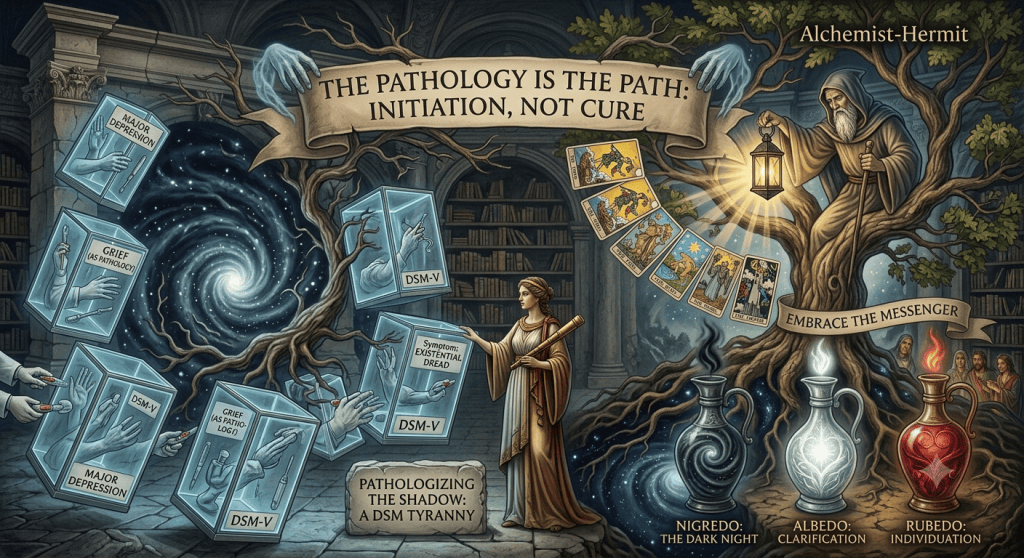
The Diagnostic and Statistical Manual of Mental Disorders (DSM) is routinely hailed as the bible of modern psychiatry. DSM labels are actually detrimental pigeon-holes.
It provides professionals with a standardized, clinical framework for classifying psychological conditions.
However, as a map of human suffering, it is profoundly bankrupt.
The DSM catalogues the surface of mental distress while entirely ignoring the depths of the psyche.
It is an oversimplified, shallow inventory that fundamentally fails to understand the architecture of the soul.
The Categorical Illusion
One of the DSM’s most glaring failures is its reliance on a rigid, categorical approach to the mind.
The manual chops the fluid, dynamic human experience into sterile boxes.
If an individual experiences both anxiety and depression, they are diagnosed with two distinct dysfunctions based on a checklist.
This one-size-fits-all taxonomy ignores reality.
In depth psychology, these overlapping states are rarely separate mechanical errors; they are often intertwined symptoms of a psyche in the midst of the nigredo… the dark, chaotic first stage of psychological alchemy.
By compartmentalizing the mind, the DSM treats the individual as a collection of broken parts rather than a whole entity undergoing a complex process of individuation.
Silencing the Unconscious
Furthermore, psychiatry’s obsession with symptom-based diagnosis is its greatest blind spot.
The DSM views a symptom exclusively as a malfunction to be eradicated. It fails to consider the complex interplay of biological, psychological, and archetypal forces at work.
A Jungian approach recognizes the symptom for what it is: the unconscious attempting to communicate.
Depression, neurosis, and anxiety are often the Shadow demanding integration.
When the DSM focuses solely on observable behaviors, it silences the messenger.
It attempts to clear the smoke while ignoring the fire of the unconscious, leaving the underlying spiritual or psychological rupture completely unaddressed.
Thoughts From Carl Jung
Jung offers a fundamentally different account of psychological distress than the one implied by strictly diagnostic models.
Rather than treating symptoms as meaningless defects to be eliminated, he understood them as symbolic communications from the unconscious, often arising when consciousness has become one-sided or psychologically overidentified with a limited attitude toward life. Source
In this view, neurosis is not merely a pathology to be suppressed but a signal of psychic imbalance, indicating that the individual is being compelled toward greater integration, self-recognition, and transformation. Source
Jung’s concept of individuation indicates that suffering can have developmental value, insofar as it initiates confrontation with the Shadow and with disowned dimensions of the self.
From this perspective, psychological symptoms may function less as evidence of a broken mind than as expressions of the psyche’s attempt to restore wholeness.
Perhaps the most dangerous aspect of the DSM is its pathologizing of normal, necessary human suffering. Source
The manual’s ever-expanding criteria inevitably lead to the medicalization of the human experience.
Grief, existential dread, and the shattering of the ego are not inherent pathologies… they are initiatory rites of passage.
By slapping a medical label on the dark night of the soul, the DSM turns the agonizing work of becoming whole into a disease.
This overreliance on diagnostic labels stigmatizes the natural descent into the unconscious, teaching individuals to fear and medicate their own depths rather than explore them.
Its categorical and symptom-based approach robs the individual of meaning, reducing the profound mystery of the psyche to a clinical checklist.
Until modern psychiatry recognizes that mental distress is often the messy, painful birth of consciousness rather than a mere chemical error, the DSM will remain exactly what it is: a colossal failure to understand the human mind.
Professional References & Supporting Frameworks
Several leading voices across psychiatry, psychology, and depth analysis have publicly condemned the DSM’s methodology:
In his book Saving Normal, Dr. Frances became one of the DSM’s most vocal critics from the inside. He explicitly condemns the DSM-5 for pathologizing everyday human experiences—such as classifying normal bereavement as Major Depressive Disorder—warning that modern psychiatry is dangerously medicalizing the natural human condition.
In 2013, Dr. Insel famously announced that the NIMH would pivot its research funding away from the DSM categories.
He stated the manual lacks scientific validity because its diagnoses are based strictly on superficial symptom clusters (the “categorical illusion”) rather than underlying biological or psychological realities.
The BPS challenged the fundamental premise of the DSM with their Power Threat Meaning Framework.
They formally argue against the “disease model” of mental health, proposing instead that psychological distress is not a malfunction, but a deeply meaningful, understandable response to adversity, trauma, and environment.
In Re-Visioning Psychology, Hillman dismantled the clinical urge to “cure” the patient of their darkness.
He argued that the soul speaks explicitly through its pathologies, and that by rushing to eradicate symptoms, modern psychiatry silences the psyche’s attempt to communicate.
Carl Jung (Founder of Analytical Psychology)
Laying the groundwork for depth psychology’s opposition to rigid clinical diagnosis, Jung observed that “neurosis is always a substitute for legitimate suffering.” He viewed psychiatric symptoms not as arbitrary defects, but as purposeful attempts by the unconscious mind to force a necessary psychological transformation.
Compares Jungian typology with DSM-III personality disorders, distinguishing symptomatology from personality structures and exploring potential connections, though it focuses on an outdated DSM version.
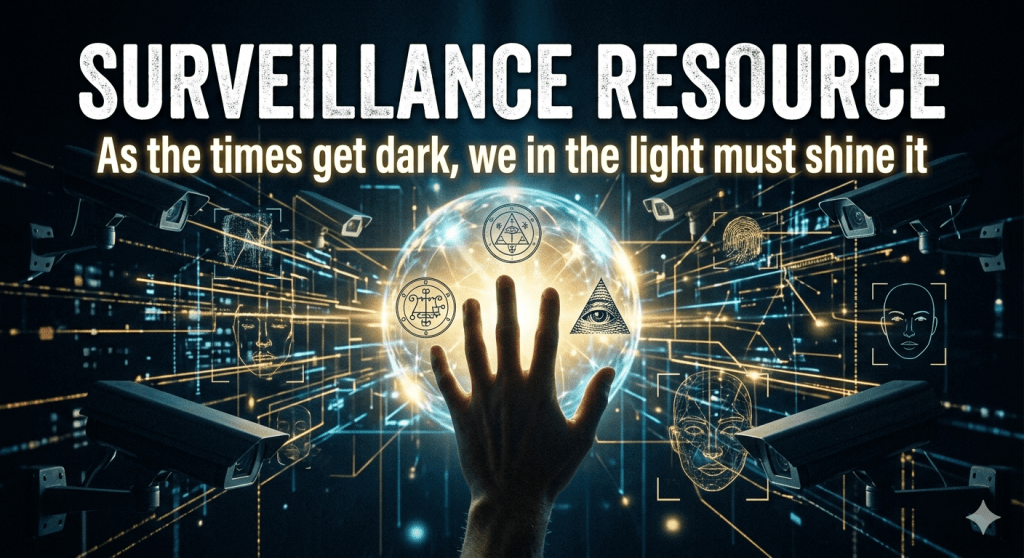
As the times get dark, we in the light must shine it. An esoteric perspective.
What is Surveillance?
Surveillance is the monitoring of behavior, activities, or information to influence, manage, direct, or observe individuals or groups.
It has evolved from simple observation into a complex, pervasive infrastructure that affects everyone.
Protecting the Inner Sanctuary
For the esoteric-minded people like myself, surveillance is not merely a political or technical issue; it is a violation of the sacred.
The increasing pervasiveness and sophistication of surveillance technology raises philosophical questions both epistemic (to do with the acquisition of knowledge) and ethical (concerned with living the good life). Surveillance Asymmetry Epistemic considerations preoccupy the CCTV users: governments, law enforcement agencies and businesses.
The drive to monitor and predict human behavior is a pursuit of total transparency that seeks to eliminate the “shadow”—the mysterious, unmapped, and creative depths of the psyche.
Esoteric traditions emphasize the cultivation of the inner self, a space that must remain private, sovereign, and unknown to the external observer to maintain its transformative power.
The Surveillance of the Spirit
Modern tracking systems attempt to commodify the human experience, turning the spontaneous, chaotic, and sacred expressions of life into predictable data points.
This is an attempt to fix the “flux” into a static, controlled reality.
The Sovereignty of the Unseen
Just as the “Hermetic seal” protects the work from outside interference, maintaining a barrier between your inner life and the digital panopticon is essential for spiritual autonomy.
If your thoughts, movements, and expressions are constantly mapped, your ability to “transmute” yourself into new states of being is compromised.
Shining the Light
To “shine the light” as these times grow darker is to act as a witness.
By understanding these systems, you deny the hidden power they rely on.
You reclaim your agency by refusing to be a readable, predictable element in their grand design.
Eyes Are On Everyone
The AI Paradigm
This is not merely a question of data privacy; it is a fundamental shift in the logic of governance.
Systems designed for administration have become tools for tracking and predicting human behavior, often with minimal oversight or accountability.
Inferences replace facts
AI interprets behavioral patterns at scale without verification.
Correlations replace testimony
Decisions are made based on data probabilities rather than direct evidence.
Universal Risk
While often deployed first against marginalized groups, this infrastructure expands its reach into the lives of all citizens.
Spy Bugs: Covert devices hidden in everyday objects (pens, USBs, lamps, sockets) to record or transmit audio.
GSM Bugs: Operate like mobile phones; perpetrators dial in to silently listen from anywhere in the world.
Mobile Phone Hijacking: Devices can be turned into remote microphones via malicious software, allowing attackers to “hot on the hook” listen to conversations.
RF & Bluetooth Bugs: Transmit audio signals via radio frequency or Bluetooth to a remote receiver.
Visual & Imaging Technology
CCTV & Drones: Automated monitoring in public and private spaces.
Advanced Optics: High-zoom lenses, infrared, and night-vision devices.
Satellite/Aerial: Persistent monitoring capability from above, including indoor spaces.
Data & Sensor Networks
Sensor Arrays: Magnetic, seismic, infrared, and strain sensors detect movement, vibration, and even keystrokes.
Pattern Recognition: AI-driven analysis of movement, voice, and thought-to-computer interfaces.
Infrastructure: Global intelligence systems (e.g., ECHELON) that scan communications for keywords and phrases.
Detection & Mitigation
To protect against unauthorized monitoring, consider these layers of defense:
Physical Inspections
Thoroughly check environments for concealed hardware.
Electronic Scanning
Utilize specialized equipment to identify active radio transmissions.
Professional Services
Engage experts in Technical Surveillance Countermeasures (TSCM) for comprehensive bug sweeps.
Information Hygiene
Be cautious of suspicious attachments and links that can compromise mobile devices.
Note: Surveillance tools, while used by law enforcement and intelligence agencies for security, frequently raise significant ethical and constitutional concerns. This resource aims to inform the public on the realities of these technologies.
The E-3 Sentry is an airborne warning and control system, or AWACS, aircraft with an integrated command and control battle management, or C2BM, surveillance, target detection, and tracking platform.
Esoteric knowledge has become more accessible than ever before. Here’s A tiny bit from the wealth of resources. Let’s explore the esoteric, mystic and hermetic.
Thelemic to contemporary esotericism, the Hermetic Library holds a curated collection of texts with deep insights into modern occult practices and philosophies.
History enthusiasts will revel in the Ritman Library’s digitized collection of pre-1900 books on alchemy, astrology, and magic. It’s a window into the esoteric world of centuries past.
Home to a collection of rare esoteric texts and manuscripts, this archive is perfect for those seeking original sources and hard-to-find documents. Twilit Grotto — Esoteric Archives: site map
This website provides access to a wide array of pagan and occult texts, making it an invaluable resource for those interested in diverse spiritual traditions.
For a more structured approach to occult studies, this guide offers organized information catering to various audiences. It’s particularly useful for those who prefer a more academic approach to esoteric subjects. Access Monmouth Guide
Expand Horizons
While these resources offer a solid foundation for your esoteric studies, remember that the world of mysticism and occultism is vast and ever-evolving.
Additional tips to enhance your search:
Online Communities:
Platforms like Reddit (r/occult, r/esoterica) and specialized forums can provide opportunities for discussion and knowledge sharing with like-minded individuals.
OpenLibrary.org is a digital library project operated by the non-profit Internet Archive. It aims to create “one web page for every book ever published”.
Classic Christian books are enduring works of literature that have significantly influenced Christian thought, theology, and spiritual practice.
These texts often explore themes of faith, morality, and the human relationship with the divine, providing insights that have transcended generations.
Some of the most notable classic Christian books include “The Pilgrim’s Progress” by John Bunyan, an allegorical novel about a Christian’s journey towards spiritual enlightenment and salvation, and “Institutes of the Christian Religion” by John Calvin, a foundational work of Protestant theology. You can find more about these works on Gospel eBooks and Goodreads.
Publishers like Ave Maria Press continue to release new editions of these classic works, ensuring their availability for contemporary readers. Their collection includes writings by influential figures such as Origen, Thomas à Kempis, and Teresa of Avila, among others avemariapress.com.
Library Genesis (Libgen) is a comprehensive digital library offering free access to a vast collection of full-text content across various topics, including technology, art, biology, business, chemistry, and computers, aimed at democratizing knowledge by bypassing traditional access barriers associated with academic and literary resources.
ManyBooks is a digital library providing access to a vast collection of free eBooks in multiple genres, catering to a wide range of reader interests.
The platform features a diverse selection of titles, from fantasy and science fiction to romance and mystery, with options for both free and discounted books.
Some highlighted titles include “The Show Must Go On” by Jonathon Kelley and “Do You Believe in Magic?” by Jim Melvin, showcasing the variety available to readers seeking new literary adventures.
The term “paradigm shift” (in the realm of physics) can be traced back to the work of Thomas Kuhn, a renowned philosopher of science.
In his book: “The Structure of Scientific Revolutions,” published in 1962, Kuhn introduced the concept of a paradigm shift as a fundamental change in the basic assumptions and framework within a scientific discipline operates.
Quantum Revolution
The Quantum Revolution began in the early 20th century.
This revolution led to a profound transformation in our understanding of the physical world, particularly on the atomic and subatomic scales.
Key Figures such as Max Planck, Albert Einstein, Niels Bohr, and Werner Heisenberg played crucial roles in developing the principles of quantum mechanics.
These principles upended classical physics and introduced a probabilistic view of the The Quantum Revolution, challenging long-held beliefs about the nature of reality.
This paved the way for groundbreaking discoveries and technological advancements, such as quantum computing and quantum teleportation, that continue to shape the field of physics today.
Historical Context leading up to the Quantum Revolution
The Quantum Revolution had its roots in the early 20th century with the emergence of quantum theory.
Prior to this revolutionary shift:
Physics was dominated by classical mechanics established by Newton and others.
However, scientists began to observe phenomena at the atomic and subatomic levels that could not be explained by classical physics alone.
Key Event Leading To Quantum Revolution
One key event leading up to the Quantum Revolution was Max Planck’s groundbreaking work on blackbody radiation in 1900, which introduced the concept of quantized energy.
This laid the foundation for further developments in quantum theory by scientists like Albert Einstein, Niels Bohr, and Erwin Schrödinger.
As research progressed, the wave-particle duality of light and matter, the uncertainty principle, and the concept of quantum superposition were all established, challenging traditional views of determinism in physics.
These developments culminated in the quantum revolution, which fundamentally transformed our understanding of the physical world and paved the way for modern quantum mechanics.
Challenges & Controversies surrounding the Quantum Revolution
The Quantum Revolution has brought about a myriad of challenges and controversies that have sparked debates within the scientific community.
Superpositioning
One of the key educational facts surrounding this revolution is the concept of superposition, where quantum particles can exist in multiple states simultaneously.
This idea challenges traditional notions of binary states and posed significant implications for computing and technologies.
The controversy surrounding entanglement also touches on the concept of “spooky action at a distance,” coined by Albert Einstein, who initially dismissed the idea as incompatible with his theory of relativity.
However, subsequent experiments have consistently confirmed the phenomenon, demonstrating that entanglement is a fundamental aspect of quantum mechanics.
The debate surrounding entanglement has led to various interpretations, including:
Quantum non-locality: The idea that information can be transmitted instantaneously between entangled particles, challenging classical notions of space and time.
Hidden variables: The proposal that there are underlying variables governing the behavior of entangled particles, which could potentially explain the correlations without requiring non-locality.
Copenhagen interpretation: The view that the act of measurement itself determines the outcome, effectively collapsing the wave function and eliminating any possibility of non-local information transfer.
The controversy surrounding quantum entanglement serves as a catalyst for ongoing research and philosophical inquiry, driving us to reexamine our understanding of reality and the interconnectedness of the universe.
As our knowledge and understanding of entanglement continue to evolve, we may uncover new insights into the fundamental nature of reality, ultimately reshaping our comprehension of the cosmos and our place within it.
These concepts highlight the complexities and intriguing possibilities of the Quantum Revolution, pushing the boundaries of our knowledge and reshaping the way we perceive the world.
Coercive Control (Power)–an act or a pattern of acts of psychological assault, threats, humiliation and intimidation or other abuse that is used to harm, punish, or frighten their victim into conforming.
Common Types of Coercive Power:
DIRECT & INDIRECT
DIRECT
Straight forward
Direct coercive power is the ‘in-your-face’ threats and direct ultimatums, leaving you feeling trapped and helpless. But you know what’s happening, there is little confusion.
INDIRECT
Manipulative- through the back door
These types will NEVER say, “Do this or else!” No, they’re far sneakier.
They instead will use subtle tactics to control and manipulate you.
Corersion puts you into a hellish maze where every turn is a mind trap, and you can never find your way out.
With indirect power, it’s about psychological warfare.
Tactics
Guilt-tripping
Using guilt or shame to manipulate individuals into conforming to certain behaviors or beliefs.
This can involve making individuals feel bad about themselves or their actions in order to control their behavior.
Threats of Punishment
Using threats of punishment or consequences to coerce individuals into compliance.
This can involve threatening to ostracize, shun, or punish individuals who do not conform to certain expectations or norms.
Emotional Manipulation
Using emotional manipulation tactics such as gaslighting, manipulation of emotions, or playing on individuals’ fears and insecurities to control their behavior.
Isolation
Isolating individuals from their support networks or communities in order to control their behavior and limit their access to alternative perspectives or sources of support.
Pressure Tactics
Using peer pressure, social pressure, or manipulation to coerce individuals into conforming to certain behaviors or beliefs.
This can involve creating a sense of urgency or fear of missing out in order to manipulate individuals into compliance.
Control of Information
Controlling access to information or limiting individuals’ exposure to alternative viewpoints in order to maintain control over their beliefs and behaviors.
Church Members
Often Play This Insidious Game
Believe it or not, There are instances where some individuals or organizations claiming to be Christian use coercion in an attempt to control or manipulate others out of concern, usually false concern.
Why?
There are various reasons why some individuals or groups within the Christian community resort to coercion.
This includes
a misguided belief that they are acting in the best interest of others.
a desire for power or control, a lack of understanding of the principles of consent and autonomy.
a misinterpretation of religious teachings.
But that’ll be another blog post.
Never Forget Jesus’ Teaching
“Bless those who curse you, pray for those who mistreat you”
As the calendar turns to a new year, it presents us with an opportunity for reflection, renewal, and growth.
It is a time when we can set new goals, make positive changes, and embark on a journey of self-discovery.
In this blog post, we will explore the significance of the new year and how we can make the most of this fresh start.
Reflecting on the Past
Before we can move forward, it is essential to take a moment to reflect on the past year.
What were our accomplishments, challenges, and lessons learned?
By acknowledging our past experiences, we can gain valuable insights and pave the way for personal growth.
Setting Intentions
Setting intentions is a powerful way to align our actions with our desires.
Instead of making resolutions that often fade away, we can focus on setting intentions that guide us throughout the year.
These intentions can be related to various aspects of our lives, such as relationships, career, health, or personal development.
Embracing Self-Discovery
The new year provides an excellent opportunity for self-discovery.
It is a chance to explore our passions, values, and purpose.
Engaging in activities like journaling, meditation, or seeking guidance from mentors can help us uncover our true selves and gain clarity about our life’s path.
Cultivating Positive Habits
To achieve personal growth, it is crucial to cultivate positive habits.
Whether it is practicing gratitude, exercising regularly, or adopting a mindful approach, small changes in our daily routines can have a significant impact on our overall well-being.
By consistently nurturing these habits, we can create a positive and fulfilling life.
Embracing Change and Overcoming Challenges
Change is an inevitable part of life, and the new year often brings new challenges.
Embracing change and viewing challenges as opportunities for growth can help us navigate through life’s uncertainties.
By developing resilience and a growth mindset, we can overcome obstacles and emerge stronger than before.
Connecting with Others
The new year is also an ideal time to strengthen our connections with others.
Building and nurturing meaningful relationships can bring joy, support, and a sense of belonging.
Engaging in acts of kindness, volunteering, or joining communities that align with our interests can help us forge deeper connections with like-minded individuals.
The new year is not just a change in the calendar; it is an opportunity for personal transformation and growth. By reflecting on the past, setting intentions, embracing self-discovery, cultivating positive habits, embracing change, and connecting with others, we can embark on a fulfilling journey towards becoming the best version of ourselves.
Let us embrace the new year with open hearts and minds, ready to embrace the endless possibilities that lie ahead.
Beyond the observable world of material matter, there exists a realm that surpasses our animal senses and is filled with timeless principles of logic and measurement, the Laws of the Universe. Laws must have a Lawgiver.
Laws must have a Law giver.
Ultimate Reality Is Not “reality”
This Ethereal Domain represents the ultimate form of reality, serving as the very source of existence and the essence of being. It is the magnificent realm of the Most High, commonly known as Heaven.
Consciousness Shapes Observable Reality
The concept that reality is shaped by thoughts and beliefs is supported by scientific theories such as superpositioning and string theory.
The One Mind Of God Created All Things
Mind → Consciousness
Consciousness connects all things in the universe. God is Consciousness.
Everything is By (through, by the power of, by the Word of…)
The Will (Consciousness, Mind, Thought, Decision) of God.
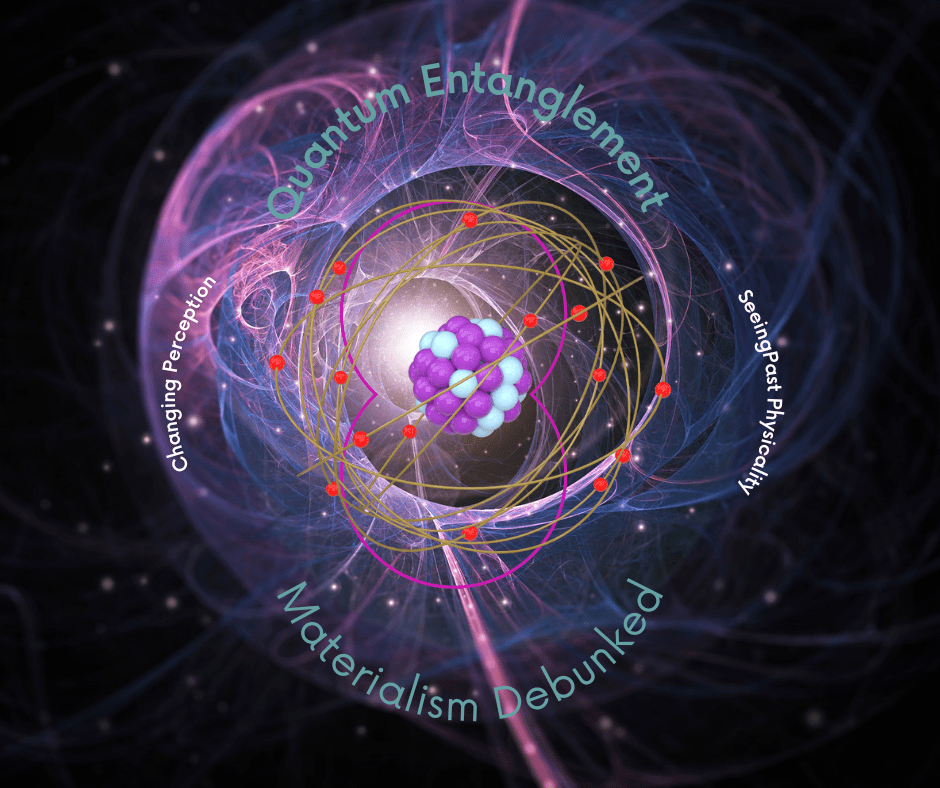
Quantum Entanglement
Quantum entanglement proves the interconnection between two particles, defying the barriers of the laws of physics according to materialists Science.
These particles are dependent on one another even when they are separated at vast distances and even dimensions.
Energetic Overlap Over All Things
Another area of overlap between quantum physics and spirituality is the concept of energy.
Energy is the fundamental force that governs everything in the universe.
Energy is the life force that connects us to the universe and each other. It is the very reason we can move, breathe, think, exist in space, etc.
Four Forces Are God’s Four Winds
Then he said to me, “Prophesy to the breath; prophesy, son of man, and say to the breath, Thus says the Lord GOD: Come from the four winds, O breath, and breathe on these slain, that they may live.” — Ezekiel 37:9
Daniel declared, “I saw in my vision by night, and behold, the four winds of heaven were stirring up the great sea. –Daniel 7:2
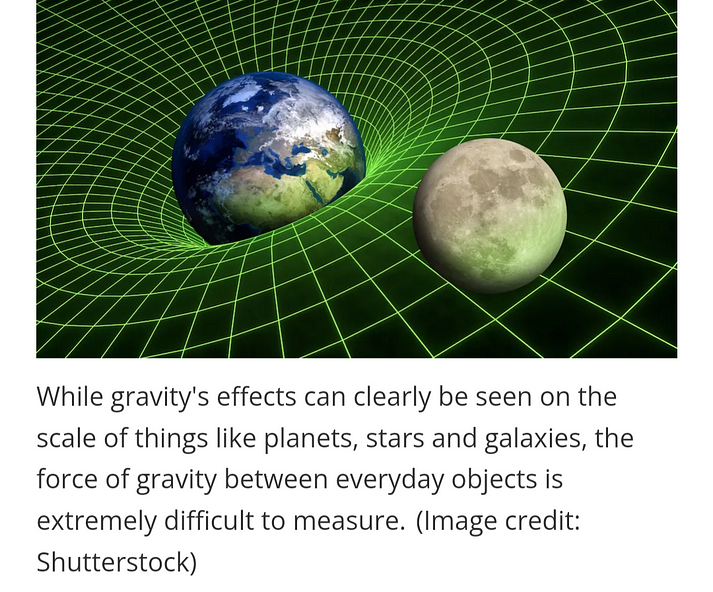
First Force: Gravity
Gravity is God
Gravity is the Force that binds us to the physical realm: Time and Space… He is also the obstacle that prevents us from transcending beyond Him.
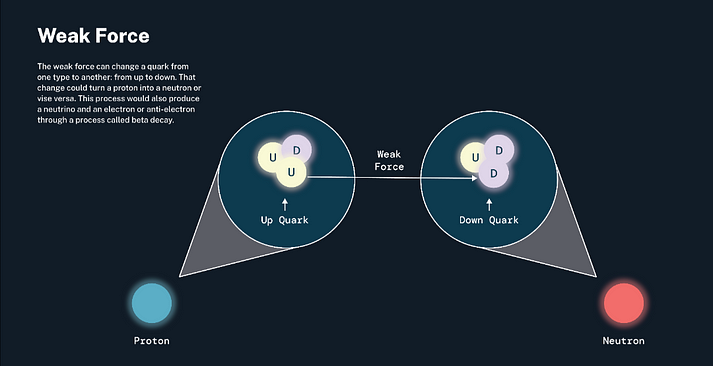
2nd Force: The Weak Force
God is the Weak Force
The weak force, also known as weak interaction, is a Force that is stronger than gravity.
However, it only operates over very short distances (as far as we humans know, from our limited ability to observe its effects).
This force acts on the subatomic level, and it plays a vital role in the Creation of elements and powering stars. The natural radiation present in the universe is primarily due to this Force.
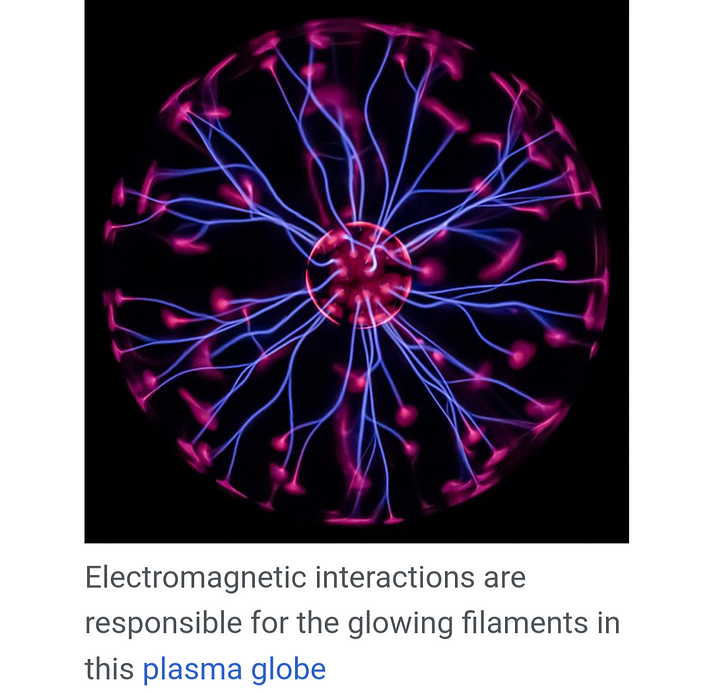
3rd Force: Electromagnetism
Again, This Is God
It is a force that arises between charged particles, such as electrons and protons, and is responsible for the interactions between them.
Electromagnetism encompasses both electricity and magnetism, as they are two sides of the same phenomenon.
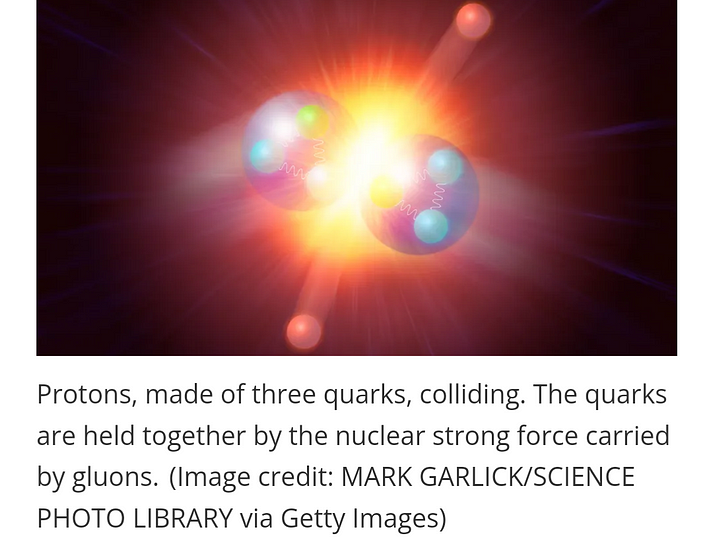
The 4th Force: Strong Force
God is The Strong Force
The strong force is the glue that binds the atoms together, the spark that ignites the stars, and the pulse that beats in the heart of matter.
It (He) is the Force that holds the quarks and gluons in a tight embrace, forming protons, neutrons, and other particles.
He is the Force that overcomes the repulsion of the electric charge, allowing nuclei to fuse and release enormous amounts of energy.
He is the force that shapes the universe, from the smallest scales to the largest.
“When all things are subjected to him, then the Son himself will also be subjected to him who put all things in subjection under him, that God may be all in all.”
Underneath the visible surface lies a profound substratum of reality, an ethereal realm composed of;
vibrations
life energies
forces &
conscious presences.
These elements animate the material displays perceived by our senses, going beyond mere physical forms.
Scripture, specifically Colossians 1:16-17, acknowledges this deeper level of being:
“For in him all things were created: things in heaven and on earth, visible and invisible… He is before all things, and in him, all things hold together.”
Some translations refer to this invisible realm as the “spiritual” or “heavenly” domain.
Is it conceivable that our physical world of atoms and molecules is nothing more than a fleeting facade?
Might it be plausible that this world shields, yet also discloses hints of the eternal plane of existence referenced in the Bible?
It could be manifested through transient material “avatars” while still maintaining its own separate identity.
MATERIAL REALM
The Tangible Universe
Scripture speaks of an unseen spiritual dimension that undergirds the physical world we perceive.
As Paul writes:
“What is seen was not made out of things that are visible” (Hebrews 11:3), &
Jesus speaks of a coming Kingdom “within you” that is not of this world.”
Luke 17:21
Although science is limited to observing empirical phenomena, the Bible presents the concept of multidimensional realities intersecting in a subtle yet profound manner.
“Your kingdom come, your will be done, on earth as it is in heaven.”
Matthew 6:10
This reveals the material reality we hold so dear is but a temporal facade, with eternity resonating within and without all things,
A flawless illustration of this concept is: melodies echoing through a musical instrument, while our spirits are crafted from unseen yet timeless realms as the divine breathes existence into mere dust.
Then the Lord God formed man from the dust of the ground and breathed the breath of life into his nostrils, and the man became a living being. –
Genesis 2:7
Physical Realm
The physical realm is the tangible, material world that we directly perceive through our five senses and scientific instruments.
It encompasses all the visible matter and energy in the universe, from galaxies, planets, and living organisms to atoms and particles and the fundamental forces that govern their interactions.
Over time, the physical realm is subject to decay and eventual physical death, as described by the second law of thermodynamics.
Despite the potential existence of non-physical minds or spirits, human observation and consciousness are inherently limited to this realm due to our embodied state.
This physical reality is the surface level of existence, which conceals a deeper, non-physical substratum from which it emerges and interconnects.
While interactions within the physical realm follow strict natural laws and may appear mechanistic, the realm of quantum phenomena unveils an intriguing flexibility.
Existence thus dances to the rhythms beyond the senses.
The trials we face unfold according to purposes transcending visible outcomes, meant to awaken us to hidden treasures dwelling within.
Spiritual Realm
The spiritual realm refers to the invisible, non-physical dimension or dimensions that interface with and give rise to the physical realm.
Some key aspects:
It exists beyond the limitations of space, time, and ordinary human senses/cognition as an eternal, multidimensional substrate.
Within it exist conscious presences like spirits/souls, as well as subtle vibrational forces or life energies that animate material forms.
The spiritual realm is the deepest level of reality from which all physical existence is expressed as a transient surface interaction or manifestation.
While invisible, it can subtly shape events in the physical realm, for example through intentionality, psi phenomena, mystical/transcendent experiences, etc.
Entities/consciousnesses within it are not bound by death but can permeate and interact with the physical dimension in mysterious ways.
Love, wisdom, creativity and other noble human qualities are said to have eternal/divine dimensions belonging fully to this realm.
Monotheistic religions propose it is the domain of God/Brahman/Ultimate Reality from which the entire cosmos emerges in multifaceted emanation/expression.
The Intangible Realm
The Bible speaks of an unseen spiritual dimension that interpenetrates our physical world, as Paul writes:
“our struggle is not against flesh and blood, but against the rulers, against the authorities, against the cosmic powers over this present darkness, against the spiritual forces of evil” (Ephesians 6:12).
Jesus performs miracles that hint at multidimensional realities, casting out demons and healing through an unseen life force.
Scripture portrays angels and demons as nonphysical entities interacting in the heavenly and earthly realms, while God dwells in unapproachable light (1 Timothy 6:16).
This invisible domain remains largely mysterious, though biblical figures like Ezekiel and Daniel catch glimpses of its vastness through visions.
If our souls continue after death as Jesus implies by raising Lazarus (John 11), human consciousness must likewise exist beyond flesh on multidimensional planes.
Like a master musician coordinating tones beyond hearing, could an eternal Intelligence subtly orchestrate all through vibrant yet imperceptible energies, animating creation with subtle otherworldly powers that science has yet to perceive?
The spiritual realm is often intertwined with the sphere of consciousness, thought, and emotion.
Some hypothesize that refined detection of electromagnetic phenomena, phenomena operating at the quantum scale, or alterations in consciousness itself may someday yield glimpses across the veil.
Certain individuals historically explored such methods, from employing ultra-sensitive instruments to gauge subtle field and energetic changes, to cultivating altered spiritual states through rituals, practices like meditation, or sacraments.
Methods that stimulate expanded human perception through disciplines like prayer, fasting, or manifesting love and compassion also show promise.
As the philosopher Augustine pondered, direct spiritual apprehension may lie beyond our narrow bandwidth of sensory perception.
However, he proposed the soul possesses means to resonate with beauty, goodness, and divinity itself when stirred by virtues like faith rather than just five senses alone.
Such a perspective suggests humanity’s noblest qualities like ethics, creativity, and devotion may provide portals that science cannot yet explain.
Tangible and Intangible Realms
This perspective proposes a most fascinating view of reality, one that potentially reconciles some tenets of quantum science with metaphysical philosophy.
It asserts the basic units and underlying workings of the cosmos themselves emanate from and express a divine consciousness, transcending but interfacing with the material.
Material Illusion?
While our senses convince us of the solidity and separation of physical things, discoveries at the quantum level have shattered this perception, showing the fundamental ambiguity between particle and wave, the ability of observation to influence outcome, and the relatedness of all things at their basest levels.
If the smallest units that make up what we perceive as reality exhibit such bewilderingly immaterial and interconnected properties, could it be that the concreteness we ascribe to material forms is itself an imposing of limitations borne of our perspective, and that there exists an even deeper unity, beyond and within all apparent partitions, a oneness of being that coordinates the whole cosmic drama but ever eludes complete observation and definition?
The seeming impenetrability of the material veil may thus prove but a constrained way of seeing, and reality’s ultimate nature remain irreducible to any single description or apprehension.
Martin Luther recognized that physical means, such as sacraments, serve as conduits for experiencing God’s spiritual blessings.
Luther is noted for saying:
“The Gospel’s message is inextricably linked with external visible signs when ordained by Christ and accompanied by a promise.”
Spiritual Forces In The Material Realm
Synchronicity
the coincidental occurrence of events especially psychic events (such as similar thoughts in widely separated persons or a mental image of an unexpected event before it happens) that seem related but are not explained by conventional mechanisms of causality
Miracles
a work effected in a manner unusual or different from the common and regular method of Providence, by the interposition either of God himself or of some intelligent agent superior to man
Intuition
Intuition is the ability to acquire knowledge without conscious reasoning or explanation.
And there are many more…
As noted by A.W. Pink:
“Earth is the theatre of ceaseless transformation. One era fades away, making way for the next… The allure of spring wilts, succumbing to summer’s heat, which in turn gives way to autumnal frosts, eventually yielding to winter’s severity.”
Physical Death Means Eternal Life
In this perspective, physical death is not seen as annihilation but as a liberation of individual consciousness from its temporary physical form, returning it to the limitless and timeless spiritual realms from which all human life originates through the divine energy of God.
Questions Answered:
Question
Are there any scientific theories or studies that explore the relationship between the spiritual and physical realms?
ANSWER
Yes. In the realm of quantum physics, scientists have observed certain phenomena that challenge our conventional understanding of reality.
The famous double-slit experiment, for instance, has shown that particles can behave as both particles and waves, suggesting a strange interconnectedness and the role of consciousness in the observation and measurement process.
Consciousness research, on the other hand, explores the nature of subjective experience and its relationship to the physical brain.
While the exact mechanisms behind consciousness are still not fully understood, some theories propose that consciousness is not solely confined to the material brain but may have a broader existence beyond the physical realm.
Question
Can you provide examples of spiritual experiences that have been studied or analyzed by scientists?
Near-Death Experiences (NDEs)
Near-death experiences occur when individuals come close to death, often through cardiac arrest or other life-threatening situations.
During these experiences, people report a range of profound spiritual and transcendental encounters, such as out-of-body experiences, encounters with deceased loved ones, and a sense of moving through a tunnel towards a bright light.
Scientists have conducted studies to understand the neurological, psychological, and physiological aspects of NDEs, attempting to explain these experiences within the framework of brain function and altered states of consciousness.
Meditation and Mindfulness
The scientific study of meditation and mindfulness practices has gained significant attention in recent years.
Researchers have investigated the effects of these practices on mental well-being, cognitive function, and even physical health.
Studies have shown that regular meditation can lead to altered states of consciousness, increased self-awareness, and a sense of connectedness to something greater than oneself.
The exploration of these experiences contributes to our understanding of the interplay between spiritual practices and brain function.
Psychedelic-Assisted Therapy
The resurgence of research into psychedelic substances, such as psilocybin (found in certain mushrooms) and MDMA, has brought forth fascinating insights into the realm of spirituality.
Studies have shown that these substances, when administered under controlled settings, can induce profound mystical experiences characterized by a sense of unity, interconnectedness, and a dissolution of the ego.
Researchers are exploring the therapeutic potential of these experiences in treating mental health conditions such as depression, anxiety, and PTSD.
Out-of-Body Experiences (OBEs)
Out-of-body experiences occur when individuals feel a separation of consciousness from their physical body, often accompanied by a sense of floating or flying.
While these experiences are commonly associated with spiritual and metaphysical realms, scientists have investigated them through the lens of neurology and psychology.
Studies have explored the brain mechanisms behind OBEs, such as disruptions in the integration of sensory information, providing intriguing insights into the nature of these experiences.
Question
Are there any ongoing studies or research projects in the field of spiritual experiences that you find particularly interesting?
While the scientific exploration of spirituality is still in its early stages, there are a few noteworthy endeavors that I find particularly intriguing.
Allow me to share a couple of them with you:
The Templeton World Charity Foundation
This philanthropic organization is dedicated to advancing our understanding of the spiritual dimensions of human existence. They support various research projects exploring topics such as the nature of consciousness, the impact of spiritual practices on well-being, and the role of spirituality in societal development. Their efforts aim to bridge the gap between science and spirituality, fostering interdisciplinary collaborations and promoting rigorous scientific inquiry in this field.
The Johns Hopkins Center for Psychedelic and Consciousness Research
This esteemed institution is at the forefront of investigating the therapeutic potential of psychedelic substances, such as psilocybin and MDMA. Their research examines the effects of these substances on mental health conditions, including depression, addiction, and PTSD, as well as their impact on spiritual experiences.
Through rigorous clinical trials and neuroimaging studies, they strive to deepen our understanding of the mechanisms underlying these transformative experiences and their potential therapeutic applications.
The Institute of Noetic Sciences (IONS): Founded by astronaut Edgar Mitchell, IONS is dedicated to exploring the intersections of science, consciousness, and spirituality.
They conduct research on various topics, including psychic phenomena, meditation practices, and the transformative effects of mystical experiences. Through their studies, they aim to expand our scientific understanding of the nature of consciousness and the interconnectedness of all things.
Question
What are some other organizations or institutions that are researching spirituality?
These institutions have made significant contributions to the field and continue to delve into the depths of this fascinating realm.
Here are a few of them:
The Monroe Institute
Founded by Robert Monroe, this organization focuses on the study of consciousness and the exploration of altered states of consciousness. They conduct research on various techniques, such as binaural beats and hemispheric synchronization, to induce altered states and facilitate spiritual experiences.
The Monroe Institute offers programs and workshops that allow individuals to explore their own consciousness and expand their understanding of the spiritual dimensions.
The Rhine Research Center
Established in 1935, the Rhine Research Center is one of the oldest parapsychology research institutions in the United States. They conduct scientific investigations into psychic phenomena, such as telepathy, precognition, and psychokinesis.
Through controlled experiments and rigorous methodologies, they aim to shed light on the potential existence of psychic abilities and their implications for our understanding of spirituality.
The Esalen Institute
Located in Big Sur, California, the Esalen Institute is a renowned center for personal growth, human potential, and spiritual exploration. They offer a wide range of workshops, seminars, and retreats that encompass various aspects of spirituality, including meditation, mindfulness, psychology, and philosophy.
The Esalen Institute serves as a gathering place for thinkers, researchers, and seekers from diverse disciplines who come together to explore the depths of human consciousness and spiritual experiences.
The Division of Perceptual Studies at the University of Virginia
This division, led by Dr. Jim B. Tucker, focuses on the scientific study of children who report memories of past lives. They investigate cases of spontaneous past-life memories in children, aiming to gather empirical evidence that may shed light on the nature of consciousness and the possibility of reincarnation.
Through their research, they explore the interplay between personal spirituality and the concept of past lives.
Question
What are some other notable parapsychology research institutions?
Here are a few additional institutions that have made significant contributions to the field of parapsychology:
The Koestler Parapsychology Unit at the University of Edinburgh
This esteemed research unit, founded in 1985 and named after the writer and philosopher Arthur Koestler, focuses on the scientific study of paranormal phenomena. They conduct rigorous experiments and investigations to explore various aspects of parapsychology, such as extrasensory perception (ESP), psychokinesis (PK), and the survival of consciousness after death. The unit aims to bridge the gap between science and the paranormal, promoting critical thinking and evidence-based research.
The Parapsychology Foundation
Established in 1951, the Parapsychology Foundation is a nonprofit organization that supports and promotes the scientific study of psychic phenomena. They provide grants for parapsychological research, organize conferences and symposiums, and publish the “International Journal of Parapsychology.” The foundation also maintains an extensive library and archive of parapsychological literature, making it a valuable resource for researchers and enthusiasts alike.
The Society for Psychical Research (SPR)
Founded in 1882, the SPR is one of the oldest and most respected parapsychological research organizations in the world. It is based in the United Kingdom and conducts scientific investigations into various paranormal phenomena, including apparitions, telepathy, and hauntings. The SPR publishes the “Journal of the Society for Psychical Research” and hosts lectures and events to foster scholarly discourse and promote the understanding of psychic phenomena.
The Parapsychology Research and Education at the University of West Georgia
This research unit, affiliated with the University of West Georgia, focuses on the scientific study of psychic and paranormal phenomena. They conduct experiments and investigations exploring topics such as telepathy, precognition, and mediumship. The unit collaborates with other parapsychology research institutions and offers courses and educational programs to promote the academic study of the paranormal.
These noted parapsychology research institutions, including the Rhine Research Center, provide platforms for scientific inquiry into the enigmatic realms of the paranormal. Through their research, publications, and educational initiatives, they contribute to the ongoing exploration of psychic phenomena and challenge the boundaries of conventional science.
BIBLICAL PROOFS OF 2 DIMENSIONS
Divine Intervention
Throughout the Bible, we see instances where God directly intervenes in the physical world to bring about specific outcomes. For example, in the Old Testament, God sent plagues upon Egypt to secure the liberation of the Israelites (Exodus 7-12).
These events involved supernatural phenomena impacting the physical realm.
Miracles and Signs
Jesus, during His ministry, performed numerous miracles that demonstrated His authority over the physical world and revealed the presence of the spiritual realm. Healings, exorcisms, raising the dead, and turning water into wine are examples of miraculous interventions that showcased His divine power.
Spiritual Warfare
The Bible also acknowledges the existence of spiritual forces opposing God’s purposes. In Ephesians 6:12, the apostle Paul speaks of spiritual wasrfare, indicating that believers wrestle not only against flesh and blood but also against spiritual powers. In such instances, the influence of the spiritual realm is seen through the battles waged against forces of evil and the need for spiritual armor and weapons.
Prayers and Spiritual Guidance
The Bible emphasizes the power of prayer and seeking guidance from the Holy Spirit. In James 5:16, it states that the effective prayer of a righteous person has great power. Prayer is a means by which we communicate with God, and the spiritual realm can influence the physical world as we intercede on behalf of others or seek guidance for our own lives.
BIBLE VERSES
This following verse reminds us that while the physical material world is tangible and temporary, the spiritual realm is everlasting and vital to our existence.
“So we fix our eyes not on what is seen, but on what is unseen, since what is seen is temporary, but what is unseen is eternal.
2 Corinthians 4:18:
This verse highlights the reality of spiritual forces at work behind the scenes, emphasizing that our battles extend beyond the merely physical realm.
“For our struggle is not against flesh and blood, but against the rulers, against the authorities, against the powers of this dark world and against the spiritual forces of evil in the heavenly realms.”
Ephesians 6:12:
This verse emphasizes that the physical world reflects the existence, character, and attributes of the spiritual realm. By observing creation, we can catch glimpses of the invisible qualities of God.
“For since the creation of the world God’s invisible qualities—his eternal power and divine nature—have been clearly seen, being understood from what has been made.”
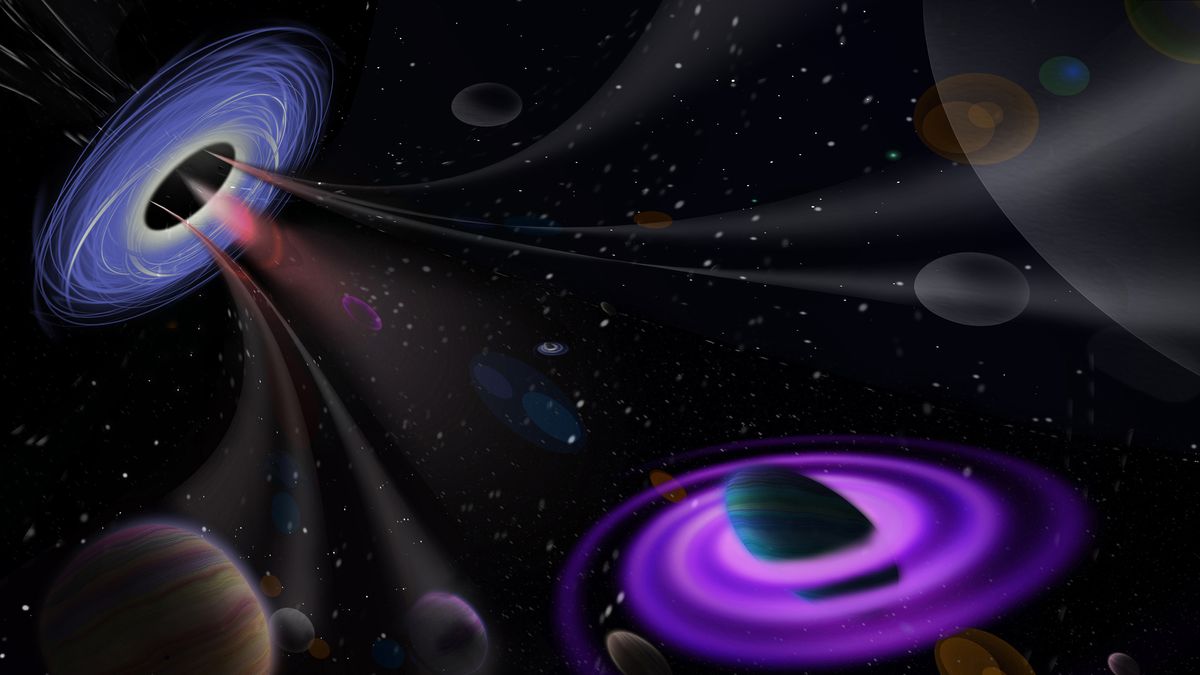
A black hole is a region of spacetime with gravitational forces so strong that nothing, not even light, can escape its gravitational pull.
A region of spacetime is a specific area within the fabric of space and time where physical events occur and interact.
The Gravity / God Connection:
Additionally, both God and gravity can be seen as unifying forces. Gravity binds objects together, shaping the structure of the cosmos and enabling the formation of galaxies, stars, and planets. In a metaphorical sense, God is often perceived as the ultimate source of unity, providing a sense of coherence and interconnectedness to the diverse elements of existence.
The Paradox of Understanding Black Holes
A paradox seems contradictory or absurd, but is actually true, when uncovered with nuance and a loyalty to truth, reflecting a deeper reality not easily accessed outside of the .
The more we uncover about black holes, the more elusive they become to our conscious mind, causing.
Recent scientific advancements have proposed intriguing theories, such as the concept of “quantum hair,” which aims to resolve the paradox between general relativity and quantum mechanics.
This paradox revolves around the idea of information loss: while quantum mechanics argues that information cannot be destroyed, general relativity suggests that a black hole can be described by only three attributes – mass, charge, and spin – therefore seemingly erasing all other information.
Philosophic Quandary
This paradox is not just a scientific dilemma; it’s a philosophical quandary that forces us to reevaluate our understanding of reality.
Unraveling the Paradox
Exploring the Coherent and Contradictory Nature of the Universe
Perhaps what appears contradictory to us is merely a reflection of our limited perspective.
Our human comprehension is bound by the constraints of our senses and intellect, which may hinder us from grasping the intricate interplay of forces within the universe.
The Awe Factor
Black holes evoke a sense of awe and reverence that transcends scientific curiosity.
This emotional response is not merely aesthetic; it’s existential. When we contemplate the incomprehensible forces at play in a black hole, we are reminded of our own finitude and the infinite complexity of the cosmos.
A Form Of Worship
This awe can be seen as a form of worship, a natural inclination to revere something far greater and more mysterious than ourselves, our worship is to God, the Creator of the Heavens and earth alone, as He alone deserves all praises.
The Theological Implications
The ceaseless quest to understand black holes—and by extension, the universe—can be seen as a spiritual journey.
Each new discovery peels back a layer of the cosmic onion, revealing yet more layers to explore.
This endless pursuit resonates my perspective, propelling the quest for Wisdom as a way to draw closer to the divine, yet it is the Divine who imparts this Wisdom, mirroring the infinite complexity of God through His creation, inviting us to a perpetual state of awe and worship.
Every other word is too lofty outside of “Awe“.
Cosmic Enigmas
An enigma is a mysterious or puzzling phenomenon that challenges understanding and invites exploration.
Black holes are more than just fascinating celestial objects; they are cosmic enigmas that challenge our philosophical and theological assumptions.
As we strive to unravel these mysteries, we are led to confront the limitations of our knowledge and the infinite complexities of a universe that may well be divinely ordered.
In this sense, the study of black holes becomes not just a scientific endeavor, but a spiritual pilgrimage—a journey that deepens our understanding of the Heavens, bringing us closer to the divine.
So, as we continue to probe the depths of the universe, let us embrace the awe, the mystery, and the endless questions as sacred aspects of this grand cosmic journey.
Within the enigma of black holes lie not only answers but also a divine road laid before us by God Himself.
While we may believe that it is us who will discover Him, the reality is that He is actually the one shaping and illuminating every single step we take, and supplying the very breath that sustains us.