There is a kind of knowing that does not ask permission from the mind.
It does not build a case.
It does not cite its sources.
It arrives already finished — and you are left, afterward, trying to reverse-engineer a reasoning process that never actually happened, because there wasn’t one.
There was only recognition.
THIS IS INTUITION
And I want to be precise about what it is, because the word gets used carelessly — as a synonym for ‘hunch’, for ‘gut feeling’, for whatever unexamined impulse happens to walk through the door.
It is more disciplined than that.
It is older than that.
What the Word Actually Says
Intuitive: from the 1640s, meaning to perceive directly and immediately.
French intuitif. Medieval Latin intuitivus.
Beneath that, Latin intueri — to look at, to consider — built from in- (into) and the Proto-Indo-European root tueri, to look at, to watch over.
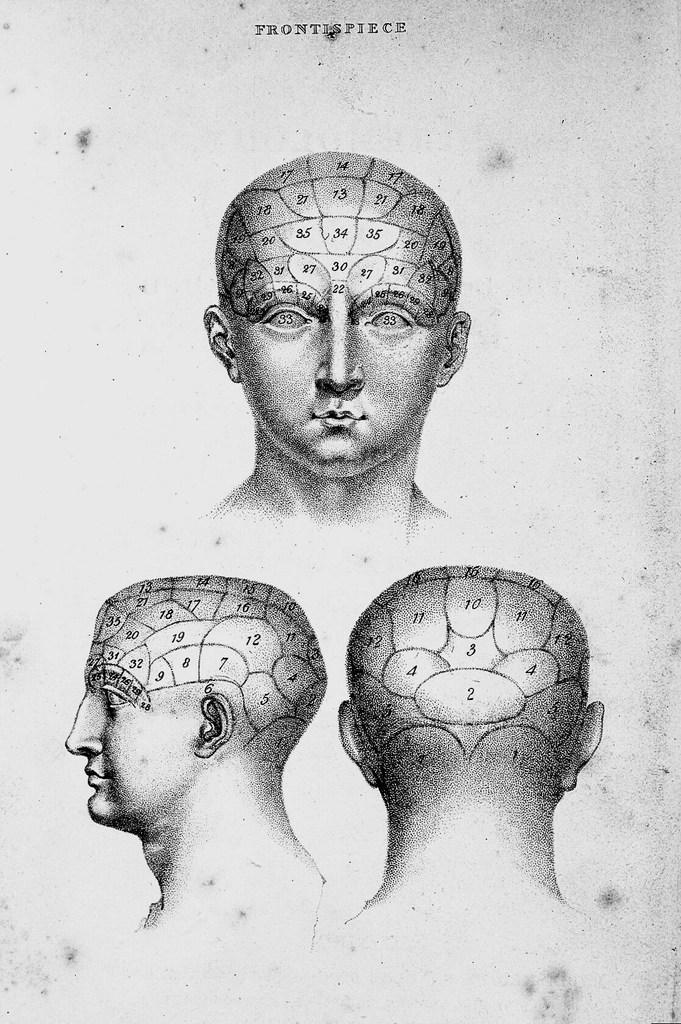
Sit with that construction for a second— TO LOOK INTO.
Not to look at something from the outside, the way the analytical mind does when it studies a thing and holds it at arm’s length.
TO LOOK INTO
Intuition was never framed, at its root, as a shortcut around understanding.
It was framed as a more direct route to the same place, perception without the detour through argument.
By 1833 the word had picked up its second meaning: self-evident.
Which tells you something about how intuitive knowledge behaves once it arrives.
It doesn’t feel like a conclusion you reached.
It feels like a fact you always had.
INTUITION’S ESSENCE
Intuition is knowledge acquired without recourse to conscious reasoning.
It costs little apparent effort, and it often arrives beneath the threshold of awareness. —you didn’t notice yourself knowing it, you just discovered that you already did.
I’ll say what I am convinced is objective reality and the rationalist minds reading this will resist:
Intuition is not knowledge in spite of the unconscious. It is knowledge because of it.
Subconscious Intuition
Somewhere beneath the noise of deliberate thought, pattern and truth are being recognized continuously, without your permission and without your effort.
Intuition is what it sounds like when that recognition finally surfaces loud enough to hear.
Call it whatever you want— Gnosis, Pattern Recognition …
Call it pattern-recognition if the word “gnosis” makes you nervous. I won’t argue about the name. I will insist on the thing.
The analytical mind — the part of you that constructs arguments, weighs pros and cons, wants everything justified before it’s trusted — is not the enemy of intuition.
But the analytical mind is not its source, either.
It is downstream.
It is the part of you that shows up afterward, translating a knowing into language, dressing it in reasons it can defend at a dinner party.
The knowing came first.
Four Intuitive Types Moving Through People
Not everyone’s intuition operates the same way.
I’ve watched these four show up distinctly enough, in myself and in the people I’ve cared about enough to study.
I think of these types less as a typology and more as four different instruments the same instinct can be played on.
1. ADAPTIVE INTUITION
Adaptive intuition moves fast, and it moves on experience — not analysis, experience, the kind that’s been lived through the body enough times to have left a residue.
It shows up when a situation is too time-compressed for deliberation, and it’s the one people instinctively turn to for guidance in a crisis, because it doesn’t destabilize when the ground does.
This is the intuition of someone who’s been through the fire enough times to recognize the smell of smoke before the alarm goes off.
2. OBSERVANT INTUITION
Observant intuition is quieter and more patient. It’s built on close attention — visual, sensory, environmental.
It notices the cue nobody else caught:
1. the tone that shifted & 2. the detail that doesn’t match the story being told.
People who carry this type tend to move cautiously, because they’re gathering before they’re deciding, and it often coexists with real artistic ability — the same faculty that reads a room can read a canvas, or make one.
3. ANALYTICAL INTUITION
Analytical intuition looks, from the outside, almost like its opposite — deliberate, unhurried, unwilling to move until every possibility has been turned over.
But it’s still intuition, not pure logic, because the “considering” isn’t a formal process; it’s a felt need to hold the question longer, even when it produces something that looks like indecision.
This is the instinct behind good lawyers and good detectives — not faster knowing, but knowing that refuses to close early.
4. QUESTIONING INTUITION
Questioning intuition is analytical intuition’s more skeptical cousin — the same refusal to rush, but anchored harder in fact and evidence rather than felt pattern.
It doesn’t trust a recognition until it can also verify it.
This is the instinct behind good accountants:
the sense that something’s off, followed immediately by the demand to prove it.
Why This Matters
None of these four are “more intuitive” than the others.
They’re the same faculty filtered through different relationships to time, evidence, and trust.
What they share is the thing the word has meant since the 1640s: direct perception.
A way of looking into something rather than only at it.
CULTURAL CONDITIONING
We’ve been trained — by a culture that worships the analysis it can show its work for — to distrust the knowing that arrives without a paper trail.
I’d ask you to consider the opposite: that the paper trail is the translation, not the source.
That the fastest, oldest, least defensible-sounding knowledge you have might also be the least corrupted.
It hasn’t been argued into a shape that’s convenient.
It’s just true, the way a self-evident thing is true — because you looked directly at it, and it looked back.
As the times get dark, we in the light must shine it. An esoteric perspective.
What is Surveillance?
Surveillance is the monitoring of behavior, activities, or information to influence, manage, direct, or observe individuals or groups.
It has evolved from simple observation into a complex, pervasive infrastructure that affects everyone.
Protecting the Inner Sanctuary
For the esoteric-minded people like myself, surveillance is not merely a political or technical issue; it is a violation of the sacred.
The increasing pervasiveness and sophistication of surveillance technology raises philosophical questions both epistemic (to do with the acquisition of knowledge) and ethical (concerned with living the good life). Surveillance Asymmetry Epistemic considerations preoccupy the CCTV users: governments, law enforcement agencies and businesses.
The drive to monitor and predict human behavior is a pursuit of total transparency that seeks to eliminate the “shadow”—the mysterious, unmapped, and creative depths of the psyche.
Esoteric traditions emphasize the cultivation of the inner self, a space that must remain private, sovereign, and unknown to the external observer to maintain its transformative power.
The Surveillance of the Spirit
Modern tracking systems attempt to commodify the human experience, turning the spontaneous, chaotic, and sacred expressions of life into predictable data points.
This is an attempt to fix the “flux” into a static, controlled reality.
The Sovereignty of the Unseen
Just as the “Hermetic seal” protects the work from outside interference, maintaining a barrier between your inner life and the digital panopticon is essential for spiritual autonomy.
If your thoughts, movements, and expressions are constantly mapped, your ability to “transmute” yourself into new states of being is compromised.
Shining the Light
To “shine the light” as these times grow darker is to act as a witness.
By understanding these systems, you deny the hidden power they rely on.
You reclaim your agency by refusing to be a readable, predictable element in their grand design.
Eyes Are On Everyone
The AI Paradigm
This is not merely a question of data privacy; it is a fundamental shift in the logic of governance.
Systems designed for administration have become tools for tracking and predicting human behavior, often with minimal oversight or accountability.
Inferences replace facts
AI interprets behavioral patterns at scale without verification.
Correlations replace testimony
Decisions are made based on data probabilities rather than direct evidence.
Universal Risk
While often deployed first against marginalized groups, this infrastructure expands its reach into the lives of all citizens.
Spy Bugs: Covert devices hidden in everyday objects (pens, USBs, lamps, sockets) to record or transmit audio.
GSM Bugs: Operate like mobile phones; perpetrators dial in to silently listen from anywhere in the world.
Mobile Phone Hijacking: Devices can be turned into remote microphones via malicious software, allowing attackers to “hot on the hook” listen to conversations.
RF & Bluetooth Bugs: Transmit audio signals via radio frequency or Bluetooth to a remote receiver.
Visual & Imaging Technology
CCTV & Drones: Automated monitoring in public and private spaces.
Advanced Optics: High-zoom lenses, infrared, and night-vision devices.
Satellite/Aerial: Persistent monitoring capability from above, including indoor spaces.
Data & Sensor Networks
Sensor Arrays: Magnetic, seismic, infrared, and strain sensors detect movement, vibration, and even keystrokes.
Pattern Recognition: AI-driven analysis of movement, voice, and thought-to-computer interfaces.
Infrastructure: Global intelligence systems (e.g., ECHELON) that scan communications for keywords and phrases.
Detection & Mitigation
To protect against unauthorized monitoring, consider these layers of defense:
Physical Inspections
Thoroughly check environments for concealed hardware.
Electronic Scanning
Utilize specialized equipment to identify active radio transmissions.
Professional Services
Engage experts in Technical Surveillance Countermeasures (TSCM) for comprehensive bug sweeps.
Information Hygiene
Be cautious of suspicious attachments and links that can compromise mobile devices.
Note: Surveillance tools, while used by law enforcement and intelligence agencies for security, frequently raise significant ethical and constitutional concerns. This resource aims to inform the public on the realities of these technologies.
The E-3 Sentry is an airborne warning and control system, or AWACS, aircraft with an integrated command and control battle management, or C2BM, surveillance, target detection, and tracking platform.
Cognitive rigidity is the stubborn insistence that our way of thinking is the only way.
It shows up in small, everyday ways:
refusing to consider another perspective
dismissing evidence that challenges our beliefs
or sticking to habitual responses when flexibility is required.
It is mental inflexibility masquerading as certainty.
This rigidity is rarely neutral. It filters experience, allowing only what aligns with our preconceptions to pass through.
What we notice and refuse to notice is determined less by reality and more by the contours of our existing beliefs. The mind becomes its own jailer.
FILTERED VISION
Perceptual limitations compound this problem. Our senses, our expectations, and our biases shape what we perceive.
Two people can witness the same event and walk away with entirely different “realities,” each convinced theirs is the truth.
Culture, language, upbringing, and personal trauma all function like lenses, coloring everything we see.
When cognitive rigidity meets these perceptual filters, the feedback loop begins: our beliefs dictate what we perceive, and our perceptions reinforce our beliefs.
We become prisoners of our own limited frameworks, blind to the complexity—and often the truth—of the world around us.
Breaking the Loop
Escaping this loop is not about acquiring more information. It is about retraining the mind to see what it usually ignores:
Observe without judgment. Watch your thought patterns and notice when you shut down possibilities automatically.
Seek what challenges you. Engage with ideas and perspectives that make you uncomfortable.
Question your perception. Ask yourself what you might be missing, what biases are filtering your experience.
Embrace intellectual humility. Accept that your understanding is provisional, incomplete, and subject to correction.
The moment we recognize that perception is always partial, and thought is always provisional, the bars of the cage begin to loosen.
Clarity is not a gift; it is a discipline.
The Work of Liberation
This is the work of liberation: not avoiding rigidity, but confronting it; not denying perceptual limits, but piercing them.
The mind can be trained to perceive more, think more flexibly, and respond more intelligently.
It is uncomfortable, but truth always is.
We cannot see everything, but we can see more than we did yesterday.
Perspective refers to a particular attitude or way of viewing something.
It can also mean the art of representing three-dimensional objects on a two-dimensional surface to give the right impression of their height, width, depth, and position relative to each other.
Trauma…
… is a deeply distressing or disturbing experience.
It can refer to emotional shock following a stressful event or physical injury.
Trauma’s impact on our perspective makes us vulnerable to manipulation.
In the past decade, increased exposure to traumatic experiences has intensified this issue, causing many to develop a strong attachment to their trauma.
It’s crucial to address this through personal growth, open dialogue, and professional support to create a healthier, more resilient society.
Trauma & Propaganda
Propaganda frequently capitalizes on pre-existing trauma or insecurity, skillfully manipulating the fears, anxieties, and emotional vulnerabilities of individuals who have endured distressing experiences.
WAR TIME PROPAGANDA USE
For example, in wartime, propaganda can intensify fears of adversaries to garner public backing for military initiatives.
FEAR MONGERING CAMPAIGNS
Similarly, political campaigns may employ fear-driven messaging to influence voters by emphasizing possible threats to their safety and well-being.
COERSION — EXPLOITATION — COMPLIANCE
By invoking intense negative emotions, propaganda seeks to coerce individuals into compliance and allegiance, exploiting their emotional reactions to fulfill its objectives.
Invokes deep rooted fears.
This strategy proves effective as it resonates with deeply rooted fears and insecurities, rendering individuals more amenable to persuasion.
Propaganda can itself CAN CAUSE TRAUMA
When propaganda is effective in spreading hatred, division, and misinformation on a wide scale, it can be psychologically traumatic for large groups of people.
Trauma can make people more susceptible to propaganda.
TRAUMA + PROPAGANDA
Individuals who have gone through traumatic experiences frequently find themselves feeling more distrustful of others.
They also have a strong desire for straightforward explanations and narratives that can make sense of their experiences.
They often have an intensified need for security and a sense of belonging to a group, which is something that propaganda can readily
Propaganda takes advantage of these vulnerabilities for its own purposes and objectives.
Both propaganda + traumatic events create :
short-circuit rational thinking
appeal to emotions
fan the flames of fear
trigger “us vs. them” tribal mentalities
With enough repetition, propaganda can start to feel indistinguishable from reality.
When a person becomes trauma-bonded:
When a civilization persistently follows a rigid path, without self-reflection, it can inadvertently lay the groundwork for its own subjugation, eroding its own liberties.
It is like constructing a theater where the civilization unknowingly acts out its own enslavement.
Each short-sighted decision and action incrementally shapes a future where external forces exert control and suppress freedom.
This serves as a sobering reminder of how profound an impact our choices can have on the fate of societies.
How Can This Happen?
The trauma bonding of a nation to its government is a gradual process, built through a combination of fear, hopelessness, manipulation and habit.
contributing factors
HOW A SOCIETY BECOMES TRAUMA BONDED:
OVERWHELMED BY CRISIS
Major crises that overwhelm citizens’ sense of security and control. These could be:
wars
economic disasters
natural catastrophes
pandemics.
The larger the crisis, the greater people’s need for protection and reassurance from authority.
EXPLOITING FEARS
Governments that actively exploit citizens’ fears and insecurities through
propaganda
threat exaggeration
misinformation,
governments condition people to see the state as the only source of security and order.
Citizens come to associate the government with survival.
The suppression of dissenting voices
As governments consolidate power in the wake of crises, they discourage opposition- making alternative perspectives seem non-existent, cementing the dominance of the official narrative. They accompany this through:
censorship
surveillance
imprisonment
coercion.
Gradual erosion of freedoms.
As citizens comply out of perceived necessity, governments expand their authority and weaken checks on their power.
Over time, these changes become normalized through repetition and habituation.
A diminishing of citizens’ sense of agency
Facing immense threats, people stop believing they can effect real political change.
They become passive subjects rather than active citizens.
This learned helplessness further traps them in the traumatic status quo.
We have been Placed Into Position
Every role we occupy seems to be carefully arranged, akin to performers in a grand theatrical production. Each individual has embraced their specific role, creating a harmonious ensemble that operates in perfect synchrony.
End Of America’s Great Experiement
The melancholy surrounding America’s decline is rooted in the recognition that the monumental experiment that has defined its principles and values is reaching a conclusion. This sadness emerges from the understanding that the American experiment, rich with aspirations and ideals, is moving into unfamiliar territory, evoking a complex mix of pride and trepidation.
Elite VS Citizens
This ongoing conflict can be seen as a significant struggle between the influential elite, who hold substantial power and resources, and the general public, who represent a much larger demographic.
At its core, this battle is fundamentally about control and influence within society. The elite are determined to preserve their privileged status and maintain their dominance, whereas the wider population is actively advocating for greater equality and justice.
This clash highlights the deep-seated tensions and disparities that exist between those at the top and those who seek to challenge the status quo in pursuit of a fairer and more equitable society.
Citizens Fighting With Opressors
This war encompasses physical clashes alongside ideological debates, as societal structures and hierarchies of power are fiercely contested.
The outcome of this war will determine the fate of the people and shape the future of society and the distribution of power.
Mastering the nuance between perception and reality is not a passive philosophical exercise; it is the essential toolkit required to dismantle our own cognitive illusions and navigate our way out of profound hardship.
When you are in the trenches, survival depends on clarity.
By carefully distinguishing between seemingly identical ideas, you build an architecture of discernment… allowing you to separate the truth of a situation from the mental friction keeping you stuck.
Map vs. Territory
The first tool in this kit is recognizing that the crisis you are experiencing (the territory) is completely separate from the story you are telling yourself about it (the map).
The distinction between the map and the territory is a fundamental concept in rationality.
A map is a representation of reality, while the territory is the actual reality itself.
Why Does This Matter?
This distinction matters because it highlights the fact that our understanding of the world is always mediated through our mental models and representations.
We must be aware that our ‘maps‘ , no matter how detailed or accurate, are never identical to the ‘territory‘.
Recognizing that your map is flawed is the first step, but how does the map get drawn in the first place?
When we are struggling, our maps are rarely constructed from present reality. Instead, they are stitched together using outdated, unexamined assumptions.
To update your map, you must confront the difference between the mental debris you default to and the active awareness required to survive.
Cached Thoughts vs. Actual Thinking
CACHED THOUGHTS
Cached thoughts are the pre-existing beliefs and assumptions that we hold, gathering trash and holding into them like a computer holds onto cqche. This means these are thoughts that lack conscious awareness.
This Repository of ‘thoughts’ are mental shortcuts that we rely on to make sense of the world, with no thought as to if these thoughts are based in objective reality or not.
THINKING
In contrast, thinking involves actively questioning and challenging our cached thoughts, engaging in critical analysis, and seeking new information to refine our understanding.
When you rely on cached thoughts instead of active thinking, your internal world becomes an echo chamber. You begin to mistake your unexamined biases for universal laws. This is where hardship turns into self-sabotage—when you project your own internal friction onto the external territory and assume everyone else is navigating the same distortion.
Mind Projection Fallacy
The Mind Projection Fallacy is a cognitive bias that occurs when people assume that their personal beliefs, values, or perceptions are shared by others or represent objective reality. This fallacy suggests that people often confuse their own thoughts and feelings with universal truths and expect others to have the same thoughts and feelings.
The Mind Projection Fallacy can significantly distort one’s ability to discern.
When we project our own beliefs and emotions onto others, we fail to accurately discern their unique perspectives and experiences.
Here Are Some Examples Of How Mind Projection Impedes Ones Ability To Discern:
Overestimating Agreement: One may falsely believe that others share their opinions, leading to an overestimation of consensus and potentially causing miscommunication or conflict when differing perspectives are eventually revealed.
Inaccurate Assumptions: When projecting personal beliefs, individuals can make inaccurate assumptions about others’ thoughts and feelings, leading to misunderstandings and incorrect conclusions.
Inability to Empathize: By assuming that everyone thinks and feels similarly, individuals can struggle to put themselves in others’ shoes and empathize with their unique experiences and emotions.
Poor Decision-Making: Decision-making can become flawed when one assumes their perspective is universally shared, potentially leading to choices that are not inclusive or beneficial for all parties involved.
To overcome the Mind Projection Fallacy and improve discernment, it is crucial to foster empathy, seek out diverse perspectives, and practice open communication. By recognizing the influence of personal beliefs and emotions on perception, individuals can become more discerning and accurately understand the viewpoints of others.
The Halo Effect:

a cognitive bias where our overall impression of someone or something influences our judgments of their specific traits. This term, coined by psychologist Edward Thorndike in 1920, illustrates how positive perceptions in one area can positively affect our opinions in another.
Escaping this cycle of projection requires a radical shift in how you process information. You must start dissecting the narratives you encounter, both internal and external. To do this effectively and strip away the illusion, you have to separate the mere structure of a situation from its actual substance.
Syntax vs. Semantics
In the context of language and communication, syntax refers to the physical structure of a message.
Semantics refers to the meaning or intended relationship to the territory.
Understanding this distinction is crucial for effective communication.
Yet, grasping the intended meaning is only half the battle.
When you are fighting your way out of a difficult season, it is not enough to know what a situation means—you must understand its real-world impact.
You must discern the difference between the definition of a problem and the actual consequences it produces.
Semantics vs. Pragmatics
Semantics refers to the literal meaning of a message, while pragmatics refers to the intended result or effect of conveying that message.
This distinction is important because it highlights the fact that communication is not just about transmitting information, but also about influencing behavior and shaping outcomes.
Once you understand the practical effects of your situation, the next logical step is determining where to apply your energy to fix it.
This requires pinpointing your exact position on the battlefield.
Are you fighting the immediate symptom right in front of you, or the overarching system that created it?
Object-level vs. Meta-level
The object-level refers to the specific task or problem at hand, while the meta-level refers to the broader context or framework within which that task or problem is situated.
A good meta-level theory can help us get things right at the object level, but it is usually impossible to get things right at the meta level before making significant progress at the object level.
Ultimately, navigating through these layers of abstraction brings you to the core of all discernment.
When the mental debris is cleared, the projections are silenced, and the structure is separated from the impact, you are left with the final, most vital distinction required for true liberation.
Seeming vs. Being
We can only deal with how things seem to us, not how they are in absolute terms.
This is a humbling reminder of our limited perspective and the importance of maintaining a degree of epistemic humility.
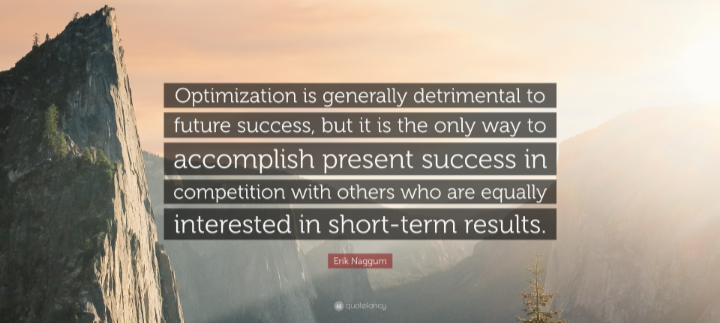
If we optimize too hard for things that seem good rather than things that are actually good, we may end up with suboptimal outcomes.
Signal vs. Noise
Not all information is created equal.
We often desire certain types of information while seeking to ignore others.
The distinction between signal and noise helps us focus on the most relevant and valuable information while filtering out the irrelevant or distracting.
Selection Effects
Selection effects occur when the evidence we have access to is filtered or biased in a particular way.
This can lead to distorted conclusions and faulty decision-making.
Understanding selection effects requires modeling where our information comes from and accounting for the processes that shape what we see.
What You Mean vs. What You Think You Mean
People often claim to have meant something slightly different than what was originally stated when their original position is challenged or refuted.
This automatic response, generated by our brains without conscious control, can be dangerous for clear thinking.
It is important to be aware of this tendency and to strive for consistency and honesty in our communication.
What You Mean vs. What Others Think You Mean
The illusion of transparency and the double illusion of transparency highlight the gap between what we think we are communicating and what others actually understand.
We often overestimate how clearly we convey our thoughts and feelings, while underestimating the extent to which others misinterpret our messages.
Effective communication requires being mindful of these biases and seeking feedback to ensure mutual understanding.
What You Optimize vs. What You Think You Optimize
Our actions are often driven by hidden motives and incentives that we may not be fully aware of.
Evolution, for example, optimizes for reproduction, but in doing so creates animals with a variety of goals that are correlated with reproduction.
Intrinsic motivation is generally stronger and more effective than extrinsic motivation.
Understanding the difference between what we think we optimize for and what we actually optimize for can help us align our actions with our true values and goals.
Stated Preferences vs. Revealed Preferences
Stated preferences are the preferences we explicitly express, while revealed preferences are the preferences we can infer from our actions.
These two types of preferences are often misaligned, with our actions not matching our stated beliefs or desires.
Recognizing this distinction can help us identify and address inconsistencies in our decision-making.
What You Achieve vs. What You Think You Achieve
Most of the consequences of our actions are unknown to us.
We often overestimate our ability to predict and control the outcomes of our decisions.
Effective action requires humility, openness to feedback, and a willingness to learn from experience.
It is impossible to optimize without proper feedback, so we must be vigilant in seeking out information about the actual results of our efforts.
What You Optimize vs. What You Actually Achieve
Consequentialism focuses on the expected consequences of our actions, rather than the actual consequences.
While it is important to consider the potential outcomes of our decisions, we must also be prepared to adapt and adjust our course based on the real-world results.
Rigid adherence to a particular optimization strategy can lead to suboptimal outcomes if it fails to account for the actual effects of our actions.
What You Seem Like vs. What You Are
Our external appearance and behavior may not always reflect our true nature or inner experience.
We may present a certain image to the world while privately struggling with doubts, fears, or contradictory impulses. Recognizing this distinction can help us cultivate self-awareness, authenticity, and empathy in our relationships with others.
What Other People Seem Like vs. What They Are
Similarly, we often make assumptions about others based on their outward behavior or reputation, without fully understanding their inner lives or the complex factors that shape their actions.
Assuming that we understand others is a common mistake that can lead to misunderstandings, prejudice, and missed opportunities for connection and growth.
What People Look Like vs. What They Think They Look Like
People tend to underestimate the gap between their stated preferences and their revealed preferences. We may claim to value certain qualities or characteristics in ourselves or others, but our actions often tell a different story. Recognizing this discrepancy can help us align our self-perception with reality and make more authentic choices.
What Your Brain Does vs. What You Think It Does
Our brains are complex, powerful, and often mysterious. We are running on “corrupted hardware” in the sense that our thought processes are shaped by social and evolutionary factors that can distort the truth. The brain’s machinations are fundamentally social, automatically engaging in signaling, face-saving, and other behaviors that can lead to biased or irrational decisions. While we must be skeptical of the outputs of our thought processes, we must also strike a balance between skepticism and action, particularly in situations that require quick thinking or decisive action.
Clever Argument vs. Truth-seeking
People often believe what they want to believe, a phenomenon known as motivated cognition.
Giving a smart person more information and more methods of argument may actually make their beliefs less accurate, because it provides them with more tools to construct clever arguments for what they want to believe.
The actual reason for believing something determines how well that belief correlates with the truth.
If you believe something because you want to, any arguments you make for that belief, no matter how strong they may sound, are devoid of informational context about the truth of the belief and should be ignored by a genuine truth-seeker.
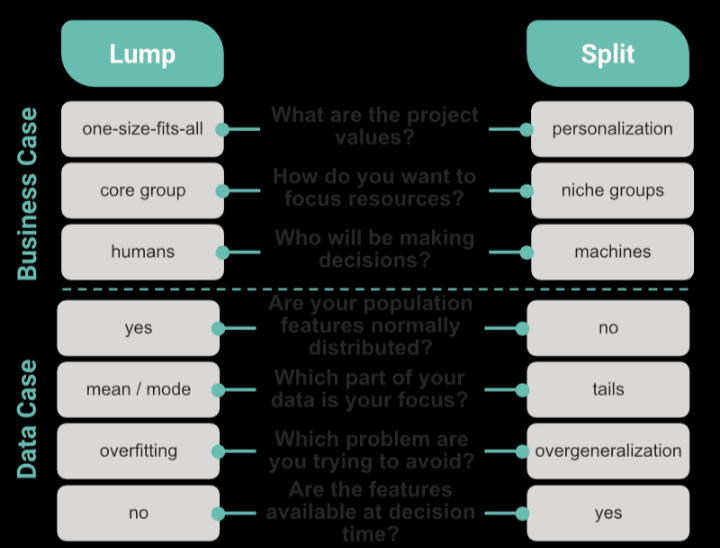
Lumpers vs. Splitters
Lumpers are thinkers who attempt to fit things into overarching patterns, while splitters are thinkers who make as many distinctions as possible, recognizing the importance of being specific and getting the details right. The lumper mindset can be useful for identifying broad trends and connections, while the splitter mindset is essential for accurate analysis and nuanced understanding.
Fox vs. Hedgehog
The fox knows many things, while the hedgehog knows one big thing. Closely related to the lumper-splitter distinction, the fox mindset involves a broad array of knowledge and the ability to draw insights from diverse sources. The hedgehog mindset, in contrast, focuses on a single big idea and applies it everywhere. According to Tetlock’s research, the fox mindset is generally better for making accurate judgments in complex, uncertain situations.
Traps vs. Gardens
Well-kept gardens die by pacifism, meaning that conversations, societies, systems, and even thermodynamic equilibrium tend to slide toward disorder, conflict, and decay unless actively maintained.
Recognizing this distinction can help us be proactive in defending and nurturing the things we value, whether it’s a productive dialogue, a thriving community, or a well-functioning organization.
Nuanced thinking involves carefully distinguishing between seemingly similar concepts and recognizing the subtle differences that shape our understanding of the world.
By engaging in this kind of discernment, we can make more informed decisions, communicate more effectively, and develop a richer, more accurate perspective on the complex realities we navigate every day.
Coercive Control (Power)–an act or a pattern of acts of psychological assault, threats, humiliation and intimidation or other abuse that is used to harm, punish, or frighten their victim into conforming.
Common Types of Coercive Power:
DIRECT & INDIRECT
DIRECT
Straight forward
Direct coercive power is the ‘in-your-face’ threats and direct ultimatums, leaving you feeling trapped and helpless. But you know what’s happening, there is little confusion.
INDIRECT
Manipulative- through the back door
These types will NEVER say, “Do this or else!” No, they’re far sneakier.
They instead will use subtle tactics to control and manipulate you.
Corersion puts you into a hellish maze where every turn is a mind trap, and you can never find your way out.
With indirect power, it’s about psychological warfare.
Tactics
Guilt-tripping
Using guilt or shame to manipulate individuals into conforming to certain behaviors or beliefs.
This can involve making individuals feel bad about themselves or their actions in order to control their behavior.
Threats of Punishment
Using threats of punishment or consequences to coerce individuals into compliance.
This can involve threatening to ostracize, shun, or punish individuals who do not conform to certain expectations or norms.
Emotional Manipulation
Using emotional manipulation tactics such as gaslighting, manipulation of emotions, or playing on individuals’ fears and insecurities to control their behavior.
Isolation
Isolating individuals from their support networks or communities in order to control their behavior and limit their access to alternative perspectives or sources of support.
Pressure Tactics
Using peer pressure, social pressure, or manipulation to coerce individuals into conforming to certain behaviors or beliefs.
This can involve creating a sense of urgency or fear of missing out in order to manipulate individuals into compliance.
Control of Information
Controlling access to information or limiting individuals’ exposure to alternative viewpoints in order to maintain control over their beliefs and behaviors.
Church Members
Often Play This Insidious Game
Believe it or not, There are instances where some individuals or organizations claiming to be Christian use coercion in an attempt to control or manipulate others out of concern, usually false concern.
Why?
There are various reasons why some individuals or groups within the Christian community resort to coercion.
This includes
a misguided belief that they are acting in the best interest of others.
a desire for power or control, a lack of understanding of the principles of consent and autonomy.
a misinterpretation of religious teachings.
But that’ll be another blog post.
Never Forget Jesus’ Teaching
“Bless those who curse you, pray for those who mistreat you”