Category: libraries

  • Esoteric Resource Guide

    Esoteric Resource Guide

    My favorite online esoteric resources.

    Esoteric knowledge has become more accessible than ever before. Here’s A tiny bit from the wealth of resources. Let’s explore the esoteric, mystic and hermetic.

    Internet Sacred Text Archive (ISTA)

    This is a must for anyone interested in the esoteric. Has way extensive collection of texts on religion, mythology, folklore, and esotericism.


    Alchemy Rediscovered and Restored by A. Cockren [1941]:

    A modern alchemist who claims to have been able to reproduce the process of creation of the philosopher’s stone.

    The Stone of the Philosophers by Edward Kelly
    Mary the Prophetess
    An Alchemical Mass
    The Mirror of Alchemy

    Digital Occult Library

    Occult Literature

    Occult Philosophy

    Primary Sources

    Notable People

    Glossary of Terms

    Psychoanalysis and Alchemy

    Witchcraft and Wicca


    Hermetic Library

    Thelemic to contemporary esotericism, the Hermetic Library holds a curated collection of texts with deep insights into modern occult practices and philosophies.

    Memoria: The Esoteric Oral History Project

    A project to encourage the preservation of the living memories of practitioners in the Western esoteric tradition through oral histories

    The Hermeneuticon Wiki
    The Metadata Project
    The Concordance Project
    Hermetic Library Anthology Project

    Ritman Library

    History enthusiasts will revel in the Ritman Library’s digitized collection of pre-1900 books on alchemy, astrology, and magic. It’s a window into the esoteric world of centuries past.

    WORLD OF THE FREE MIND

    This is the virtual library of the Embassy of the Free Mind. 

    Check out their awesome GLOSSARY


    Esoteric Archives

    Home to a collection of rare esoteric texts and manuscripts, this archive is perfect for those seeking original sources and hard-to-find documents. Twilit Grotto — Esoteric Archives: site map

    timeline Of ESOTERICA

    Timeline of Esoterica

    picatrix.htm 

    Picatrix (The Goal of the Wise) pseudo-Majriti. (Summary)

    agrippa/home.htm 

    Agrippa directory

    agrippa/op1.htm 

    Agrippa’s Occult PhilosophyBook I.

    agrippa/op2.htm 

    Agrippa’s Occult PhilosophyBook II.

    agrippa/op3.htm 

    Agrippa’s Occult PhilosophyBook III.


    Gallery of Magick

    If you’re looking to put theory into practice, the Gallery of Magick offers practical guides and resources for modern magical practices.

    It’s an excellent resource for those who want to apply esoteric knowledge in their daily lives.

    The Beginner’s (and Expert’s) Guide to Magick


    Sacred Texts

    This website provides access to a wide array of pagan and occult texts, making it an invaluable resource for those interested in diverse spiritual traditions.

    Monmouth University Occult Science Guide

    For a more structured approach to occult studies, this guide offers organized information catering to various audiences. It’s particularly useful for those who prefer a more academic approach to esoteric subjects.
    Access Monmouth Guide

    Expand Horizons

    While these resources offer a solid foundation for your esoteric studies, remember that the world of mysticism and occultism is vast and ever-evolving.

    Additional tips to enhance your search:

    Online Communities:

    Platforms like Reddit (r/occult, r/esoterica) and specialized forums can provide opportunities for discussion and knowledge sharing with like-minded individuals.

    Explore Podcasts:

    Shows like “Occult of Personality” and “Glitch Bottle” offer in-depth discussions on various esoteric topics.


    REMEMBER:

    True understanding comes from personal reflection, practice, and experience.

  • Manly P. Hall

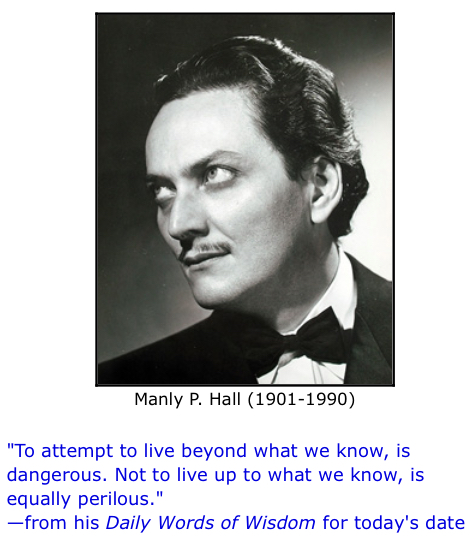
    Manly P. Hall

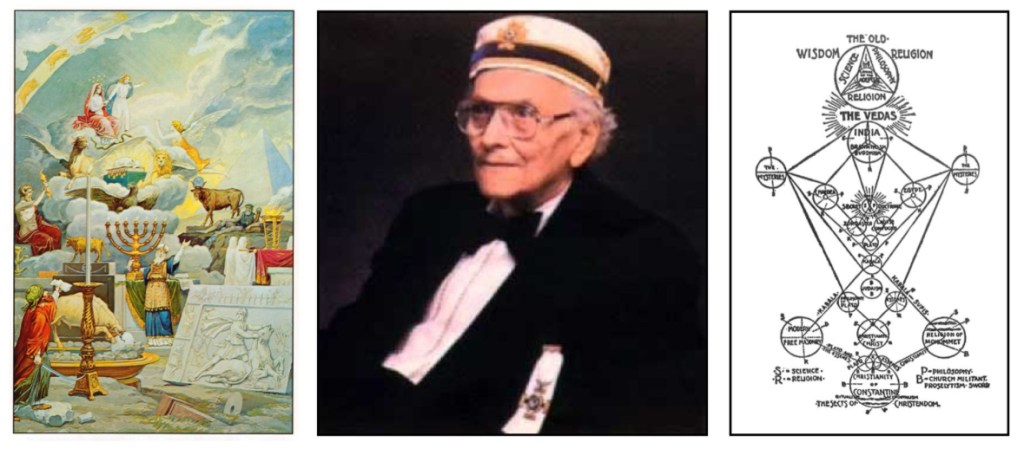
    Manly P. Hall (1901-1990) was a renowned authority on comparative religion and ancient philosophy, known for his extensive library and public lectures that reached millions.

    Photo of Manly Palmer Hall

    Canadian writer and mystic (1901–1990)

    Born18 March 1901, Peterborough Ontario
    Died29 August 1990, Los Angeles

    Hall authored over 200 books and founded the Philosophical Research Society in 1934, focusing on the dissemination of knowledge in philosophy, comparative religion, and psychology.

    Throughout his 70-year career, Hall delivered thousands of lectures worldwide, emphasizing the importance of philosophy in improving individual thought and living.


    Esoteric Wisdom

    Hall dedicated his life to uncoveringo and sharing the hidden knowledge passed down through secret societies and mystery schools.

    Hall delved into ancient texts, symbols, rituals, and teachings, aiming to decode the esoteric wisdom they held.

    Hall believed this knowledge, once understood, could guide individuals on their path towards self-discovery and spiritual enlightenment.


    Philosophy

    Hall’s philosophical views were eclectic, drawing inspiration from a diverse range of traditions such as Platonism, Hermeticism, Rosicrucianism, and Eastern philosophies.

    from manlyphall.info

    Manly P. Hall was an inspired and prolific philosopher of the 20th century whose books, journals, and lectures are still available to a world-wide audience.

    From this site you can download and read issues from a complete PDF collection of Mr. Hall’s Journals (published 1923-1990). The site also offers his “on the lighter side” Contributors’ Bulletins, a list of his book titles including their topics, and all article titles in his Journal runs: The All-Seeing Eye(1923-1931), Horizon (1941-1958), and PRS Journal(1958-1990). Also presented are all of his Monthly Letters to Students, dated May 1934-July 1941.

    He emphasized the importance of understanding universal principles like:

    the law of attraction, the interconnectedness of all things, and the cyclical nature of life.


    Hall believed that by delving into these philosophical concepts, individuals could gain a deeper understanding of themselves, the world around them, and their place in the grand scheme of things.


    Symbolism

    Hall viewed symbols as a universal language, a way for the subconscious mind to communicate with the conscious mind.

    He meticulously analyzed symbols found in mythology, religion, art, and architecture, believing they held hidden meanings that could unlock profound insights into the human psyche and the mysteries of the universe.

    Hall’s interpretations of these symbols often focused on themes of transformation, rebirth, and the journey towards enlightenment.


    Ancient Cultures and Traditions

    Hall’s insatiable curiosity led him to explore a vast array of ancient cultures and traditions, including Egyptian, Greek, Roman, Mayan, Chinese, and Indian.

    He believed these cultures held valuable knowledge about the human condition, spiritual practices, and the secrets of the universe.

    Hall’s studies aimed to bridge the gap between ancient wisdom and modern understanding, offering contemporary interpretations of these traditions that resonated with a wider audience.


    Self-knowledge

    Hall considered self-knowledge to be the cornerstone of personal growth and spiritual development.

    He encouraged individuals to embark on a journey of introspection, to delve into their thoughts, emotions, and motivations, and to confront their shadow selves.

    Hall believed that by understanding their inner workings, individuals could break free from limiting beliefs, heal emotional wounds, and ultimately connect with their true essence.


    Spiritual Growth

    Hall’s teachings ultimately aimed to guide individuals towards spiritual awakening and enlightenment.

    He believed that through self-knowledge, understanding universal principles, and connecting with the divine, individuals could transcend their egoic limitations and achieve higher levels of consciousness.

    Hall’s vision of spiritual growth was not confined to a specific religion or doctrine but encompassed a broader, more inclusive understanding of spirituality.

  • Rosicrucian Texts

    Rosicrucian Texts

    Unveiling the Mysteries of the 17th Century

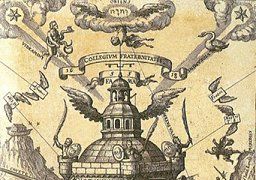
    Rosicrucianism emerged into public consciousness during the early 17th century, with the release of its initial manifesto, Fama Fraternitatis, circulated among German occultists around 1610.

    The printed editions of Fama Fraternitatis and Confessio Fraternitatis in 1614 and 1615, respectively, ignited widespread interest among alchemists, Qabalists, magicians, and astrologers across Europe.

    These manifestos narrate the history of the Order, introduce its enigmatic Founder, and elucidate its principles, sparking intellectual fervor for several years.


    In 1616, The Chymical Marriage of Christian Rosenkreutz was published, contributing to the belief that the Order was founded by a figure named Christian Rosenkreutz.

    LISTEN TO THE AUDIO (mp3) Version

    The Rosicrucian manifestos, initially published in the 17th century, were later translated into English by Thomas Vaughan in 1652. This translation sparked renewed interest in the 19th and 20th centuries.

    However, the modern Rosicrucian organizations, such as the Societas Rosicruciana in America (SRIA) and the Ancient Mystical Order Rosae Crucis (AMORC), often obscure the original teachings.

    Key Differences

    The original manifestos were anonymous and mystical, conveying esoteric knowledge through allegories and legends.

    Modern Rosicrucianism, as represented by SRIA and AMORC, has evolved into a more structured and organized system, with specific rituals, initiations, and teachings.

    The modern names and symbols may overshadow the original intent and message of the manifestos, potentially altering the understanding and interpretation of the teachings.

    Consequences

    The original teachings may be lost or distorted due to the modern emphasis on organization and structure.

    The mystical and allegorical nature of the manifestos may be overlooked or misunderstood in favor of more literal and dogmatic interpretations.

    The historical context and cultural influences that shaped the original manifestos may be forgotten or ignored.

    Importance of Context

    To truly appreciate the Rosicrucian manifestos, it is essential to consider their historical context and the original intentions of their authors. By doing so, we can gain a deeper understanding of the mystical and esoteric teachings that underlie modern Rosicrucianism, and appreciate the evolution of the movement over time.

    These texts are historical documents relating to the ‘Brotherhood of the Rosy Cross’, a renaissance German secret society. This group had a huge impact on more recent organizations such as the Golden Dawn, and is often cited by conspiracy theorists for completely different reasons.

    Note: 
    The connection of the original Rosicrucians with the well-known contemporary fraternal organization, the Rosicrucian Society [AMORC] is vague at best. The AMORC, founded in 1915, runs the Egyptian Museum in San Jose, CA, and a mail-order study series.


    The Real History of the Rosicrucians
    by Arthur Edward Waite

    This is Arthur Edward Waite’s study of the elusive Rosicrucians, a secret society of which the first public notice was in early 17th century Germany.

    Waite presents complete translations of all of the texts which defined the Rosicrucians, including the Fama Fraternitatis, the Confessio Fraternitatis, and the Chemical Wedding of Christian Rosencreutz.

    The longest text, the Chemical Wedding is a thinly veiled alchemical allegory.

    Waite also surveys Rosicrucian literature from successive centuries, including extensive quotes from authors who wrote about the Rosicrucians such as Michael Maier, Robert Fludd, Thomas Vaughan and John Heydon.

    Heydon wrote Voyage to the Land of the Rosicrucians, reminiscent of Thomas More’s Utopia, about a voyage to an obscure continent inhabited by Rosicrucians, included here in its entirety.

    Waite concludes with a look at a 19th century ‘Rosicrucian’ organization: Hargrave Jennings was, notably, a member of this group. Speaking of whom. . .

    The Real History stands in stark contrast to Hargrave Jennings’ The Rosicrucians, their Rites and Mysteries, which Waite (justifiably) criticizes throughout.

    All in all, this serves both as a survey of the literature about Rosicrucians and an invaluable anthology of that literature.

    Waite, although he had a solid background in the occult, is in a firmly rationalist mode in this book.

    The Real History will be of use to both academic and general readers.

    Start Reading
    Fama Fraternitatis

    In the Pronaos of the Temple of Wisdom

    by Franz Hartmann [1890]

    Contents
    Start Reading

    Franz Hartmann, who also wrote the esoteric novella With the Adepts, published this short non-fiction summary of the Rosicrucian question in 1890.


    Franz Hartmann, who also wrote the esoteric novella With the Adepts, published this short non-fiction summary of the Rosicrucian question in 1890.

    He reviews the well-known history and literature of the Rosicrucians. In the last two chapters Hartmann presents what he believes to be the core doctrines of the ‘true’ Rosicrucians.


    The Secret Doctrine of the Rosicrucians

    This book, attributed to William Walker Atkinson under the pseudonym “Magus Incognito”, is a comprehensive exploration of the Rosicrucian manifestos from the 1600s.

    The text delves into the esoteric teachings and occult doctrines of the Rosicrucians.

    It bears strong similarities to The Kybalion, which is also known to have been authored by Atkinson.

    Key Concepts in The Secret Doctrine of the Rosicrucians
    • The Rosicrucian manifestos and their significance
    • The nature of the universe, including the astral plane and the infinite unmanifest
    • The human soul and its relationship to the divine
    • The pursuit of spiritual enlightenment and the attainment of higher states of consciousness
    • The synthesis of Eastern and Western philosophies and spiritual traditions

    Fama Fraternitatis

    Fama Fraternitatis, attributed to C.R., was first published in 1614 in German and in 1615 in Latin. This anonymous manifesto introduced the concept of a secret brotherhood, the “Fraternity of the Rose Cross,” comprising wise men who had traveled extensively, including Damascus and Fez, to learn from scholars and philosophers.

    This document is the key on which the Rosicrucian phenomenon was based.

    It was first published in 1614 in German and in 1615 in Latin.

    The document discusses the wisdom and power of God, as well as the secrets of nature

    The author, Brother C.R., traveled extensively and learned from wise men in Damascus and Fez.

    He sought to reform the arts and sciences and impart his knowledge to others.

    The document emphasizes the importance of unity and the pursuit of true knowledge.

    Brother C.R. Built a fitting dwelling for himself and three other brethren to continue their work in secrecy

    About the Fraternity’s Founding

    The Fraternity of the Rosy Cross created a Magical Language and writing system, as well as a large Dictionary.

    Fraternity Beliefs

    The Fraternity believed that their teachings and knowledge should be shared with others, but only to those who were worthy and deserving.

    The Fraternity believed in the importance of secrecy and remained hidden for 100 years.

    The Fraternity believed in the power of God and the importance of following His commandments.

    The Fraternity believed in the reform and purification of the Church and the world.

    The Fraternity had a strong belief in the afterlife and the resurrection of the body.

    The Fraternity had a strong emphasis on learning and knowledge, and they valued the pursuit of wisdom and understanding.


    More Reading:

    Confessio Fraternitatis
    The Chymical Wedding
    Ara foedaris Theraphici
    Consideratio brevis
    Speculum sophicum rhodostauroticum
    Bacstrom’s Rosicrucian society
    The Rosicrucian Prayer to God – from John Heydon
    The Secret symbols of the Rosicrucians [In preparation]
    Michael Maier – Laws of the Fraternity of the Rosy Cross [In preparation – chapters 1-9 only]
    Vaughan’s Preface to the Rosicrucian Manifestos
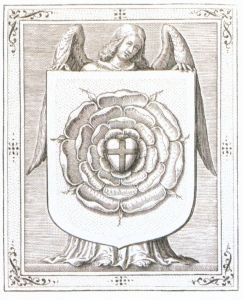
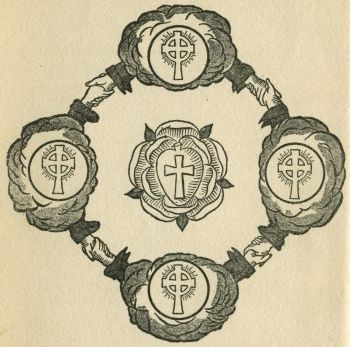
    Coloured illustration of the Golden and Rosy Cross [from Secret symbols of the Rosicrucians]
  • FREE DIGITAL LIBRARIES

    FREE DIGITAL LIBRARIES

    1. Open Library

    OpenLibrary.org is a digital library project operated by the non-profit Internet Archive. It aims to create “one web page for every book ever published”.

    2. Digital Occult Library

    The site aims to foster learning, intellectual exchange, and growth by integrating different disciplines and perspectives on occult topics.

    3. Christian Classic Library

    Classic Christian books are enduring works of literature that have significantly influenced Christian thought, theology, and spiritual practice.

    These texts often explore themes of faith, morality, and the human relationship with the divine, providing insights that have transcended generations.

    Some of the most notable classic Christian books include “The Pilgrim’s Progress” by John Bunyan, an allegorical novel about a Christian’s journey towards spiritual enlightenment and salvation, and “Institutes of the Christian Religion” by John Calvin, a foundational work of Protestant theology.
    You can find more about these works on Gospel eBooks and Goodreads.

    Publishers like Ave Maria Press continue to release new editions of these classic works, ensuring their availability for contemporary readers. Their collection includes writings by influential figures such as Origen, Thomas à Kempis, and Teresa of Avila, among others avemariapress.com.

    4. Library Genesis

    Library Genesis (Libgen) is a comprehensive digital library offering free access to a vast collection of full-text content across various topics, including technology, art, biology, business, chemistry, and computers, aimed at democratizing knowledge by bypassing traditional access barriers associated with academic and literary resources.


    5. Many Books

    ManyBooks is a digital library providing access to a vast collection of free eBooks in multiple genres, catering to a wide range of reader interests.

    The platform features a diverse selection of titles, from fantasy and science fiction to romance and mystery, with options for both free and discounted books.

    Some highlighted titles include “The Show Must Go On” by Jonathon Kelley and “Do You Believe in Magic?” by Jim Melvin, showcasing the variety available to readers seeking new literary adventures.