Category: Books

  • Thelema

    Thelema

    Θελημα— meaning ‘WILL’ —philosophical school founded in 1904.

    Origin

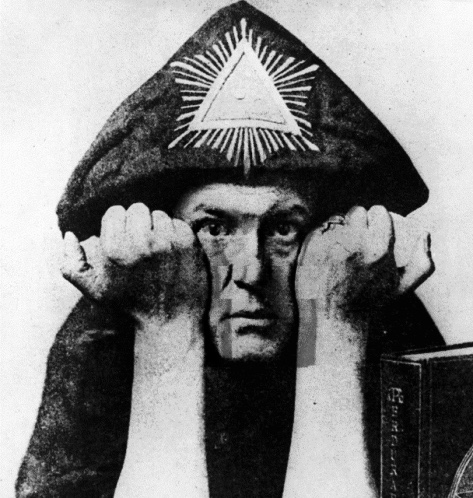
    Thelema is a spiritual philosophy and new religious movement founded by Aleister Crowley.

    Core Principle

    Central to Thelema is the concept of ‘True Will‘ which refers to an individual’s divine purpose that transcends ordinary desires.

    Influences

    Thelema draws from various traditions, including Hermeticism, Kabbalah, and ancient Egyptian religion.

    Thelma comes from the following Writing:

    The Book of The Law is the central axiom, the Law of Thelema.

    The Law is summed up in two phrases from the Book: 

    1. “Do what thou wilt shall be the whole of the Law”
    – AL I:40)

    &

    2. “Love is the law, love under will”
    – AL I:57

    THELEMA’S GOAL:

    TRUE WILL

    True Will is the Will from Heaven.

    Know firmly, O my Son, that the True Will connot err; for it is thine appointed Course in Heaven, in whose Order is Perfection. 

    – Liber Aleph vel CXI – The Book of Wisdom or Folly pg.13

    HOW THELEMITES ATTAIN TRUE WILL? MAGICK

    THELEMA’S DOCTRINES:

    COSMOLOGY

    The Book of the Law establishes a model of reality that combines two elementary forces: the infinite extension of space, which is personified by the Egyptian sky-goddess Nuit, and the infinitely contracted point, personified by the Egyptian god Hadit.

    It is the interaction of these two forces that results in manifested reality.

    Crowley often described this interaction in sexual terms:

    “Nuit is the centripetal energy, infinitely elastic because it must fit over the hard thrust directed against it; Hadit, the centrifugal, ever seeking to penetrate the unknown”

    Magick Without Tears, Ch.38

    The union of these two opposites results in the new current of the present Aeon, represented by Ra-Hoor-Khuit (lit. Horus of Two Horizons), also called the Crowned and Conquering Child. 

    ETHICS

    Arguably the central Thelemic ethic is one of individual liberty and the personal freedom to fulfill one’s Will.

    Social restriction—such as laws that make illegal certain sex acts between consenting adults—is generally seen in a negative light by most Thelemites. 

    Two documents in particular help to define Thelemic ethics for most adherents

    Oz and Duty

    • Liber Oz establishes the rights of the individual.
    • Duty is described as “A note on the chief rules of practical conduct to be observed by those who accept the Law of Thelema.”

    THELEMA IN THE BIBLE

    Thelema appears in the Holy Bible referring to divine will, human will, and even the will of the Devil.

    One well-known example is from “The Lord’s Prayer” in Matthew 6:10,

    “Your kingdom come.
    Your will (Θελημα) be done, On earth as it is in heaven.”

    mat. 6

    More Bible Verses

    “He went away again a second time and prayed, saying, “My Father, if this cannot pass away unless I drink it, Your will be done.”

    —Matthew 26:42

    “But as many as received Him, to them He gave the right to become children of God, even to those who believe in His name, who were born, not of blood nor of the will of the flesh nor of the will of man, but of God.”

    —John 1:12-13

    And do not be conformed to this world, but be transformed by the renewing of your mind, so that you may prove what the will of God is, that which is good and acceptable and perfect.”

    —Romans 12:2″

    Worthy are You, our Lord and our God, to receive glory and honor and power; for You created all things, and because of Your will they existed, and were created.”

    — Revelation 4:11″

    …and they may come to their senses and escape from the snare of the devil, having been held captive by him to do his will.”

    —2 Timothy 2:26

    RESOURCES


    • Crowley, Aleister. (1997). Magick Without Tears.Tempe: New Falcon Publications.
    • Sabazius (1998). The Kiblah. Retrieved June 9, 2004.
    • Thriambos, Dionysos. The Utility of the Bible to the Student of Thelema. Retrieved Sept. 17, 2004.
    • Weinberg, Florence M. (1972) The Wine and the Will: Rabelais’s Bacchic Christianity. Detroit: Wayne State University Press.
    • Wikipedia (2004). Gargantua and Pantagruel.Retrieved Sept. 17, 2004.
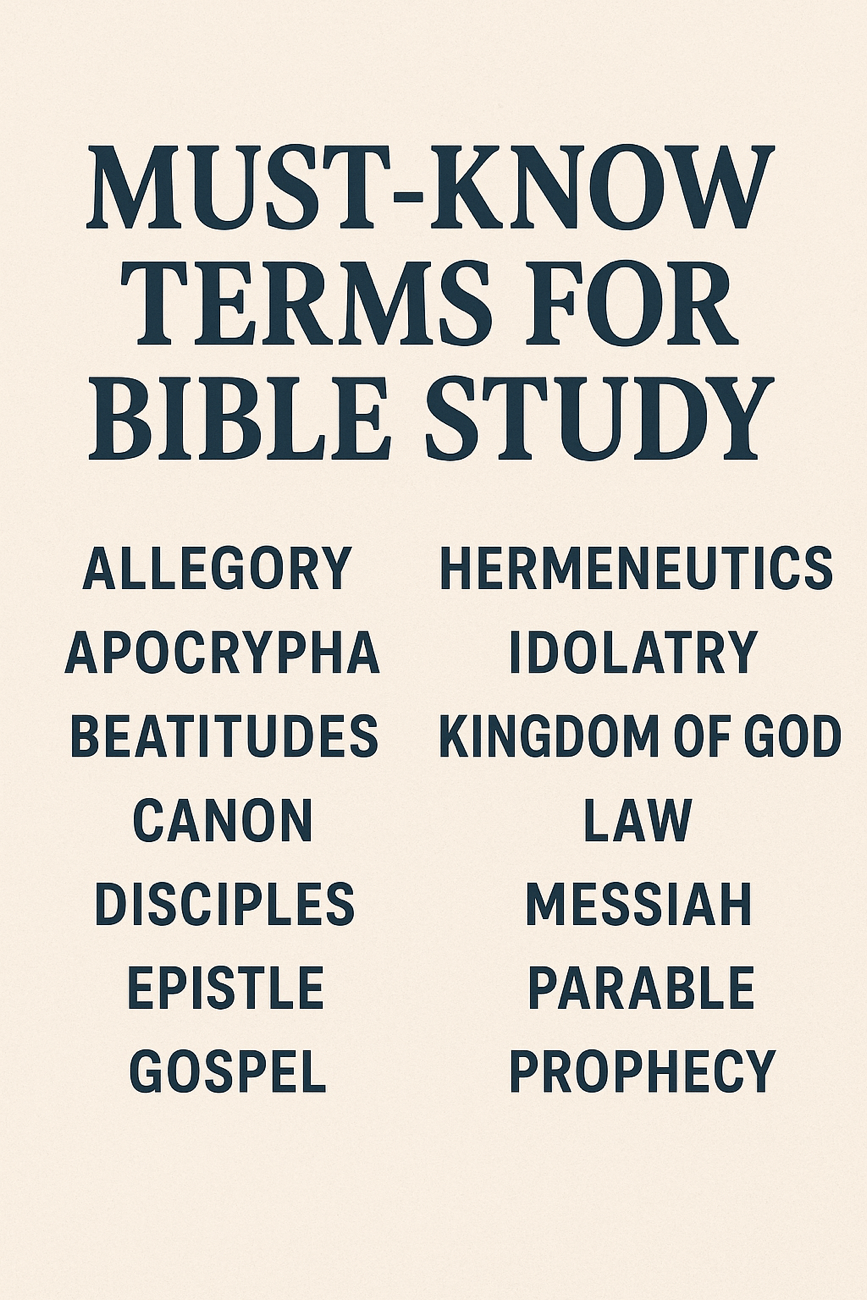
  • Biblical Terminology

    Biblical Terminology

    Allegory

    Allegory is a literary and artistic device in which characters, events, and details within a narrative symbolize broader concepts and ideas, often conveying moral, social, or political messages. The term derives from the Greek word “allegoria,” meaning “speaking otherwise,” which highlights its function of expressing deeper meanings beyond the literal interpretation. Allegories can be found across various mediums, including literature, visual arts, and film, and they often involve a narrative that operates on two levels: the surface story and the underlying message.

    Classic examples include George Orwell’s “Animal Farm,” which critiques totalitarianism through the story of farm animals, and John Bunyan’s “The Pilgrim’s Progress,” which represents the spiritual journey of a Christian believer.

    Allegory has been a significant tool throughout history, allowing creators to address complex themes in a more accessible manner, as noted in sources like Britannica and Merriam-Webster.

    Apocrypha

    A collection of ancient texts that are not considered canonical by certain religious traditions, often included in some versions of the Bible.

    Beatitudes

    A series of blessings pronounced by Jesus in the Sermon on the Mount (Matthew 5:3-12), highlighting the values of the Kingdom of God.

    Canon

    The official list of books that are considered authoritative scripture by a particular religious community.

    Disciples

    Followers of Jesus Christ, particularly the twelve apostles who were chosen to spread his teachings.

    Epistle

    A letter, often written by apostles, that addresses specific issues or teachings within early Christian communities (e.g., the letters of Paul).

    Gospel

    The “good news” of Jesus Christ, specifically the accounts of his life, death, and resurrection found in the New Testament (Matthew, Mark, Luke, and John).

    Hermeneutics

    The study of interpretation, especially of biblical texts, focusing on understanding the meaning and application of scripture.

    Idolatry

    The worship of idols or false gods, which is condemned throughout the Bible.

    Kingdom of God

    A central theme in Jesus’ teachings, referring to God’s reign and authority, both in the present and in the future.

    Law

    Refers to the commandments and regulations given by God, particularly those found in the Torah (the first five books of the Old Testament).

    Messiah

    The anointed one, a savior or liberator expected by the Jewish people, fulfilled in the New Testament by Jesus Christ.

    Parable

    A simple story used to illustrate a moral or spiritual lesson, often told by Jesus.

    Prophecy

    A message from God, often delivered by a prophet, that foretells future events or conveys divine truth.

    Redemption

    The act of being saved from sin and its consequences, often associated with the sacrifice of Jesus.

    Righteousness

    The quality of being morally right or just, often associated with living in accordance with God’s will.

    Sacrament

    A religious rite recognized as of particular importance and significance, such as baptism and communion.

    Sin

    An act that goes against God’s will or law, often understood as a separation from God.

    Testament

    Refers to the two main divisions of the Bible: the Old Testament (Hebrew Scriptures) and the New Testament (Christian Scriptures).

    Transfiguration

    The event in which Jesus is transformed and revealed in divine glory to three of his disciples (Matthew 17:1-9).

    Worship

    The term “worship” originates from the Old English word “weorþscipe,” which combines “weorþ,” meaning worth or value, and “scipe,” indicating a condition or quality.

    Thus, worship fundamentally conveys the idea of attributing worth to a deity or divine being.

    In various religious contexts, worship encompasses acts of reverence, adoration, and devotion directed towards God or gods, often involving rituals, prayers, and communal gatherings. It serves as a means for individuals and communities to express their beliefs, seek spiritual connection, and engage in transformative experiences.

    True worship is not merely about fulfilling personal or communal needs but is centered on honoring and glorifying God, reflecting a commitment to divine values and principles.


    Understanding these terms can greatly enhance your study of the Bible and provide a clearer framework for interpreting its messages and teachings.

    MORE WORDS YOU SHOULD KNOW:

    Theology

    … the study of God.

    Apologetics

    … defense of Faith.

    Exegesis

    … critical interpretation of scripture.


    Substitutionary Atonement

    Christ died as a substitute for sinners, bearing the punishment that they deserved.

    Eschatology

    Eschatology is the study of the end times, focusing on events like

    • the Second Coming of Christ
    • the final judgment
    • the ultimate destiny of souls.

    It encompasses what happens to individuals after death and the fate of the entire universe.

    Key eschatological concepts include:

    • the resurrection of the dead
    • the millennium
    • the establishment of God’s kingdom. 

    Incarnation

    The Incarnation is the doctrine that the Son of God assumed human nature and became man in the person of Jesus Christ. This belief is central to Christianity, affirming that Jesus is both fully divine and fully human. The theological implications of the Incarnation include the idea that through Jesus, God entered human history, experiencing human life and providing a means of salvation.

    Grace

    Grace is the unmerited favor and love of God towards humanity. It is central to Christian soteriology (the study of salvation), emphasizing that salvation is a gift from God, not earned by human effort. Different traditions emphasize different aspects of grace:

    Justification

    Justification is the act by which God declares a sinner to be righteous on the basis of faith in Jesus Christ. In Protestant theology, this is often emphasized

    REFORMED THEOLOGY

    Reformed theology affirms the five solas with all their implications; recognizes the centrality of the covenant in God’s saving purposes; and is expressed in a historic and public confession of faith.


    CALVINISM

    Calvinism, also known as Reformed theology or the Reformed tradition: is a major branch of Protestant Christianity that originated with the teachings of the French theologian John Calvin in the 16th century.

    It is named after Calvin because he played a significant role in shaping its doctrines and organizing its Ecclesiastical structure.

    Calvinism emphasizes the sovereignty of God in all aspects of life, including salvation, divine providence, and the governance of the world. It is characterized by its adherence to the “Five Points of Calvinism,” which are often summarized using the acronym TULIP.

    Total Depravity

    This doctrine teaches that due to the fall of Adam and Eve, all human beings are born in a state of spiritual depravity and are incapable of choosing God or doing good on their own. They are entirely dependent on God’s grace for salvation.

    Unconditional Election

    According to this belief, God, out of His sovereign will and without any consideration of human merit or choice, predestines certain individuals to be saved. This election is not based on anything that humans do but solely on God’s divine purpose.

    Limited atonement

    This doctrine states that Christ’s atoning sacrifice on the cross was specifically intended for the salvation of the elect, those whom God has chosen for salvation. It does not extend to all people universally.

    Irresistible grace

    Also known as “effectual calling” or “regenerating grace,” this doctrine asserts that when God chooses to save someone, His grace is irresistible and will unfailingly bring that person to salvation. Those who are called by God cannot ultimately resist His saving work.

    Perseverance of the saints

    This belief affirms that those who are truly saved by God’s grace will persevere in faith and holiness until the end. Genuine believers cannot lose their salvation but will continue to follow Christ throughout their lives.

    Calvinism

    Calvinism is a theological system and branch of Protestant Christianity that originated with the teachings of John Calvin, a 16th-century French reformer. It emphasizes the sovereignty of God in all aspects of salvation, particularly through the doctrine of predestination, which asserts that God has already chosen who will be saved and who will not. This belief is often summarized by the Five Points of Calvinism, which include Total Depravity, Unconditional Election, Limited Atonement, Irresistible Grace, and Perseverance of the Saints. Calvinism stands in contrast to Arminianism, which emphasizes free will and the ability of individuals to choose salvation. The term itself derives from Calvin's last name, and the movement has significantly influenced various Protestant denominations, particularly in Reformed and Presbyterian traditions. It gained prominence during the Reformation and has continued to shape theological discussions and debates within Christianity today, as noted in various sources like Britannica and Clickmill.

    Arminianism

    Arminianism is a theological system named after the Dutch theologian Jacob Arminius (1560-1609), who proposed a framework of Christian belief that emphasizes free will and God’s universal grace. This doctrine arose as a response to the deterministic views of Calvinism, particularly regarding predestination and salvation. Arminianism asserts that while God offers salvation to all, individuals have the free will to accept or reject this offer, which stands in contrast to the Calvinist belief in irresistible grace. Central to Arminian theology are five key points: the denial of original sin as an insurmountable barrier, justification by faith, conditional predestination, the resistibility of grace, and the possibility of falling from grace.

    The theological debate between Arminianism and Calvinism was notably formalized during the Synod of Dort (1618-1619), where Arminian views were challenged but continued to influence various Protestant traditions, especially Methodism and the broader Evangelical movement (Christian History Institute, Wellspring MS Church).

    Free Will

    The term “free will” refers to the philosophical concept that individuals have the capacity to make choices that are not predetermined by prior causes or divine intervention.

    Etymologically, the phrase combines “free,” deriving from the Old English freo, meaning “not in bondage,” and “will,” from the Old English willan, meaning “to wish or desire.”

    This concept has been a subject of intense debate in philosophy, psychology, and neuroscience, particularly concerning whether human actions are determined by biological processes or if individuals can act independently of such influences.

    Some philosophers advocate for a “compatibilist” view, suggesting that free will can coexist with determinism, arguing that the essence of free will lies in the ability to act according to one’s motivations and desires, even if those are influenced by prior causes (psyche.co).

    The implications of free will are profound, affecting moral responsibility and ethical considerations in society, as individuals are often held accountable for their actions based on the assumption that they can choose freely (scientificamerican.com).

    Election

    The etymology of “election” comes from the Latin word “electio,” meaning “choice” or “selection,” which itself derives from the verb “eligere,” meaning “to choose.”

    In a biblical context, election is seen as an expression of God’s sovereignty, where He selects individuals based on His divine will rather than their actions or merits.

    This concept is discussed in various theological writings, emphasizing that God’s choice is unconditional and not based on foreseen faith or works (as noted in sources like gotquestions.org).

    The implications of this doctrine often lead to discussions about grace, justice, and the nature of God’s love, as seen in the debates surrounding unconditional election and its portrayal of God in relation to humanity (monergism.com).

    Atonement

    The term “atonement” refers to the act of making amends or reparation for a wrongdoing or injury, often implying a reconciliation between two parties. Etymologically, the word is derived from the Middle English phrase “at one,” which signifies being in harmony or agreement. This concept has significant theological implications, particularly in Christianity, where atonement is associated with the reconciliation between God and humanity through the life, suffering, and death of Jesus Christ. The doctrine of atonement encompasses various interpretations, such as the satisfaction view and substitutionary atonement, which explore how this reconciliation is achieved (Merriam-Webster, Cambridge Dictionary, Dictionary.com).

    Grace

    The term “grace” has a rich etymological background, originating from the Latin word “gratia,” which means favor, goodwill, or kindness.

    In contemporary usage, grace encompasses various meanings, including elegance or beauty of form, manner, motion, or action, as well as a disposition to kindness and compassion.

    In religious contexts, particularly within Christianity, grace refers to the unmerited favor of God towards humanity, often linked to salvation and divine assistance.

    This theological concept emphasizes that grace is a gift from God, as highlighted in Ephesians 2:8, which states, “For by grace you have been saved through faith.”

    The multifaceted nature of grace can be seen in phrases like “fall from grace,” which denotes a loss of status or favor, and “saving grace,” which refers to a redeeming quality that mitigates a negative situation.

    Perseverance of the Saints

    the belief that salvation is secure and cannot be lost, a concept often referred to as “eternal security.”

    The etymology of the word “perseverance” comes from the Latin “perseverare,” meaning to persist or continue steadfastly.

    This idea is rooted in the understanding of predestination, where God’s grace enables the faithful to endure in their beliefs despite challenges

    John 10:28-29: “I give them eternal life, and they will never perish, and no one will snatch them out of my hand. My Father, who has given them to me, is greater than all, and no one is able to snatch them out of the Father’s hand.”

    ECCLESIAL / ECCLESIOLOGY 

    ecclesiology is the study of the Church, the origins of Christianity, its relationship to Jesus, its role in salvation, its polity, its discipline, its eschatology, and its leadership.
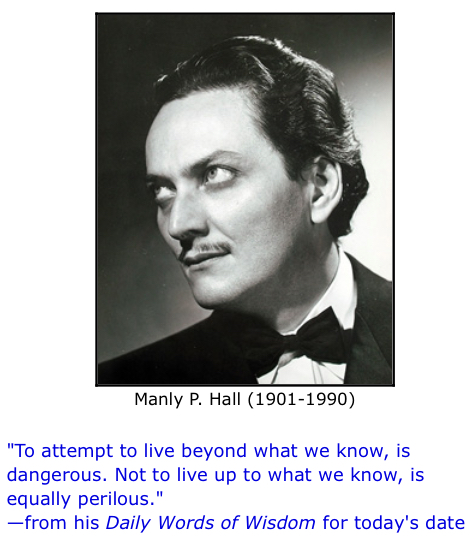
  • Manly P. Hall

    Manly P. Hall

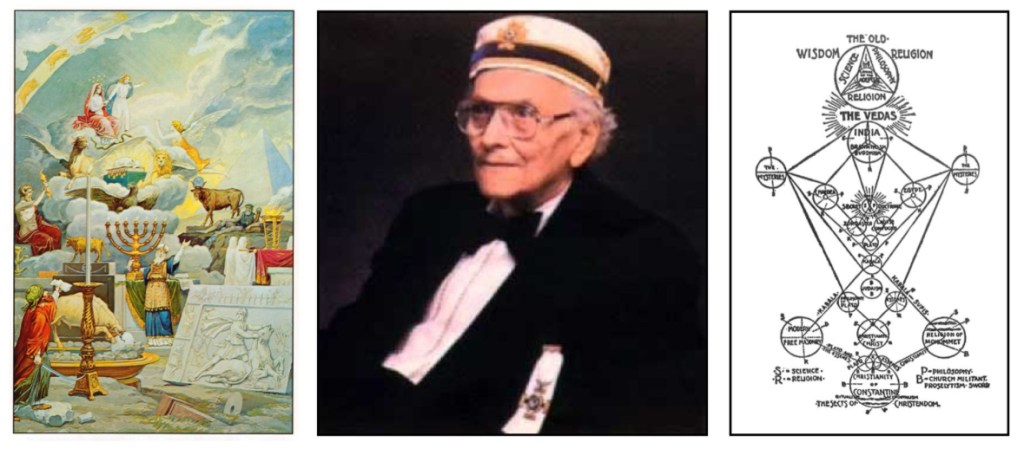
    Manly P. Hall (1901-1990) was a renowned authority on comparative religion and ancient philosophy, known for his extensive library and public lectures that reached millions.

    Photo of Manly Palmer Hall

    Canadian writer and mystic (1901–1990)

    Born18 March 1901, Peterborough Ontario
    Died29 August 1990, Los Angeles

    Hall authored over 200 books and founded the Philosophical Research Society in 1934, focusing on the dissemination of knowledge in philosophy, comparative religion, and psychology.

    Throughout his 70-year career, Hall delivered thousands of lectures worldwide, emphasizing the importance of philosophy in improving individual thought and living.


    Esoteric Wisdom

    Hall dedicated his life to uncoveringo and sharing the hidden knowledge passed down through secret societies and mystery schools.

    Hall delved into ancient texts, symbols, rituals, and teachings, aiming to decode the esoteric wisdom they held.

    Hall believed this knowledge, once understood, could guide individuals on their path towards self-discovery and spiritual enlightenment.


    Philosophy

    Hall’s philosophical views were eclectic, drawing inspiration from a diverse range of traditions such as Platonism, Hermeticism, Rosicrucianism, and Eastern philosophies.

    from manlyphall.info

    Manly P. Hall was an inspired and prolific philosopher of the 20th century whose books, journals, and lectures are still available to a world-wide audience.

    From this site you can download and read issues from a complete PDF collection of Mr. Hall’s Journals (published 1923-1990). The site also offers his “on the lighter side” Contributors’ Bulletins, a list of his book titles including their topics, and all article titles in his Journal runs: The All-Seeing Eye(1923-1931), Horizon (1941-1958), and PRS Journal(1958-1990). Also presented are all of his Monthly Letters to Students, dated May 1934-July 1941.

    He emphasized the importance of understanding universal principles like:

    the law of attraction, the interconnectedness of all things, and the cyclical nature of life.


    Hall believed that by delving into these philosophical concepts, individuals could gain a deeper understanding of themselves, the world around them, and their place in the grand scheme of things.


    Symbolism

    Hall viewed symbols as a universal language, a way for the subconscious mind to communicate with the conscious mind.

    He meticulously analyzed symbols found in mythology, religion, art, and architecture, believing they held hidden meanings that could unlock profound insights into the human psyche and the mysteries of the universe.

    Hall’s interpretations of these symbols often focused on themes of transformation, rebirth, and the journey towards enlightenment.


    Ancient Cultures and Traditions

    Hall’s insatiable curiosity led him to explore a vast array of ancient cultures and traditions, including Egyptian, Greek, Roman, Mayan, Chinese, and Indian.

    He believed these cultures held valuable knowledge about the human condition, spiritual practices, and the secrets of the universe.

    Hall’s studies aimed to bridge the gap between ancient wisdom and modern understanding, offering contemporary interpretations of these traditions that resonated with a wider audience.


    Self-knowledge

    Hall considered self-knowledge to be the cornerstone of personal growth and spiritual development.

    He encouraged individuals to embark on a journey of introspection, to delve into their thoughts, emotions, and motivations, and to confront their shadow selves.

    Hall believed that by understanding their inner workings, individuals could break free from limiting beliefs, heal emotional wounds, and ultimately connect with their true essence.


    Spiritual Growth

    Hall’s teachings ultimately aimed to guide individuals towards spiritual awakening and enlightenment.

    He believed that through self-knowledge, understanding universal principles, and connecting with the divine, individuals could transcend their egoic limitations and achieve higher levels of consciousness.

    Hall’s vision of spiritual growth was not confined to a specific religion or doctrine but encompassed a broader, more inclusive understanding of spirituality.

  • Rosicrucian Texts

    Rosicrucian Texts

    Unveiling the Mysteries of the 17th Century

    Rosicrucianism emerged into public consciousness during the early 17th century, with the release of its initial manifesto, Fama Fraternitatis, circulated among German occultists around 1610.

    The printed editions of Fama Fraternitatis and Confessio Fraternitatis in 1614 and 1615, respectively, ignited widespread interest among alchemists, Qabalists, magicians, and astrologers across Europe.

    These manifestos narrate the history of the Order, introduce its enigmatic Founder, and elucidate its principles, sparking intellectual fervor for several years.


    In 1616, The Chymical Marriage of Christian Rosenkreutz was published, contributing to the belief that the Order was founded by a figure named Christian Rosenkreutz.

    LISTEN TO THE AUDIO (mp3) Version

    The Rosicrucian manifestos, initially published in the 17th century, were later translated into English by Thomas Vaughan in 1652. This translation sparked renewed interest in the 19th and 20th centuries.

    However, the modern Rosicrucian organizations, such as the Societas Rosicruciana in America (SRIA) and the Ancient Mystical Order Rosae Crucis (AMORC), often obscure the original teachings.

    Key Differences

    The original manifestos were anonymous and mystical, conveying esoteric knowledge through allegories and legends.

    Modern Rosicrucianism, as represented by SRIA and AMORC, has evolved into a more structured and organized system, with specific rituals, initiations, and teachings.

    The modern names and symbols may overshadow the original intent and message of the manifestos, potentially altering the understanding and interpretation of the teachings.

    Consequences

    The original teachings may be lost or distorted due to the modern emphasis on organization and structure.

    The mystical and allegorical nature of the manifestos may be overlooked or misunderstood in favor of more literal and dogmatic interpretations.

    The historical context and cultural influences that shaped the original manifestos may be forgotten or ignored.

    Importance of Context

    To truly appreciate the Rosicrucian manifestos, it is essential to consider their historical context and the original intentions of their authors. By doing so, we can gain a deeper understanding of the mystical and esoteric teachings that underlie modern Rosicrucianism, and appreciate the evolution of the movement over time.

    These texts are historical documents relating to the ‘Brotherhood of the Rosy Cross’, a renaissance German secret society. This group had a huge impact on more recent organizations such as the Golden Dawn, and is often cited by conspiracy theorists for completely different reasons.

    Note: 
    The connection of the original Rosicrucians with the well-known contemporary fraternal organization, the Rosicrucian Society [AMORC] is vague at best. The AMORC, founded in 1915, runs the Egyptian Museum in San Jose, CA, and a mail-order study series.


    The Real History of the Rosicrucians
    by Arthur Edward Waite

    This is Arthur Edward Waite’s study of the elusive Rosicrucians, a secret society of which the first public notice was in early 17th century Germany.

    Waite presents complete translations of all of the texts which defined the Rosicrucians, including the Fama Fraternitatis, the Confessio Fraternitatis, and the Chemical Wedding of Christian Rosencreutz.

    The longest text, the Chemical Wedding is a thinly veiled alchemical allegory.

    Waite also surveys Rosicrucian literature from successive centuries, including extensive quotes from authors who wrote about the Rosicrucians such as Michael Maier, Robert Fludd, Thomas Vaughan and John Heydon.

    Heydon wrote Voyage to the Land of the Rosicrucians, reminiscent of Thomas More’s Utopia, about a voyage to an obscure continent inhabited by Rosicrucians, included here in its entirety.

    Waite concludes with a look at a 19th century ‘Rosicrucian’ organization: Hargrave Jennings was, notably, a member of this group. Speaking of whom. . .

    The Real History stands in stark contrast to Hargrave Jennings’ The Rosicrucians, their Rites and Mysteries, which Waite (justifiably) criticizes throughout.

    All in all, this serves both as a survey of the literature about Rosicrucians and an invaluable anthology of that literature.

    Waite, although he had a solid background in the occult, is in a firmly rationalist mode in this book.

    The Real History will be of use to both academic and general readers.

    Start Reading
    Fama Fraternitatis

    In the Pronaos of the Temple of Wisdom

    by Franz Hartmann [1890]

    Contents
    Start Reading

    Franz Hartmann, who also wrote the esoteric novella With the Adepts, published this short non-fiction summary of the Rosicrucian question in 1890.


    Franz Hartmann, who also wrote the esoteric novella With the Adepts, published this short non-fiction summary of the Rosicrucian question in 1890.

    He reviews the well-known history and literature of the Rosicrucians. In the last two chapters Hartmann presents what he believes to be the core doctrines of the ‘true’ Rosicrucians.


    The Secret Doctrine of the Rosicrucians

    This book, attributed to William Walker Atkinson under the pseudonym “Magus Incognito”, is a comprehensive exploration of the Rosicrucian manifestos from the 1600s.

    The text delves into the esoteric teachings and occult doctrines of the Rosicrucians.

    It bears strong similarities to The Kybalion, which is also known to have been authored by Atkinson.

    Key Concepts in The Secret Doctrine of the Rosicrucians
    • The Rosicrucian manifestos and their significance
    • The nature of the universe, including the astral plane and the infinite unmanifest
    • The human soul and its relationship to the divine
    • The pursuit of spiritual enlightenment and the attainment of higher states of consciousness
    • The synthesis of Eastern and Western philosophies and spiritual traditions

    Fama Fraternitatis

    Fama Fraternitatis, attributed to C.R., was first published in 1614 in German and in 1615 in Latin. This anonymous manifesto introduced the concept of a secret brotherhood, the “Fraternity of the Rose Cross,” comprising wise men who had traveled extensively, including Damascus and Fez, to learn from scholars and philosophers.

    This document is the key on which the Rosicrucian phenomenon was based.

    It was first published in 1614 in German and in 1615 in Latin.

    The document discusses the wisdom and power of God, as well as the secrets of nature

    The author, Brother C.R., traveled extensively and learned from wise men in Damascus and Fez.

    He sought to reform the arts and sciences and impart his knowledge to others.

    The document emphasizes the importance of unity and the pursuit of true knowledge.

    Brother C.R. Built a fitting dwelling for himself and three other brethren to continue their work in secrecy

    About the Fraternity’s Founding

    The Fraternity of the Rosy Cross created a Magical Language and writing system, as well as a large Dictionary.

    Fraternity Beliefs

    The Fraternity believed that their teachings and knowledge should be shared with others, but only to those who were worthy and deserving.

    The Fraternity believed in the importance of secrecy and remained hidden for 100 years.

    The Fraternity believed in the power of God and the importance of following His commandments.

    The Fraternity believed in the reform and purification of the Church and the world.

    The Fraternity had a strong belief in the afterlife and the resurrection of the body.

    The Fraternity had a strong emphasis on learning and knowledge, and they valued the pursuit of wisdom and understanding.


    More Reading:

    Confessio Fraternitatis
    The Chymical Wedding
    Ara foedaris Theraphici
    Consideratio brevis
    Speculum sophicum rhodostauroticum
    Bacstrom’s Rosicrucian society
    The Rosicrucian Prayer to God – from John Heydon
    The Secret symbols of the Rosicrucians [In preparation]
    Michael Maier – Laws of the Fraternity of the Rosy Cross [In preparation – chapters 1-9 only]
    Vaughan’s Preface to the Rosicrucian Manifestos
    Coloured illustration of the Golden and Rosy Cross [from Secret symbols of the Rosicrucians]
  • FREE DIGITAL LIBRARIES

    FREE DIGITAL LIBRARIES

    1. Open Library

    OpenLibrary.org is a digital library project operated by the non-profit Internet Archive. It aims to create “one web page for every book ever published”.

    2. Digital Occult Library

    The site aims to foster learning, intellectual exchange, and growth by integrating different disciplines and perspectives on occult topics.

    3. Christian Classic Library

    Classic Christian books are enduring works of literature that have significantly influenced Christian thought, theology, and spiritual practice.

    These texts often explore themes of faith, morality, and the human relationship with the divine, providing insights that have transcended generations.

    Some of the most notable classic Christian books include “The Pilgrim’s Progress” by John Bunyan, an allegorical novel about a Christian’s journey towards spiritual enlightenment and salvation, and “Institutes of the Christian Religion” by John Calvin, a foundational work of Protestant theology.
    You can find more about these works on Gospel eBooks and Goodreads.

    Publishers like Ave Maria Press continue to release new editions of these classic works, ensuring their availability for contemporary readers. Their collection includes writings by influential figures such as Origen, Thomas à Kempis, and Teresa of Avila, among others avemariapress.com.

    4. Library Genesis

    Library Genesis (Libgen) is a comprehensive digital library offering free access to a vast collection of full-text content across various topics, including technology, art, biology, business, chemistry, and computers, aimed at democratizing knowledge by bypassing traditional access barriers associated with academic and literary resources.


    5. Many Books

    ManyBooks is a digital library providing access to a vast collection of free eBooks in multiple genres, catering to a wide range of reader interests.

    The platform features a diverse selection of titles, from fantasy and science fiction to romance and mystery, with options for both free and discounted books.

    Some highlighted titles include “The Show Must Go On” by Jonathon Kelley and “Do You Believe in Magic?” by Jim Melvin, showcasing the variety available to readers seeking new literary adventures.

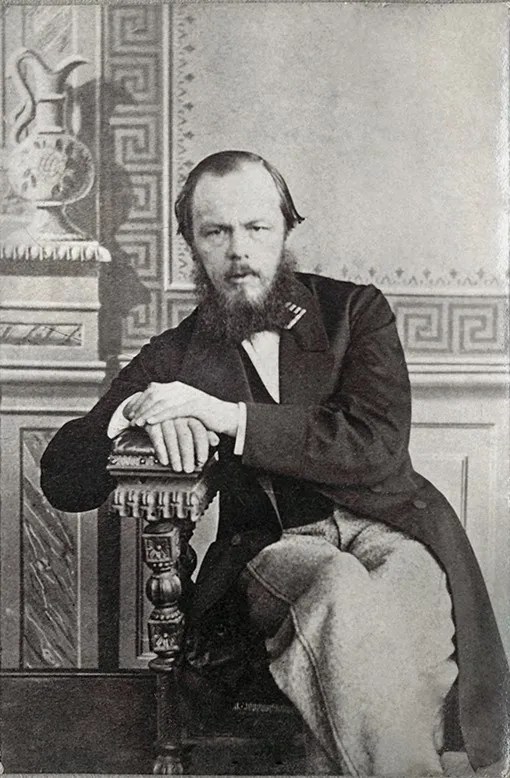
  • Dostoevsky’s Underground Man

    Dostoevsky’s Underground Man

    Excerpt:

    “I am a sick man… I am a spiteful man. I am an unattractive man. I think my liver is diseased. However, I know nothing about medicine and cannot say for certain. I am not even sure what is the matter with me. I am a ridiculous, absurd creature. But I am not as ridiculous as I am made out to be. I have a heart, and I have feelings, and I am not made of wood. I am a sick man, but I am not a foolish man. I am a sick man because I am a man, and I am a man because I am a sick man. I am a man who has been condemned to suffer, and I must suffer. I cannot help it. I must suffer, and I must be sick. I am a man who has been condemned to be sick, and I must be sick. I cannot help it. I must be sick, and I must suffer. I am a sick man, and I must suffer.”


    The protagonist of Notes from the Underground is a deeply spiteful and self-aware man who derives pleasure from causing unhappiness to others while feeling shame and guilt.

    He questions the nature of revenge, consciousness, and the absurdity of existence, ultimately assuming responsibility for his actions and feeling trapped by his own degradation.

    This provides insight into the complexities of his psyche.

    The Underground Man embodies the struggles of m man disconnected from society and its norms.

    His skepticism and inability to trust others and himself lead to self-loathing and masochistic tendencies, causing him to instigate conflict and subject himself to humiliation.

    Despite his desire for respect and admiration, his inability to interact with others in a healthy manner leads to disastrous attempts at relationships, further driving him deeper underground.

    The Underground Man’s contradictory nature, marked by intelligence and self-awareness but consumed by flaws and self-destructive tendencies, serves as a powerful reflection of the human condition.

    “Man is broad, too broad, indeed. I’d have him narrower.”

    – Fyodor Dostoevsky

    The Underground Man’s formative years as an orphan, which lacked normal affectionate connections, vividly illustrate the profound impact of his environment on his psyche.

    This background adds a poignant depth to his character, highlighting his sense of detachment and alienation from societal progress.

    Orphan: Archetype

    An archetype is a universally recognized symbol, theme, or pattern that recurs in literature, art, mythology, or culture, representing a fundamental human experience or characteristic.

    The orphan archetype is crucial for understanding the depth of the Underground Man’s character.

    It symbolizes profound solitude, alienation, and a lack of belonging, shaping the worldview and interactions of characters disconnected from traditional familial and societal structures.

    Juxtaposed against this portrayal of victimhood is the poignant revelation of the Underground Man’s role in perpetuating his own anguish.

    Pitfall Of Pride

    His pride and self-absorption hinder genuine human connections, while his pervasive skepticism and cynicism preclude belief in anything or anyone

    The narrative unfolds as a tragic chronicle of squandered potential, underscoring the profound tragedy of a man who could have ascended to greatness, only to succumb to self-inflicted suffering and self-loathing.

    Acknowledging this relentlessly, the Underground Man tragically resigns himself to needless, yet profoundly honest suffering, inflicting the misery upon himself as a testament to his internal struggles and complex inner turmoil.

    The Underground Man reveal a complex personality

    He is simultaneously fascinated and terrified by the concept of freedom.

    Despite being a rebel, he lacks a definitive cause.

    He dismisses societal norms, yet fails to propose an alternative. His nihilistic views contrast with his romantic tendencies.

    Despite his belief in life’s meaninglessness, he yearns for purpose and connection.

    The Underground Man exemplifies how even the most intelligent and self-aware individuals can become their own adversaries.

    Dostoevsky’s depiction of the Underground Man is regarded as one of the most impactful in literature..

    His character is a representation of the alienation and despair that can stem from residing in a modern, industrialized society.


    Primary source
    Other Related Resources:
    • Joseph Frank, Dostoevsky: The Seeds of Revolt, 1821-1849 (1976)
    • James P. Scanlan, Dostoevsky the Thinker (1970)
    • David Magarshack, Dostoevsky (1962)
    • George Steiner, Dostoevsky and the Demons (1973)
    • Robert Louis Jackson, Dostoevsky’s Underground Man in Russian Literature (1981)
    • Malcolm V. Jones, Dostoevsky and the Human Condition (1975)