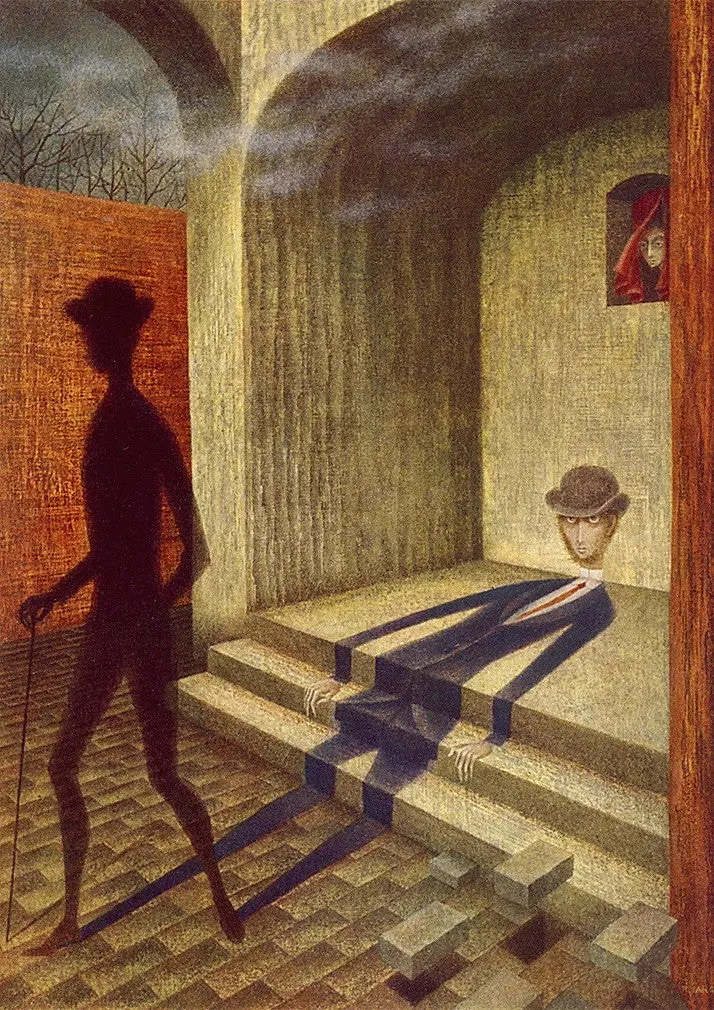
Our perception of reality is shaped by our senses, yet it is a fragile construct that can easily be deceived and corrupted.
This article explores the limitations and uncertainties of our perceived reality, questioning the accuracy and consistency of our individual perceptions.
Perception
Perception, as we understand it, is subjective and personal.
We cannot definitively know if our perception aligns with that of others.
Each person experiences the world through their unique set of senses, making it impossible to verify the objective truth of our perceived reality.
Certain Of Uncertainty
Even the concept of solidity and physical matter, which seems inherent in our everyday experiences, is not something we can be certain of.
We may feel something to be solid, but we lack a means to confirm if it is truly so or just a product of our sensory delusions.
Dreams An Example Of Delusions
Dreams provide a striking example of how our perceptions can create a convincing illusion of reality.
While dreaming, our experiences appear as vivid and tangible as when we are awake.
However, science has shown that humans frequently hallucinate, causing variations in our perceptions.
This further highlights the subjective nature of our perceived reality.
If we consider the possibility that our existence is a product of the Divine Mind, then that becomes the fundamental reality underlying our perceptions.
However, it is crucial to acknowledge that our subjective perception may not necessarily align with the Perceptions of the Divine, whom we conceive as the sovereign King of Spirit.
To gain a deeper understanding of the objective reality presented by God’s decree, we must turn to Scripture, guided by the Holy Spirit.
“Sanctify them by the truth; your word is truth…”
John 17:17
Man, with his fallible nature, cannot grasp the entirety of God’s perfect and unchangeable universal law.
By seeking guidance from the Holy text, we can strive to approach a more accurate perception of the underlying reality.
The nature of perceived reality is complex and elusive.
We rely on our senses, which are prone to error and subjective interpretation.
Our experiences and perceptions may differ from one another, making it difficult to ascertain a universally consistent reality.
Through the lens of Divinity, we can explore a deeper understanding of reality, guided by the Word of God and the indwelling presence of the Holy Spirit.
While we may strive to attain perfect harmony with the Divine, it is likely that our complete alignment will always elude us, so long as we remain limited and confined to the physical realm’s limits.
Isaiah 55:8-9 – “For my thoughts are not your thoughts, neither are your ways my ways, declares the Lord. For as the heavens are higher than the earth, so are my ways higher than your ways and my thoughts than your thoughts.”
Job 11:7-9 – “Can you find out the deep things of God? Can you find out the limit of the Almighty? It is higher than heaven—what can you do? Deeper than Sheol—what can you know? Its measure is longer than the earth and broader than the sea.”
Romans 11:33-34 – “Oh, the depth of the riches and wisdom and knowledge of God! How unsearchable are his judgments and how inscrutable his ways! For who has known the mind of the Lord, or who has been his counselor?”
1 Corinthians 13:12 –“For now we see in a mirror dimly, but then face to face. Now I know in part; then I shall know fully, even as I have been fully known.”
These verses highlight the limitations of human understanding and emphasize the vastness and incomprehensibility of God’s ways.
While we may strive to understand God’s perfect and unchangeable universal law, our human nature and limited perspective make it impossible to fully grasp it.
Theologians Thomas Aquinas and Augustine of Hippo stand as titans in the history of Christian thought, offering profound insights on various theological topics. Their perspectives on theology and free will have captivated scholars and sparked ongoing debates. In this article, we will delve into the divergent viewpoints of Aquinas and Augustine, shedding light on the nuances of their theological frameworks and the significance of their contributions.
Augustine, often referred to as one of the most influential thinkers in Christian history, approached the concept of free will from a distinctive angle. He posited that due to the inherent fallen nature of humanity, human beings are incapable of choosing genuine good without the transformative grace of God.
Augustine believed that all humans are born with a deep inclination towards evil, known as “original sin,” which stems from the disobedience of Adam and Eve in the Garden of Eden. This fallen nature, according to Augustine, renders human free will deeply wounded and inclined towards evil.
Contrary to Aquinas, Augustine emphasized the primacy of divine grace in the salvation of humanity.
He argued that God’s grace is necessary for the regeneration and redemption of individuals, as human efforts alone are insufficient to overcome the pervasive effects of sin. Augustine’s theological framework, often referred to as “divine determinism,” places a greater emphasis on God’s sovereignty and predestination, with human choice being ultimately subject to God’s will.
Aquinas’s Concept of Free Will
In contrast to Augustine’s more pessimistic view of free will, Aquinas approached the concept with a more optimistic lens. He proposed that human beings possess the capacity for true freedom and the ability to choose between good and evil.
Aquinas argued that God created human beings with free will, granting them the ability to make moral choices. He believed that free will is essential for the exercise of virtues and the pursuit of moral excellence. According to Aquinas, human actions are a result of deliberation and choice, allowing individuals to cooperate with the divine plan and live a virtuous life.
Moreover, Aquinas posited that human free will is compatible with God’s divine foreknowledge. He argued that God’s knowledge of our choices does not diminish our freedom but rather transcends time itself. In Aquinas’s view, God’s omniscience and human free will exist harmoniously within a comprehensive divine plan.
Theological Implications and Ongoing Debate
The contrasting views of Aquinas and Augustine on free will have far-reaching implications for theological thought. While Augustine emphasized the fallen nature of humanity and the necessity of divine grace, Aquinas placed greater emphasis on human agency and the compatibility of free will with God’s attributes.
These differing perspectives continue to inspire lively debates among theologians.
Some argue for the compatibility of free will and divine sovereignty, building upon Aquinas’s framework. Others align more closely with Augustine’s emphasis on divine determinism and the essentiality of God’s grace for salvation.
The ongoing dialogue between proponents of both viewpoints enriches our understanding of the complexities of human choice, divine grace, and the interplay between them. It invites us to explore the profound mysteries of faith from different angles and appreciate the multiplicity of theological perspectives.
Thomas Aquinas and Augustine of Hippo have left an indelible mark on the theological landscape through their distinct perspectives on free will and theology.
While Augustine emphasized the fallen nature of humanity and the necessity of divine grace, Aquinas advocated for the existence of true human freedom and its compatibility with God’s attributes.
Their divergent viewpoints continue to inspire theological exploration and spark intellectual debates. The ongoing dialogue surrounding their perspectives enriches our understanding of the complexities of human choice, divine grace, and the intricacies of theological thought. By delving into the depths of their ideas, we gain profound insights into the nature of faith and the profound mysteries that lie at the heart of Christian theology.