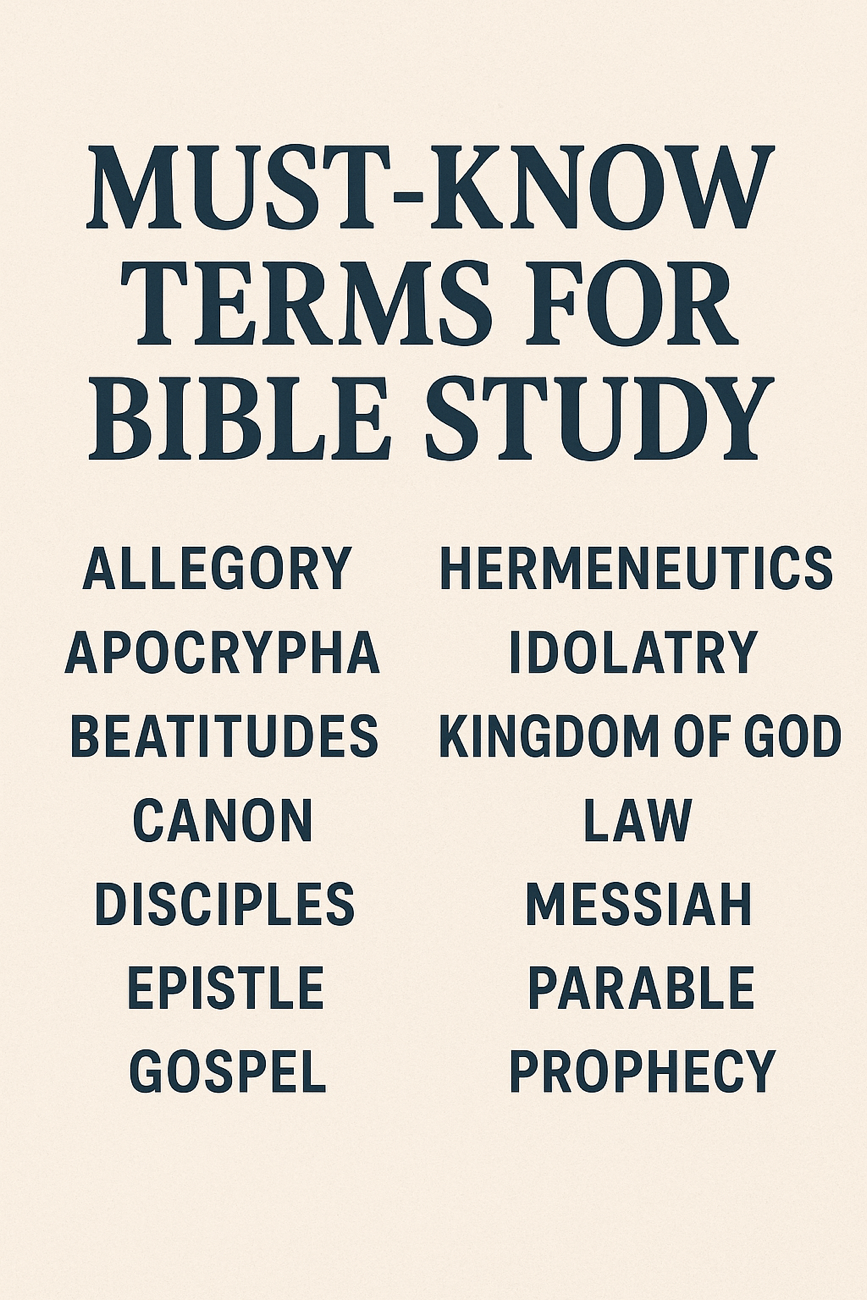
Allegory
Allegory is a literary and artistic device in which characters, events, and details within a narrative symbolize broader concepts and ideas, often conveying moral, social, or political messages. The term derives from the Greek word “allegoria,” meaning “speaking otherwise,” which highlights its function of expressing deeper meanings beyond the literal interpretation. Allegories can be found across various mediums, including literature, visual arts, and film, and they often involve a narrative that operates on two levels: the surface story and the underlying message.
Classic examples include George Orwell’s “Animal Farm,” which critiques totalitarianism through the story of farm animals, and John Bunyan’s “The Pilgrim’s Progress,” which represents the spiritual journey of a Christian believer.
Allegory has been a significant tool throughout history, allowing creators to address complex themes in a more accessible manner, as noted in sources like Britannica and Merriam-Webster.
Apocrypha
A collection of ancient texts that are not considered canonical by certain religious traditions, often included in some versions of the Bible.
Beatitudes
A series of blessings pronounced by Jesus in the Sermon on the Mount (Matthew 5:3-12), highlighting the values of the Kingdom of God.
Canon
The official list of books that are considered authoritative scripture by a particular religious community.
Disciples
Followers of Jesus Christ, particularly the twelve apostles who were chosen to spread his teachings.
Epistle
A letter, often written by apostles, that addresses specific issues or teachings within early Christian communities (e.g., the letters of Paul).
Gospel
The “good news” of Jesus Christ, specifically the accounts of his life, death, and resurrection found in the New Testament (Matthew, Mark, Luke, and John).
Hermeneutics
The study of interpretation, especially of biblical texts, focusing on understanding the meaning and application of scripture.
Idolatry
The worship of idols or false gods, which is condemned throughout the Bible.
Kingdom of God
A central theme in Jesus’ teachings, referring to God’s reign and authority, both in the present and in the future.
Law
Refers to the commandments and regulations given by God, particularly those found in the Torah (the first five books of the Old Testament).
Messiah
The anointed one, a savior or liberator expected by the Jewish people, fulfilled in the New Testament by Jesus Christ.
Parable
A simple story used to illustrate a moral or spiritual lesson, often told by Jesus.
Prophecy
A message from God, often delivered by a prophet, that foretells future events or conveys divine truth.
Redemption
The act of being saved from sin and its consequences, often associated with the sacrifice of Jesus.
Righteousness
The quality of being morally right or just, often associated with living in accordance with God’s will.
Sacrament
A religious rite recognized as of particular importance and significance, such as baptism and communion.
Sin
An act that goes against God’s will or law, often understood as a separation from God.
Testament
Refers to the two main divisions of the Bible: the Old Testament (Hebrew Scriptures) and the New Testament (Christian Scriptures).
Transfiguration
The event in which Jesus is transformed and revealed in divine glory to three of his disciples (Matthew 17:1-9).
Worship
The term “worship” originates from the Old English word “weorþscipe,” which combines “weorþ,” meaning worth or value, and “scipe,” indicating a condition or quality.
Thus, worship fundamentally conveys the idea of attributing worth to a deity or divine being.
In various religious contexts, worship encompasses acts of reverence, adoration, and devotion directed towards God or gods, often involving rituals, prayers, and communal gatherings. It serves as a means for individuals and communities to express their beliefs, seek spiritual connection, and engage in transformative experiences.
True worship is not merely about fulfilling personal or communal needs but is centered on honoring and glorifying God, reflecting a commitment to divine values and principles.
Understanding these terms can greatly enhance your study of the Bible and provide a clearer framework for interpreting its messages and teachings.
MORE WORDS YOU SHOULD KNOW:
Theology
… the study of God.
Apologetics
… defense of Faith.
Exegesis
… critical interpretation of scripture.
Substitutionary Atonement
Christ died as a substitute for sinners, bearing the punishment that they deserved.
Eschatology
Eschatology is the study of the end times, focusing on events like
- the Second Coming of Christ
- the final judgment
- the ultimate destiny of souls.
It encompasses what happens to individuals after death and the fate of the entire universe.
Key eschatological concepts include:
- the resurrection of the dead
- the millennium
- the establishment of God’s kingdom.
Incarnation
The Incarnation is the doctrine that the Son of God assumed human nature and became man in the person of Jesus Christ. This belief is central to Christianity, affirming that Jesus is both fully divine and fully human. The theological implications of the Incarnation include the idea that through Jesus, God entered human history, experiencing human life and providing a means of salvation.
Grace
Grace is the unmerited favor and love of God towards humanity. It is central to Christian soteriology (the study of salvation), emphasizing that salvation is a gift from God, not earned by human effort. Different traditions emphasize different aspects of grace:
Justification
Justification is the act by which God declares a sinner to be righteous on the basis of faith in Jesus Christ. In Protestant theology, this is often emphasized
REFORMED THEOLOGY
Reformed theology affirms the five solas with all their implications; recognizes the centrality of the covenant in God’s saving purposes; and is expressed in a historic and public confession of faith.
CALVINISM
Calvinism, also known as Reformed theology or the Reformed tradition: is a major branch of Protestant Christianity that originated with the teachings of the French theologian John Calvin in the 16th century.
It is named after Calvin because he played a significant role in shaping its doctrines and organizing its Ecclesiastical structure.
Calvinism emphasizes the sovereignty of God in all aspects of life, including salvation, divine providence, and the governance of the world. It is characterized by its adherence to the “Five Points of Calvinism,” which are often summarized using the acronym TULIP.
Total Depravity
This doctrine teaches that due to the fall of Adam and Eve, all human beings are born in a state of spiritual depravity and are incapable of choosing God or doing good on their own. They are entirely dependent on God’s grace for salvation.
Unconditional Election
According to this belief, God, out of His sovereign will and without any consideration of human merit or choice, predestines certain individuals to be saved. This election is not based on anything that humans do but solely on God’s divine purpose.
Limited atonement
This doctrine states that Christ’s atoning sacrifice on the cross was specifically intended for the salvation of the elect, those whom God has chosen for salvation. It does not extend to all people universally.
Irresistible grace
Also known as “effectual calling” or “regenerating grace,” this doctrine asserts that when God chooses to save someone, His grace is irresistible and will unfailingly bring that person to salvation. Those who are called by God cannot ultimately resist His saving work.
Perseverance of the saints
This belief affirms that those who are truly saved by God’s grace will persevere in faith and holiness until the end. Genuine believers cannot lose their salvation but will continue to follow Christ throughout their lives.
Calvinism
Calvinism is a theological system and branch of Protestant Christianity that originated with the teachings of John Calvin, a 16th-century French reformer. It emphasizes the sovereignty of God in all aspects of salvation, particularly through the doctrine of predestination, which asserts that God has already chosen who will be saved and who will not. This belief is often summarized by the Five Points of Calvinism, which include Total Depravity, Unconditional Election, Limited Atonement, Irresistible Grace, and Perseverance of the Saints. Calvinism stands in contrast to Arminianism, which emphasizes free will and the ability of individuals to choose salvation. The term itself derives from Calvin's last name, and the movement has significantly influenced various Protestant denominations, particularly in Reformed and Presbyterian traditions. It gained prominence during the Reformation and has continued to shape theological discussions and debates within Christianity today, as noted in various sources like Britannica and Clickmill.
Arminianism
Arminianism is a theological system named after the Dutch theologian Jacob Arminius (1560-1609), who proposed a framework of Christian belief that emphasizes free will and God’s universal grace. This doctrine arose as a response to the deterministic views of Calvinism, particularly regarding predestination and salvation. Arminianism asserts that while God offers salvation to all, individuals have the free will to accept or reject this offer, which stands in contrast to the Calvinist belief in irresistible grace. Central to Arminian theology are five key points: the denial of original sin as an insurmountable barrier, justification by faith, conditional predestination, the resistibility of grace, and the possibility of falling from grace.
The theological debate between Arminianism and Calvinism was notably formalized during the Synod of Dort (1618-1619), where Arminian views were challenged but continued to influence various Protestant traditions, especially Methodism and the broader Evangelical movement (Christian History Institute, Wellspring MS Church).
Free Will
The term “free will” refers to the philosophical concept that individuals have the capacity to make choices that are not predetermined by prior causes or divine intervention.
Etymologically, the phrase combines “free,” deriving from the Old English freo, meaning “not in bondage,” and “will,” from the Old English willan, meaning “to wish or desire.”
This concept has been a subject of intense debate in philosophy, psychology, and neuroscience, particularly concerning whether human actions are determined by biological processes or if individuals can act independently of such influences.
Some philosophers advocate for a “compatibilist” view, suggesting that free will can coexist with determinism, arguing that the essence of free will lies in the ability to act according to one’s motivations and desires, even if those are influenced by prior causes (psyche.co).
The implications of free will are profound, affecting moral responsibility and ethical considerations in society, as individuals are often held accountable for their actions based on the assumption that they can choose freely (scientificamerican.com).
Election
The etymology of “election” comes from the Latin word “electio,” meaning “choice” or “selection,” which itself derives from the verb “eligere,” meaning “to choose.”
In a biblical context, election is seen as an expression of God’s sovereignty, where He selects individuals based on His divine will rather than their actions or merits.
This concept is discussed in various theological writings, emphasizing that God’s choice is unconditional and not based on foreseen faith or works (as noted in sources like gotquestions.org).
The implications of this doctrine often lead to discussions about grace, justice, and the nature of God’s love, as seen in the debates surrounding unconditional election and its portrayal of God in relation to humanity (monergism.com).
Atonement
The term “atonement” refers to the act of making amends or reparation for a wrongdoing or injury, often implying a reconciliation between two parties. Etymologically, the word is derived from the Middle English phrase “at one,” which signifies being in harmony or agreement. This concept has significant theological implications, particularly in Christianity, where atonement is associated with the reconciliation between God and humanity through the life, suffering, and death of Jesus Christ. The doctrine of atonement encompasses various interpretations, such as the satisfaction view and substitutionary atonement, which explore how this reconciliation is achieved (Merriam-Webster, Cambridge Dictionary, Dictionary.com).
Grace
The term “grace” has a rich etymological background, originating from the Latin word “gratia,” which means favor, goodwill, or kindness.
In contemporary usage, grace encompasses various meanings, including elegance or beauty of form, manner, motion, or action, as well as a disposition to kindness and compassion.
In religious contexts, particularly within Christianity, grace refers to the unmerited favor of God towards humanity, often linked to salvation and divine assistance.
This theological concept emphasizes that grace is a gift from God, as highlighted in Ephesians 2:8, which states, “For by grace you have been saved through faith.”
The multifaceted nature of grace can be seen in phrases like “fall from grace,” which denotes a loss of status or favor, and “saving grace,” which refers to a redeeming quality that mitigates a negative situation.
Perseverance of the Saints
the belief that salvation is secure and cannot be lost, a concept often referred to as “eternal security.”
The etymology of the word “perseverance” comes from the Latin “perseverare,” meaning to persist or continue steadfastly.
This idea is rooted in the understanding of predestination, where God’s grace enables the faithful to endure in their beliefs despite challenges
John 10:28-29: “I give them eternal life, and they will never perish, and no one will snatch them out of my hand. My Father, who has given them to me, is greater than all, and no one is able to snatch them out of the Father’s hand.”
ECCLESIAL / ECCLESIOLOGY
ecclesiology is the study of the Church, the origins of Christianity, its relationship to Jesus, its role in salvation, its polity, its discipline, its eschatology, and its leadership.