Tag: forgiveness

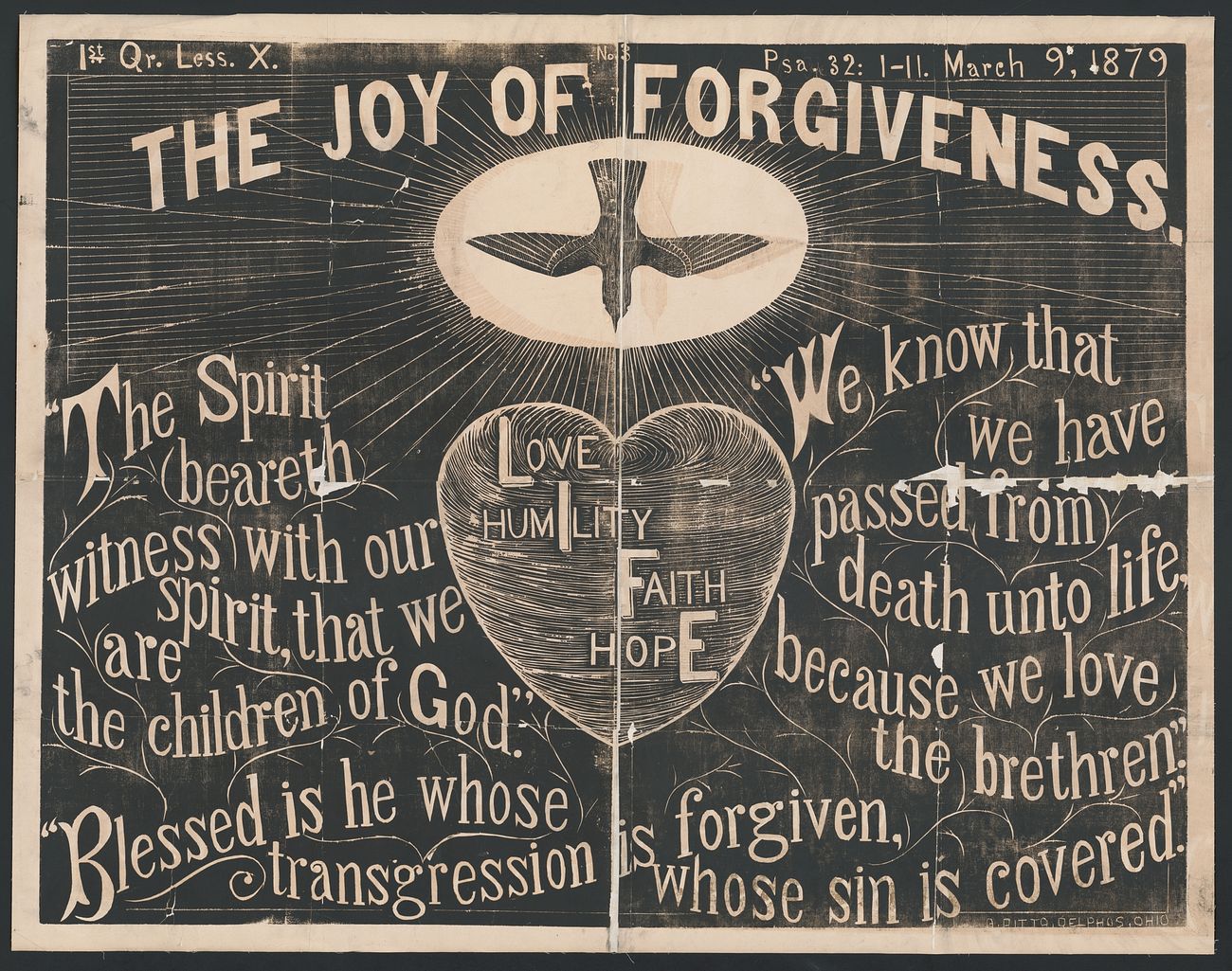
  • Forgiven People Forgive

    Forgiven People Forgive

    What does it mean to forgive?

    Forgive:  … the act of pardoning someone for a perceived offense or wrongdoing.  i

    Forgiveness Involves: … letting go of feelings of resentment, anger, or vengeance towards the person who has wronged you.

    Forgiveness Is: … a conscious and deliberate decision to release negative emotions and move towards reconciliation or healing.

    Forgiveness Promotes: … empathy, understanding, and compassion. 

    Forgiveness Is Key For: … conflict resolution, peace-building efforts, and interpersonal relationships.

    Forgiveness comes from the Old English word “forgiefan,” where “for” means “completely” or “thoroughly,” and “giefan” means “to give.”

    Forgiveness

    a powerful and unwavering act of relinquishing all resentment or bestowing complete pardon upon another.

    The opposite of forgiveness?

    – to hold a grudge

    – to harbor resentment towards someone…

    – to refuse to let go of anger or blame.  

    – refusing to let go of past offenses or wrongdoings…

    maintaining negative feelings instead of granting absolution or offering pardon.

    Forgiveness is the Main Teaching of Jesus

    Scripture consistently emphasizes the importance of forgiveness, it is the primary message.

    Matthew 6:14-15:

    “… if you forgive others their trespasses, your heavenly Father will also forgive you. 

    … but if you do not forgive others their trespasses, neither will your Father forgive your trespasses.”

    Luke 6:37:

    “Judge not, and you will not be judged; condemn not, and you will not be condemned; forgive, and you will be forgiven.”

    Ephesians 4:32:

    “Be kind to one another, tenderhearted, forgiving one another, as God in Christ forgave you.”


    When The Lord Bears Your Burdens, You’ll Bear Other’s Burdens.

    Colossians 3:13 –

    Bear with each other and forgive one another if any of you has a grievance against someone.

    Colossians 3:13

    ” … Forgive as the Lord forgave you.”


    The concept of forgiveness is rooted in the principle of treating others the way you would like to be treated.

    Whatever you would want that others do to you, do also that to them… on this hangs all the Law and the Prophets.”

    Matthew 7:12, Luke 6:31

    How does the Law and Prophets depend on the way we treat others?

    Because the message is the same as it was in this beginning…

    LOVE

    LOVE FORGIVES…

    LOVE IS THE WHOLE POINT…

    TO LOVE IS TO FORGIVE.

    Holiness & Truth

    Holiness is the state or quality of being pure, sacred, and in perfect accordance with truth. It represents a profound alignment, embodying both integrity in one’s actions and authenticity in one’s self-expression.

    “Love does no wrong to a neighbor; therefore love is the fulfilling of the law.”

    Romans 13:10

    Forgiveness is an act of empathy and compassion that leads to growth & harmony.


    Where’s Your Focus?

    When people divert their attention to consistently highlighting and searching out the shortcomings of others and habitually advocating for justice to be served, it becomes evident that they have not received the gift of mercy.

    By shifting our focus towards scrutinizing the failures and flaws of those around us, we inadvertently disclose our own shortcomings.

    Mercy, a quality from God that expresses  from a place of compassion and understanding, gives us the ability to forgive, empathize, and extend grace to others.

    When we live in pursuit of justice for others, we ask for God’s justice for ourselves… don’t be a hypocrite because:

    … in Gods court, you are GUILTY!!!

    & your best works are useless period rags. (Isa.64:4)

    (more…)
  • Salvation’s Trinitarian Mission By The Holy Trinity

    Salvation’s Trinitarian Mission By The Holy Trinity

    Each aspect of God has a purpose in all things, including Salvation.

    The doctrine of salvation underscores the unity, sovereignty, and active involvement of the Father, Son, and Holy Spirit in bringing about the redemption of mankind. Let us explore the Trinitarian nature of salvation and the distinct roles each person of the Trinity plays in this divine mission

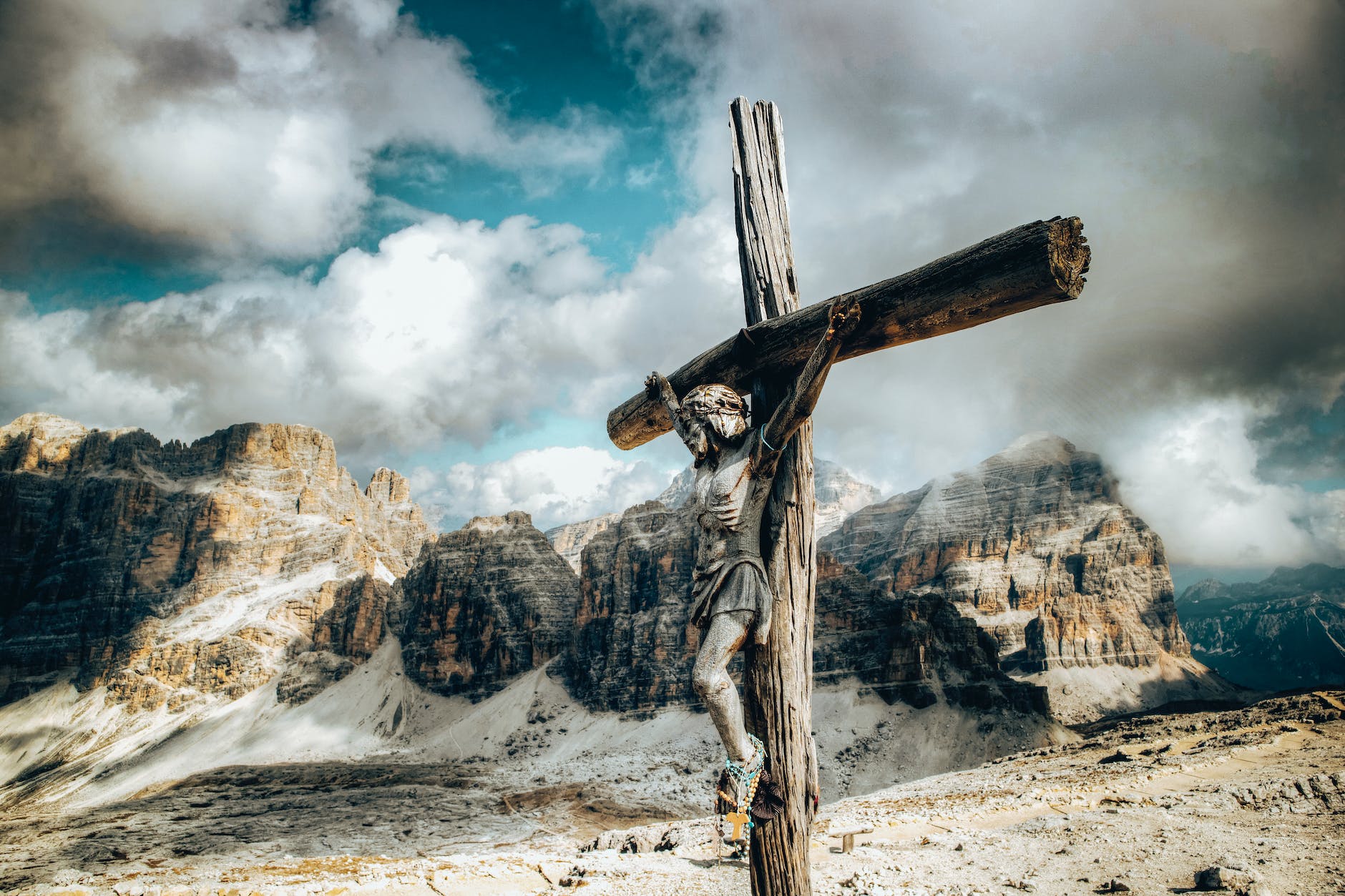
    a wooden crucifix against the rock mountains
    Photo by eberhard grossgasteiger on Pexels.com

    PERSON: The Father

    SALVATION: Sovereign Election/Choice

    “But we ought always to give thanks to God for you, brothers beloved by the Lord, because God chose you as the firstfruits to be saved, through sanctification by the Spirit and belief in the truth.”

    – 2 Thessalonians 2:13

    Salvation’s essence resides in the Father’s unwavering choice and election of individuals. Long before the world’s inception, the Father, in His boundless grace, deliberately chose a people for Himself. This divine selection was not based on their merits, but solely rooted in His infinite mercy and divine decree. As the driving force behind salvation, the Father sets the stage for the magnificent unfolding of His redemptive plan.

    The Father, being the ultimate source and architect of salvation, assumes a paramount role in the Trinity of Salvation. It is He who, guided by His sovereign will and overflowing grace, elects and distinguishes individuals for redemption. The Father’s immeasurable love and grand design establish the unshakable groundwork for the majestic unveiling of salvation’s divine purpose.

    PERSON: The Son

    SALVATION: Perfect Redemption

    “For even the Son of Man came not to be served but to serve, and to give his life as a ransom for many.”

    – Mark 10:45

    The Son, Jesus Christ, plays a crucial role in the accomplishment of salvation. He obediently fulfills the demands of the law, living a flawless life that sets the standard for humanity. Through His sacrificial death on the cross, He offers Himself as a perfect and substitutionary atonement for the sins of the chosen ones. Rising triumphantly from the grave, He conquers sin and secures eternal life for those who place their trust in Him.

    The Son, Jesus Christ, holds a central position in the Trinity of Salvation. He willingly takes on human form, becoming the perfect mediator between God and humanity. Through His incarnation, life, death, and resurrection, Jesus achieves redemption for the chosen ones. His sacrificial death on the cross serves as the ultimate atonement for sin, providing forgiveness and reconciliation with God.

    PERSON: Holy Spirit

    SALVATION: Transformation

    “And I will give you a new heart, and a new spirit I will put within you. And I will remove the heart of stone from your flesh and give you a heart of flesh. And I will put my Spirit within you, and cause you to walk in my statutes and be careful to obey my rules.”

    – Ezekiel 36:26-27

    Completing the Trinity of Salvation is the Holy Spirit. The Spirit is the one who applies the work of Christ to the hearts of individuals. Through the regenerating power of the Holy Spirit, the elect are given new life, enabling them to have faith in Jesus Christ and repent of their sins. The Spirit sanctifies believers, empowering them to grow in holiness and conform to the image of Christ.

    The Holy Spirit, the third person of the Trinity, plays a transformative role in salvation. He regenerates the hearts of the chosen ones, granting them new life and a disposition inclined towards God. Through His work, the Holy Spirit enables individuals to have unwavering faith in Jesus Christ, bestowing the remarkable gift of salvation. He continuously sanctifies believers, decisively conforming them to the image of Christ and empowering them to live a life abundantly pleasing to God.

    Together, the Father, Son and Holy Spirit work harmoniously in the Trinity of Salvation.

    “Go therefore and make disciples of all nations, baptizing them in the name of the Father and of the Son and of the Holy Spirit.”

    – Matthew 28:19

    The Father initiates and chooses, the Son accomplishes redemption, and the Holy Spirit applies and empowers. Their unified work reveals the depth of God’s love, grace, and mercy towards humanity, showcasing the intricate and divine interplay within the Trinity itself.

  • The Profound Complexity of Forgiveness

    The Profound Complexity of Forgiveness

    A Spiritual and Psychological Exploration

    Introduction

    The Multifaceted Nature of Forgiveness

    Forgiveness is often misunderstood as a simple act of forgetting or overlooking past wrongs. However, the Bible and psychological studies tell us that it’s a complex emotional and spiritual journey. In this blog post, we’ll explore the intricate layers of forgiveness, supported by Biblical teachings, to understand its transformative power.

    The Common Misconception: Is Forgiveness Just Forgetting?

    “For I will forgive their wickedness and will remember their sins no more.” – Hebrews 8:12

    One of the most prevalent misunderstandings about forgiveness is that it’s synonymous with forgetting. This is a simplistic view that doesn’t capture the essence of what the Bible teaches or what psychological studies have shown.

    The Role of Memory in Forgiveness

    The Bible tells us that God forgives and forgets our sins, but for humans, the process is more complex. Memory serves as a guide for future actions and decisions. True forgiveness changes the emotional weight of those memories, allowing us to remember without resentment.

    Emotional and Intellectual Honesty: The Biblical Perspective
    Therefore, confess your sins to one another and pray for one another, that you may be healed.” –

    Forgiveness doesn’t mean overlooking past difficulties or pretending they never happened. This would be intellectually and emotionally dishonest, and it’s not what the Bible teaches.

    The Importance of Acknowledging Past Wrongs

    Acknowledging the past is crucial for authentic forgiveness. It aligns with the Biblical principle of confession and allows for genuine healing and reconciliation.

    The Pitfalls of Self-Deception: A Barrier to True Forgiveness

    “The heart is deceitful above all things and beyond cure. Who can understand it?” – Jeremiah 17:9

    It’s tempting to deceive ourselves into painting a rosy picture of a situation or person to make forgiveness easier. However, this is not only emotionally complicated but also spiritually problematic.

    Achieving Clarity Through Forgiveness

    True forgiveness, as supported by Biblical teachings, allows us to see situations and people clearly. It enables us to learn valuable life lessons, fostering personal and spiritual growth.

    The Transformative and Spiritual Power of Forgiveness

    “Bear with each other and forgive one another if any of you has a grievance against someone. Forgive as the Lord forgave you.” – Colossians 3:13

    Forgiveness is not just a psychological act but also a spiritual mandate. It’s a continuous process that leads to emotional peace and spiritual growth. By understanding the multifaceted nature of forgiveness, we not only free ourselves from the chains of resentment but also open doors to deeper, more meaningful connections with ourselves and others.

  • The Doctrine of Salvation by Faith Alone in Christianity

    The Doctrine of Salvation by Faith Alone in Christianity

    Sola Fide

    Sola fide, also known as justification by faith alone, was a key doctrine of the Protestant Reformation.

    It emphasizes that salvation is attained through faith in Jesus Christ alone, and not through any works or merit of our own.

    Prior to the Reformation, the Catholic Church taught that salvation was achieved through a combination of faith and works. The church believed that individuals had to earn their way into heaven by performing acts of righteousness, participating in sacraments, and following church laws and traditions.

    However, during the 16th century, Martin Luther and other Reformers challenged this understanding of salvation. They argued that the Bible teaches that salvation is a gift from God, granted to individuals solely on the basis of their faith in Jesus Christ. They believed that human efforts and good works could never be enough to earn salvation.

    The Reformers based their teachings on key passages from the Bible, such as Ephesians 2:8-9: “For it is by grace you have been saved, through faith—and this is not from yourselves, it is the gift of God—not by works, so that no one can boast.” They emphasized the sufficiency of Christ’s sacrifice on the cross for the forgiveness of sins, and the need for individuals to trust in Jesus alone for salvation.Sola fide remains a central doctrine in Protestant theology. It asserts that faith in Christ is the only means of justification before God, and that good works are a result of genuine faith, but not a means to earn salvation.

    This doctrine had profound implications for both the individuals and the church as a whole. It emphasized the personal relationship between an individual and God, as well as the sufficiency of Christ’s sacrifice for salvation. It also challenged the authority and practices of the Catholic Church, leading to a major schism between Catholicism and Protestantism.

    The Doctrine of Faith Alone, also known as Sola Fide, is a theological concept that originated during the Protestant Reformation in the 16th century. It holds that faith in Jesus Christ is the sole means of attaining salvation, and that good works are not necessary for salvation.

    Read More

    This doctrine stands in contrast to the Catholic teaching of justification, which emphasizes a combination of faith and good works.

    According to the Doctrine of Faith Alone, salvation is a gift from God that is received through faith alone, apart from any human effort or merit.Advocates of the Doctrine of Faith Alone argue that this belief is based on the teachings of the Bible, particularly the letters of the apostle Paul. They point to passages such as Ephesians 2:8-9, which states, “For it is by grace you have been saved, through faith – and this is not from yourselves, it is the gift of God – not by works, so that no one can boast.”

    Supporters of this doctrine assert that good works are a natural outpouring of genuine faith, but they do not contribute to one’s justification or salvation. They believe that salvation is solely the result of God’s grace, freely given to those who put their trust in Jesus Christ.

    • What does it mean when we say that faith alone saves us in Christianity?
    • Can we still be saved if we continue to sin?
    • How can we have faith in Jesus Christ?
    • Can good works earn us salvation in Christianity?
    • Why is the doctrine of salvation by faith alone important in Christianity?

    The topic of salvation is central to Christianity, as it defines what it means to be a follower of Christ.

    The belief that faith alone saves us is a key aspect of Christianity. However, there can be confusion about what this concept truly means.

    In this article, we will address five questions that will help clarify the doctrine of salvation.

    What does it mean when we say that faith alone saves us in Christianity?

    “For it is by grace you have been saved, through faith—and this is not from yourselves, it is the gift of God—not by works, so that no one can boast.” Ephesians 2:8-9

    When we affirm that faith is the sole means by which we are saved, we are asserting that our unwavering trust in Jesus Christ is the only requirement for being delivered from the repercussions of sin and attaining everlasting life. Salvation pertains to our rescue from the punishment of sin, which results in eternal death, as well as our deliverance into a life filled with divine favor and everlasting existence. Our faith in Christ represents the reliance and certainty we have in Him, firmly believing that He is indeed the person He claims to be and that He is fully capable of fulfilling His promises. This encompasses trusting in His sacrificial death on the cross for the forgiveness of our sins and His resurrection, which grants us both absolution and the promise of eternity. Thus, it is faith alone, not our good deeds or any other factor, that serves as the means of our salvation.

    Can we still be saved if we continue to sin?

    Salvation is an act of God’s grace, not based on one’s own efforts or works. Humans are naturally sinful and unable to save themselves. It is only through faith in Jesus Christ and his redemptive work that someone can be saved.

    The transformative work of the Holy Spirit in the believer’s life entails ongoing sanctification, a process of becoming more like Christ. It includes repentance and turning away from sin.

    Believers will still struggle with sin and may fall into sin at times. But the assurance of salvation rests on the belief that God’s grace is sufficient to forgive and restore those who genuinely repent and seek forgiveness. While believers may continue to sin, the transformative work of the Holy Spirit should lead them toward repentance and growth in holiness, where sin diminishes.

    The Bible teaches that our works are evidence of our faith (James 2:14-26).

    When we have genuine faith in Christ, it will lead us to obey Him and perform good works. While we will still fall into sin, our desire will be to please God and do what is right. Salvation by faith alone does not provide a license to sin, but rather motivates us to live holy and obedient lives out of gratitude for what Christ has done for us.

    How can we have faith in Jesus Christ?

    “For it is by grace you have been saved, through faith—and this is not from yourselves, it is the gift of God—not by works, so that no one can boast.” – Ephesians 2:8-9

    Faith is a gift from God; we cannot produce it on our own. God primarily imparts faith through His Word, the Bible.

    In the book of Romans, it is written,

    “So faith comes from hearing, and hearing through the word of Christ” (Romans 10:17).

    As we read, study, and meditate on His Word, our faith grows.

    Importance of prayer: Through prayer, we humbly come before the Lord, acknowledging our dependence on Him and expressing our desires, concerns, and praises.

    The book of James reminds us of the power of prayer, stating, “If any of you lacks wisdom, let him ask God, who gives generously to all without reproach, and it will be given him” (James 1:5).

    The apostle Paul encourages us to “pray without ceasing” (1 Thessalonians 5:17). Through persistent prayer, we develop a deeper reliance on God and a greater understanding of His faithfulness. Our faith is nourished as we lay our burdens before Him.

    Can good works earn us salvation in Christianity?

    No, salvation is obtained solely by the Good Works of God, not by our own efforts.

    Good works are a natural outpouring of faith, they are not the means by which salvation is obtained nor kept.

    Titus 3:5 says we are saved “not by deeds done in righteousness, but according to [God’s] mercy.” While God calls us to live righteously, it is ultimately out of grateful response for his mercy and grace that saves us, not as a means to earn or obtain that salvation.

    Romans 3:20 tells us “no one will be declared righteous in God’s sight by the works of the law; rather, through the law we become conscious of our sin.” Our good works cannot save us or make us righteous before a perfectly holy God. Our works fall short.

    Why is the doctrine of salvation by faith alone important in Christianity?

    The doctrine of salvation by faith alone is crucial in Christianity as it emphasizes that salvation is not dependent on one’s actions or good works, but rather on faith in God. It helps guard against legalism and self-righteousness, promotes unity among believers, and highlights the transformative power of faith.

    Overall, it upholds the principles of grace and mercy.

  • Betrayal – The Fading Scars

    Betrayal – The Fading Scars

    Nobody ever expects to experience betrayal and yet it is a difficult emotion to grapple with. Betrayal can come in many forms, from a close friend, a family member, a romantic partner, and even an acquaintance.

    Types Of Betrayal :

    Overt Betrayal:

    This type of betrayal is usually intentional and very direct, and often affects a wide range of people involved. It can lead to damaging consequences and a huge loss of trust.

    The Bible teaches that all have sinned and fallen short of the glory of God -Romans 3:23, including the propensity to betray others.

    The story of Judas Iscariot, who betrayed Jesus for thirty pieces of silver, is a prime example of overt betrayal. His actions affected not only Jesus but also the other disciples and ultimately led to the crucifixion of Christ. The consequences of overt betrayal can be devastating, as it can lead to a loss of trust and damage relationships.

    Unspoken Betrayal:

    This entails a lack of disclosure or communication. Unspoken betrayals can be the most painful since they often build up over time and can easily manipulate the betrayed person without them even realizing it.

    In Proverbs 27:6, it says, “Faithful are the wounds of a friend; but the kisses of an enemy are deceitful.”

    Self-Betrayal:

    Self-betrayal is when someone goes against their own values, beliefs, or sense of self. This can include lying to oneself or others, doing things that are wrong, or ignoring one’s own needs. It can harm mental and emotional health and cause guilt and shame. Self-betrayal is a sin that goes against Jesus’ teachings and one’s own faith. The Bible says to live according to Jesus’ teachings and not act against one’s own values and beliefs. Self-betrayal is also a form of dishonesty, which is also a sin according to the Bible.

    Passive-Aggressive Betrayal:

    This can lead to mistrust and suspicion due to the lack of communication and clarity, as well as intentional attempts to distance oneself from the situation. It may also lead to resentment and suspicion from those close to the person doing the betraying.

    In Proverbs 26:24-25, it says, “People may cover their hatred with pleasant words, but they’re deceiving you. They pretend to be kind, but don’t believe them. Their hearts are full of many evils.”

    Be cautious of those who use pleasant words to cover up their true intentions.

    In Matthew 5:37, Jesus teaches us to let our yes be yes and our no be no, to be honest and straightforward in our communication.

    Unintentional Betrayal:

    Unintentional Betrayal happens when someone unintentionally breaks their commitments and expectations, causing hurt and loss of trust. It’s a common experience that can have lasting effects.

    OFTEN BETRAYAL IS DISGUISED AS KINDNESS

    When it comes to betrayal, it is often disguised as care or kindness. We may believe that what we are doing is in the best interests of ourselves, our friends, our family, or relationships and that by behaving in an ‘acceptable’ or ‘proper’ way, we will have no cause to betray another. We may even feel a sense of loyalty or devotion to those who are closest to us and, in turn, those same people may have an unwavering trust in us, only to be betrayed in the end.

    The Feeling Of Betrayal Is Vivid

    It’s like a punch to the gut, a sudden and unexpected blow that leaves you reeling. You never imagine that they would do to you what they did. But there it was, plain as day: they betrayed my trust.

    You feel a sense of loss, as if a part of you has been stolen. God is the only one who can heal this level of pain.