Tag: Jung

  • Carl Jung –Art – Archetypes

    Carl Jung –Art – Archetypes

    Psyche, and the Collective Unconscious

    Carl Jung’s Mystical Journey in ‘The Red Book’

    Carl Jung, the renowned Swiss psychiatrist and psychoanalyst, made significant contributions to the understanding of art and its psychological dimensions.

    Carl Jung
    Key aspects of his work related to art & the psyche:

    Collective Unconscious + Visual Art:

    Jung proposed the concept of the collective unconscious, which suggests that certain universal symbols and archetypes are shared across cultures and generations.

    Visual art often taps into these archetypal images, providing a means for individuals to express and explore their inner worlds.

    Jung believed that art could reveal latent memories from our ancient past and help us understand our responses to the environment.

    Examples of visual representations related to the collective unconscious include mandalas, surrealism, and abstract art

    Art = Self-Revelation:

    Jung encouraged his patients to engage in artistic expression, not as a judge of their work, but as a personal voyage of self-discovery.

    The act of creating art allowed individuals to unravel hidden aspects of their minds and release repressed memories.

    For Jung, the canvas became a therapeutic tool for understanding the psyche and achieving breakthroughs.

    Artistic Impulse + Meaning:

    Jung believed that art itself had no inherent meaning; instead, it was the artistic process that mattered.

    Artists grappled with an “artistic impulse,” akin to a kind of madness—an irresistible force that drove them to create.

    Through this process, artists found temporary relief and a way to express their psychological condition.

    Jung’s own experiences as both a psychologist and an artist informed his understanding of this delicate balance between completion and incompleteness in artistic expression.

    RESOURCE

    🎨 Jung’s exploration of the psyche through art is a game-changer.
    Creativity, symbolism, and self-expression…

    His approach to art was deeply rooted in his theories of the unconscious mind and symbolism.

    Jung believed that art was a powerful medium for expressing the unconscious, serving as a bridge between the conscious and unconscious realms. 

    He saw artistic creation as a process that tapped into universal symbols and archetypes, which he termed the collective unconscious.

    This perspective allowed for a unique interpretation of visual art, providing insights into both the artist’s psyche and broader cultural meanings.

    Jung’s own artistic endeavors, such as his Alchemical Tower at Bollingen, exemplified his belief in the transformative power of creative expression. This personal project was a physical manifestation of his inner psychological journey.

    In analyzing artworks, Jung developed a method of symbolic interpretation that became a tool for understanding an individual’s mental functioning and social behavior

    https://alchemist.data.blog/resource-library/

    https://www.semanticscholar.org/paper/c12e0abbb1a4739517739a5023334eea93961a34

    His approach to symbolism in art emphasized the importance of psychic content and its vital role in human life and culture.

    Jung’s ideas have influenced various fields, including music composition. His cognitive functions system has been used to understand different composers’ psychological tendencies and creative processes

    This application of Jungian theory demonstrates the enduring relevance of his ideas in interpreting artistic creation across various mediums.

    Liber Novus

    The Red Book
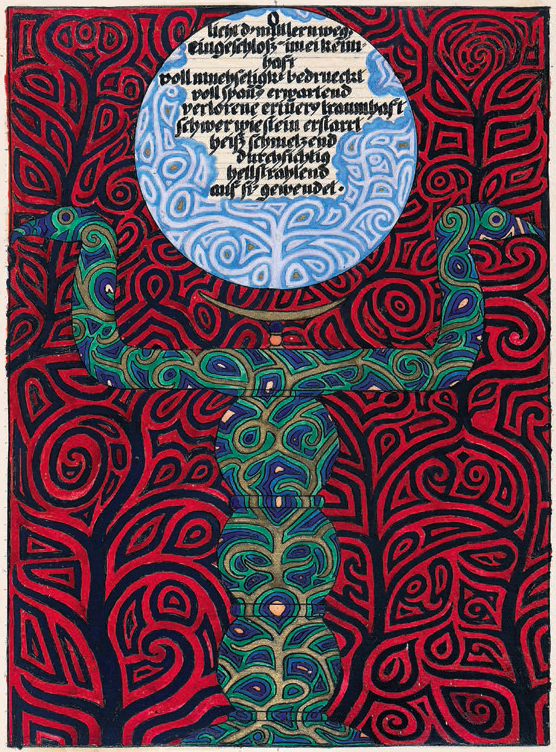
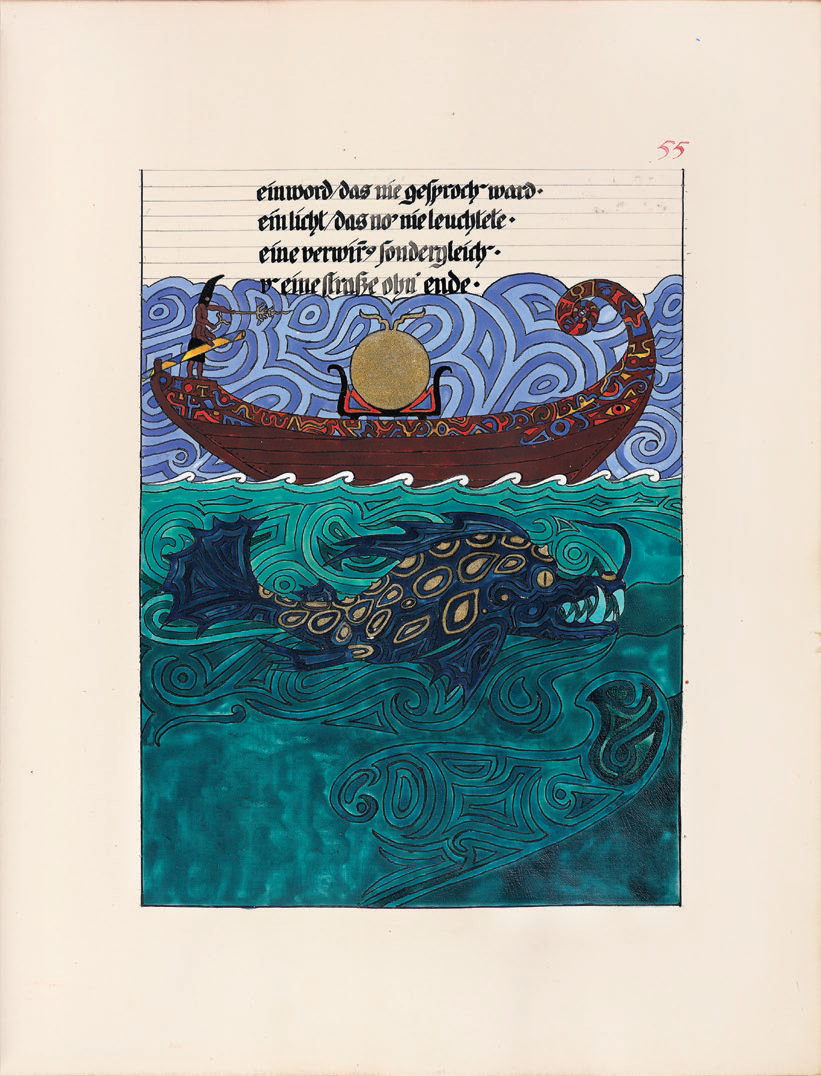
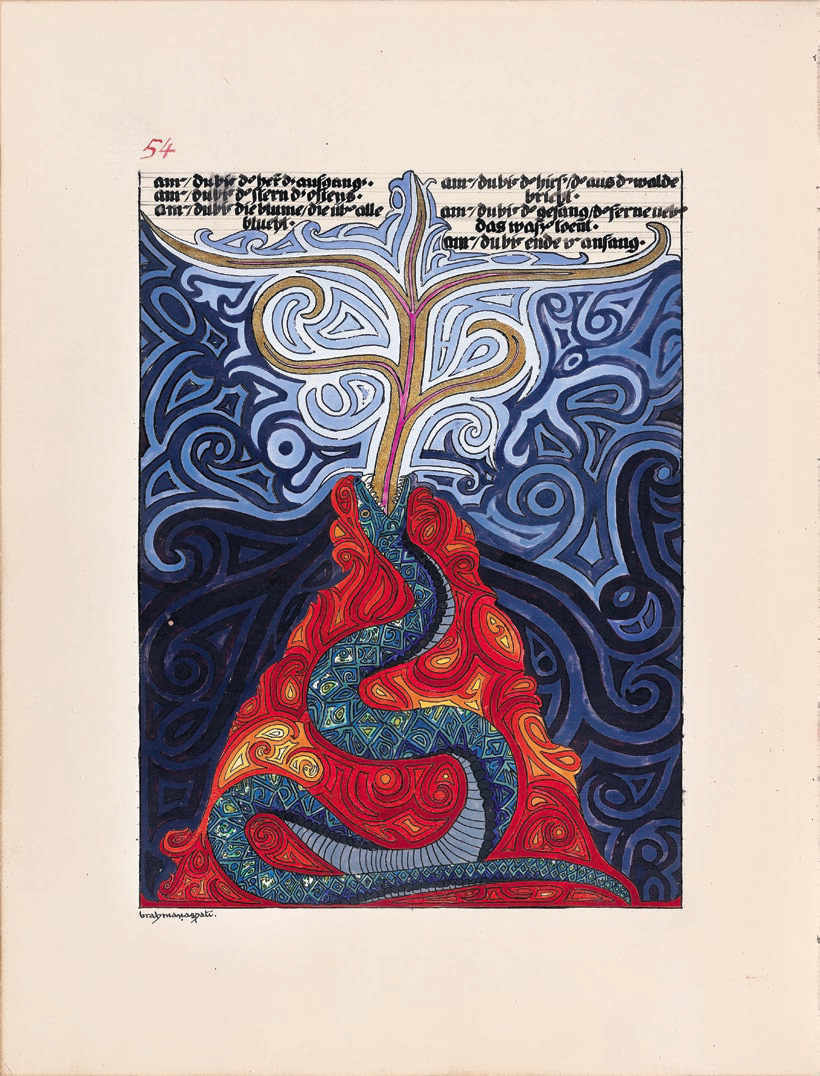
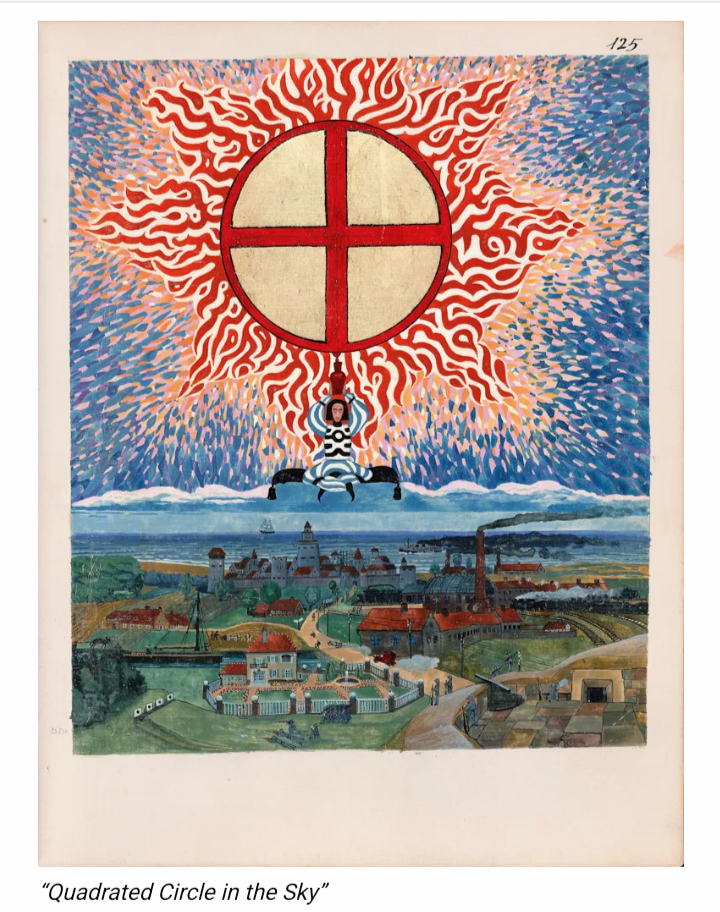
    Carl Jung’s Liber Novus, also known as The Red Book, was recently unveiled in a complete English translation by Norton. This translation was first published in a facsimile edition in 2009, followed by a smaller “reader’s edition” in 2012. Since then, there have been several exhibitions showcasing the book.

    Art critic Peter Frank describes it as resembling a Bible crafted by a medieval monk, particularly noting the intricate Gothic script that Jung meticulously used for his writings.

    Despite Carl Jung’s reluctance to consider himself an “artist,” it is noteworthy that his Liber Novus has been displayed in museums and served as the core of the ‘Encyclopedic Palace,’ a survey of visionary art featured at the 2013 Venice Biennale. Jung’s intricate paintings depict him as every inch an artist, akin to medieval monks or Persian courtiers. His artistry was devoted not to divine or royal glorification, but rather to celebrating the potential and significance of humanity.

    One could more accu­rate­ly say that Jung’s book was ded­i­cat­ed to the mys­ti­cal uncon­scious, a much more neb­u­lous and ocean­ic cat­e­go­ry. The “ocean­ic feeling”—a phrase coined in 1927 by French play­wright Romain Rol­land to describe mys­ti­cal oneness—so annoyed Sig­mund Freud that he dis­missed it as infan­tile regres­sion.

    Freud’s antipa­thy to mys­ti­cism, as we know, did not dis­suade Jung, his one­time stu­dent and admir­er, from div­ing in and swim­ming to the deep­est depths.

    The voy­age began long before he met his famous men­tor.

    At age 11, Jung lat­er wrote in 1959, “I found that I had been in a mist, not know­ing how to dif­fer­en­ti­ate myself from things; I was just one among many things.”

    Jung con­sid­ered his elab­o­rate dream/vision journal—kept from 1913 to 1930, then added to spo­rad­i­cal­ly until 1961—“the cen­tral work in his oeu­vre,” says Jung schol­ar Sonu Sham­dasani in the Rubin Muse­um intro­duc­tion above. “It is lit­er­al­ly his most impor­tant work.”

    And yet it took Dr. Sham­dasani “three years to con­vince Jung’s fam­i­ly to bring the book out of hid­ing,” notes NPR. “It took anoth­er 13 years to trans­late it.”

    Part of the rea­son his heirs left the book hid­den in a Swiss vault for half a cen­tu­ry may be evi­dent in the only por­tion of the Red Book to appear in Jung’s life­time.

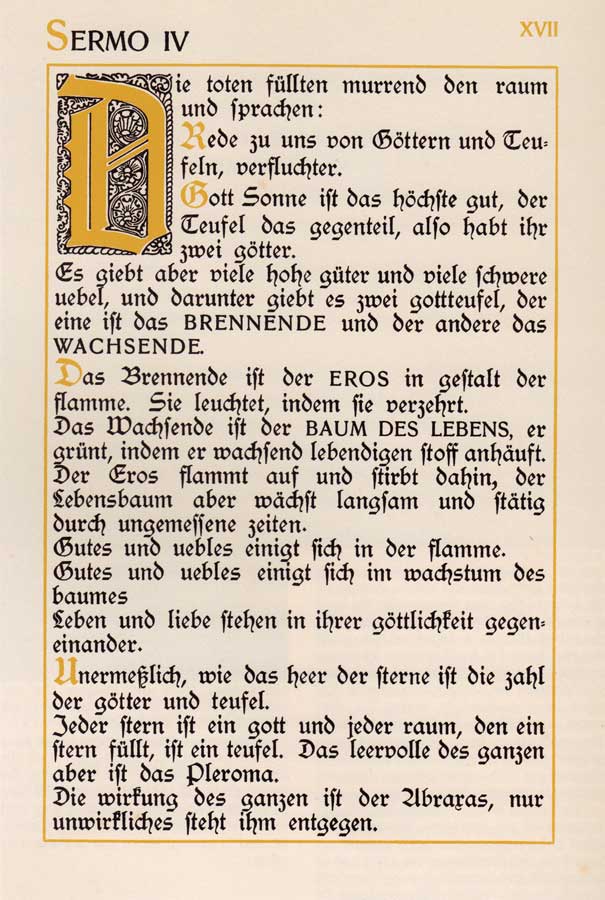
    The Sev­en Ser­mons of the Dead.”

    Jung had this text pri­vate­ly print­ed in 1916 and gave copies to select friends and fam­i­ly mem­bers. He com­posed it in 1913 in a peri­od of Gnos­tic stud­ies, dur­ing which he entered into vision­ary trance states, tran­scrib­ing his visions in note­books called the “Black Books,” which would lat­er be rewrit­ten in The Red Book.

    You can see a page of Jung’s metic­u­lous­ly hand-let­tered man­u­script above. The “Ser­mons,” he wrote in a lat­er inter­pre­ta­tion, came to him dur­ing an actu­al haunt­ing:

    The atmos­phere was thick, believe me! Then I knew that some­thing had to hap­pen. The whole house was filled as if there were a crowd present, crammed full of spir­its. They were packed deep right up to the door, and the air was so thick it was scarce­ly pos­si­ble to breathe. As for myself, I was all a‑quiver with the ques­tion: “For God’s sake, what in the world is this?” Then they cried out in cho­rus, “We have come back from Jerusalem where we found not what we sought/’ That is the begin­ning of the Septem Ser­mones. 

    The strange, short “ser­mons” are dif­fi­cult to cat­e­go­rize. They are awash in Gnos­tic the­ol­o­gy and occult terms like “plero­ma.”

    The great mys­ti­cal one­ness of ocean­ic feel­ing also took on a very sin­is­ter aspect in the demigod Abraxas, who “beget­teth truth and lying, good and evil, light and dark­ness, in the same word and in the same act. Where­fore is Abraxas ter­ri­ble.”

    There are tedious, didac­tic pas­sages, for con­verts only, but much of Jung’s writ­ing in the “Sev­en Ser­mons,” and through­out The Red Book, is filled with strange obscure poet­ry, com­ple­ment­ed by his intense illus­tra­tions. Jung “took on the sim­i­lar­ly styl­ized and beau­ti­ful man­ners of non-west­ern word-image con­fla­tion,” writes Frank, “includ­ing Per­sian minia­ture paint­ing and east Asian cal­lig­ra­phy.”

    If The Red Book is, as Sham­dasani claims, Jung’s most impor­tant work—and Jung him­self, though he kept it qui­et, seemed to think it was—then we may in time come to think of him as not only as an inspir­er of eccen­tric artists, but as an eccen­tric artist him­self, on par with the great illu­mi­na­tors and vision­ary mys­tic poet/painters.


    Resources

    www.openculture.com

    https://www.semanticscholar.org/paper/c12e0abbb1a4739517739a5023334eea93961a34

    https://www.semanticscholar.org/paper/3c150d64f8faa6243b5cdf116b9422bb29b0bb48

    https://www.independent.com/2019/02/04/art-carl-gustav-jung/

  • Overview Of ‘The Shadow’- Analytical Psychology

    Overview Of ‘The Shadow’- Analytical Psychology

    The depths of the human psyche are vast and intricate, and I have found, only through the lens of Jungian analytical psychology, can we begin to unravel the depths of the shadow.

    This shadow, this hidden aspect of the ego, is a complex and multifaceted entity that demands our attention and introspection. It is only by delving into the depths of our unconscious that we can truly come to know ourselves. By exploring the shadow, we can gain a profound understanding of the darker aspects of our psyche. In doing so, we can develop a greater sense of self-awareness, for it is only by acknowledging and embracing the shadow that we can truly become whole.

    SHADOW WORK ISN’T JUST ABOUT IDENTIFYING NEGATIVE PATTERNS OR TRAITS

    It is a sacred journey of self-discovery, a pursuit to uncover the hidden aspects of our mentality that have been suppressed deep within the shadows of our being. We come to understand the intricate web of our thoughts, emotions, and behaviors, and how they shape our reality. It is a transformative experience that requires bravery, vulnerability, and a willingness to confront our deepest fears and insecurities.

    As we delve deeper into the darkness, we begin to see the light that exists, and we emerge with a newfound insight of clarity, meaning, and inner stability.

    Shadow work is not just a journey of self-improvement, but a spiritual awakening that leads us to a deeper connection with ourselves, others, and God.

    UNDERSTANDING

    The idea is to understand and accept our shadow parts so we can turn them into something positive. The shadow is anything outside of our conscious awareness and can be positive or negative. We tend to reject or ignore our negative aspects, but there are positive parts that can also be hidden. Everyone has a shadow, and the less we acknowledge it, the worse it becomes. This is because our unconscious mind, developed in childhood, can be more primitive or instinctual in some people. The shadow is the unknown, irrational, and prone to projection, where we see ourselves as inferior to others. If we don’t acknowledge these projections, they can harm us by creating a disconnect between reality and our minds. This is like sin, which is separation. Without integrating our shadow, we can’t even recognize our sins and repent.

    WHEN THE SHADOW APPEARS

    The shadow, a mysterious and elusive force, often reveals itself to us in our dreams and other ethereal forms. It takes on the guise of a person, typically of the same gender as the dreamer, and its traits may or may not align with the dreamer’s own character. Yet, we must not forget the societal shadow that looms over us all, a collective weight that we carry as individuals and as a society. It is only through deep introspection and a willingness to confront our innermost fears that we can hope to shed light on the shadow and emerge into the light of our true selves.

    THERE ARE LAYERS TO THE SHADOW

    I’ve learned that the Shadow is not just one thing, but many layers. The first layer is made up of memories that I’ve forgotten or pushed away. As I go deeper, I find archetypes that represent human experiences I’ve had. These layers are hard to access, but I need to face them to understand myself. I used to be scared of the Shadow, but now I know it’s important to accept and integrate it. This is how I can become whole and grow spiritually.

    Can we encounter our shadow?

    Yes and this is a part of what Jung calls the process of individuation.

    Jung considered as a perennial danger in life that “the more consciousness gains in clarity, the more monarchic becomes its content…the king constantly needs the renewal that begins with a descent into his own darkness”—his shadow—which the “dissolution of the persona” sets in motion.

    Meaning, when the consciousness becomes clearer, its content may become more dominant. The conscious self needs to explore its own darkness or shadow regularly to renew itself, which is triggered by the dissolution of the persona. This is important because the conscious self is like a king that needs to maintain its power and authority.

    The shadow quite literally personifies everything that we refuse to acknowledge about ourselves; it’s a narrow door; its entrance is a mere sliver, requiring us to navigate through a narrow and torturous path.

    JUNG’S CLAIM OF FALLING VICTIM TO THE SHADOW

    Jung talks about the difficult journey of dissolving the persona and starting the individuation process. It’s risky because it makes you confront the dark parts of yourself, represented by the shadow. If you give in to the shadow, you’ll lose yourself in confusion and chaos. But if you face and accept it, you can come out of the journey as a whole and complete person.

    WHAT DOES IT MEAN TO ‘MERGE WITH’ THE SHADOW?

    In simplest terms, a person’s shadow can take over their personality and actions. This can happen when their conscious mind is shocked, confused, or experiencing extreme emotions. They become possessed and don’t realize what they’re saying or doing because the shadow has taken over.

    The concept of being possessed by one’s shadow, suggests that an individual who fails to integrate their unconscious desires and impulses into their conscious awareness may find themselves perpetually standing in their own light, falling into their own traps, and living below their potential. This notion is exemplified in literary works such as Robert Louis Stevenson’s “The Strange Case of Dr Jekyll and Mr Hyde,” wherein the titular character’s failure to reconcile his dark impulses with his conscious identity leads to his eventual downfall. As Jung notes, it is crucial that the conscious personality take an active role in integrating their shadow, lest they become enslaved by its autonomous influence.

    as described by Carl Jung.

    Jung suggests that during the process of individuation, the conscious mind may become controlled by the autonomous shadow. As this process continues, the libido shifts from the conscious world to the unconscious shadow below.

    Meaning; The surface of our being often conceals the true nature of our existence, which lies in the depths of our unconscious mind. This hidden aspect, known as the shadow, must be confronted by the ego to achieve a state of unity. However, this process has challenges, as it can lead to moral paralysis. The descent into the shadow realm is a difficult journey that requires immense courage and fortitude, with no guarantee of a positive outcome. Yet, despite the risks, this journey is essential for personal growth and transformation. For Jung, the descent is a necessary step towards the assimilation of the shadow, ultimately leading to a more integrated and authentic self. Although the road may be fraught with suffering, the ascent that follows is a testament to the resilience of the human spirit.

    THE PURPOSE OF SHADOW WORK

    The purpose of shadow work is to bring you into alignment with your true self. When you are able to face and work through your shadows, you become more authentic, compassionate, and connected to your inner wisdom.

    Shadow work can also help you break free from unhealthy patterns, relationships, and behaviors that have been holding you back. By transforming your shadows into sources of strength, you can create a more fulfilling and purposeful life for yourself.

    HOW TO DO SHADOW WORK ON YOURSELF

    Here are some steps you can take to begin your own shadow work journey:

    Ask yourself these questions:

    What patterns or themes keep showing up in my life?

    What traits or behaviors are hindering my personal growth?

    What emotions and memories do I avoid or suppress?

    Thinking about these deep questions can help you understand yourself better. You may discover hidden parts of yourself that need attention and healing. By facing these challenges, you can become more self-aware and live a more authentic and fulfilling life.

    LINK THE EMOTIONS

    Once you’ve identified your shadow, take some time to connect with the emotions and feelings associated with it.

    This could be fear, shame, guilt, anger, or sadness.

    Allow yourself to fully experience and express these emotions, without judging or suppressing them.

    Connect The Dots

    Try to understand where these emotions are coming from.

    Perhaps they stem from a traumatic experience in childhood, or a belief system that was instilled in you by your family or society.

    Recognize that these experiences and beliefs are not who you are, but rather something that has been imposed upon you.

    WHILE SHADOW WORK CAN BE UNCOMFORTABLE AND CHALLENGING, IT’S AN ESSENTIAL PART OF THE JOURNEY TOWARDS SELF-DISCOVERY AND HEALING

    In the same way, when we come to God, we must bring our whole selves before Him, including the parts that we may have been hiding or denying. Only then can we truly repent and experience the peace, contentment, and fulfillment that comes from being fully known and accepted by God. Just as we cannot repent of something we do not acknowledge, we cannot fully experience God’s love and grace if we continue to hide or deny parts of ourselves. Let us come before God with open hearts and minds, ready to be transformed by His love and truth.