Tag: Spiritual Awakening

  • Plato’s Cave

    Plato’s Cave

    Lesson Allegory of the Republic

    The Allegory of the Cave from Plato’s Republic is one of those perfect metaphors.

    I think about it’s truth over and over again, even more so in today’s societal atmosphere.

    The Cave depicts our tendency to mistake perception for truth.

    THE STORY

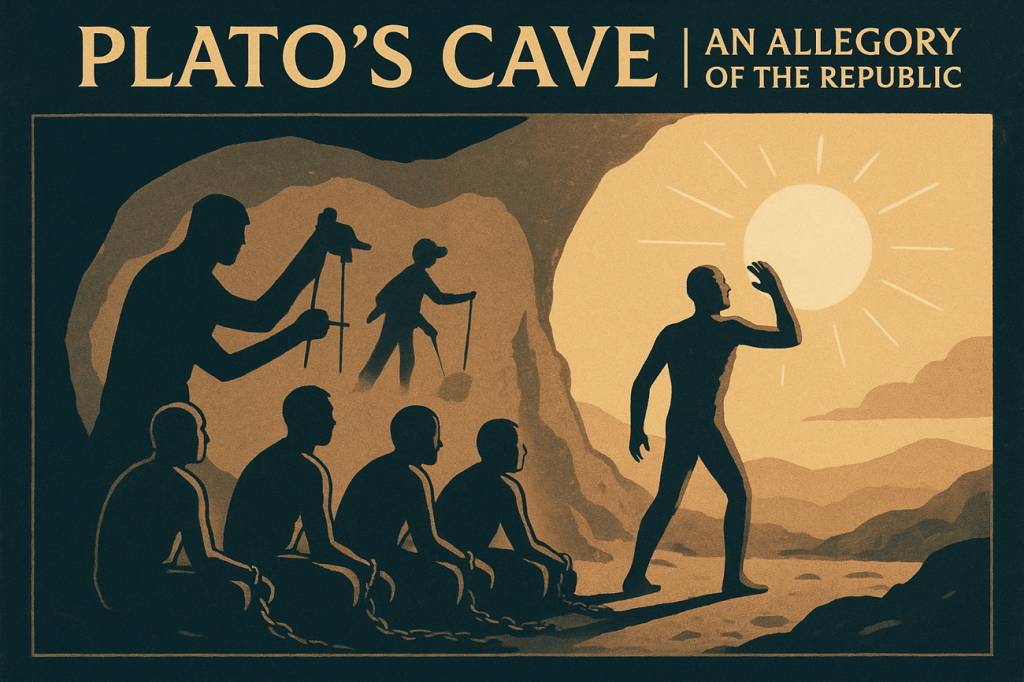
    In the story, these prisoners are chained inside a cave, they’re facing a wall where they watched these shadows dancing and moving.

    These shadows were cast by puppeteers, covertly hiding behind them.

    They were manipulating objects to create a shadow that gave the illusion of a fire’s flame.

    The prisoners named the shadows, studied them, and even built hierarchies around who interpreted the shadows most accuratel.

    To them, this was reality, and they took it very seriously.
    We’re not so different.

    Most people live confined within their own perceptual cave.

    We’re inevitably going to be shaped by our emotional connection to our belief systems, cultural roots, educational indoctrination, and familial conditioning.

    Too often we’re caught mistaking projection for truth.

    Yes, we’ve been conditioned, but this isn’t the problem per se. We can see past all the programs if we have a fully functioning brain.

    The resistance to confronting the possibility of a constructed reality is understandable.

    The idea that memories, identity, and perceptions might not be as solid as they seem can feel like an existential threat.

    Letting go of deeply held beliefs, even if they are illusions, requires confronting discomfort, uncertainty, and the fear of losing oneself.

    It’s easier to cling to familiarity, even if it’s flawed, than to face the unknown. But growth often begins where certainty ends.

    Freedom is admitting that you have been deluded and under an illusory story of your own making. Then you’ll break free.

    CONSIDER THE PUPPETEERS

    The puppeteers are those who shape the narratives we consume.

    They are the gatekeepers of knowledge and power:

    the donors, financiers, and elites who we likely will never know the true name of.

    By controlling the information and communication, they can and do shape what a society perceives as “real.

    Propaganda, entertainment, and social pressure all became tools of control through illusions.

    The Awakening

    Then comes the moment of liberation. One prisoner is freed.

    At first, he’s blinded by the fire’s light.

    His eyes, accustomed to shadows, can’t handle the truth so suddenly.

    But as they adjust, he begins to see clearly: the shadows were never real.

    They were only echoes of something greater.

    He’s led outside the cave into the sunlight, another painful adjustment.

    Yet when vision returns, he beholds the true world in all its beauty and realizes that the cave was only a prison of perception.

    Why Can’t They Turn Their Heads?

    CHAINS OF IGNORANCE

    Because they are chained. Not just physically, but mentally.

    The chains represent ignorance, the invisible grip of conformity and belief.

    Most never question the nature of their own bondage.

    To break these chains requires courage. It requires unlearning.

    It requires the willingness to endure the pain of seeing clearly for the first time.

    The Philosopher’s Task

    For Plato, this story points to his Theory of Forms.

    Theory of Forms is the idea that the physical world is but a shadow of a higher, more perfect reality.

    The philosopher’s role is to turn toward that higher truth, to step into the light and understand what truly is true.

    EXPECT STRUGGLE

    But enlightenment is not a comfortable process.

    When the freed prisoner returns to the cave to tell the others what he has seen, they mock him.

    They reject him. To them, his truth sounds like madness, because it threatens the foundation of their world.

    QUESTION YOUR OWN BELIEFS

    The Allegory of the Cave calls us to question our own shadows, to notice what we’ve been taught to believe and think: who benefits from those beliefs?

    It asks us to endure the blinding light of truth, no matter how uncomfortable, and to choose freedom over comfort.

    To break the chains of ignorance is to step into the light, not to escape the world, but to finally see it.
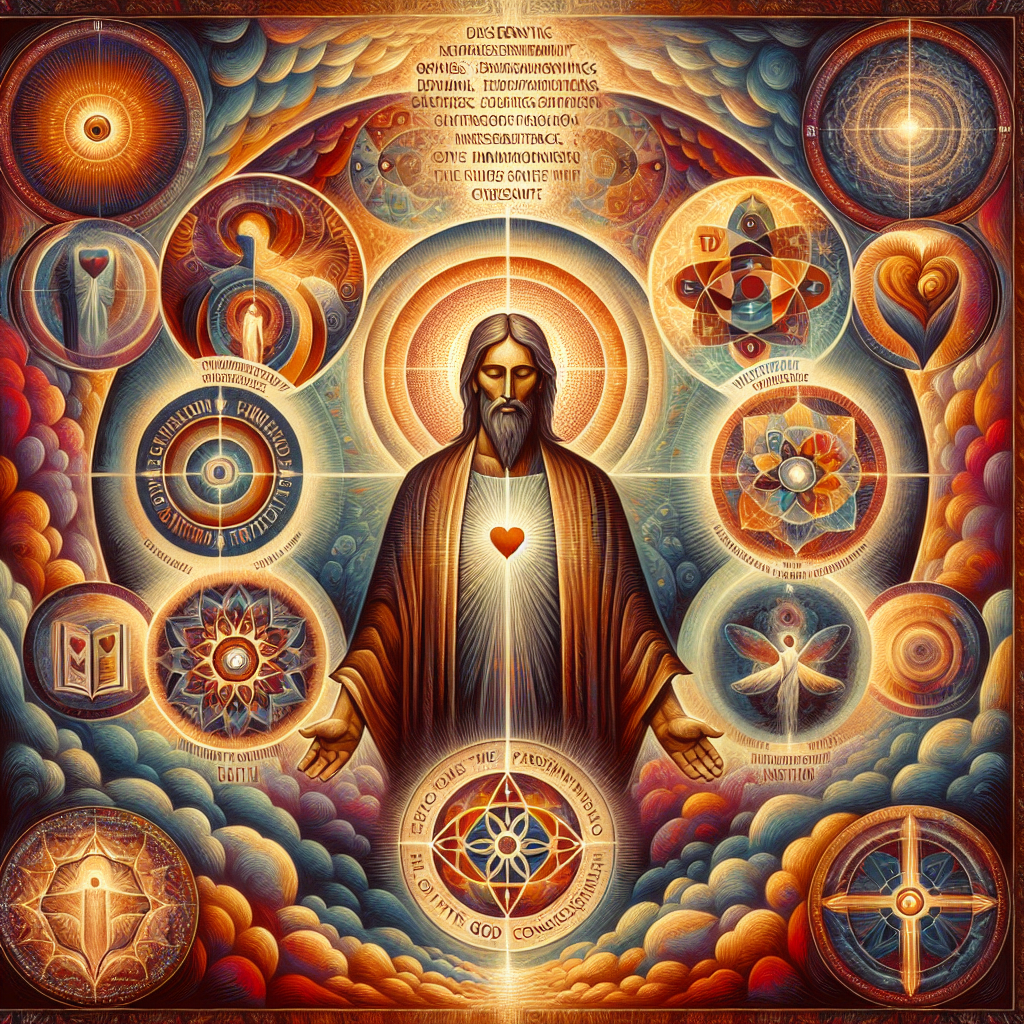

  • Recognize Jesus

    Recognize Jesus

    Through history, Jesus’ teachings have been twisted.

    His message has been distorted by worldly authorities, repackaged and sold to the masses in 66 Books, not only branded as Divine, but also proclaimed to be the only divinely inspired text in the world that we could trust.

    False doctrine dressed as truth.

    The true simplicity of His words and depth of His message has been concealed beneath centuries of misinterpretations, some on accident due to error… others with malicious intent.

    HOW JESUS TAUGHT

    Jesus spoke from a place of gnosis.

    GOSPEL OF THOMAS

    Gospel of Thomas (Lambdin Translation) — The Nag Hammadi Library – Gnosis

    The Gospel of Thomas in multiple translations, along with a vast collection of material about the Thomas tradition. This site includes the entire Hammadi Library, as well as a large collection of other primary Gnostic scriptures and documents.


    What is Gnosis?
    Gnosis is knowledge that transcends what society was able to grasp.

    Canonized doctrine has obscured this inner wisdom.

    The true path, He revealed, was not in compliance with man’s laws or constructed hierarchies.

    Gnosis is awakening.

    Awakening to the divine potential already living within, it is intimate exploration, not institutional obedience.

    Know Christ. Be Known by Him.

    Pride.

    Self-righteousness.

    The need to assert control.

    These are the antithesis of Jesus’ way.

    He would have overturned the tables of those clinging to materialistic delusion, worshipping the god of society instead of the truth.

    He taught through stories, parables designed to open hearts, spark insight, and reveal reality to those ready to see.

    The False Jesus of the Mainstream

    Over time, His teachings have been distorted.

    I do not see this as an accident.

    Deception is a natural habit of the human heart.

    Many will come in His name and mislead others, as He warned in Matthew 24:5.

    Lies will be spun. Truth will be hidden. The path to understanding will be obscured. & it has.

    His guidance is simple: stay vigilant. Seek truth. Seek God. Do not lean on man. Lean on the Spirit. Open your heart.

    Discernment is the key. Through connection with the Holy Spirit, the true meaning of His teachings will be revealed.

    In God’s eyes, all souls are equal. Hierarchy, power, wealth—they hold no weight in the light of Heaven.

    We are spiritual beings inhabiting human bodies. Our essence is love.

    Our value is inherent. In His presence, there is no superiority, only unity and grace.

    Open the Bible. See for yourself.

    Jesus’ message aligns with the deeper structures of the human psyche—the archetypes that Carl Jung described.

    LEARN MORE

    The Four Psychological Functions and the Gospel Drama

    Jung had much to say about the gospel drama. His reading was largely literary and symbolic, avoiding what he considered misguided attempts by scholars of his day to extract the human figure of Jesus from what they presumed to be fictional accounts


    Jesus’ purpose was not to educate superficially but to illuminate within our minds and hearts the principles of love, compassion, and divine order.

    He took on the burden of our failures, showing us that we could not ascend alone in our ego.

    He bore the weight of what we could not bear, saying, in essence, “You are weak, but I am here. I carry this for you.”

    He demonstrated what it means to embody the divine because He is the Divine.

    He did not expect us to imitate Him blindly.

    Through understanding Him, we find salvation—not through effort, but through alignment with His mind and heart.

    To truly grasp His teachings, our hearts and minds must be open.

    Wisdom resides within us, waiting.

    When we integrate the external world with our inner essence, when we allow the Spirit to guide us, Jesus’ teachings become alive.

    The divine does not reside in walls, pulpits, or rituals—it resides within. Limiting Christianity to buildings, to man-made constructs, stifles spiritual evolution.

    The shadows of false guidance hide behind piety.

    But if you engage scripture, cultivate the Divine within, and surrender to the Spirit, there are no barriers.

    God’s presence lives in every faithful heart, guiding, illuminating, and giving purpose.

    Know this presence within yourself and others. Your mind will sharpen. Your intuition will deepen. Wisdom will anchor you.

    Chaos dissolves when you align with Him. True freedom is forgetting yourself and finding yourself lost in Him.

    Get lost in Him.

  • The Soul

    The Soul

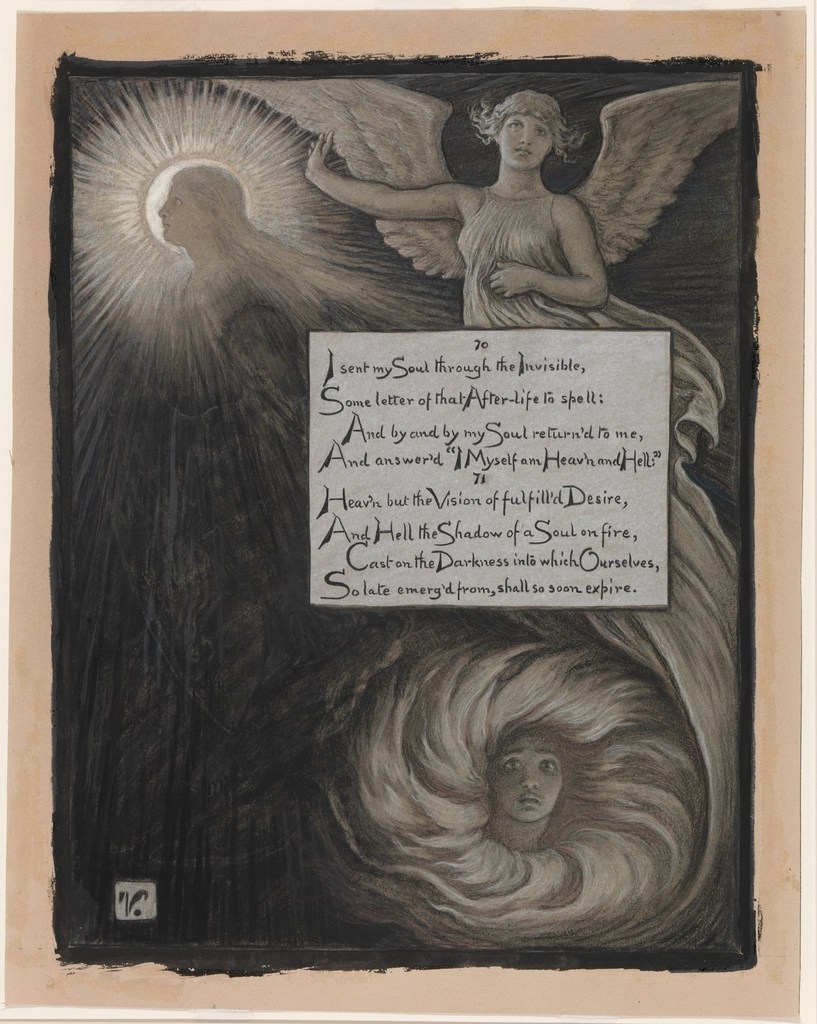
    The Soul is the immaterial, spiritual essence of a human being.

    It is the part of us that exists beyond flesh and blood—the spark fashioned by God before creation, known and willed into being with purpose.

    (Illustration Rubáiyát Omar Khayyám) Soul’s“/ CC0 1.0

    Etymology

    “Soul” comes from the Old English sawol and the Germanic saiwalo, signifying life itself—the principle that separates the living from the inanimate.

    The Soul as Our Inner Nature

    The soul is the core of human spiritual nature, capable of longing, thirsting, and reaching for truths that transcend the visible world.

    It hungers for God, for understanding, for the “solid food” of deeper wisdom embedded in scripture.

    Soul Hunger and Awakening

    When God opens the eyes of the spirit, the soul awakens. It senses a void that can only be filled by divine truth.

    This hunger is not fleeting desire—it is a gnosis-driven recognition of what the soul was made to receive.

    Growth Through Discernment

    As the soul engages with God’s word, it matures. Discernment sharpens. Understanding deepens.

    The soul is not static—it evolves as it drinks from the well of spiritual nourishment, separating truth from illusion.

    Transformation in the Human Being

    The soul is the locus of change. Surrendering to God’s word, allowing His living message to permeate the inner being, renews and transforms the soul.

    This is the ongoing work of sanctification: a refining fire that shapes the heart and mind, aligning them with divine purpose.

    The soul is more than life—it is the canvas upon which God paints His eternal image.

    To nourish it is to participate in the work of transformation that echoes in eternity.

  • The Unseen is Eternal | Journey into the Spiritual Realm

    The Unseen is Eternal | Journey into the Spiritual Realm

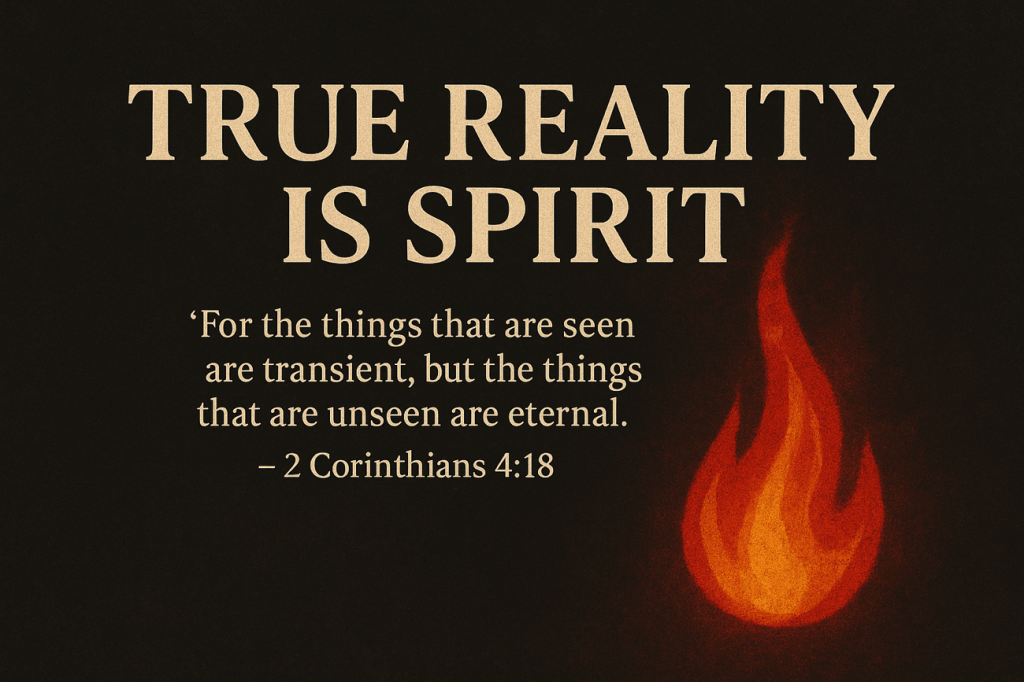
    Truth revealed through fire: The spiritual realm is the true substance; the physical realm is but a fleeting shadow.

    “For the things that are seen are transient, but the things that are unseen are eternal.”

    – 2 Corinthians 4:18

    What is seen is temporary. What is unseen—eternal.

    “Do not lay up for yourselves treasures on earth, where moth and rust destroy and where thieves break in and steal, but lay up for yourselves treasures in heaven, where neither moth nor rust destroys and where thieves do not break in and steal.”
    – Matthew 6:19-20

    The Old Testament, with all its laws, rituals, and symbols, was never the final word. It was a shadow, a foreshadowing.

    As Hebrews 10:1 declares,

    “The law is only a shadow of the good things to come—not the realities themselves.”

    These old systems—they’re rooted in flesh, bound by material signs—were copies, symbols, types.

    But the fullness? That belongs to Christ. The fullness of what???

    Colossians 2:17 says it without apology:

    “These are a shadow of the things to come, but the substance belongs to Christ.”

    Before faith came, we were imprisoned under the law—confined by flesh, chained to the visible.

    But now? The veil is torn.

    The light has come, and light exposes shadow for what it is: impermanent.

    As it is written in 2 Corinthians 3:6:

    “The letter kills, but the Spirit gives life.”

    We are not ministers of a fading covenant carved in stone, but of the living Spirit that resurrects the soul.

    Jesus is the Light of the World— not a symbol of light, but the Light itself.

    He reveals the spiritual reality behind the physical symbols.

    He exposes the temporary nature of the material and brings us into contact with what is eternal.

    Even the sacrifices—bloody and endless—were never the end goal.

    Hebrews 9:23 makes the distinction clear:

    “The copies of the heavenly things were purified with earthly sacrifices, but the heavenly things themselves require better sacrifices.”

    And that better sacrifice is Christ Himself—who did not enter a manmade sanctuary, but Heaven itself.

    This is the arc of the Gospel from creation to revelation, from shadow to light.

    “Again Jesus spoke to them, saying, ‘I am the light of the world. Whoever follows me will not walk in darkness, but will have the light of life.’”

    John 8:12

    From death to life.

    The physical was the womb. But birth comes through Spirit. This is what it means to be born twice.

    Truly, truly, I say to you, unless one is born of water (womb) and the Spirit, he cannot enter the kingdom of God.
    That which is born of the flesh is flesh, and that which is born of the Spirit is spirit.

    John 3:4-7

    What once served as a veil is now obsolete, abandoned, transcended.

    “No one puts a piece of unshrunk cloth on an old garment, for the patch tears away from the garment, and a worse tear is made. Neither is new wine put into old wineskins. If it is, the skins burst; and the wine is spilled, and the skins are destroyed. But new wine is put into fresh wineskins, and so both are preserved.”

    Matthew 9:16-17

    Christ has brought us from death into life—not metaphorically, but metaphysically.

    “Jesus said to her, ‘I am the resurrection and the life. Whoever believes in me, though he die, yet shall he live, and everyone who lives and believes in me shall never die. Do you believe this?’”

    John 11:25-26

    So I say let’s live no longer according to the flesh, but by the Spirit.

    Let us not cling to the image of humanness when we have access to the essence.

    Let us no longer fear the law and live by it, for we have entered into grace to live in.

    “For the law was given through Moses; grace and truth came through Jesus Christ.”

    John 1:17

    The goodness of God is not proven by material blessing, but by His initiation into the eternal.

    The physical is the symbol. The spiritual is the substance.

    “It is the Spirit who gives life; the flesh is no help at all. The words that I have spoken to you are spirit and life.”
    – John 6:63

    And through Christ, we are called to live in the Real not as contrived.

    “But the hour is coming, and is now here, when the true worshipers will worship the Father in spirit and truth, for the Father is seeking such people to worship him.”

    – John 4:23
  • Jesus

    Jesus

    Do You Think You Know Jesus?

    They Said Jesus Was
    Insane. Mad. Crazy. Strange.

    The image of Jesus most people hold is wrong and wrung through centuries of:

    • ideological whitewashing
    • beautified marketing
    • sanitized Sunday School summaries.

    He’s often pictured as an ethereal peace-giver, universally adored, calmly glowing in a ‘soft sepia light’.

    But this wasn’t the Jesus known to his followers. Not even close.

    In fact, many who encountered Jesus in the flesh found him either;

    1. confusing, at best
    2. mentally unstable, at worst.

    He wasn’t simply controversial, he was considered a threat to both religious orthodoxy and social order.

    The sanitized version of Christ so many cling to was shaped after the cross, after the church industrial complex took control of his narrative.

    Let’s take a scalpel to the original reactions—the raw, unsettling perceptions of Jesus while he was still walking the earth.

    His Family Thought He’d Lost His Mind

    The Gospel of Mark pulls no punches. In Mark 3:21, we’re told that Jesus’ own family said:

    “He is out of his mind.”


    Yes, his own bloodline. Not strangers. Not critics. His family. Pause there…

    Imagine. Imagine the weight of that.

    You’ve awoken to a Divine Knowing, a consciousness that cracks open reality—and the people who know your voice best say:

    “You’ve snapped.”


    It wasn’t mockery from outsiders that came first; it was internal doubt.

    His kin likely feared he’d gone mad with something akin to messianic delusion.

    Or perhaps they were embarrassed by his sudden rise as a controversial street-preacher confronting the Government and Church…

    He spoke vehemently against both Rome and the temple elite.

    Religious Leaders:

    “You’re Breaking the Law and Blaspheming

    The religious class didn’t just dislike Jesus—they actively plotted his removal.

    The scribes and Pharisees viewed him as a heretic, accusing him of;

    • violating the Sabbath
    • flouting Mosaic Law
    • daring to forgive sins.

    —a divine prerogative.


    His miracles weren’t applauded; they were denounced as works of Beelzebub.

    Let that settle: divine acts being interpreted as demonic.

    … this was normal folk… the acceptable people… The community.

    This wasn’t petty disagreement.
    This was existential threat-level panic from the religious hierarchy.

    They saw in Jesus… not just a radical voice—but someone who dismantled their very grip on sacred authority.

    Public Whispers: “He Has a Demon and Is Mad

    John 10:20 captures this damning public sentiment:

    “He has a demon and is mad; why listen to him?”

    These weren’t elite theologians.

    These were everyday observers—

    • neighbors
    • townsfolk
    • bystanders.

    Jesus’ words, while layered with profound gnosis (wisdom), sounded unhinged to the average ear.

    And truthfully, wouldn’t they today? I mean… They do.

    Imagine someone saying,

    Before Abraham was, I am.

    Or calling God their literal Father, claiming to bring not peace but a sword.

    If spoken in today’s marketplace, they’d be dismissed as spiritually schizophrenic, or worse.

    So what’s changed?
    Only the power structure that codified his words.

    Outside the Bible: Even More Scathing Views

    This doubt wasn’t exclusive to Jewish contemporaries.

    Roman voices and philosophers took their shots, too.

    Talmud

    The Talmud contains cryptic but deeply derogatory references to Jesus—branding him a sorcerer who led Israel astray.

    He is also said in the Talmud to be swimming in hot excrements.

    These weren’t passive critiques.

    They were sharp rejections by those who saw his influence as spiritually treacherous.

    Roman Philosophers

    Roman historian Tacitus referred to Christianity as a “pernicious superstition,” blaming the followers of Christ for corrupting public morals.

    To Roman minds, Christ’s followers were:

    irrational fanatics clinging to a crucified troublemaker.

    Celsus

    And then there’s Celsus, the ancient philosopher and intellectual, who reportedly called Jesus

    small, ugly, and undistinguished,”

    claiming his father was a Roman soldier—a jab meant to invalidate his divine paternity and tarnish the virgin birth narrative.

    Jesus wasn’t revered by the intellectual elite of his time.

    He was;

    • mocked
    • dismissed
    • vilified.

    Why This Matters

    This isn’t about shock value or anti-Christian rhetoric. It’s about truth-telling.

    When we sanitize the narrative of Jesus to make him palatable. We also:

    • rob Him of the radical edge that threatened anti Christ power
    • offended institutions
    • deny the painful fact that he alienated his own family.

    His teachings were revolutionary because they disrupted—not because they fit neatly within pre-existing paradigms.

    So when you feel like your awakening makes others uncomfortable when your truth sounds like madness to the masses take comfort. You’re in excellent company.

    Because the real Jesus wasn’t crucified for being nice. He was crucified because he challenged the lies. And many thought he was insane for doing so. Truth rarely sounds sane to those who live comfortably in delusion.

    “And you will be hated by all for my name’s sake. But the one who endures to the end will be saved.”

    – Matthew 10:22
  • Embracing the Light Amidst Turmoil

    Embracing the Light Amidst Turmoil

    As a sensitive person, blessed with the Gift of Discernment, I can sense the deep anguish and suffering that permeates the human heart at an inconceivable level in this very moment.

    The presence of spirits such as betrayal, deception, envy, hate, and resentment, along with the feelings of fear, anxiety, terror, abuse, torture, and murder, seems to be entering the Collective Consciousness of Humanity.

    This manifestation of evil is as ancient as Time itself, hiding in the shadows until now.

    The light has arrived with an abrupt explosion of exposure, unveiling information that unravels millennia’s worth of wicked depravity in the blink of an eye.

    In response to this revelation, the systems of influence and rulership over our old world are devising various tactics and implementing snares to cultivate a state of uproar, emotionalism, paranoia, and self-righteousness among us. They seek to create a sense of coldness and distance between individuals, leading us further away from one another, ourselves, and the Creator. However, we possess powerful weapons against these manipulations – Love, Truth, Discernment, Calmness, Patience, Diligence, Grace, Wisdom, Righteousness, and Boldness.

    Amidst the chaos, they aim to ignite our hearts with hatred and vengeance.

    In the face of this darkness, it’s crucial to seek the light. As stated in John 8:12:

    ‘I am the light of the world. Whoever follows me will not walk in darkness, but will have the light of life.’

    The Light is no longer a distant concept; it is here, illuminating the path towards Truth.

    To those who abide in the Light, I implore you to remain vigilant and on guard. The ongoing wave of exposure, wherein masses are being confronted with an influx of information, requires careful navigation. Take heed and avoid falling into one of the many traps that have been strategically laid out before you during this fragile period.

    As you continue on this path, remember:

    ‘Give careful thought to the paths for your feet and be steadfast in all your ways. Do not turn to the right or the left; keep your foot from evil.’

    Proverbs 4:26-27

    Now, there is a collective awareness sweeping through humanity’s consciousness. This is a calling for Spiritual Awakening and the recognition of unadulterated Truth.

    ‘Wake up, sleeper, rise from the dead, and Christ will shine on you.’

    Ephesians 5:14

    It is an awakening, a call to embrace the truth and recognize the urgency for change. Let us unite and cultivate a concept of compassion, respect, and understanding that extends beyond our immediate paradigm.

    This is a time for growth and transformation, both individually and collectively. Romans 12:2 urges us to not conform to the pattern of this world but to be transformed by the renewing of our mind.

    In a world where love grows cold and hearts begin to harden, it is crucial to seek the light amidst the darkness.

    May we find solace in the knowledge that despite the turmoil, the Light remains steadfast.

    As we navigate this tumultuous era, let us guide ourselves with unwavering love, elevated truth, and a faith that transcends the chaos. Together, we have the power to shape a brighter future, anchored in unity and guided by the eternal presence of “I AM THE I AM.”

    RELATED QUOTES:

    Light and truth are basically synonymous. The Hebrews had a way of “doubling-up” or “doubling-over” a word, a term, a phrase, so that one would emphasize the other, despite both meaning essentially the same thing. This method hits a concept from two slightly different angles so that it becomes more emphatic. Light and truth are the similar ideas, the word “truth” channeling the author’s illustration of light and what it signifies. Light illustrates, emphasizes, and expands the abstract idea of truth.

    John W. Ritenbaugh

    RESOURCES:

    What does it mean that the light shines in the darkness (John 1:5)? GotQuestions

     No power of darkness can defeat or snuff out this light (Matthew 16:18; John 16:33). Jesus is the giver of life and bearer of lightThe Son of God continues to shine His light to humankind through His church, the body of Christ (Philippians 2:15). Whoever believes in Him receives eternal life (John 3:15; see also Psalm 112:4). 

    How Can We “Let Our Light Shine”? BibleStudyTools.com

    The Lord Jesus Christ is Our Light in this Dark and Evil World

    THOUGHTS:

    In the Bible, light is often used as a metaphor for truth, goodness, and the presence of God. The arrival of this light brings clarity, understanding, and a deeper connection to the truth that was previously obscured.

    By being a source of inspiration and unwavering support, you bring light to others. Your actions guide and uplift people in difficult times, reminding them that goodness and hope still exist. Being a bearer of light means having inner strength, resilience, and upholding values like love, kindness, and empathy. It involves spreading positivity through words, actions, and interactions. In times of darkness, being a bearer of light brings hope, healing, and unity. You become a positive influence, offering guidance and support to those facing struggles.