Tag: God’s sovereignty

  • Divine Sovereignty

    Divine Sovereignty

    God’s Order in All Things

    Divine discernment: The ability to understand and perceive God’s will.

    God’s sovereignty: God’s complete authority and control over everything.

    Spiritual: Pertaining to the non-physical and transcendent aspects of existence.

    Time and space: Dimensions in which events occur and are measured

    Providence: God’s guidance and care over all creation.

    Wisdom: The ability to make sound judgments based on knowledge and understanding.

    Solace: Comfort or consolation in times of distress or sorrow.

    Finding Divine Discernment & Solace in His Guidance

    In the realm of divine discernment, we delve into the profound understanding of God’s sovereignty and the intricate balance between the physical and the spiritual.

    We explore the notion that God’s complete sovereignty extends to every aspect of His creation, from the tiniest details to the grandest cosmic events.

    This sovereignty not only encompasses the orderly progression of events but also the purposeful disruption of order to fulfill His ultimate plan.

    It is essential to recognize that God’s sovereignty transcends the boundaries of time and space.

    He has already ordained and purposed every action that takes place, as revealed through His prophetic word.

    By acknowledging His complete control, we align ourselves with the divine order established by God.

    Contrary to the notion that the physical world operates independently of the spiritual realm, we understand that all temporal and material aspects of existence are subject to God’s divine power.

    Nothing exists outside of His providential oversight. To deny this truth is to deny the very purpose of God’s account.

    God, as the epitome of order, orchestrates the intricate chain of events necessary to accomplish His divine plan.

    Even in the midst of apparent disorder, we can discern His guiding hand.

    He uses disruptions and challenges to bring everything into subjugation to Himself.

    In His wisdom, God employs disorder as a means to ultimately overcome death itself.

    burning candles at praying place in church

    Let us embrace the profound truth that God’s sovereignty extends to every facet of our lives.

    He holds the reins of creation, bringing order out of chaos and fulfilling His divine purpose.

    By recognizing His sovereignty, we align ourselves with His plan and find solace in the knowledge that every aspect of our existence is governed by His loving hand.

    Scripture

    1. Proverbs 3:5-6 – “Trust in the LORD with all your heart, and do not lean on your own understanding. In all your ways acknowledge him, and he will make straight your paths.”
    2. Romans 8:28 – “And we know that for those who love God all things work together for good, for those who are called according to his purpose.”
    3. Psalm 139:16 – “Your eyes saw my unformed substance; in your book were written, every one of them, the days that were formed for me, when as yet there was none of them.”
    4. Isaiah 46:9-10 – “Remember the former things of old; for I am God, and there is no other; I am God, and there is none like me, declaring the end from the beginning and from ancient times things not yet done, saying, ‘My counsel shall stand, and I will accomplish all my purpose.’”
    5. Proverbs 2:6 – “For the LORD gives wisdom; from his mouth come knowledge and understanding.”
    6. Psalm 34:17-18 – “When the righteous cry for help, the LORD hears and delivers them out of all their troubles. The LORD is near to the brokenhearted and saves the crushed in spirit.”
  • Aquinas vs Augustine: Exploring Their Perspectives on Theology and Free Will

    Aquinas vs Augustine: Exploring Their Perspectives on Theology and Free Will

    Theologians Thomas Aquinas and Augustine of Hippo stand as titans in the history of Christian thought, offering profound insights on various theological topics. Their perspectives on theology and free will have captivated scholars and sparked ongoing debates. In this article, we will delve into the divergent viewpoints of Aquinas and Augustine, shedding light on the nuances of their theological frameworks and the significance of their contributions.

    Further Reading:

    https://ideaexchange.uakron.edu/cgi/viewcontent.cgi?article=2387&context=honors_research_projects

    Augustine’s Understanding of Free Will

    Augustine, often referred to as one of the most influential thinkers in Christian history, approached the concept of free will from a distinctive angle. He posited that due to the inherent fallen nature of humanity, human beings are incapable of choosing genuine good without the transformative grace of God.

    Augustine believed that all humans are born with a deep inclination towards evil, known as “original sin,” which stems from the disobedience of Adam and Eve in the Garden of Eden. This fallen nature, according to Augustine, renders human free will deeply wounded and inclined towards evil.

    Contrary to Aquinas, Augustine emphasized the primacy of divine grace in the salvation of humanity.

    He argued that God’s grace is necessary for the regeneration and redemption of individuals, as human efforts alone are insufficient to overcome the pervasive effects of sin. Augustine’s theological framework, often referred to as “divine determinism,” places a greater emphasis on God’s sovereignty and predestination, with human choice being ultimately subject to God’s will.

    Aquinas’s Concept of Free Will

    In contrast to Augustine’s more pessimistic view of free will, Aquinas approached the concept with a more optimistic lens. He proposed that human beings possess the capacity for true freedom and the ability to choose between good and evil.

    Aquinas argued that God created human beings with free will, granting them the ability to make moral choices. He believed that free will is essential for the exercise of virtues and the pursuit of moral excellence. According to Aquinas, human actions are a result of deliberation and choice, allowing individuals to cooperate with the divine plan and live a virtuous life.

    Moreover, Aquinas posited that human free will is compatible with God’s divine foreknowledge. He argued that God’s knowledge of our choices does not diminish our freedom but rather transcends time itself. In Aquinas’s view, God’s omniscience and human free will exist harmoniously within a comprehensive divine plan.

    Theological Implications and Ongoing Debate

    The contrasting views of Aquinas and Augustine on free will have far-reaching implications for theological thought. While Augustine emphasized the fallen nature of humanity and the necessity of divine grace, Aquinas placed greater emphasis on human agency and the compatibility of free will with God’s attributes.

    These differing perspectives continue to inspire lively debates among theologians.

    Some argue for the compatibility of free will and divine sovereignty, building upon Aquinas’s framework. Others align more closely with Augustine’s emphasis on divine determinism and the essentiality of God’s grace for salvation.

    The ongoing dialogue between proponents of both viewpoints enriches our understanding of the complexities of human choice, divine grace, and the interplay between them. It invites us to explore the profound mysteries of faith from different angles and appreciate the multiplicity of theological perspectives.

    Thomas Aquinas and Augustine of Hippo have left an indelible mark on the theological landscape through their distinct perspectives on free will and theology.

    While Augustine emphasized the fallen nature of humanity and the necessity of divine grace, Aquinas advocated for the existence of true human freedom and its compatibility with God’s attributes.

    Their divergent viewpoints continue to inspire theological exploration and spark intellectual debates. The ongoing dialogue surrounding their perspectives enriches our understanding of the complexities of human choice, divine grace, and the intricacies of theological thought. By delving into the depths of their ideas, we gain profound insights into the nature of faith and the profound mysteries that lie at the heart of Christian theology.

    Resources:

    Saint Augustine – Stanford Encyclopedia of Philosophy

    Augustine and the Pelagian Controversy

    Handout: Augustine on the Will, Sin and Grace

    Martin Luther’s Trinitarian Hermeneutic of Freedom

  • Understanding God’s Sovereignty: The Potter and the Clay

    Understanding God’s Sovereignty: The Potter and the Clay

    In light of our belief as inheritors of the Promise bestowed upon us by the Messiah, we humbly acknowledge the unquestionable certainty of our Salvation, which originates solely from the boundless grace of God. It is important to emphasize that this divine favor extends beyond any human volition, including the choices we make for ourselves.

    And if children, then heirs (namely, heirs of God and also fellow heirs with Christ)—if indeed we suffer with him so we may also be glorified with him.

    Romans 8:17

    Introduction

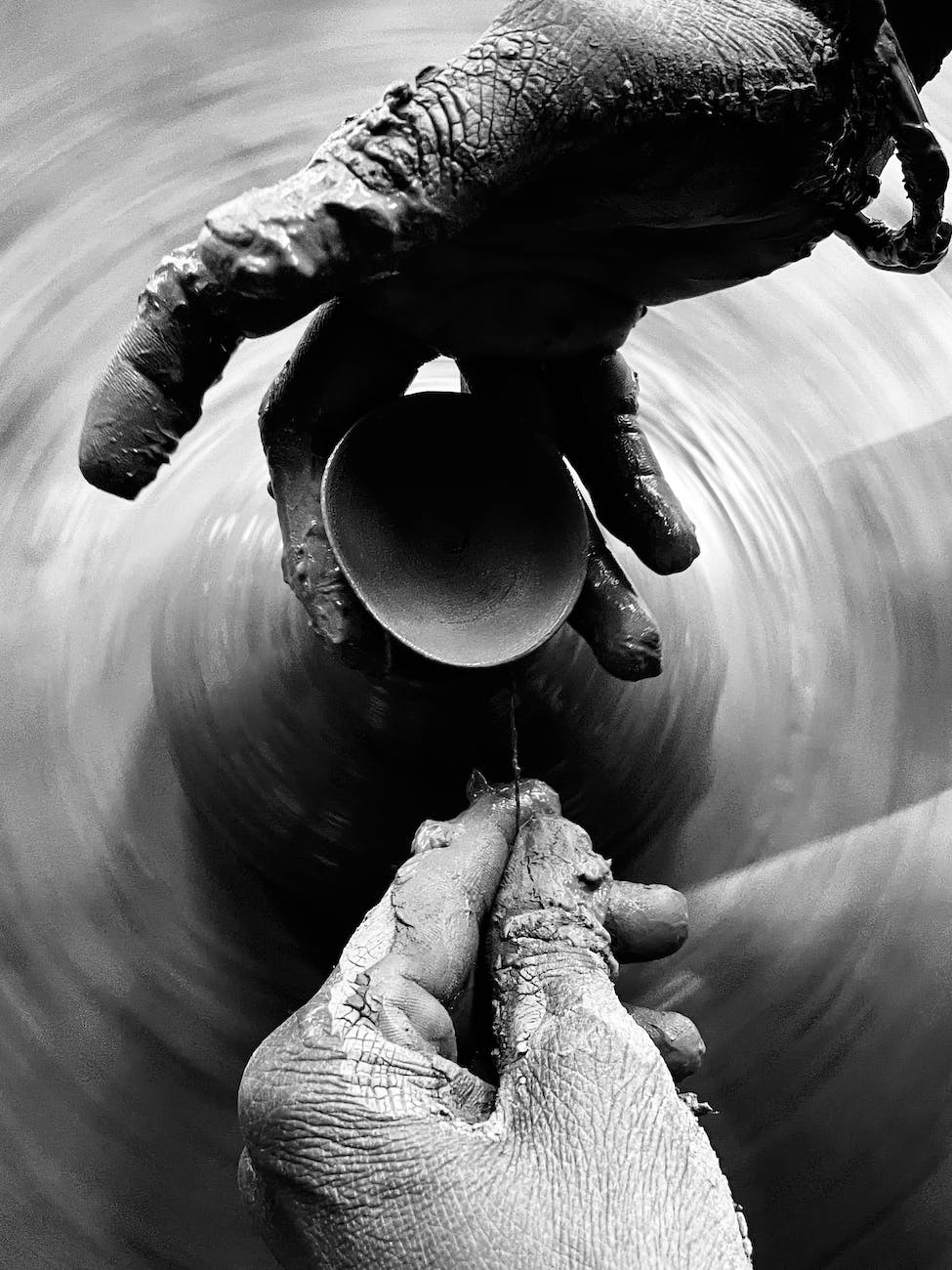
    crop potter with clay in hands

    In this article, we will delve into the profound concept of God’s sovereignty, symbolized by the relationship between a Potter and the Clay. We will explore the implications of this analogy and unravel the key principles that shape our understanding of God’s role in our lives.

    Embracing Our Sinful Nature

    man s hand in shallow focus and grayscale photography
    Photo by lalesh aldarwish on Pexels.com

    As the clay in the Potter’s hands, we must acknowledge our inherent sinful nature. Our thoughts, actions, and very being fall short of divine perfection. It is through this acknowledgment that we realize our desperate need for a Savior to bridge the gap between our flawed selves and a holy God.

    “for all have sinned and fall short of the glory of God” (Romans 3:23)

    The Potter’s Divine Plan

    a person engaged in pottery
    Photo by Gaurav Budhiraja on Pexels.com

    God, as the Potter, shapes us according to His perfect plan. Our existence and reality are a reflection of His thoughts and creativity. This understanding humbles us and highlights the supremacy of the spiritual realm over the material world.

    “But now, O Lord, you are our Father; we are the clay, and you are our potter; we are all the work of your hand.” (Isaiah 64:8)

    Recognizing God’s Sovereignty

    gold round coins
    Photo by Alesia Kozik on Pexels.com

    Our value and worth are entirely dependent on God, the Potter. Any attempt to claim glory for ourselves only serves to distort the truth. We must recognize that salvation and grace come solely from Him, regardless of our own efforts or merits.

    “But who are you, O man, to answer back to God? Will what is molded say to its molder, ‘Why have you made me like this?’” (Romans 9:20)

    Unraveling God’s Perfect Will

    God’s will is flawless and complete. It encompasses everything and leaves nothing lacking. His divine plan transcends our limited understanding and is accomplished in His own timing and purpose. We can find solace in the assurance that His will prevails and nothing can hinder its fulfillment.

    “The counsel of the LORD stands forever, the plans of his heart to all generations.” (Psalm 33:11)

    Discerning Through the Holy Spirit

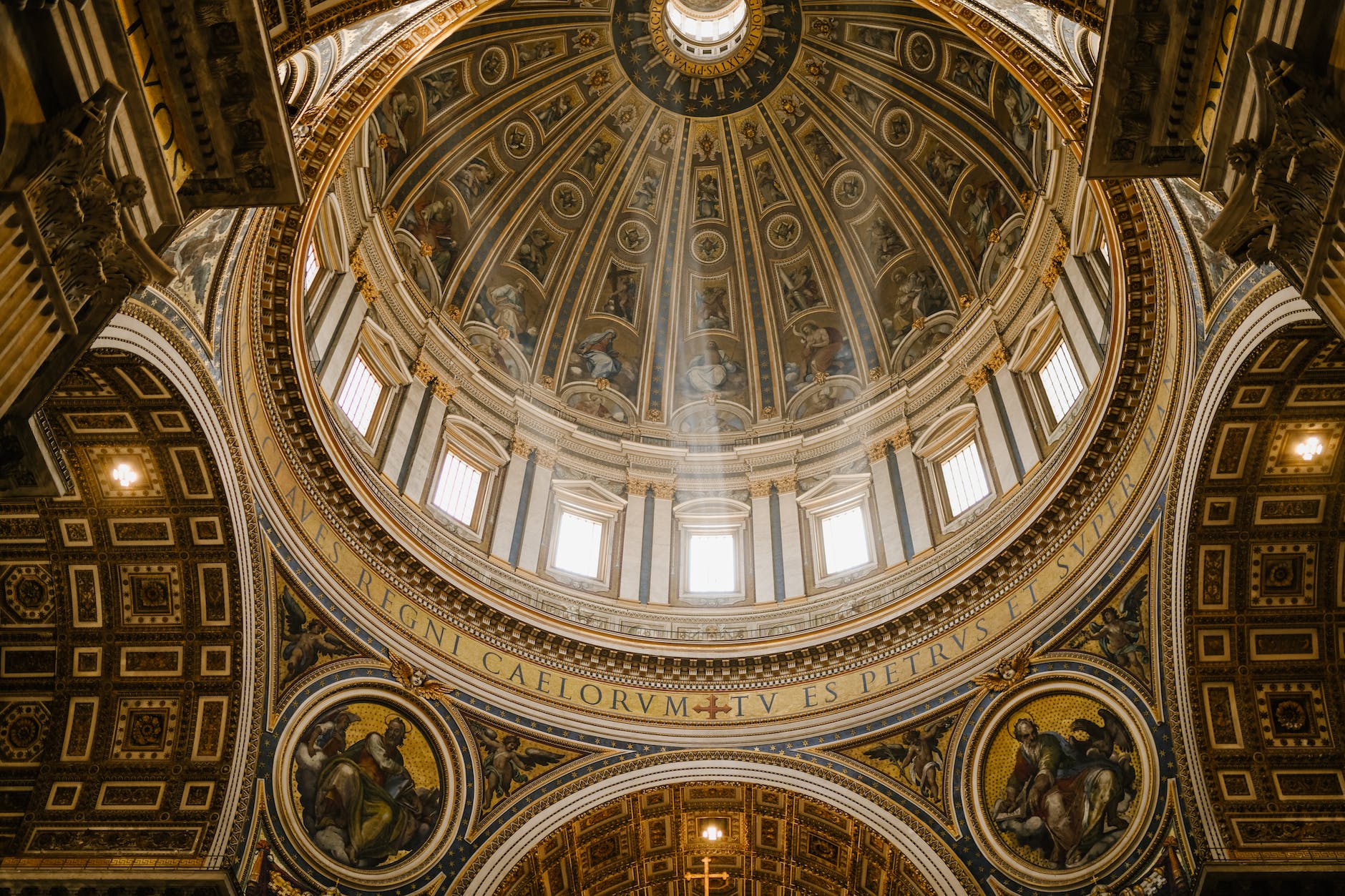
    The Holy Spirit guides and illuminates us, allowing us to discern truth amidst the fog of worldly distractions.

    ornamental dome of grand catholic cathedral
    Photo by Julia Volk on Pexels.com

    We are no longer limited to the surface-level understanding of material existence, but instead, integrated with the spiritual substance that brings clarity and purpose.

    “When the Spirit of truth comes, he will guide you into all the truth, for he will not speak on his own authority, but whatever he hears he will speak, and he will declare to you the things that are to come.” (John 16:13)

    Embracing the Gift of Salvation

    delicate flower in dark room
    Photo by Skylar Kang on Pexels.com

    Through God’s mercy, we are rescued from the consequences of our sinful nature. We are purchased into life by our Creator, utterly undeserving of such grace. Our salvation is solely a result of the power of the Holy Spirit, not our own achievements or worthiness.

    “For by grace you have been saved through faith. And this is not your own doing; it is the gift of God.” (Ephesians 2:8)

    Conclusion

    Understanding God’s sovereignty through the analogy of the Potter and the Clay offers profound insights into the nature of our existence and God’s role in shaping our lives.

    Embracing this perspective allows us to fully recognize and honor His supremacy, finding comfort in His unfailing love and guidance. May we humbly submit ourselves to the Potter’s hand and live out our purpose in alignment with His perfect will.

    suave

    Remember, it is in surrendering to God’s sovereignty that we find true fulfillment and experience the depth of His grace and mercy.