Tag: psychic sensitivity

  • Sensory Processing Sensitivity

    There is a distinct difference between a system that is broken and one that operates at a higher caliber.

    Sensory Processing Sensitivity (SPS) is often misdiagnosed by people blinded by a loud world seeing fragility something to be cured.

    It is not. It is a structural blueprint of deep cognitive absorption.

    To navigate it is to manage a continuous influx of high-frequency data… a reality that requires deliberate strategy rather than pathology.

    Here is the anatomy of the highly sensitive archetype, stripped of standard fluff.

    The Nature of the Trait

    A Blueprint, Not a Pathology

    SPS is a genetically hardwired trait, not a clinical disorder.

    Deep Processing

    Characterized by acute cognitive absorption, heightened emotional resonance, and an immediate, visceral awareness of environmental subtleties.

    The HSP

    Individuals carrying this neural blueprint are classified as Highly Sensitive Persons.

    Origins & Mechanics

    The Genesis

    Formulated in the 1990s by Drs. Elaine and Arthur Aron through the 27-item Highly Sensitive Person Scale (HSPS).

    The Baseline

    Data indicates this trait encompasses 15–30% of the population, surviving evolutionary selection by offering distinct advantages in threat detection and social nuance.

    Neural Signature

    EEG data reveals elevated beta and gamma brainwave activity, documenting a state of continuous, high-fidelity sensory processing.

    The Perceptual Landscape

    Sensory Saturation

    Vulnerability to overstimulation from unchecked environmental inputs—static noise, harsh lighting, chaotic frequencies.

    Emotional Resonance

    High empathy paired with intense internal reactions, often leading to rapid energetic depletion.

    The Solitary Requirement

    Deliberate downtime and isolation are structural necessities to recalibrate the nervous system.

    Internal Realism

    A vast inner landscape defined by creativity, deep introspection, and an acute response to aesthetic harmony.

    The Impact of Friction

    Negative feedback and criticism cut deeper, requiring more time to metabolize.

    Sovereignty & Calibrations

    SPS is not a deficit to be cured, but a system to be managed.

    Mastery relies on deliberate, practical integration:

    Neural Regulation

    Mindfulness, meditation, and therapeutic listening to stabilize overstimulated circuits.

    Somatic Strategy

    Cognitive Behavioral Therapy (CBT) for emotional refraction, alongside Sensory Integration and Occupational Therapy to build tolerance.

    Sensory Diets

    Structured, personalized routines designed to balance environmental inputs.

    Micro-Adjustments

    Utilizing noise-canceling tools, low-impact lighting, and controlled olfactory environments to preserve perceptual autonomy.

    The Reframed Reality

    When stripped of clinical framing, sensitivity ceases to be a liability.

    It is a precise instrument of empathy, insight, and creative depth.

    With structural alignment and the right tools, this high-fidelity processing becomes a distinct operational strength.
  • Empathy

    Empathy

    Feeling Into Another

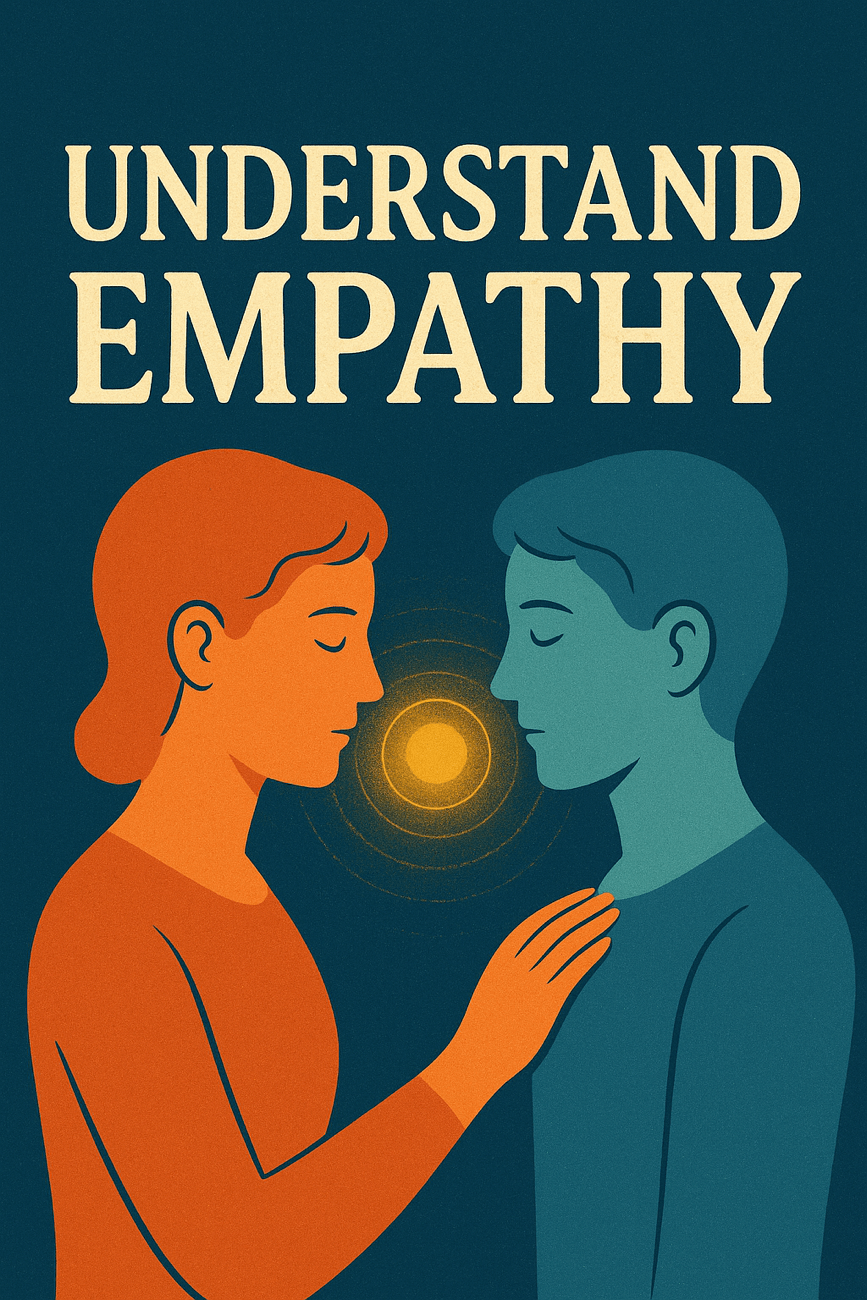
    Empathy is not passive sympathy—it is entry. To empathize is to feel into another’s experience until the boundary between “you” and “them” briefly dissolves.


    Jonathan Edwards once described it as knowing another’s feelings as if they were your own. That’s closer to the truth than most realize.

    Empathy is more than emotion—it’s perception.

    A heightened nervous system, a tuning fork of consciousness that resonates with the unspoken frequencies around it. Science now peers curiously at this mystery, finding evidence of hyper-responsive mirror neurons and unique dopamine patterns, particularly among introspective personalities.

    Yet the laboratory only grazes what mystics and sensitives have long known: empathy is not merely learned; it can be awakened.

    Some are born empaths—open channels of sensation from the first breath.

    Others grow into it, chiseling sensitivity from stillness, meditation, and the discipline of inner quiet.

    With intention, anyone can refine this art:

    • grounding the body
    • visualizing energetic boundaries
    • learning when to open and when to shield.

    Focus enhancers—nootropics, deep breathing, and meditative practice—can sharpen this capacity.

    But the core of empathy remains spiritual, not chemical.

    The word itself comes from the Greek empatheia—to feel into, to be moved by passion.

    Later, the German Einfühlung carried it into psychology through Hermann von Helmholtz in the 19th century. Yet long before language named it, empathy pulsed through the human story as the invisible bridge between souls.

    At its root, empathy is threefold:

    Understanding

    Recognizing and comprehending another’s emotions.

    Sharing

    Feeling a reflection of what they feel within your own body.

    Perspective-Taking

    Stepping fully into their world and seeing through their eyes.

    From these arise the primary faces of empathy:

    Affective (Emotional) Empathy

    When another’s sorrow or joy ripples through you, unbidden. It’s the contagion of feeling that can both unite and overwhelm.

    Cognitive Empathy

    The intellectual capacity to see through another’s frame of mind. It doesn’t feel what they feel—it understands it. This form is vital in discernment, negotiation, and healing professions, where compassion must be guided by clarity rather than collapse.

    Somatic Empathy

    When the body itself becomes a translator of emotion. A stomach tightens in response to another’s anxiety, a chest constricts when they recall grief. The nervous system speaks in sympathetic vibration.

    Spiritual Empathy

    The rarest and deepest: when one soul feels into another beyond words, time, or separation. It’s the awareness that what hurts one part of creation reverberates through the whole.

    Empathy lives at the intersection of heart and brain—an orchestra of mirror neurons, amygdala signals, and energetic resonance.

    Emotional cognition allows us to interpret what we feel, to trace the current back to its source and understand how emotion shapes thought, memory, and decision.

    At its highest form, empathy becomes empathic resonance. It is the recognition that another’s heartbeat is not separate from your own, only playing a different rhythm.

    To cultivate empathy is not to drown in feeling—it’s to master it.

    The empath who grounds their sensitivity becomes an instrument of peace. The one who leaves it untrained becomes a sponge for the world’s pain.

    Empathy is the art of sacred attunement.

    It is both psychic and profoundly human, the oldest language of the soul.

    When harnessed with discernment, it births compassion, connection, and the quiet strength that heals unseen wounds—within and without.

    READ MORE