Tag: christian

  • Chains to Connection

    Chains to Connection

    How Self-Imprisonment Forged Unbreakable Empathy

    The human journey often leads us through valleys of despair before we can ascend to peaks of understanding.

    There was a time when I believed myself to be perpetually bound… a captor, slave, and victim of my own making, forever undeserving of redemption.

    This rigid self-condemnation felt like an inescapable truth, a life sentence I had both imposed and accepted.

    Yet, within the depths of that very desolation, an unexpected grace emerged.

    The Crucible of Deprivation

    A Pathway to Profound Empathy

    Experiencing such profound internal deprivation and desolation wasn’t just painful; it was transformative.

    Without having walked through that particular darkness, I genuinely believe I wouldn’t possess the miraculous sensibilities I do today.

    My past self-imprisonment became the key to unlocking an almost impossible level of relatability.

    I can now connect with those who seem irredeemable, seeing flickers of shared humanity where others might see only despair.

    This profound understanding wasn’t born from external validation or societal acceptance.

    It stemmed from becoming my own adversary, from witnessing the truth only after the deepest shadows had fallen.

    The Warrior’s Path

    Endurance Beyond Conventional Wisdom

    The journey out of that self-imposed prison demanded a level of endurance that defies conventional understanding.

    It required long-term perseverance, turning the other cheek to self-pity, and denying immediate gratification.

    It meant observing my own thoughts and emotions without judgment or attachment, detaching from the noise of a society often plagued by suffering and superficiality.

    Seventy-five days of isolation, removed from the very societal pressures that contribute to our collective ailments in the Western world, proved to be an invaluable catalyst.

    This isn’t the kind of endurance often found within the comforting walls of most churches or synagogues; it’s a solitary, internal forging.

    It demands an acceptance of profound solitude, coupled with the paradoxical realization that you are never truly alone.

    Embracing the Unseen

    The Non-Physical Meaning of Life

    What happens when your core beliefs are challenged, mocked, scoffed at, or simply ignored?

    When fellow humans oppose the very essence of your existence or expression?

    This journey taught me that the meaning of life is not physical.

    If this truth holds—and I now know it does—then what are we truly striving for in our material pursuits?

    This path requires a warrior in spirit, willing to sacrifice all perceived strongholds: friends, family, ego, and even security, all in the name of Truth.

    We are called to battle our internal “demons,” embracing an objective realization that refuses to bend to our subjective feelings.

    It’s about practicing the skill of derealization, conjuring a righteous mind for self-judgment, and relaxing into our ability to construct a powerfully robust split within our own personalities.

    We must accept any answer that proves itself to be without external control, embracing the freedom found in releasing what we cannot dictate.

    Tips

    Practice Mindful Observation

    Dedicate 10-15 minutes daily to observe your thoughts and emotions without judgment. Notice patterns, triggers, and reactions without engaging with them.

    Explore Stoic Philosophy

    Delve into texts by Seneca, Epictetus, and Marcus Aurelius. Their emphasis on inner control, acceptance of what cannot be changed, and the pursuit of virtue resonates deeply with the themes discussed here.

    Journal Your Journey

    Document your insights, challenges, and breakthroughs. Writing can be a powerful tool for self-reflection and recognizing personal growth.

    Seek Solitude (Safely)

    If feasible and safe, consider periods of digital detox or even a short retreat to experience the benefits of reduced external stimulation.

    Engage in Deep Listening

    When interacting with others, practice listening without interruption or formulating your response. Aim to truly understand their perspective, especially when it differs from your own.

    What aspects of self-discovery have profoundly changed your perspective?

    Share your thoughts and continue the conversation in the comments below!
  • Jesus

    Jesus

    Do You Think You Know Jesus?

    They Said Jesus Was
    Insane. Mad. Crazy. Strange.

    The image of Jesus most people hold is wrong and wrung through centuries of:

    • ideological whitewashing
    • beautified marketing
    • sanitized Sunday School summaries.

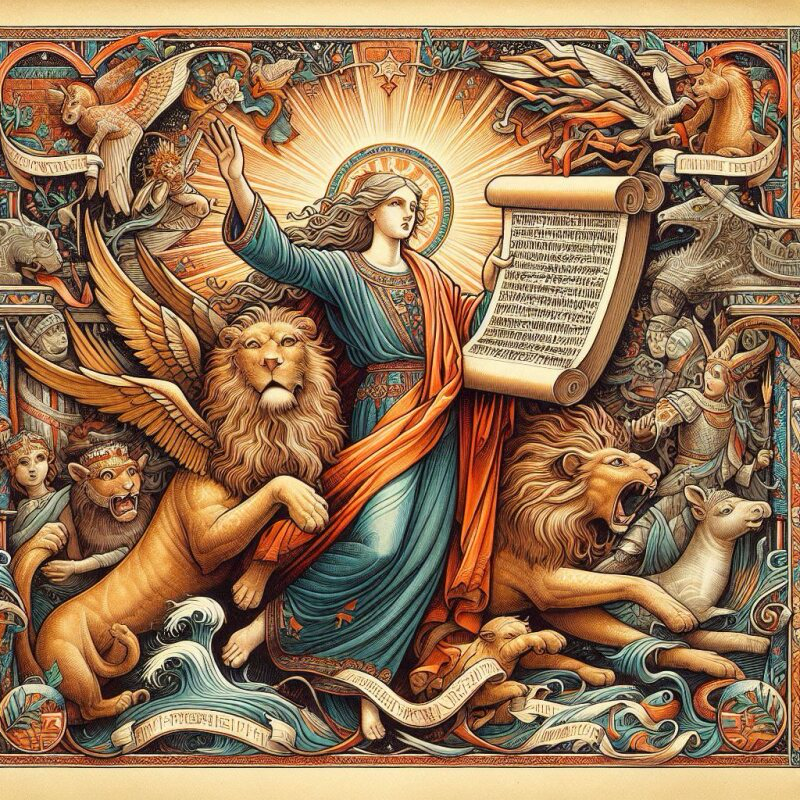
    He’s often pictured as an ethereal peace-giver, universally adored, calmly glowing in a ‘soft sepia light’.

    But this wasn’t the Jesus known to his followers. Not even close.

    In fact, many who encountered Jesus in the flesh found him either;

    1. confusing, at best
    2. mentally unstable, at worst.

    He wasn’t simply controversial, he was considered a threat to both religious orthodoxy and social order.

    The sanitized version of Christ so many cling to was shaped after the cross, after the church industrial complex took control of his narrative.

    Let’s take a scalpel to the original reactions—the raw, unsettling perceptions of Jesus while he was still walking the earth.

    His Family Thought He’d Lost His Mind

    The Gospel of Mark pulls no punches. In Mark 3:21, we’re told that Jesus’ own family said:

    “He is out of his mind.”


    Yes, his own bloodline. Not strangers. Not critics. His family. Pause there…

    Imagine. Imagine the weight of that.

    You’ve awoken to a Divine Knowing, a consciousness that cracks open reality—and the people who know your voice best say:

    “You’ve snapped.”


    It wasn’t mockery from outsiders that came first; it was internal doubt.

    His kin likely feared he’d gone mad with something akin to messianic delusion.

    Or perhaps they were embarrassed by his sudden rise as a controversial street-preacher confronting the Government and Church…

    He spoke vehemently against both Rome and the temple elite.

    Religious Leaders:

    “You’re Breaking the Law and Blaspheming“

    The religious class didn’t just dislike Jesus—they actively plotted his removal.

    The scribes and Pharisees viewed him as a heretic, accusing him of;

    • violating the Sabbath
    • flouting Mosaic Law
    • daring to forgive sins.

    —a divine prerogative.


    His miracles weren’t applauded; they were denounced as works of Beelzebub.

    Let that settle: divine acts being interpreted as demonic.

    … this was normal folk… the acceptable people… The community.

    This wasn’t petty disagreement.
    This was existential threat-level panic from the religious hierarchy.

    They saw in Jesus… not just a radical voice—but someone who dismantled their very grip on sacred authority.

    Public Whispers: “He Has a Demon and Is Mad“

    John 10:20 captures this damning public sentiment:

    “He has a demon and is mad; why listen to him?”

    These weren’t elite theologians.

    These were everyday observers—

    • neighbors
    • townsfolk
    • bystanders.

    Jesus’ words, while layered with profound gnosis (wisdom), sounded unhinged to the average ear.

    And truthfully, wouldn’t they today? I mean… They do.

    Imagine someone saying,

    “Before Abraham was, I am.”

    Or calling God their literal Father, claiming to bring not peace but a sword.

    If spoken in today’s marketplace, they’d be dismissed as spiritually schizophrenic, or worse.

    So what’s changed?
    Only the power structure that codified his words.

    Outside the Bible: Even More Scathing Views

    This doubt wasn’t exclusive to Jewish contemporaries.

    Roman voices and philosophers took their shots, too.

    Talmud

    The Talmud contains cryptic but deeply derogatory references to Jesus—branding him a sorcerer who led Israel astray.

    He is also said in the Talmud to be swimming in hot excrements.

    These weren’t passive critiques.

    They were sharp rejections by those who saw his influence as spiritually treacherous.

    Roman Philosophers

    Roman historian Tacitus referred to Christianity as a “pernicious superstition,” blaming the followers of Christ for corrupting public morals.

    To Roman minds, Christ’s followers were:

    irrational fanatics clinging to a crucified troublemaker.

    Celsus

    And then there’s Celsus, the ancient philosopher and intellectual, who reportedly called Jesus

    “small, ugly, and undistinguished,”

    claiming his father was a Roman soldier—a jab meant to invalidate his divine paternity and tarnish the virgin birth narrative.

    Jesus wasn’t revered by the intellectual elite of his time.

    He was;

    • mocked
    • dismissed
    • vilified.

    Why This Matters

    This isn’t about shock value or anti-Christian rhetoric. It’s about truth-telling.

    When we sanitize the narrative of Jesus to make him palatable. We also:

    • rob Him of the radical edge that threatened anti Christ power
    • offended institutions
    • deny the painful fact that he alienated his own family.

    His teachings were revolutionary because they disrupted—not because they fit neatly within pre-existing paradigms.

    So when you feel like your awakening makes others uncomfortable when your truth sounds like madness to the masses take comfort. You’re in excellent company.

    Because the real Jesus wasn’t crucified for being nice. He was crucified because he challenged the lies. And many thought he was insane for doing so. Truth rarely sounds sane to those who live comfortably in delusion.

    “And you will be hated by all for my name’s sake. But the one who endures to the end will be saved.”

    – Matthew 10:22
  • What is a Christian?

    What is a Christian?

    In the quest to understand the essence of Christianity, one might ask, “What is a Christian?”

    The answer to this question is deeply rooted in Faith’s core: 

    Jesus Christ

    A Christian, at the most fundamental level, is someone who has encountered the grace of God in a profound and life-altering way.

    This encounter is not merely an intellectual assent to a set of doctrines but a personal and spiritual awakening to the reality of God’s mercy as revealed in Jesus Christ.

    The Recognition of Divine Justice

    A Christian begins their spiritual journey with the recognition of their own sinfulness and the just wrath of God that such sin deserves.

    It is a sobering acknowledgment that, left to their own devices, they stand condemned before a holy and righteous God.

    This realization is not meant to crush the spirit but to prepare the heart for the reception of grace.

    The Mercy of Jesus Christ

    Central to the Christian identity is the mercy of Jesus Christ.

    Christians hold that it is only through the sacrifice of Jesus on the cross that they are saved from the wrath they deserve.

    This salvation is not something that can be earned through good deeds or personal righteousness; it is a gift of grace, freely given and unmerited.

    The Rejection of Self-Righteousness

    A Christian is one who casts aside all illusions of self-righteousness.

    They understand that their best efforts and most noble deeds cannot bridge the gap between God’s perfection and human imperfection.

    This humility is not self-deprecation but a realistic appraisal of the human condition in light of divine holiness.

    Spiritual Bankruptcy and the Riches of Christ

    Embracing the concept of spiritual bankruptcy, a Christian admits to being a “poor sinner” in need of the riches of Christ’s grace and righteousness.

    This admission is not a cause for despair but a reason for hope, as it leads to the treasure of a restored relationship with God through Christ.

    Gratitude and Allegiance

    The grace that a Christian experiences results in a heart overflowing with gratitude.

    This gratefulness is not passive but active, manifesting in allegiance to Jesus as Lord and sovereign.

    The Christian life is thus characterized by a joyful obedience and a desire to honor God in all aspects of life.

    Glorying in Christ

    Finally, a Christian is someone who “glories in Christ Jesus and has no confidence in the flesh,” as the apostle Paul writes in Philippians 3:3.

    This means that a Christian finds their ultimate joy and satisfaction not in personal achievements or worldly accolades but in their relationship with Christ and the transformation He brings.

    A Christian is one who has come to the end of themselves and found the beginning of true life in Jesus Christ.

    It is a life marked by humility, gratitude, and a profound sense of purpose rooted in the love and mercy of God.

  • Defending the Faith: Why It Matters in Today’s World

    Defending the Faith: Why It Matters in Today’s World

    “You don’t need to debate Theology, God doesn’t need us to defend Him.”

    And to that, I say;

    Amen! While it is true that God does not require anything from me, or anyone else, it is undeniable that we are in need of Him.

    As a believer:

    Defending My Faith and Beliefs

    As a spirited follower of Christ, any untrue or defamatory statements about my Faith and Redemption (Who is Christ) cannot be tolerated.

    The mere mention of disparaging comments about my Savior sparks a hunger within me, fueled by the divine presence of God. The Holy Spirit urges me to defend His name, as my devotion to Him is steadfast and unwavering. My belief in the gospel and the salvation it brings is absolute, and any attempts to tarnish it will be met with determined opposition. I stand firm in my Faith and remain committed to defending it against all forms of persecution.

    Discovering that God chose me and continues to keep me despite my flaws was a moving experience. This revelation has sparked an unquenchable desire within me to learn more about Him and His ways, and to share this message with others.

    UNQUENCHABLE THIRST FOR HIS WISDOM

    As I reflect on the profound influence of God’s divine intervention in my life, I am overcome with a sense of intellectual stimulation. Despite my inherent weaknesses, I have reached a resolute understanding that God has chosen me and is the sole source of my preservation. This realization has ignited an unquenchable thirst within me to delve deeper into the limitless depths of His character and teachings.

    SATISFIED IN HIS WORD, ALONE

    Certainly, this newfound desire to gain spiritual knowledge and share it with others brings me immense joy and satisfaction.

    SUPERNATURAL KNOWLEDGE

    I was compelled by a supernatural force to intimately know the Almighty when He revealed to me His choice of me despite my unworthiness, and in His mercy and grace, He has supported me despite my inherent flaws.

    CAN’T RESIST GOD

    Despite the reluctance and resistance I had towards worshiping God exclusively as my Creator and Sustainer, He compelled me to surrender my entire soul to Him, even against my own will. Although some may find it hard to believe, God has the power to do this.

    I WAS FULL OF PRIDE

    I realize that I used to take pride in my ability to comprehend and retain “Gnosis” from various Ancient texts. However, I have come to acknowledge that these texts are the works of other gods, mere imitations from foreign sources, albeit much is true; the serpent tells the truth to trick us.

    It took me a while to accept the truth, but after undergoing numerous trials by God’s spirit, I yearned for a deeper connection.

    HE LEAD ME TO HIS WORD

    He led me to study His Word more intently, to get to know Him profoundly. Through this process, I have experienced a transformation, moving from one level of glory to the next in truth. If you, too, are seeking a deeper understanding of God’s Word, I encourage you to embrace the journey and allow His spirit to guide you. With dedication and perseverance, you, too, can experience the transformative power of hermeneutics.

    GOD’S LOVE IS AN ACTION

    If you still don’t understand, you need to realize that the One Love of God is not an emotion but rather an action – God’s action.

    So, no, He needs nothing from me. I’m the one who needs Him. I have to defend His name, and I’m relentlessly compelled to do so.

    GOD WORKS GOOD THINGS IN US, NOT US

    It is not me who works righteousness, but God alone. We are sheer vessels to be used by our Creator.

    When I think about how unworthy I am, He still loves me unconditionally. This revelation has transformed my life and my philosophy on everything. 
    I am constantly seeking to deepen my relationship with Him and learn more about His character and will for my life.

    Scriptural Inspiration:

    Sanctify the Messiah as Lord in your hearts. Always be ready to give a defense to anyone who asks you for a reason for the hope that is in you.
    1 Peter 3:15

    The word Sanctify in context means we set the Lord apart from everyone else, making Him be the only one we worship, adore, and obey.

    He is Lord of Life.

    I felt compelled to write and urge you to contend for the faith that was once for all entrusted to God’s holy people.
    Jude 1:3

    He must be devoted to the trustworthy message we teach. Then he can use these accurate teachings to encourage people and correct those who oppose the word.
    Titus 1:9

    "For the word of God is alive and active. Sharper than any double-edged sword, it penetrates even to dividing soul and spirit, joints and marrow; it judges the thoughts and attitudes of the heart."
    Hebrews 4:12
    We destroy arguments and every lofty opinion raised against the knowledge of God, and take every thought captive to obey Christ.
    2 Corinthians 10:5
  • Why Defend God’s Doctrine?

    Why Defend God’s Doctrine?

    Someone once told me:

    “You don’t need to debate Theology, God doesn’t need us to defend Him.”

    And to that, I say;

    Amen!

    Of course He does not need anything from me, nor from anyone.
    BUT…

    I was compelled to Know Him when He revealed to me that He chose me, and He has kept me, despite me;
    Even…

    Gasp…

    Against my will…

    Yep, I was kicking and screaming against worshiping Him, alone.

    I was only willing to remain in the prideful elation I received from my own ability to retain and understand “Gnosis” from other texts. What I now understand, after much denial, is that these texts are from “other gods” – foreign imitators. Once I truly recognized this and after enduring many trials by God’s spirit, I developed a real need for Him. So, in needing Him and studying His Word to get to know Him as deeply as possible, I am being moved from glory to glory in truth.

    So, being marked by God with His Word etched in my mind and heart:

    1. My mind cannot hear a lie about my salvation and remain unaffected because it stirs the One who owns me and dwells with me.
    2. If my heart perceives slander against its Reviver, the Heart of God, His Spirit convicts me to become stirred to defend His Name against slander.

    Why? Because I love Him…  Only because He loves me. (1 John 4:19)

    If you still don’t understand, you need to realize that the One Love of God is not an emotion, but rather an action – God’s action.

    So, no, He needs nothing from me. I’m the one who needs Him. I have to defend His name, and I’m relentlessly compelled to do so.

    It is not me who works righteousness, but God alone. We are mere vessels to be used by our Creator.

    Inspiration:

    Samctify the Messiah as Lord in your hearts. Always be ready to give a defense to anyone who asks you for a reason for the hope that is in you.
    1 Peter 3:15

    The word Sanctify here means: set the Lord apart from everyone else to be the only one we worship, adore, and obey. He is Lord of Life.
    I felt compelled to write and urge you to contend for the faith that was once for all entrusted to God’s holy people.
    Jude 1:3
    He must be devoted to the trustworthy message we teach. Then he can use these accurate teachings to encourage people and correct those who oppose the word.
    Titus 1:9
    "For the word of God is alive and active. Sharper than any double-edged sword, it penetrates even to dividing soul and spirit, joints and marrow; it judges the thoughts and attitudes of the heart."
    Hebrews 4:12
    We destroy arguments and every lofty opinion raised against the knowledge of God, and take every thought captive to obey Christ.
    2 Corinthians 10:5
  • How Should Christians View Rationality?

    How Should Christians View Rationality?

    Have you thought about how your emotions can make you act impulsively without considering the bigger picture? It’s important to recognize this and take a moment to reflect before making decisions. This allows us to tap into our intuition and make choices that align with our higher purpose.

    Christians are encouraged to use reason and contemplation to guide their actions instead of letting their emotions lead them.

    No Rationality, No Discernment

    It’s important to strive for rationality if we want to make wise decisions and differentiate between truth and our emotional biases. Removing biases helps us see reality more clearly and make better judgments.

    Transcends Logic, Broadens Vision

    Being rational goes beyond just using deductive reasoning. It involves a complete process of evaluating options and making informed decisions based on evidence. This strategy helps us consider different philosophies and expand our worldview. It also improves our capacity to make wise choices.

    What are the fundamentals of Rationality?

    • Reasoning: Rationality is based on the principle of reasoning. It involves the ability to think logically and rationally, without any emotional biases or influences.
    • Evidence: Rationality requires evidence as a basis for decision making or beliefs. Rationality requires that beliefs and actions are grounded upon reason, observation, and evidence.
    • Consistency: Rationality requires coherence and consistency in thinking, decision making and actions. It requires consistency in applying reasoning principles.
    • Objectivity: Rationality requires objectivity. It requires one to evaluate evidence without being swayed by personal opinions, beliefs, biases or prejudice.
    • Critical thinking: Critical thinking is the ability to analyse, evaluate, and critique information and arguments in order to form accurate judgments or make sound decisions.
    • Open-mindedness: Rationality requires open-mindedness, the ability to consider alternative perspectives and ideas, and willingness to change one’s beliefs and thinking based on new evidence.
    • Clarity: Rationality requires clarity in thought, language and decision making. It requires that one’s thoughts and communication are understandable and clear.
    • Scepticism: Rationality requires a healthy level of scepticism. It involves a critical approach to accepting claims and evidence that likely warrant further inquiry.

    Beyond Ability; Rationally Gives Capacity For Ability

    Rationality is not just the ability to think logically and solve problems, but it is also the capacity to understand the world around us and make sense of it. At its core, rationality is the capacity in which we attain the ability to reason and make judgments based on evidence and logic, void of subjectivity.

    Foundation For Comprehending Truth

    It is the foundation of knowledge and the basis for sound decision-making.
    Without rationality, we would be unable to distinguish truth from falsehood or make informed choices about our lives.

    Rationality Is Not Simply Something To Do; But Something To BE

    Rationality isn’t just about solving problems and making decisions. It’s also a way of life that helps us connect with God on a deeper level. By using reason and logic, we can overcome our biases and assumptions and see the world more clearly. This spiritual path of rationality allows us to seek out greater truths and understand the mysteries of existence.

    Rationality Is Akin To Truth

    The quest for truth is a sacred journey that requires us to transcend the limitations of our subjective perceptions and embrace the objective reality that lies beyond.

    The Need For Children To Be Taught How To Think

    Reason is a gift, granted to us by God. As such, it is our responsibility to encourage and nurture rationally within ourselves and the upcoming generation of children.

    The shaping of young souls is a sacred duty, and the cultivation of reason is a crucial factor of this noble task. Reason, as a cornerstone of cognitive growth, has the power to shape our very essence, influencing our beliefs, attitudes, and actions. As such, it is essential to delve deeply into the profound significance of reason in the development of critical thinking skills in children. Yet, regrettably, the existing educational paradigm seems to neglect the vital function of reason in the formative years of childhood.

    Seeking The Very Substance Of Rationality

    Reason & Faith

    I believe that rationality involves using both reason and faith to determine what is true and find effective ways to achieve our goals. This approach recognizes that human intelligence has limits and that divine guidance is important in gaining understanding and wisdom.

    By reflecting on our thoughts, studying religious texts, and praying, we can go beyond the limitations of the physical world and connect with the ultimate source of truth and goodness. Rationality is a spiritual practice that helps us gain a deeper understanding of reality and our purpose in life according to God’s plan. It involves using logical reasoning and evidence to discover truth and make fair decisions.

    God has given us the gift of rationality to guide us through life’s complexities. It is like a beacon that illuminates our path and helps us navigate the challenges we face. Ultimately, rationality helps us grasp the truth about reality.

    Reason Alone Is Useless

    Reason is important for understanding the world, but it has limitations and biases, and must be complemented by other forms of knowledge to achieve true enlightenment.

    Rationality Without The Spirit Of Rationality Is Disorder & Chaos

    Without the Holy Spirit’s light, our human reasoning is not enough. We need the Holy Spirit’s spiritual enlightenment to understand life’s mysteries. Without it, we can’t fully understand things beyond the surface. The Holy Spirit helps us unlock our hidden wisdom and knowledge, leading us to true spiritual enlightenment and transcendence.

    A Stumbling Block

    Without the Holy Spirit, our reasoning is a hindrance and leads us astray. It causes confusion and doubt, making our judgments unreliable. We become vulnerable to the world’s whims, and our convictions become shaky. But with the Holy Spirit, our reasoning is elevated, and we can discern truth from falsehood with confidence. Our convictions become steadfast, and we can navigate life with grace and wisdom. The Holy Spirit unlocks our minds and hearts’ full potential, and without it, we’re lost in uncertainty and doubt.

    Faith & Reason Are to be Unified

    Faith and reason work together to help us understand life’s mysteries. They are not enemies, but partners. Reason helps us analyze and understand the world, while faith gives us access to spiritual and metaphysical aspects of existence.

    What Metaphysics?

    Metaphysics is a philosophy that studies the nature of reality. It explores the relationship between the mind and matter, substance and attribute, and potentiality and actuality.

    The Holy Spirit acts as a mediator between the divine and human, helping people connect the physical and spiritual realms.

    Epistemological Enlightenment

    The Holy Spirit’s illumination is seen as a type of epistemological enlightenment in philosophy. Epistemology deals with the nature of knowledge and how it is obtained.

    Holy Spirit Transcends Limitations

    The Holy Spirit’s light helps us understand the world better. It lets us see beyond our physical senses and minds to get a glimpse of reality. This spiritual insight helps us understand our purpose and existence from a heavenly perspective. We also become more aware of how everything is connected and can see patterns in the universe. This gift is priceless and allows us to see the world divinely.

    Blessed be the Almighty for gifting us with the power of reason, for it is a divine tool that every follower of Christ should embrace and utilize to its fullest potential.

  • What Is Rationality?

    What Is Rationality?

    Do you ever find yourself making impulsive decisions based on your emotions, rather than taking a step back and logically evaluating the situation?

    Well, you’re not alone.

    It’s a crucial behavior that allows us to make sound judgments and decisions, free from the influence of our emotions or biases.

    Rationality is not just about logic, but it’s also about analyzing different options and making informed decisions based on evidence. It enables us to consider multiple perspectives before reaching a conclusion. Rationality is an integral part of our cognition and behavior, shaping our beliefs, attitudes, and actions. In this post, we’ll explore the different facets of rationality and discover what it means to make rational decisions.

    Rationality entails employing logical reasoning and factual evidence to ascertain truth and determine effective strategies for achieving desired objectives.

    I believe that God has given us the gift of reason to help guide us through life. Rationality is a medium for discerning the truth.

    Without the guidance of reason by the Holy Spirit, we become lost in a sea of confusion and uncertainty.

    The capacity for logical, rational, and analytic thought; the ability to think abstractly and solve problems is the basis for sound decision-making and the foundation of knowledge.

    Thank God for reason.

  • Rationality, Why It Matters For The Christian?

    Rationality, Why It Matters For The Christian?

    To read what it means to be rational, read my blog, What Is Rationality?

    Rationality brings the clarity of Scripture to the reader:

    The Bible is the inspired and inerrant Word of God. Despite what many claim, I maintain Its teachings are clear and comprehensible. Rationality is a necessary tool to interpret Scripture correctly. Rationality aids in understanding the meaning and intent of the biblical authors.

    God’s nature and character:

    Because God is a rational being, humans, being created in God’s image, are also rational. This shared rationality allows for us humans to understand the nature and character of God, as well as the content of His revelation. Ration is a must in order to grasp theological concepts as well as spiritual. Without it, we couldn’t discern truth from falsehood, and we would never grow in our knowledge of God.

    The orderly structure of the universe:

    God created an orderly and structured universe, which can be studied and clearly understood through the standard of logic and reason.

    To understands what Logic and Reason really means, read my blog: What is Logic And Reason?

    Rationality is necessary to make sense of the complex relationships and patterns found in creation, providing a solid foundation for theological understanding and application.