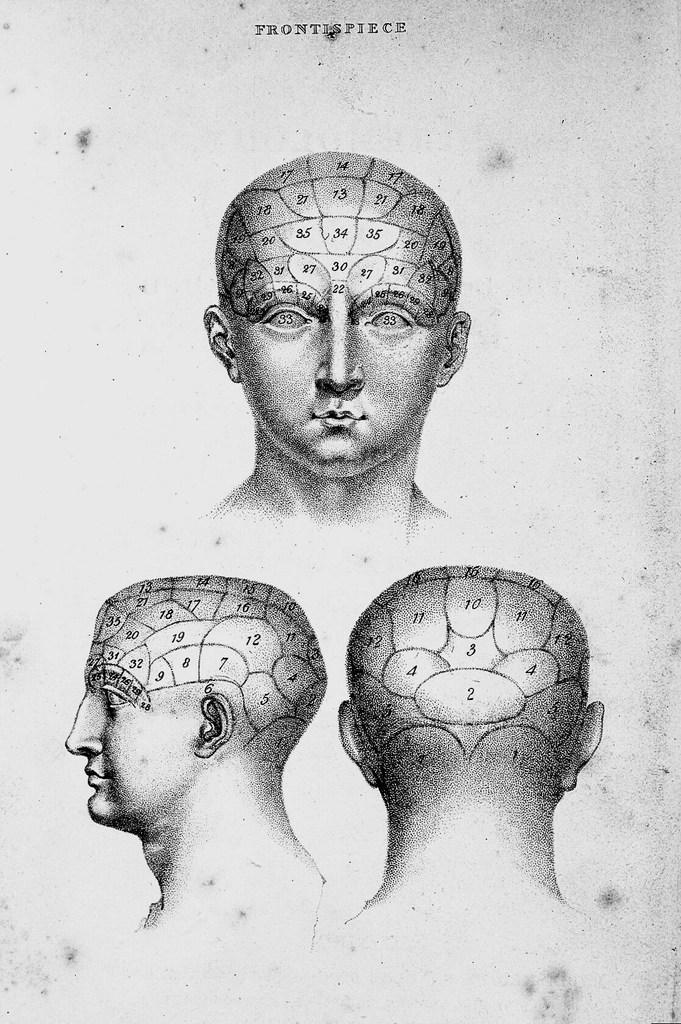
Cognitive rigidity is the stubborn insistence that our way of thinking is the only way.
It shows up in small, everyday ways:
refusing to consider another perspective
dismissing evidence that challenges our beliefs
or sticking to habitual responses when flexibility is required.
It is mental inflexibility masquerading as certainty.
This rigidity is rarely neutral. It filters experience, allowing only what aligns with our preconceptions to pass through.
What we notice and refuse to notice is determined less by reality and more by the contours of our existing beliefs. The mind becomes its own jailer.
FILTERED VISION
Perceptual limitations compound this problem. Our senses, our expectations, and our biases shape what we perceive.
Two people can witness the same event and walk away with entirely different “realities,” each convinced theirs is the truth.
Culture, language, upbringing, and personal trauma all function like lenses, coloring everything we see.
When cognitive rigidity meets these perceptual filters, the feedback loop begins: our beliefs dictate what we perceive, and our perceptions reinforce our beliefs.
We become prisoners of our own limited frameworks, blind to the complexity—and often the truth—of the world around us.
Breaking the Loop
Escaping this loop is not about acquiring more information. It is about retraining the mind to see what it usually ignores:
Observe without judgment. Watch your thought patterns and notice when you shut down possibilities automatically.
Seek what challenges you. Engage with ideas and perspectives that make you uncomfortable.
Question your perception. Ask yourself what you might be missing, what biases are filtering your experience.
Embrace intellectual humility. Accept that your understanding is provisional, incomplete, and subject to correction.
The moment we recognize that perception is always partial, and thought is always provisional, the bars of the cage begin to loosen.
Clarity is not a gift; it is a discipline.
The Work of Liberation
This is the work of liberation: not avoiding rigidity, but confronting it; not denying perceptual limits, but piercing them.
The mind can be trained to perceive more, think more flexibly, and respond more intelligently.
It is uncomfortable, but truth always is.
We cannot see everything, but we can see more than we did yesterday.
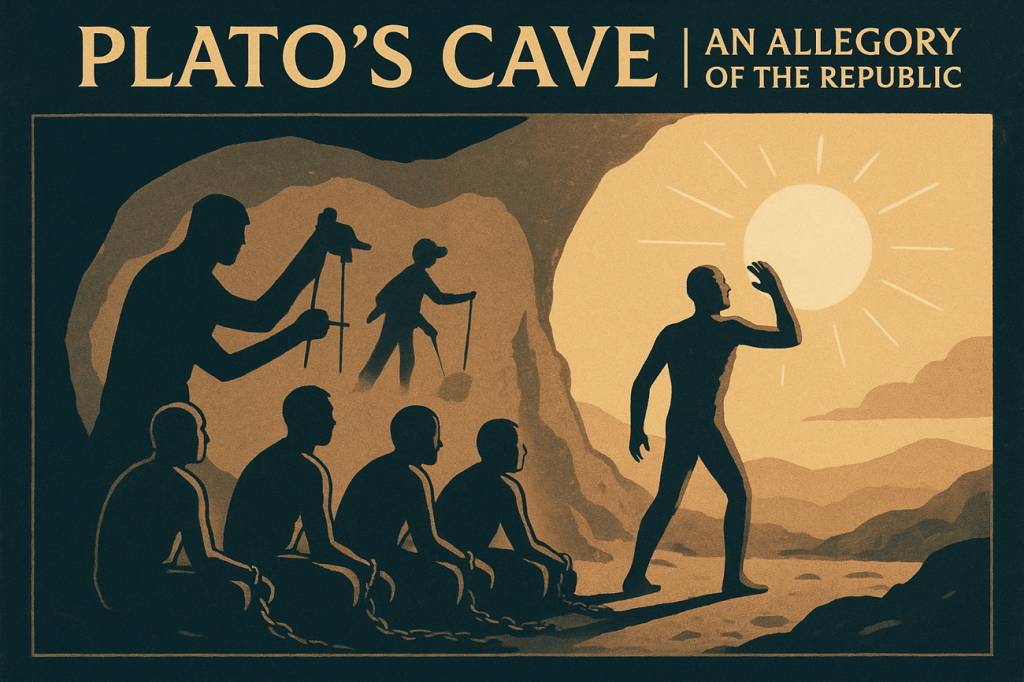
The Allegory of the Cave from Plato’s Republic is one of those perfect metaphors.
I think about it’s truth over and over again, even more so in today’s societal atmosphere.
The Cave depicts our tendency to mistake perception for truth.
THE STORY
In the story, these prisoners are chained inside a cave, they’re facing a wall where they watched these shadows dancing and moving.
These shadows were cast by puppeteers, covertly hiding behind them.
They were manipulating objects to create a shadow that gave the illusion of a fire’s flame.
The prisoners named the shadows, studied them, and even built hierarchies around who interpreted the shadows most accuratel.
To them, this was reality, and they took it very seriously.
We’re not so different.
Most people live confined within their own perceptual cave.
We’re inevitably going to be shaped by our emotional connection to our belief systems, cultural roots, educational indoctrination, and familial conditioning.
Too often we’re caught mistaking projection for truth.
Yes, we’ve been conditioned, but this isn’t the problem per se. We can see past all the programs if we have a fully functioning brain.
The resistance to confronting the possibility of a constructed reality is understandable.
The idea that memories, identity, and perceptions might not be as solid as they seem can feel like an existential threat.
Letting go of deeply held beliefs, even if they are illusions, requires confronting discomfort, uncertainty, and the fear of losing oneself.
It’s easier to cling to familiarity, even if it’s flawed, than to face the unknown. But growth often begins where certainty ends.
Freedom is admitting that you have been deluded and under an illusory story of your own making. Then you’ll break free.
CONSIDER THE PUPPETEERS
The puppeteers are those who shape the narratives we consume.
They are the gatekeepers of knowledge and power:
the donors, financiers, and elites who we likely will never know the true name of.
By controlling the information and communication, they can and do shape what a society perceives as “real.”
Propaganda, entertainment, and social pressure all became tools of control through illusions.
The Awakening
Then comes the moment of liberation. One prisoner is freed.
At first, he’s blinded by the fire’s light.
His eyes, accustomed to shadows, can’t handle the truth so suddenly.
But as they adjust, he begins to see clearly: the shadows were never real.
They were only echoes of something greater.
He’s led outside the cave into the sunlight, another painful adjustment.
Yet when vision returns, he beholds the true world in all its beauty and realizes that the cave was only a prison of perception.
Why Can’t They Turn Their Heads?
CHAINS OF IGNORANCE
Because they are chained. Not just physically, but mentally.
The chains represent ignorance, the invisible grip of conformity and belief.
Most never question the nature of their own bondage.
To break these chains requires courage. It requires unlearning.
It requires the willingness to endure the pain of seeing clearly for the first time.
The Philosopher’s Task
For Plato, this story points to his Theory of Forms.
Theory of Forms is the idea that the physical world is but a shadow of a higher, more perfect reality.
The philosopher’s role is to turn toward that higher truth, to step into the light and understand what truly is true.
EXPECT STRUGGLE
But enlightenment is not a comfortable process.
When the freed prisoner returns to the cave to tell the others what he has seen, they mock him.
They reject him. To them, his truth sounds like madness, because it threatens the foundation of their world.
QUESTION YOUR OWN BELIEFS
The Allegory of the Cave calls us to question our own shadows, to notice what we’ve been taught to believe and think: who benefits from those beliefs?
It asks us to endure the blinding light of truth, no matter how uncomfortable, and to choose freedom over comfort.
To break the chains of ignorance is to step into the light, not to escape the world, but to finally see it.
Aristotle claimed that time is dependent on motion, meaning that time only exists in relation to and as a consequence of change occurring in the world.
Muller, a physicist at the University of California, Berkeley, posits that the expansion of the universe, starting with the Big Bang, constantly creates new space and, consequently, new time.
“Now” as the Leading Edge
He argues that the “now” is the boundary, the shock front, or the leading edge of time, where new time is constantly being created.
Implications for Time Travel
This theory has implications for our understanding of time travel, suggesting that the future is not predetermined, and that the “now” is the only reality that truly exists.
This concept contrasts with the block universe or eternalism, which suggests that all moments in time exist equally, and the presentism, which holds that only the present moment is real.
Aristotle argued that time, as a concept, depends on the soul’s ability to perceive and count it.
He suggested that if there were no souls to “count” time, there might still be change, but not time itself.
This view implies that time is not just countable but also essentially counted, meaning it requires a conscious entity to exist as a measurable concept.
Plato’s theory of the soul, influenced by Socrates, considered the soul (psyche) as the essence of a person, an incorporeal and eternal entity.
He believed the soul exists even after death and is able to think, and that as bodies die, the soul is continually reborn (metempsychosis) in subsequent bodies.
Some philosophical traditions, like Neo-Platonism, explored the concept of a world soul (anima mundi) or soul of the world,suggesting an intrinsic connection between all living beings and that the world is animated by a soul.
This concept posits that the world is animated by a soul much like the human body.
This perspective suggests that the soul is not limited by space or time.
Some theories, like the Quantum Theory of Soul, propose that the soul, as defined as information stored in the quantum field, can extend over space and time, potentially transcending the limitations of the physical body.
Time as a Number
Aristotle describes time as a “number of motion with respect to the before and after,” suggesting that we can count or measure time by counting instances of change.
Descartes on Time
Time as a Foundation for Diversity and Motion
Descartes’s mechanistic view of the world, where diversity and motion are fundamental, requires time for these phenomena to occur.
Time as Proof for God’s Existence
Descartes uses the concept of “parts of time” in his Meditation III proof for God’s existence, emphasizing the role of time in our understanding of God’s attributes.
Time as a “Mode of Thought”
In his Principles of Philosophy, Descartes also states that time is a mere attribute and “mode of thought”.
Time & Duration
Descartes distinguishes between time as the measure of motion and duration as an attribute of things.
Time & the Span of Life
Descartes sees no differentiation between the span of a life and the span of time itself.
Descartes introduced the concept of dualism, which argued that reality or existence is divided into two parts.
He argued that humanity could be divided into two parts as well: the mind and the body.
TIME AS MOMENTS
Time as a Series of Moments
This perspective suggests that time can be broken down into a sequence of unique, distinct moments, each representing a specific point in the timeline.
Kairos refers to an opportune or significant moment, while chronos refers to a specific amount of time, such as a day or an hour.
Examples of “Moments in Time”
Think of memorable events, like a wedding, a birth, or a historical turning point.
These are all “moments in time” that stand out as distinct points in the flow of time.
Time as Absolute
Newtonian Time
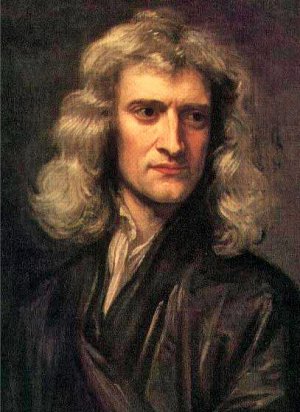
According to its most famous proponent, Sir Isaac Newton, for example, absolute time (which is also sometimes known as “Newtonian time”) exists independently of any perceiver, progresses at a consistent pace throughout the universe, is measurable but imperceptible, and can only be truly understood mathematically.
For Newton, absolute time and space were independent and separate aspects of objective reality, and not dependent on physical events or on each other.
Time as a Product of the Mind
Whitehead | Heidegger—Time as the Form of Becoming
Whitehead and Heidegger described time as the process of things changing and becoming.
They believed that time is essential for things to happen and transform.
Theory of Relativity
SPACETIME
According to modern science, particularly the theories of relativity and quantum mechanics, time is considered a part of a larger concept called spacetime.
Spacetime includes all the events in the past, present, and future, and is interconnected with space.
The Nature of Suffering: A Necessary Element of Existence


As much as we may wish otherwise, the reality is that suffering is an inescapable part of the human experience.
The age-old philosophical and religious observation that “life is suffering” points to a fundamental truth about the human condition.
Embracing Uncertainty and Impermanence
In the face of uncertainty and impermanence, we cultivate the qualities of empathy, humility, and inner strength that are vital for navigating the complexities of life.
It is through our struggles that we learn and grow, transforming our experiences into avenues for personal development.
Seeking Meaning in Suffering
Perhaps, in the end, it is not a life devoid of suffering that we should seek, but rather a life where suffering serves a purpose.
As Viktor Frankl articulated, fulfillment cannot be stripped of struggle; it is through confronting our darkest moments that we can truly experience the richness of life.
Our perception of reality is shaped by our senses, yet it is a fragile construct that can easily be deceived and corrupted.
This article explores the limitations and uncertainties of our perceived reality, questioning the accuracy and consistency of our individual perceptions.
Perception
Perception, as we understand it, is subjective and personal.
We cannot definitively know if our perception aligns with that of others.
Each person experiences the world through their unique set of senses, making it impossible to verify the objective truth of our perceived reality.
Certain Of Uncertainty
Even the concept of solidity and physical matter, which seems inherent in our everyday experiences, is not something we can be certain of.
We may feel something to be solid, but we lack a means to confirm if it is truly so or just a product of our sensory delusions.
Dreams An Example Of Delusions
Dreams provide a striking example of how our perceptions can create a convincing illusion of reality.
While dreaming, our experiences appear as vivid and tangible as when we are awake.
However, science has shown that humans frequently hallucinate, causing variations in our perceptions.
This further highlights the subjective nature of our perceived reality.
If we consider the possibility that our existence is a product of the Divine Mind, then that becomes the fundamental reality underlying our perceptions.
However, it is crucial to acknowledge that our subjective perception may not necessarily align with the Perceptions of the Divine, whom we conceive as the sovereign King of Spirit.
To gain a deeper understanding of the objective reality presented by God’s decree, we must turn to Scripture, guided by the Holy Spirit.
“Sanctify them by the truth; your word is truth…”
John 17:17
Man, with his fallible nature, cannot grasp the entirety of God’s perfect and unchangeable universal law.
By seeking guidance from the Holy text, we can strive to approach a more accurate perception of the underlying reality.
The nature of perceived reality is complex and elusive.
We rely on our senses, which are prone to error and subjective interpretation.
Our experiences and perceptions may differ from one another, making it difficult to ascertain a universally consistent reality.
Through the lens of Divinity, we can explore a deeper understanding of reality, guided by the Word of God and the indwelling presence of the Holy Spirit.
While we may strive to attain perfect harmony with the Divine, it is likely that our complete alignment will always elude us, so long as we remain limited and confined to the physical realm’s limits.
Isaiah 55:8-9 – “For my thoughts are not your thoughts, neither are your ways my ways, declares the Lord. For as the heavens are higher than the earth, so are my ways higher than your ways and my thoughts than your thoughts.”
Job 11:7-9 – “Can you find out the deep things of God? Can you find out the limit of the Almighty? It is higher than heaven—what can you do? Deeper than Sheol—what can you know? Its measure is longer than the earth and broader than the sea.”
Romans 11:33-34 – “Oh, the depth of the riches and wisdom and knowledge of God! How unsearchable are his judgments and how inscrutable his ways! For who has known the mind of the Lord, or who has been his counselor?”
1 Corinthians 13:12 –“For now we see in a mirror dimly, but then face to face. Now I know in part; then I shall know fully, even as I have been fully known.”
These verses highlight the limitations of human understanding and emphasize the vastness and incomprehensibility of God’s ways.
While we may strive to understand God’s perfect and unchangeable universal law, our human nature and limited perspective make it impossible to fully grasp it.
Sigmund Freud was an Austrian neurologist and the founder of psychoanalysis, a clinical method for treating psychopathology through dialogue between a patient and a psychoanalyst.
He formulated the theory of the Oedipus complex, proposed the existence of an unconscious mind, and developed the idea of the id, ego, and superego as structural components of the human psyche.
Additionally, Freud’s work significantly influenced the field of psychology and various aspects of Western culture.
Carl Jung
Carl Jung was a Swiss psychiatrist and psychoanalyst who founded analytical psychology.
He is known for his concepts of the collective unconscious, archetypes, and the process of individuation. Jung emphasized the significance of symbolism, mythology, and the integration of opposing forces within the psyche.
His work has had a profound impact on psychology, psychiatry, and various fields, influencing areas such as dream analysis, personality theory, and the study of cultural and religious symbolism.
The main differences between Sigmund Freud’s psychoanalysis and Carl Jung’s analytical psychology lie in their perspectives on the unconscious, the role of the libido, and the significance of the collective unconscious and cultural symbolism.
Freud’s psychoanalysis emphasizes the influence of early childhood experiences, the unconscious drive of the libido, and the concept of repression as a key mechanism shaping human behavior.
In contrast, Jung’s analytical psychology expands on the collective unconscious, archetypes, and the process of individuation, focusing on the integration of opposing forces and the pursuit of wholeness or self-realization.
Freud’s emphasis on the Oedipus complex and the role of sexual and aggressive instincts differs from Jung’s broader view of the unconscious, which includes personal and collective elements, as well as archetypal patterns that transcend individual experiences.
Jung’s approach places greater emphasis on spirituality, mythology, and the symbolism found in various cultures, in contrast to Freud’s more clinical and biological focus on human behavior and mental processes.
Analytical Psychology
Analytical psychology, also known as Jungian psychology, is a branch of psychology developed by Carl Jung that focuses on exploring the depths of the unconscious mind and understanding the individual’s journey towards psychological wholeness. It places a strong emphasis on the exploration of the collective unconscious, archetypes, and symbolic imagery. Analytical psychology recognizes the importance of spirituality and the transcendent aspects of human experience. It views the psyche as a dynamic and self-regulating system, seeking to integrate and balance both conscious and unconscious elements.
Analytical psychology, also known as Jungian psychology, and “regular” psychology, commonly referred to as mainstream psychology differ in several significant ways:
Analytical psychology delves into the collective unconscious, archetypes, and symbolic imagery.
Collective Unconscious
Concept within analytical psychology that refers to the shared reservoir of knowledge, experiences, and symbols that all individuals inherit as a result of their common humanity. It is believed to be a deep layer of the unconscious mind that contains archetypes, universal themes, and instincts that are shared by all human beings across cultures and throughout history. This collective unconscious is thought to influence our thoughts, feelings, and behaviors, shaping our perceptions of the world and guiding our behavior in ways that are often unconscious to us. Through exploring and understanding the symbols and patterns that arise from the collective unconscious, individuals can gain insights into themselves, their relationships, and their place in the larger human experience.
Archetypes
Jungian archetypes are deeply rooted and universally recognized patterns of symbols and images that reside within the collective unconscious. These archetypes, such as the Hero, the Shadow, the Wise Old Man, and the Mother, represent fundamental aspects of the human psyche and serve as primordial templates for understanding and interpreting our experiences. They are symbolic guides that help us navigate the complexities of life, providing us with insight into our deepest fears, desires, and potentials. Jungian archetypes offer a profound framework for self-discovery and personal transformation, allowing us to tap into the depths of our unconscious and unlock greater awareness and wholeness.
Symbolic Imagery
Jungian symbolic imagery is a cornerstone of analytical psychology, emphasizing the profound power and significance of symbols and their role in unlocking the depths of the unconscious mind. Symbols are potent manifestations of archetypes, universal patterns of meaning that tap into the collective unconscious. They speak a language beyond words, evoking profound emotions, insights, and connections to the wider human experience. Through exploring and understanding these symbolic images, individuals gain access to a rich tapestry of personal and collective meaning, diving into the depths of their own psyche, unraveling mysteries, and opening doors to self-discovery, healing, and transformation. Jungian symbolic imagery offers a bridge between the conscious and unconscious realms, allowing individuals to navigate the complexities of their inner world and find deeper understanding and integration.
Integration
Jungian integration is the process of merging and reconciling the conscious and unconscious aspects of the psyche, as proposed by Carl Jung in analytical psychology. It involves recognizing and embracing the shadow, the hidden and often repressed aspects of ourselves, and integrating them into our conscious awareness. By acknowledging and working with the shadow, we can uncover and integrate the valuable lessons it holds, leading to greater self-understanding and wholeness. Jungian integration also entails recognizing and exploring archetypal patterns and symbols that arise from the collective unconscious, allowing individuals to tap into a deeper level of consciousness and find meaning and purpose in their lives. Through this process, we may cultivate a sense of balance, authenticity, and personal growth, enabling us to fully realize our potentials and navigate the complexities of the human experience.
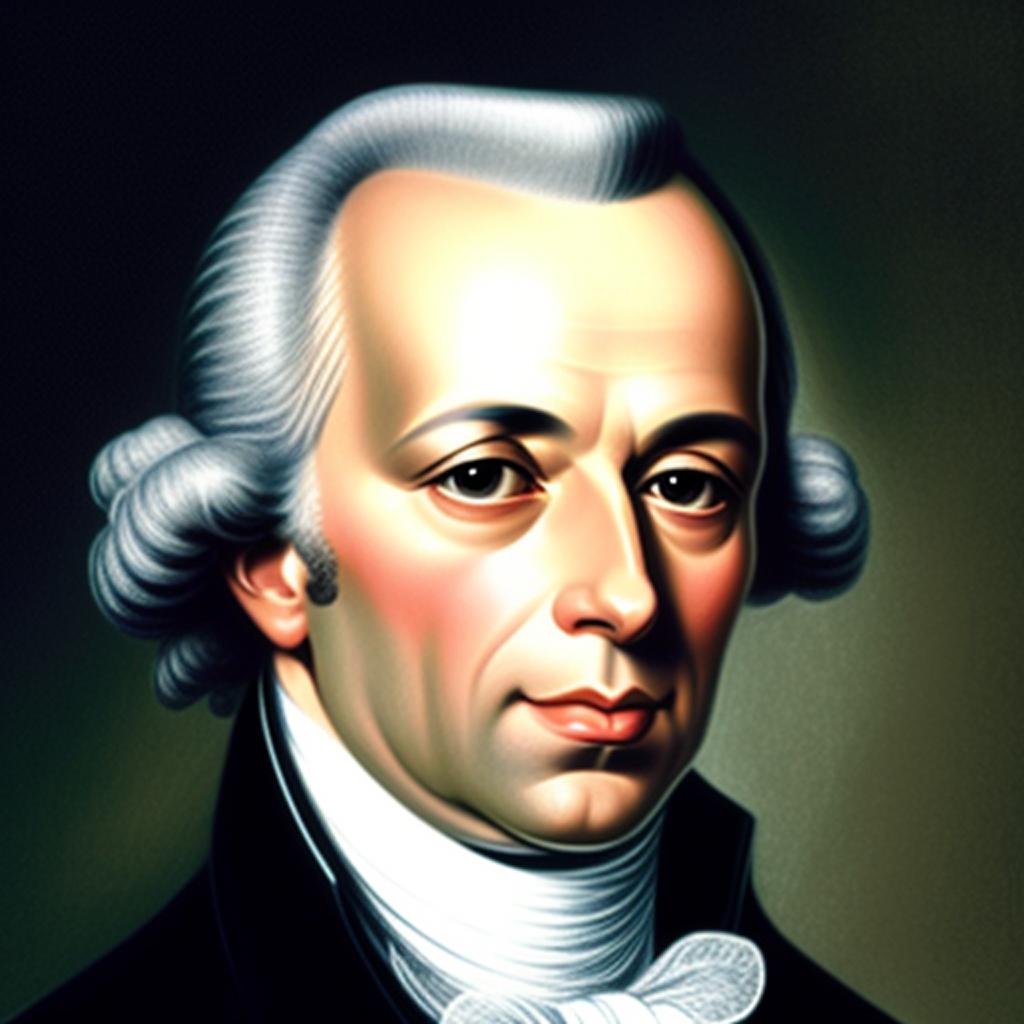
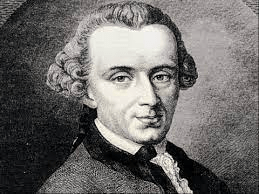
Immanuel Kant, a prominent philosopher of the Enlightenment era, revolutionized our understanding of knowledge, ethics, and metaphysics. His influential work, the Critique of Pure Reason, explores the limits and possibilities of human cognition. Kant’s concept of the “categorical imperative” serves as a universal moral compass. His legacy as a beacon of enlightenment challenges us to critically examine our existence.
In this article, we will delve into Kant’s masterpiece, the Critique of Pure Reason, where he explores the nature of knowledge. Kant’s argument emphasizes the interplay between our innate concepts and the sensory experiences that shape our understanding of the world. Let us embark on a journey to unravel the depths of Kant’s philosophical insights.
The Interplay of Innate Concepts and Sensory Experiences:
Kant posits that our comprehension of the world is not solely reliant on our sensory encounters.
Instead, he argues for the existence of a priori knowledge, which is inherent and independent of empirical observation. A notable example is the concept of causality, which we grasp even before we have any specific sensory experiences relating to it. This suggests that our understanding of the world is deeply influenced by our innate concepts, which in turn are shaped by reason.
Many scholars also support Kant’s stance by asserting that our sensory experiences are molded by our pre-existing concepts.
Some notable scholars who endorse this stance include:
John McDowell: McDowell, a contemporary philosopher, embraces Kant’s idea that our conceptual framework shapes our perceptual experiences. He argues for the inseparability of conceptual understanding and sensory perception, emphasizing the role of our pre-existing concepts in structuring our experience of the world.
Hilary Putnam: Putnam, a prominent philosopher of mind and language, aligns with Kant’s view that our concepts influence the way we perceive and interpret the world. He emphasizes the significance of our conceptual schemes in determining the content and meaning of our sensory experiences.
Robert Hanna: Hanna, a Kantian scholar and philosopher, extensively explores the relationship between concepts and perception. He supports Kant’s contention that our pre-existing concepts shape our sensory experiences, emphasizing the role of our cognitive faculties in constructing our understanding of reality.
Patricia Kitcher: Kitcher, a philosopher known for her work on Kant, acknowledges the importance of our conceptual frameworks in shaping our perceptual experiences. She emphasizes the active role of our cognitive capacities in structuring our understanding of the world.
These esteemed scholars fervently uphold Kant’s concept, making invaluable contributions to the ever-evolving discourse and advancement of Kantian philosophy. With meticulous scrutiny and profound exploration, they fortify the profound impact our pre-existing concepts exert on our perception and understanding of the world that surrounds us.
Organizing Experiences through Innate Concepts:
According to Kant, our minds possess the innate capacity to organize and structure our experiences in a manner consistent with our inherent concepts.
This is evident when different individuals interpret the same sensory experiences differently, based on their unique pre-existing concepts.
Sebastian Gardner’s book, “Kant and the Critique of Pure Reason,” provides a comprehensive analysis of Kant’s work, shedding light on the significance of both innate concepts and sensory experiences in shaping our understanding of the world. Gardner’s insights further reinforce Kant’s argument, highlighting the intricate relationship between our innate concepts and the interpretation of our experiences.
Kant argues that while sensory experience provides the raw data, it is our innate concepts that enable us to comprehend and interpret that data.
These concepts act as organizing principles, guiding our perception and giving shape to our understanding of reality.
The individual variations in how we interpret sensory experiences arise from the unique combination and configuration of our pre-existing concepts.
Each person’s conceptual framework is influenced by their own cognitive capacities, cultural background, education, and personal experiences.
These factors contribute to shaping the specific lens through which they perceive and interpret the world.
Example:
For example, when two people observe a sunset, their interpretations may differ based on their conceptual frameworks. One person might focus on the aesthetic beauty and evoke emotions of tranquility, while another might analyze the scientific phenomena behind the colors and atmospheric conditions.
This diversity of interpretation highlights the subjective nature of perception and the role of our pre-existing concepts in shaping our understanding. Kant’s philosophy prompts us to recognize and appreciate the multiplicity of perspectives that arise from these individual conceptual frameworks.
Furthermore, Kant’s emphasis on the interplay between our innate concepts and sensory experiences challenges us to reflect on the limitations and biases inherent in our understanding. It encourages us to critically examine the ways in which our conceptual frameworks influence our interpretations and to strive for a more nuanced and comprehensive comprehension of the world.
In essence, Kant’s philosophy illuminates the intricate relationship between our innate concepts and sensory experiences, highlighting the subjective nature of perception and the role of our pre-existing frameworks in shaping our understanding. By acknowledging and exploring these dynamics, we gain a deeper appreciation for the complexities of human cognition and the rich tapestry of individual perspectives.
The Intricate Pathways of Kant’s Philosophy:
Immanuel Kant’s meticulous analysis delves into the intricate pathways through which our thoughts navigate in the vast realm of philosophy. With an intellectual prowess that leaves no stone unturned, he challenges us to question the sources of our knowledge and to embark on a profound exploration of the interplay between our innate concepts and sensory experiences.
The Critique of Pure Reason shines a light on the profound relationship between our a priori knowledge and the shaping influence of our reason. He beckons us to delve into the very foundations of knowledge, urging us to question the assumptions that underpin our understanding of the world.
Through his intricate analysis, Kant extends an invitation to embark on a transformative journey of self-reflection and intellectual exploration. He unveils a framework that allows us to grasp the complexities of human understanding and glimpse the profound depths of knowledge that lie within the realm of philosophy.
Let us embrace the wisdom bestowed upon us by Kant and continue our relentless pursuit of unraveling the mysteries that philosophy holds. For it is through this pursuit that we shall unlock the true essence and purpose of our existence.
If you’re interested in further exploring Immanuel Kant’s philosophy, here are a few other notable books and resources that delve into his profound ideas:
“Kant: A Very Short Introduction” by Roger Scruton: This concise yet enlightening book provides an accessible introduction to Kant’s philosophy, offering a clear overview of his key concepts and arguments.
“Kant and the Problem of Metaphysics” by Martin Heidegger: Heidegger, a prominent philosopher in his own right, engages with Kant’s philosophy in this thought-provoking text, providing a unique interpretation and critique of Kant’s transcendental philosophy.
“Kant’s Ethical Thought” by Allen W. Wood: For those interested in Kant’s moral philosophy, this book offers a thorough exploration of his ethical thought, focusing on his concept of moral duty and the categorical imperative.
“The Cambridge Companion to Kant” edited by Paul Guyer: This collection of essays by various scholars provides a comprehensive overview of Kant’s philosophy, covering a wide range of topics including metaphysics, epistemology, ethics, and aesthetics.
These resources, among others, will provide you with a deeper understanding of Kant’s philosophical ideas and their implications. They serve as valuable companions in unraveling the complexities of Kant’s thought and engaging in further intellectual exploration.