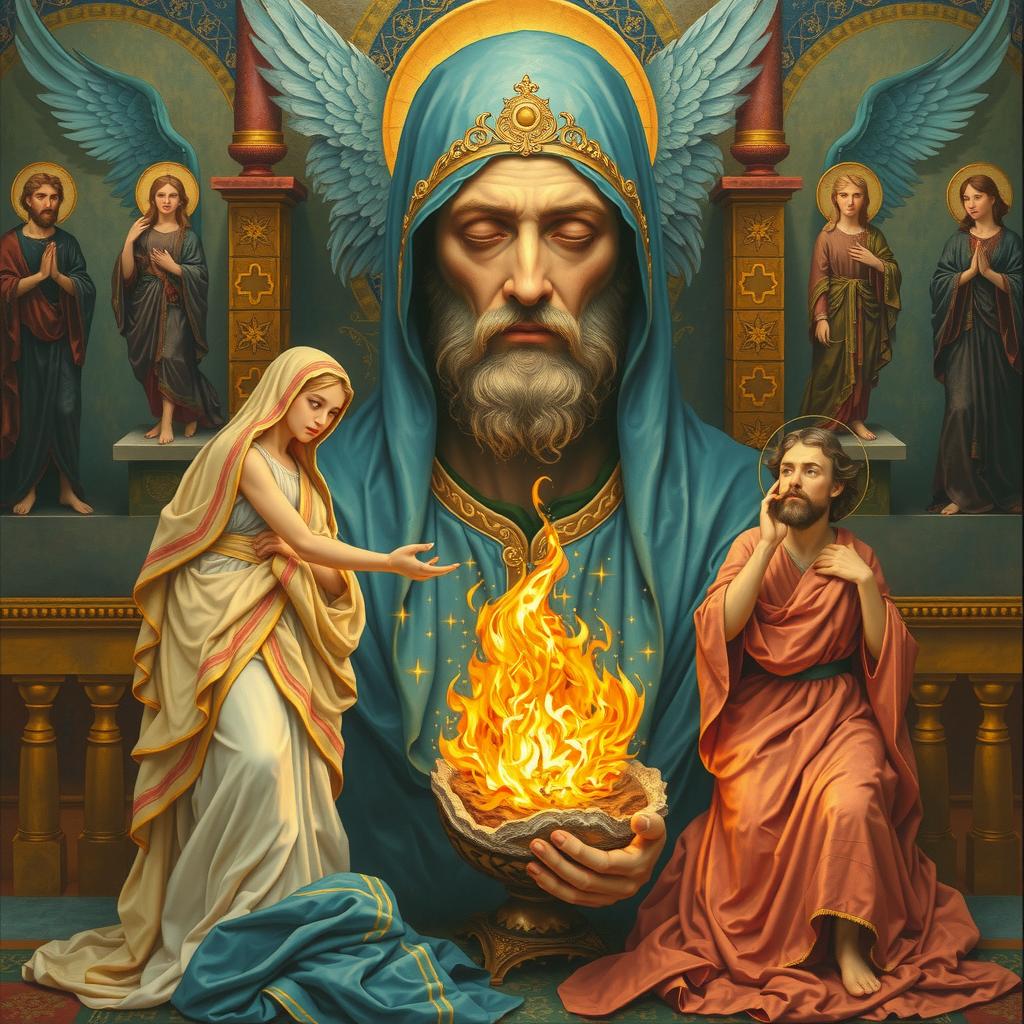
Are we propelled by fate, driven by choice, or guided by a delicate dance between the two?
Each path offers its own mystique, summoning us to dissect the interplay of destiny, fate, and free-will in shaping our lives and reality as a whole.
The Emergence of Fate
Fate represents the unseen architecture of our lives—a cosmic design that envelopes every step we take.
It is the orchestrator of synchronicities and signs, suggesting that our experiences might be part of a grand laid out structure, initiated by a higher intelligence.
This invisible thread forms the backdrop of our existence, like a silent script written in the stars that sometimes we see how it dictates our journey.
The Empowerment of Choice
Contrasting fate is the power of choice—
our conscious ability to deliberate
decide
and act.
In every fleeting moment, we stand at a crossroads, armed with the power to transform potentiality into reality.
Our choices…
…whether deliberate
…or spontaneous.
Choice carves new pathway, through a predetermined framework, affirming our unique role as co-creators of our destinies.
The Synthesis
A Cosmic Dance
The truth, as I perceive it, lies not in the isolated domains of fate or choice, but in their connection, no matter how chaotic or volatile it appears.
FATE IS AN ALREADY SET STAGE
Fate sets the stage by placing us in a world of infinite complexities, yet within this arena, our choices illuminate the power of agency.
Within fate your decisions become the act in the play that redefine the script with each break in line, as sin aka duality, causes is to forget choosing this character… MORE ON THAT IN ANOTHER ARTICLE…
Fate merges the predetermined decision we made with the human self in all our duality.
Embracing The Interplay
Every decision— it can be a choice of…
love
defiance
surrender or
inquiry…
These decisions serve as compelling evidence of the capacity for transformation. The inherent power within us shapes the circumstances we encounter, establishing a structure of cause and effect that upholds duality and sin.
While the forces of fate may direct the overarching narrative, it is within our responses that true freedom is forged.
DESTINY + CONSCIOUS AWARENESS
The co-operation between destiny and conscious choice is…
where meaning is born
where chaos finds order
where wisdom is ultimately distilled.
We have a profound power to navigate the realms of existence.
We are neither bound by the currents of destiny nor are we lost in the illusion of unbridled freedom.
We are the artisans of our own lives, crafting purpose from the interplay of the inevitable and the intentional as they are One.
Aristotle claimed that time is dependent on motion, meaning that time only exists in relation to and as a consequence of change occurring in the world.
Muller, a physicist at the University of California, Berkeley, posits that the expansion of the universe, starting with the Big Bang, constantly creates new space and, consequently, new time.
“Now” as the Leading Edge
He argues that the “now” is the boundary, the shock front, or the leading edge of time, where new time is constantly being created.
Implications for Time Travel
This theory has implications for our understanding of time travel, suggesting that the future is not predetermined, and that the “now” is the only reality that truly exists.
This concept contrasts with the block universe or eternalism, which suggests that all moments in time exist equally, and the presentism, which holds that only the present moment is real.
Aristotle argued that time, as a concept, depends on the soul’s ability to perceive and count it.
He suggested that if there were no souls to “count” time, there might still be change, but not time itself.
This view implies that time is not just countable but also essentially counted, meaning it requires a conscious entity to exist as a measurable concept.
Plato’s theory of the soul, influenced by Socrates, considered the soul (psyche) as the essence of a person, an incorporeal and eternal entity.
He believed the soul exists even after death and is able to think, and that as bodies die, the soul is continually reborn (metempsychosis) in subsequent bodies.
Some philosophical traditions, like Neo-Platonism, explored the concept of a world soul (anima mundi) or soul of the world,suggesting an intrinsic connection between all living beings and that the world is animated by a soul.
This concept posits that the world is animated by a soul much like the human body.
This perspective suggests that the soul is not limited by space or time.
Some theories, like the Quantum Theory of Soul, propose that the soul, as defined as information stored in the quantum field, can extend over space and time, potentially transcending the limitations of the physical body.
Time as a Number
Aristotle describes time as a “number of motion with respect to the before and after,” suggesting that we can count or measure time by counting instances of change.
Descartes on Time
Time as a Foundation for Diversity and Motion
Descartes’s mechanistic view of the world, where diversity and motion are fundamental, requires time for these phenomena to occur.
Time as Proof for God’s Existence
Descartes uses the concept of “parts of time” in his Meditation III proof for God’s existence, emphasizing the role of time in our understanding of God’s attributes.
Time as a “Mode of Thought”
In his Principles of Philosophy, Descartes also states that time is a mere attribute and “mode of thought”.
Time & Duration
Descartes distinguishes between time as the measure of motion and duration as an attribute of things.
Time & the Span of Life
Descartes sees no differentiation between the span of a life and the span of time itself.
Descartes introduced the concept of dualism, which argued that reality or existence is divided into two parts.
He argued that humanity could be divided into two parts as well: the mind and the body.
TIME AS MOMENTS
Time as a Series of Moments
This perspective suggests that time can be broken down into a sequence of unique, distinct moments, each representing a specific point in the timeline.
Kairos refers to an opportune or significant moment, while chronos refers to a specific amount of time, such as a day or an hour.
Examples of “Moments in Time”
Think of memorable events, like a wedding, a birth, or a historical turning point.
These are all “moments in time” that stand out as distinct points in the flow of time.
Time as Absolute
Newtonian Time
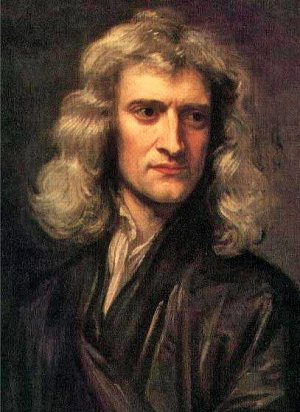
According to its most famous proponent, Sir Isaac Newton, for example, absolute time (which is also sometimes known as “Newtonian time”) exists independently of any perceiver, progresses at a consistent pace throughout the universe, is measurable but imperceptible, and can only be truly understood mathematically.
For Newton, absolute time and space were independent and separate aspects of objective reality, and not dependent on physical events or on each other.
Time as a Product of the Mind
Whitehead | Heidegger—Time as the Form of Becoming
Whitehead and Heidegger described time as the process of things changing and becoming.
They believed that time is essential for things to happen and transform.
Theory of Relativity
SPACETIME
According to modern science, particularly the theories of relativity and quantum mechanics, time is considered a part of a larger concept called spacetime.
Spacetime includes all the events in the past, present, and future, and is interconnected with space.