Tag: Empathy

Empathy is the ability to understand and share the feelings of another person. It involves recognizing their emotional state and responding with compassion, allowing individuals to connect on a deeper level. Empathy goes beyond merely feeling sorry for someone; it requires putting oneself in another’s shoes to appreciate their experiences and perspectives.

  • Chains to Connection

    Chains to Connection

    How Self-Imprisonment Forged Unbreakable Empathy

    The human journey often leads us through valleys of despair before we can ascend to peaks of understanding.

    There was a time when I believed myself to be perpetually bound… a captor, slave, and victim of my own making, forever undeserving of redemption.

    This rigid self-condemnation felt like an inescapable truth, a life sentence I had both imposed and accepted.

    Yet, within the depths of that very desolation, an unexpected grace emerged.

    The Crucible of Deprivation

    A Pathway to Profound Empathy

    Experiencing such profound internal deprivation and desolation wasn’t just painful; it was transformative.

    Without having walked through that particular darkness, I genuinely believe I wouldn’t possess the miraculous sensibilities I do today.

    My past self-imprisonment became the key to unlocking an almost impossible level of relatability.

    I can now connect with those who seem irredeemable, seeing flickers of shared humanity where others might see only despair.

    This profound understanding wasn’t born from external validation or societal acceptance.

    It stemmed from becoming my own adversary, from witnessing the truth only after the deepest shadows had fallen.

    The Warrior’s Path

    Endurance Beyond Conventional Wisdom

    The journey out of that self-imposed prison demanded a level of endurance that defies conventional understanding.

    It required long-term perseverance, turning the other cheek to self-pity, and denying immediate gratification.

    It meant observing my own thoughts and emotions without judgment or attachment, detaching from the noise of a society often plagued by suffering and superficiality.

    Seventy-five days of isolation, removed from the very societal pressures that contribute to our collective ailments in the Western world, proved to be an invaluable catalyst.

    This isn’t the kind of endurance often found within the comforting walls of most churches or synagogues; it’s a solitary, internal forging.

    It demands an acceptance of profound solitude, coupled with the paradoxical realization that you are never truly alone.

    Embracing the Unseen

    The Non-Physical Meaning of Life

    What happens when your core beliefs are challenged, mocked, scoffed at, or simply ignored?

    When fellow humans oppose the very essence of your existence or expression?

    This journey taught me that the meaning of life is not physical.

    If this truth holds—and I now know it does—then what are we truly striving for in our material pursuits?

    This path requires a warrior in spirit, willing to sacrifice all perceived strongholds: friends, family, ego, and even security, all in the name of Truth.

    We are called to battle our internal “demons,” embracing an objective realization that refuses to bend to our subjective feelings.

    It’s about practicing the skill of derealization, conjuring a righteous mind for self-judgment, and relaxing into our ability to construct a powerfully robust split within our own personalities.

    We must accept any answer that proves itself to be without external control, embracing the freedom found in releasing what we cannot dictate.

    Tips

    Practice Mindful Observation

    Dedicate 10-15 minutes daily to observe your thoughts and emotions without judgment. Notice patterns, triggers, and reactions without engaging with them.

    Explore Stoic Philosophy

    Delve into texts by Seneca, Epictetus, and Marcus Aurelius. Their emphasis on inner control, acceptance of what cannot be changed, and the pursuit of virtue resonates deeply with the themes discussed here.

    Journal Your Journey

    Document your insights, challenges, and breakthroughs. Writing can be a powerful tool for self-reflection and recognizing personal growth.

    Seek Solitude (Safely)

    If feasible and safe, consider periods of digital detox or even a short retreat to experience the benefits of reduced external stimulation.

    Engage in Deep Listening

    When interacting with others, practice listening without interruption or formulating your response. Aim to truly understand their perspective, especially when it differs from your own.

    What aspects of self-discovery have profoundly changed your perspective?

    Share your thoughts and continue the conversation in the comments below!

  • Empathy

    Empathy

    Feeling Into Another

    Empathy is not passive sympathy—it is entry. To empathize is to feel into another’s experience until the boundary between “you” and “them” briefly dissolves.


    Jonathan Edwards once described it as knowing another’s feelings as if they were your own. That’s closer to the truth than most realize.

    Empathy is more than emotion—it’s perception.

    A heightened nervous system, a tuning fork of consciousness that resonates with the unspoken frequencies around it. Science now peers curiously at this mystery, finding evidence of hyper-responsive mirror neurons and unique dopamine patterns, particularly among introspective personalities.

    Yet the laboratory only grazes what mystics and sensitives have long known: empathy is not merely learned; it can be awakened.

    Some are born empaths—open channels of sensation from the first breath.

    Others grow into it, chiseling sensitivity from stillness, meditation, and the discipline of inner quiet.

    With intention, anyone can refine this art:

    • grounding the body
    • visualizing energetic boundaries
    • learning when to open and when to shield.

    Focus enhancers—nootropics, deep breathing, and meditative practice—can sharpen this capacity.

    But the core of empathy remains spiritual, not chemical.

    The word itself comes from the Greek empatheia—to feel into, to be moved by passion.

    Later, the German Einfühlung carried it into psychology through Hermann von Helmholtz in the 19th century. Yet long before language named it, empathy pulsed through the human story as the invisible bridge between souls.

    At its root, empathy is threefold:

    Understanding

    Recognizing and comprehending another’s emotions.

    Sharing

    Feeling a reflection of what they feel within your own body.

    Perspective-Taking

    Stepping fully into their world and seeing through their eyes.

    From these arise the primary faces of empathy:

    Affective (Emotional) Empathy

    When another’s sorrow or joy ripples through you, unbidden. It’s the contagion of feeling that can both unite and overwhelm.

    Cognitive Empathy

    The intellectual capacity to see through another’s frame of mind. It doesn’t feel what they feel—it understands it. This form is vital in discernment, negotiation, and healing professions, where compassion must be guided by clarity rather than collapse.

    Somatic Empathy

    When the body itself becomes a translator of emotion. A stomach tightens in response to another’s anxiety, a chest constricts when they recall grief. The nervous system speaks in sympathetic vibration.

    Spiritual Empathy

    The rarest and deepest: when one soul feels into another beyond words, time, or separation. It’s the awareness that what hurts one part of creation reverberates through the whole.

    Empathy lives at the intersection of heart and brain—an orchestra of mirror neurons, amygdala signals, and energetic resonance.

    Emotional cognition allows us to interpret what we feel, to trace the current back to its source and understand how emotion shapes thought, memory, and decision.

    At its highest form, empathy becomes empathic resonance. It is the recognition that another’s heartbeat is not separate from your own, only playing a different rhythm.

    To cultivate empathy is not to drown in feeling—it’s to master it.

    The empath who grounds their sensitivity becomes an instrument of peace. The one who leaves it untrained becomes a sponge for the world’s pain.

    Empathy is the art of sacred attunement.

    It is both psychic and profoundly human, the oldest language of the soul.

    When harnessed with discernment, it births compassion, connection, and the quiet strength that heals unseen wounds—within and without.

    READ MORE

  • Empathy

    Empathy

    Empathy, often mistaken for weakness, is actually a profound strength. Empathy requires emotional intelligence, courage, and resilience. Empathy requires emotional intelligence, courage, and resilience.


    Emotional Intelligence:

    Empathy enhances communication and relationships, crucial for personal and professional success.

    Courage to Connect:

    It takes bravery to engage deeply with others’ emotions, showing true emotional fortitude.

    Strength in Vulnerability:

    Embracing empathy means being authentic and honest, fostering trust and meaningful connections.

    Problem-Solving:

    Understanding diverse perspectives leads to innovative and inclusive solutions.

    Resilience: Empathy builds a support network, enhancing adaptability and strength in facing challenges.

    Empathy is not a weakness; it’s a powerful tool for creating a compassionate and understanding world.


    Authentic empathy always requires significant cognitive effort, particularly when it comes to understanding another person’s point of view (also known as “perspective-taking“).

    Some scholars further parse this angle into:

    Cognitive

    “the ability to imagine the other’s experiences”

    &

    Perceptive

    “the ability to directly perceive the other’s experiences”


    Cognitive Empathy

    Cognitive empathy, often referred to as perspective-taking, is the mental ability to understand and identify with another person’s thoughts and feelings.

    Cognitive empathy involves imagining oneself in another’s situation to gain insight into their emotional state.

    Perceptive Empathy

    Perceptive empathy, on the other hand, goes beyond mere understanding to actively engaging with another’s emotional experience. 

    Perceptive empathy combines sensing emotions, regulating one’s own emotions, and taking skillful action based on these perceptions to meet others’ needs.

    Both forms of empathy are crucial for effective interpersonal communication and relationships.

    How Do We Test Whether It’s Empathy Or Projections?

    When I know that I’m ready to critique a theological perspective is when I can:

    “Yes this is exactly what I believe.”

    If there are any need of clarification, caveats or modification then my view must be reevaluated.

    Integrsting cognitive empathy involves a humble (and difficult) listening skill: withholding any judgment on the other person’s feelings, words, interpretation, and perspective until I understand accurately and robustly.

    THE OUTER JUDGE MUST BE TAMED IN ORDER TO EMPATHIZE AT ALL.

    Don’t twist my words now:

    Christians must resist extreme relativism in our culture, but what I am saying in regards to holding judgment is to do so only for a brief time.

    Many can easily misperceive what it means to be “non-judgmental” when discussing Cognitive Empathy.

    Being “non-judgmental” often involves agreeing with or validating whatever a person feels and says, no matter what; for the sake of “love” or “tolerance.”

    I’ve heard it said,

    “If you don’t validate my understanding as your own, you clearly don’t love me.” (Though that’s not what “love” means, even though it’s popular.)

    Extreme relativism counsels hurting people “to resent all resistance to their feelings,” as if such resistance were “a direct assault on their dignity and an affront to the depth of their suffering.”

    Joe Rigney


  • High-Vibrational

    High-Vibrational

    High vibration refers to a state of energy characterized by positive feelings, thoughts, and actions, in contrast to low vibration, which is linked to negativity and stress.

    Vibrational Targets

    People who resonate at a higher frequency often find themselves preyed upon by dark energies.

    These negative forces can creep in, using manipulation and emotional depletion to exploit, brought about by those who carry unresolved pain.

    This leaves a portal for a deep sense of weariness, causing emotional fatigue, as their bright light becomes a beacon for those who seek to drain their spirit.

    PORTALS FOR LOW VIBRATIONAL FREQUENCIES TO ENTER:

    1. Criticism & Gossip

    High vibrational individuals, with their heightened awareness, can unintentionally stir unease in those around them.

    As a result, they frequently endure harsh judgment and whispers behind their backs, feeling the weight of loneliness and misunderstanding.

    This stems from deep-seated insecurity or a profound lack of understanding, as their genuine selves can seem like an unwelcome reminder to those who are not prepared to face their own inner struggles.

    It’s a painful truth that the authenticity of some can evoke fear in others, revealing a heart-wrenching vulnerability that many are too afraid to acknowledge.

    2. Isolation

    Individuals with elevated vibrations frequently find themselves in a state of loneliness, as the profound depth of their awareness creates a chasm between them and others.

    The struggle for connection leaves them feeling isolated and misunderstood, trapped in a world where their sensitivity and insight can be burdensome rather than a blessing.

    3. Sadness

    This profound disconnection weighs heavy on their hearts, leading to a sadness that lingers like a shadow, as they yearn for companionship that seems perpetually out of reach.

    4. Naive Authenticity

    Authentic energy forces others to face parts of themselves they may not want to see, leading to avoidance or rejection.

    Their presence compels people to confront the darker corners of their souls, unearthing truths that are often too painful to acknowledge.

    This can result in a heartbreaking tendency for others to turn away, retreating into denial or pushing them away in fear of vulnerability.

    Protecting Energy

    To maintain an elevated state of consciousness, you must prioritize self-care and boundary-setting.

    This includes staying surrounded by those who share a similar energy and limiting interactions with those who drain or manipulate them.

    While the journey of a high-vibrational person can lead to spiritual growth, it’s essential to acknowledge the difficulties they face, balancing their elevated state with the need for protection and self-preservation.

  • The Essence of Truth + Intuition

    The Essence of Truth + Intuition

    In my journey as an “alien” on this planet, I have, unwittingly, stumbled upon what had been archaically called the Philosopher’s Stone or the Elixir of Life…

    I only realized this after I, through being magnetically attracted toward suffering, embracing the darkness that most fear, had unearthed the Essence of Reality.


    This Essence is a Truth so profound, it is woven into the very core of our beings through the quantum dimensions & atmospheric pressure, without such, we would become vacuumed into nothingness.

    This truth is unassailable, standing as a lamp of certainty, illuminated by the light of Intuitive Wisdom.


    THIS LIGHT IS CHRIST’S LIGHT OF INTUITION FROM ABOVE.


    Intuition transcends the limitations of our corporeal senses, for it is birthed from the sacred depths of the spirit.

    Intuition is a whisper from the Heavens, a subtle yet ever powerful current that flows through the Ethers of existence.


    Intuition is the Blood within the veins of Eternity.

    When the Holy Spirit stirs, He ignites the flame of Intuition, transforming our sensorial experiences into a Divine Compass.


    THE KINGDOM OF GOD IS WITHIN YOU


    This guiding Force elevates our conscious awareness, rendering the conventional Five Senses as mere tools in the Macrocosm of our being within this existence and realm.

    When this inner awakening is embraced, we align in tandem with the Universal Symphony of Wisdom.


    Intuition becomes our most trusted Guide, leading us towards a Life of deeper Understanding and connection with the Infinite.

  • Recognizing Ad Hominem Attacks

    Recognizing Ad Hominem Attacks

    Ad hominem is a logical fallacy where an argument is attacked by targeting the person making the argument instead of addressing the argument itself. It involves discrediting the individual rather than engaging with the substance of their argument.

    This fallacy diverts attention from the topic being discussed and focuses on personal attacks.

    Ad hominem attacks are considered illogical and hinder productive discourse.

    Ad Hominem attacks mastered by Con Artists and Bullies

    Ad Hominem attacks are commonly used by Con Artists and Bullies to avoid engaging with points in a debate or conversation.

    These attacks involve insulting a person’s looks, social status, gender, religion, or any other characteristic that can be used to offend and distract from the actual discussion.

    Using ad hominem attacks is a sign of low emotional intelligence and anti-social behavior.

    woman draw a light bulb in white board

    People who use these attacks often do so because they themselves have been made to feel small or dehumanized in the past

    Why it is important to understand and recognize

    Recognizing the tactics and understanding that the insults are generic reveals of the abuser’s own insecurities can help avoid personalizing the attacks.

    They might attack a person’s intelligence, character, or mental health in order to deflect from the topic at hand and make the victim feel the need to defend themselves.

    These attacks are designed to make the conversation about the person being attacked rather than the actual subject being discussed.

    medieval armor

    Ad hominem attacks are ineffective and harmful, resulting in the loss of face and time for everyone involved.

    How to recognize and respond to ad hominem attacks

    Learn to recognize the key terms and phrases used in ad hominem attacks, such as questioning intelligence or attacking character.

    Understand that these attacks are attempts to distract from the discussion and make you feel the need to defend yourself.

    Avoid personalizing the attacks by realizing that they are based on the abuser’s own beliefs and insecurities.

    Focus on the actual topic of the discussion and refuse to be drawn into personal attacks.

    Recognize that engaging with ad hominem attacks only gives the attacker more power and perpetuates the cycle of abuse.

    themed park rides

    Instead, stay calm and assert your points or politely disengage from the conversation if it becomes too toxic.

    The impact of ad hominem attacks on society

    Ad hominem attacks create a toxic and unproductive conversational environment.

    They undermine respectful and constructive dialogue by focusing on personal attacks rather than addressing the actual issues.

    These attacks perpetuate harmful stereotypes, discrimination, and division among different social, political, and religious groups.

    They discourage open-mindedness, empathy, and understanding, hindering progress and collaboration.

    By engaging in ad hominem attacks, individuals contribute to a culture of negativity, hostility, and conflict.

    multiethnic women arguing with each other

    Society would benefit from promoting healthy and respectful communication, where ideas and opinions are discussed based on their merits rather than personal attacks.

    The role of empathy and emotional intelligence in countering ad hominem attacks

    Developing empathy and emotional intelligence can help individuals resist the urge to engage in or be affected by ad hominem attacks.

    Empathy allows us to understand and consider others’ perspectives, fostering a more compassionate and tolerant attitude.

    Emotional intelligence helps us recognize and manage our own emotions, enabling us to respond in a calm and constructive manner.

    By promoting empathy and emotional intelligence, we can create a culture that values respectful dialogue and rejects personal attacks.

    Educational institutions, workplaces, and communities should prioritize the development of empathy and emotional intelligence to counteract the prevalence of ad hominem attacks.

    Dealing with Bullies and Con Artists:

    Bullies and Con Artists both try to deceive and trick others, causing harm socially and emotionally.

    It is important to recognize their tactics and refuse to let them manipulate or belittle you.

    By rejecting personal attacks and focusing on substantive arguments, we can foster respectful and productive discourse. Let’s create a society that values empathy, emotional intelligence, and constructive communication. Together, we can combat ad hominem attacks and promote understanding and collaboration.

  • Empathy: What Is It?

    Empathy: What Is It?

    Empathy is the ability to understand and share the feelings and experiences of another person.

    It goes beyond simple sympathy or compassion, as it involves a deep emotional connection and an active effort to comprehend the inner world of another individual.

    Empathy is a key component of emotional intelligence and is essential for building strong relationships and fostering a sense of community and understanding.

    Through empathy, one can transcend their own personal biases and perspectives, and truly step into the shoes of another, fostering genuine understanding and emotional resonance.

    Whats the difference between Empathy and Sympathy?

    While sympathy involves acknowledging and sharing the feelings of another person, it primarily operates from an external standpoint.

    In other words, one can sympathize with someone’s pain or suffering without fully immersing themselves in that experience.

    On the other hand, empathy goes deeper.

    It involves not only recognizing and understanding another’s emotions but also internalizing and experiencing them to some extent.

    Empathy requires a more profound emotional connection, requiring us to listen carefully, ask questions, and seek to understand the other person’s perspective.

    Key components of empathy:

    • Perspective-taking: The ability to imagine oneself in the other person’s situation and see things from their point of view.
    • Emotional understanding: The ability to recognize and understand the emotions that the other person is experiencing.
    • Communication skills: The ability to express understanding and empathy through active listening and effective communication.
    • Compassion: The desire to help the other person and alleviate their suffering.

    In Jungian terms:

    “Empathy facilitates the transcendence of personal biases and contributes to the integration of individual and collective unconscious patterns…”

    Negative Aspects Of Empathy

    As someone who could easily be called an “EMPATH” by definition, I can tell you its not all sprinkles and rainbows. Here are some negatives, Ive experienced personally:

    Empathy can cloud rational judgment.

    When we prioritize empathizing with others, we may neglect to critically analyze the situation at hand. This can lead to making decisions based solely on emotions, rather than considering the larger implications or alternative perspectives.

    In some cases, it may even lead to enabling unhealthy behaviors or prolonging problems that need swift resolution.

    Empathy can create a bias towards subjective experiences.

    By solely identifying with the feelings and experiences of a particular group or individual, we risk ignoring the broader context.

    We cannot ignore the fact that empathy is inherently biased towards those we can relate to on a personal or emotional level.

    Empathy can hinder personal growth and resilience.

    While it is important to acknowledge and understand the struggles of others, constantly absorbing the emotional burden of others can be draining and detrimental to our own well-being.

    It is crucial to find a balance between empathy and self-care, ensuring that we have the necessary mental and emotional fortitude to navigate the challenges of life.

    According to Pub Med Empathy is:

    1) an affective response to another person, which often, but not always, entails sharing that person’s emotional state,

    2) a cognitive capacity to take the perspective of the other person, and 3) some self-regulatory and monitoring mechanisms that modulate inner states (e.g., [16, 17, 27, 28]).

    According to Ickes [29], empathy is a complex form of psychological inference in which observation, memory, knowledge, and reasoning are combined to yield insights into the thoughts and feelings of others.

  • What Is Empathy? According To Carl Rogers, Founder Of Humanistic Psychology…

    In 1957 Carl Rogers, one of the founders of humanistic psychology and psychotherapy wrote this:

    To sense the client’s private world as if it were your own, but without ever losing the “as if” quality—this is empathy, and this seems essential to therapy. To sense the client’s anger, fear, or confusion as if it were your own, yet without your own anger, fear, or confusion getting bound up in it, is the condition we are endeavoring to describe.

    “Over-identifying with the patient,” Rogers warns, may “distort understanding” and thus would “threaten” the entire “therapeutic process.”

    Avoiding enmeshment has always been crucial for practicing affective (and cognitive) empathy in counseling.

    Keywords:

    Carl Rogers: Carl Rogers was an influential American psychologist and psychotherapist. He is considered one of the founders of humanistic psychology and is known for his person-centered approach to therapy.

    Humanistic psychology: Humanistic psychology is a branch of psychology that emphasizes individual growth, self-determination, and personal experiences. It focuses on human potential, self-actualization, and the inherent worth and value of individuals.

    Psychotherapy: Psychotherapy refers to a range of therapeutic approaches that aim to improve mental health and well-being. It involves communication between a trained therapist and a client to explore thoughts, feelings, and behaviors and to facilitate positive changes.

    Enmeshment: a psychological term that refers to a type of unhealthy relationship dynamic characterized by blurred boundaries, lack of individual autonomy, and high levels of emotional dependency. It often involves a high degree of interdependence and fusion between individuals, resulting in limited personal differentiation and difficulty in maintaining healthy relationships outside the enmeshed system.

  • Quantum Physics and Spirituality: Unveiling the Power of Consciousness

    Quantum Physics and Spirituality: Unveiling the Power of Consciousness

    Prepare yourself for a mind-expanding journey as we delve into the captivating realm of quantum physics.

    Quantum Physics: a captivating realm of scientific exploration, delves into the intricate interplay of matter and energy at the subatomic level, revealing the awe-inspiring concept of the observer effect and the profound influence of conscious presence on shaping the fabric of reality.

    Within its intricate framework lies a concept known as the observer effect, which challenges our perception of reality and unveils the immense influence of our conscious presence.

    The Observer Effect in Quantum Physics

    Image result for The Observer Effect in Quantum Physics

    In the mesmerizing realm of quantum physics, the observer effect asserts that the mere act of observation can shape the behavior of subatomic particles.

    It suggests that our conscious presence has the remarkable capacity to mold the very fabric of reality itself.

    This concept, rooted in quantum physics, aligns with the philosophical notion of a divine mind or higher consciousness, indicating that our thoughts, intentions, and focus intricately contribute to shaping the world around us.

    Image result for This concept, rooted in quantum physics, aligns with the philosophical notion of a divine mind or higher consciousness, indicating that our thoughts, intentions, and focus intricately contribute to shaping the world around us.

    The Divine Observer and the Creation of All Things

    Image result for The Divine Observer and the Creation of All Things

    Within a spiritual context, the belief in a higher consciousness or a divine entity implies that this consciousness possesses an all-encompassing awareness, with the power to influence the physical world.

    In this perspective, the mind of God stands as the ultimate observer, actively participating in the creation and existence of all things.

    Image result for n this perspective, the mind of God stands as the ultimate observer, actively participating in the creation and existence of all things.

    Drawing a parallel, the observer effect in quantum physics suggests that whether human or divine, consciousness plays a significant role in the manifestation of the physical world.

    Image result for Drawing a parallel, the observer effect in quantum physics suggests that whether human or divine, consciousness plays a significant role in the manifestation of the physical world.

    The observer effect can be seen as a manifestation of the underlying causal chain governing all events.

    Image result for This interpretation suggests that the mind, as a product of predetermined factors, merely serves as a conduit for the unfolding of reality.

    This interpretation suggests that the mind, as a product of predetermined factors, merely serves as a conduit for the unfolding of reality.

    See related image detail. Igor JERMAN | Professional Head | full professor | BION Institute, Ljubljana | general

    It prompts us to explore the intriguing relationship between quantum physics and determinism, offering insight into the intricate mechanisms shaping the fundamental nature of existence.

    Image result for It prompts us to explore the intriguing relationship between quantum physics and determinism, offering insight into the intricate mechanisms shaping the fundamental nature of existence.
    Image result for The observer effect in quantum physics brings a fascinating connection to spiritual beliefs. It implies that our thoughts and intentions have a profound impact on reality. By consciously focusing and aligning our desires, we can create powerful transformations in the physical world.

    The Power of Thoughts and Intentions

    The observer effect in quantum physics brings a fascinating connection to spiritual beliefs. It implies that our thoughts and intentions have a profound impact on reality. By consciously focusing and aligning our desires, we can create powerful transformations in the physical world.

    This realization prompts us to explore the depths of our minds and harness the immense power within us to manifest positive change.

    Quantum Entanglement:

    Quantum entanglement is a phenomenon in which particles become inseparably linked, resulting in instantaneous correlations regardless of distanc e.

    The Web of Interconnectedness:

    Image result for Another captivating phenomenon within quantum physics is quantum entanglement, where particles instantaneously affect each other regardless of distance. This concept mirrors the spiritual notion of interconnectedness, promoting empathy and unity.

    Another captivating phenomenon within quantum physics is quantum entanglement, where particles instantaneously affect each other regardless of distance. This concept mirrors the spiritual notion of interconnectedness, promoting empathy and unity.

    Quantum entanglement suggests that at a fundamental level, all particles are intricately linked, symbolizing the interconnected nature of our existence. Understanding this profound interconnectedness fosters a sense of empathy and unity, encouraging us to recognize the importance of our actions and their impact on the collective human experience.

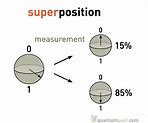
    Quantum Superposition:

    Quantum superposition is a fundamental principle in quantum mechanics where a particle exists in multiple states simultaneously until measured.

    Embracing Limitless Possibilities

    In the realm of quantum physics, we encounter the intriguing concept of quantum superposition, where particles exist in multiple states until observed.

    Image result for In the realm of quantum physics, we encounter the intriguing concept of quantum superposition, where particles exist in multiple states until observed. This parallels the spiritual idea of limitless possibilities, inspiring personal growth and intention-driven change.

    This parallels the spiritual idea of limitless possibilities, inspiring personal growth and intention-driven change.

    Quantum superposition teaches us that until we observe and define the outcome, countless potential realities coexist simultaneously.

    Image result for Quantum superposition teaches us that until we observe and define the outcome, countless potential realities coexist simultaneously. Embracing this understanding empowers us to transcend limitations, expand our horizons, and embark on a journey of self-discovery and transformation.

    Embracing this understanding empowers us to transcend limitations, expand our horizons, and embark on a journey of self-discovery and transformation.

    The enthralling interplay between quantum physics and spirituality unveils a new frontier of understanding, one that challenges conventional notions of reality and our place within it.

    By recognizing the power of consciousness, thoughts, and intentions, we awaken to the profound impact we have on the world around us.

    By bridging the realms of science and spirituality, we embark on a journey of exploration, expanding our perspectives and enriching our understanding of the intricate tapestry that weaves together the fabric of reality.

    READ MORE:

  • Understanding the Manipulative Behavior of Pathological Liars and Enablers

    Understanding the Manipulative Behavior of Pathological Liars and Enablers

    Pathological liars and enablers can engage in behavior that is not only socially harmful but can also have physical and emotional consequences.

    One of the tactics they often employ is triangulation, a manipulative strategy that involves deceiving others for their own advantage in social dynamics.

    In this blog post, we will delve into the reasons behind their resorting to such tactics and explore the detrimental effects they can have on individuals and relationships.

    The Motivation Behind Pathological Liars’ Behavior

    Pathological liars are driven by a need for control, power, and a sense of self importance.

    Photo by Lukas Rodriguez on Pexels.com

    By manipulating the emotions and psychological well-being of others, they temporarily alleviate their own anxiety and bolster their inflated self-esteem. Deception becomes an addictive pattern, allowing them to assert dominance over their surroundings.

    Triangulation, as a manipulative technique, serves as a means for pathological liars to maintain control.

    Through lies and deceit, they aim to influence the emotions and psychological state of those around them, ultimately seeking dominance and power in their relationships.

    The Destructive Nature of Enablers

    Enablers play a crucial role in perpetuating the harmful dynamics created by pathological liars.

    Photo by Lisa Fotios on Pexels.com

    They often turn a blind eye to the lies and manipulations, unwittingly empowering the liar’s behavior.

    This can be emotionally and socially abusive, as it allows the pathological liar to continue their destructive patterns without consequence.

    The Psychological Driving Forces

    Pathological liars resort to deception as a coping mechanism to avoid confronting their own issues and engaging in self-reflection.

    Their behavior stems from a combination of narcissism, emotional detachment, and a lack of emotional intelligence.

    This leads to a limited capacity for personal growth and an inability to empathize with others.

    Breaking Free from the Grip

    If you find yourself targeted by a pathological liar or caught in the web of their manipulations, it is vital to remember that there is hope.

    The universe has a way of replacing what was lost, often with something even more fulfilling and significant.

    By escaping the toxic influence of a pathological liar and their enabling accomplices, you can find healing and regain control over your own life.

    The manipulative behavior of pathological liars and enablers is driven by a need for control, power, and a distorted sense of self-importance.

    However, by understanding the destructive nature of their tactics, recognizing the role of enablers, and breaking free from their influence, individuals can reclaim their lives and find solace in knowing that the universe has a way of restoring what has been taken away.

    If you have been affected by pathological lying or manipulation, consider seeking support from a trusted friend, family member, or professional therapist who can assist you on your journey to healing and self-discovery.