The Diagnostic and Statistical Manual of Mental Disorders (DSM) is routinely hailed as the bible of modern psychiatry. DSM labels are actually detrimental pigeon-holes.
It provides professionals with a standardized, clinical framework for classifying psychological conditions.
However, as a map of human suffering, it is profoundly bankrupt.
The DSM catalogues the surface of mental distress while entirely ignoring the depths of the psyche.
It is an oversimplified, shallow inventory that fundamentally fails to understand the architecture of the soul.
The Categorical Illusion
One of the DSM’s most glaring failures is its reliance on a rigid, categorical approach to the mind.
The manual chops the fluid, dynamic human experience into sterile boxes.
If an individual experiences both anxiety and depression, they are diagnosed with two distinct dysfunctions based on a checklist.
This one-size-fits-all taxonomy ignores reality.
In depth psychology, these overlapping states are rarely separate mechanical errors; they are often intertwined symptoms of a psyche in the midst of the nigredo… the dark, chaotic first stage of psychological alchemy.
By compartmentalizing the mind, the DSM treats the individual as a collection of broken parts rather than a whole entity undergoing a complex process of individuation.
Silencing the Unconscious
Furthermore, psychiatry’s obsession with symptom-based diagnosis is its greatest blind spot.
The DSM views a symptom exclusively as a malfunction to be eradicated. It fails to consider the complex interplay of biological, psychological, and archetypal forces at work.
A Jungian approach recognizes the symptom for what it is: the unconscious attempting to communicate.
Depression, neurosis, and anxiety are often the Shadow demanding integration.
When the DSM focuses solely on observable behaviors, it silences the messenger.
It attempts to clear the smoke while ignoring the fire of the unconscious, leaving the underlying spiritual or psychological rupture completely unaddressed.
Thoughts From Carl Jung
Jung offers a fundamentally different account of psychological distress than the one implied by strictly diagnostic models.
Rather than treating symptoms as meaningless defects to be eliminated, he understood them as symbolic communications from the unconscious, often arising when consciousness has become one-sided or psychologically overidentified with a limited attitude toward life. Source
In this view, neurosis is not merely a pathology to be suppressed but a signal of psychic imbalance, indicating that the individual is being compelled toward greater integration, self-recognition, and transformation. Source
Jung’s concept of individuation indicates that suffering can have developmental value, insofar as it initiates confrontation with the Shadow and with disowned dimensions of the self.
From this perspective, psychological symptoms may function less as evidence of a broken mind than as expressions of the psyche’s attempt to restore wholeness.
Perhaps the most dangerous aspect of the DSM is its pathologizing of normal, necessary human suffering. Source
The manual’s ever-expanding criteria inevitably lead to the medicalization of the human experience.
Grief, existential dread, and the shattering of the ego are not inherent pathologies… they are initiatory rites of passage.
By slapping a medical label on the dark night of the soul, the DSM turns the agonizing work of becoming whole into a disease.
This overreliance on diagnostic labels stigmatizes the natural descent into the unconscious, teaching individuals to fear and medicate their own depths rather than explore them.
Its categorical and symptom-based approach robs the individual of meaning, reducing the profound mystery of the psyche to a clinical checklist.
Until modern psychiatry recognizes that mental distress is often the messy, painful birth of consciousness rather than a mere chemical error, the DSM will remain exactly what it is: a colossal failure to understand the human mind.
Professional References & Supporting Frameworks
Several leading voices across psychiatry, psychology, and depth analysis have publicly condemned the DSM’s methodology:
In his book Saving Normal, Dr. Frances became one of the DSM’s most vocal critics from the inside. He explicitly condemns the DSM-5 for pathologizing everyday human experiences—such as classifying normal bereavement as Major Depressive Disorder—warning that modern psychiatry is dangerously medicalizing the natural human condition.
In 2013, Dr. Insel famously announced that the NIMH would pivot its research funding away from the DSM categories.
He stated the manual lacks scientific validity because its diagnoses are based strictly on superficial symptom clusters (the “categorical illusion”) rather than underlying biological or psychological realities.
The BPS challenged the fundamental premise of the DSM with their Power Threat Meaning Framework.
They formally argue against the “disease model” of mental health, proposing instead that psychological distress is not a malfunction, but a deeply meaningful, understandable response to adversity, trauma, and environment.
In Re-Visioning Psychology, Hillman dismantled the clinical urge to “cure” the patient of their darkness.
He argued that the soul speaks explicitly through its pathologies, and that by rushing to eradicate symptoms, modern psychiatry silences the psyche’s attempt to communicate.
Carl Jung (Founder of Analytical Psychology)
Laying the groundwork for depth psychology’s opposition to rigid clinical diagnosis, Jung observed that “neurosis is always a substitute for legitimate suffering.” He viewed psychiatric symptoms not as arbitrary defects, but as purposeful attempts by the unconscious mind to force a necessary psychological transformation.
Compares Jungian typology with DSM-III personality disorders, distinguishing symptomatology from personality structures and exploring potential connections, though it focuses on an outdated DSM version.
Mastering the nuance between perception and reality is not a passive philosophical exercise; it is the essential toolkit required to dismantle our own cognitive illusions and navigate our way out of profound hardship.
When you are in the trenches, survival depends on clarity.
By carefully distinguishing between seemingly identical ideas, you build an architecture of discernment… allowing you to separate the truth of a situation from the mental friction keeping you stuck.
Map vs. Territory
The first tool in this kit is recognizing that the crisis you are experiencing (the territory) is completely separate from the story you are telling yourself about it (the map).
The distinction between the map and the territory is a fundamental concept in rationality.
A map is a representation of reality, while the territory is the actual reality itself.
Why Does This Matter?
This distinction matters because it highlights the fact that our understanding of the world is always mediated through our mental models and representations.
We must be aware that our ‘maps‘ , no matter how detailed or accurate, are never identical to the ‘territory‘.
Recognizing that your map is flawed is the first step, but how does the map get drawn in the first place?
When we are struggling, our maps are rarely constructed from present reality. Instead, they are stitched together using outdated, unexamined assumptions.
To update your map, you must confront the difference between the mental debris you default to and the active awareness required to survive.
Cached Thoughts vs. Actual Thinking
CACHED THOUGHTS
Cached thoughts are the pre-existing beliefs and assumptions that we hold, gathering trash and holding into them like a computer holds onto cqche. This means these are thoughts that lack conscious awareness.
This Repository of ‘thoughts’ are mental shortcuts that we rely on to make sense of the world, with no thought as to if these thoughts are based in objective reality or not.
THINKING
In contrast, thinking involves actively questioning and challenging our cached thoughts, engaging in critical analysis, and seeking new information to refine our understanding.
When you rely on cached thoughts instead of active thinking, your internal world becomes an echo chamber. You begin to mistake your unexamined biases for universal laws. This is where hardship turns into self-sabotage—when you project your own internal friction onto the external territory and assume everyone else is navigating the same distortion.
Mind Projection Fallacy
The Mind Projection Fallacy is a cognitive bias that occurs when people assume that their personal beliefs, values, or perceptions are shared by others or represent objective reality. This fallacy suggests that people often confuse their own thoughts and feelings with universal truths and expect others to have the same thoughts and feelings.
The Mind Projection Fallacy can significantly distort one’s ability to discern.
When we project our own beliefs and emotions onto others, we fail to accurately discern their unique perspectives and experiences.
Here Are Some Examples Of How Mind Projection Impedes Ones Ability To Discern:
Overestimating Agreement: One may falsely believe that others share their opinions, leading to an overestimation of consensus and potentially causing miscommunication or conflict when differing perspectives are eventually revealed.
Inaccurate Assumptions: When projecting personal beliefs, individuals can make inaccurate assumptions about others’ thoughts and feelings, leading to misunderstandings and incorrect conclusions.
Inability to Empathize: By assuming that everyone thinks and feels similarly, individuals can struggle to put themselves in others’ shoes and empathize with their unique experiences and emotions.
Poor Decision-Making: Decision-making can become flawed when one assumes their perspective is universally shared, potentially leading to choices that are not inclusive or beneficial for all parties involved.
To overcome the Mind Projection Fallacy and improve discernment, it is crucial to foster empathy, seek out diverse perspectives, and practice open communication. By recognizing the influence of personal beliefs and emotions on perception, individuals can become more discerning and accurately understand the viewpoints of others.
The Halo Effect:

a cognitive bias where our overall impression of someone or something influences our judgments of their specific traits. This term, coined by psychologist Edward Thorndike in 1920, illustrates how positive perceptions in one area can positively affect our opinions in another.
Escaping this cycle of projection requires a radical shift in how you process information. You must start dissecting the narratives you encounter, both internal and external. To do this effectively and strip away the illusion, you have to separate the mere structure of a situation from its actual substance.
Syntax vs. Semantics
In the context of language and communication, syntax refers to the physical structure of a message.
Semantics refers to the meaning or intended relationship to the territory.
Understanding this distinction is crucial for effective communication.
Yet, grasping the intended meaning is only half the battle.
When you are fighting your way out of a difficult season, it is not enough to know what a situation means—you must understand its real-world impact.
You must discern the difference between the definition of a problem and the actual consequences it produces.
Semantics vs. Pragmatics
Semantics refers to the literal meaning of a message, while pragmatics refers to the intended result or effect of conveying that message.
This distinction is important because it highlights the fact that communication is not just about transmitting information, but also about influencing behavior and shaping outcomes.
Once you understand the practical effects of your situation, the next logical step is determining where to apply your energy to fix it.
This requires pinpointing your exact position on the battlefield.
Are you fighting the immediate symptom right in front of you, or the overarching system that created it?
Object-level vs. Meta-level
The object-level refers to the specific task or problem at hand, while the meta-level refers to the broader context or framework within which that task or problem is situated.
A good meta-level theory can help us get things right at the object level, but it is usually impossible to get things right at the meta level before making significant progress at the object level.
Ultimately, navigating through these layers of abstraction brings you to the core of all discernment.
When the mental debris is cleared, the projections are silenced, and the structure is separated from the impact, you are left with the final, most vital distinction required for true liberation.
Seeming vs. Being
We can only deal with how things seem to us, not how they are in absolute terms.
This is a humbling reminder of our limited perspective and the importance of maintaining a degree of epistemic humility.
If we optimize too hard for things that seem good rather than things that are actually good, we may end up with suboptimal outcomes.
Signal vs. Noise
Not all information is created equal.
We often desire certain types of information while seeking to ignore others.
The distinction between signal and noise helps us focus on the most relevant and valuable information while filtering out the irrelevant or distracting.
Selection Effects
Selection effects occur when the evidence we have access to is filtered or biased in a particular way.
This can lead to distorted conclusions and faulty decision-making.
Understanding selection effects requires modeling where our information comes from and accounting for the processes that shape what we see.
What You Mean vs. What You Think You Mean
People often claim to have meant something slightly different than what was originally stated when their original position is challenged or refuted.
This automatic response, generated by our brains without conscious control, can be dangerous for clear thinking.
It is important to be aware of this tendency and to strive for consistency and honesty in our communication.
What You Mean vs. What Others Think You Mean
The illusion of transparency and the double illusion of transparency highlight the gap between what we think we are communicating and what others actually understand.
We often overestimate how clearly we convey our thoughts and feelings, while underestimating the extent to which others misinterpret our messages.
Effective communication requires being mindful of these biases and seeking feedback to ensure mutual understanding.
What You Optimize vs. What You Think You Optimize
Our actions are often driven by hidden motives and incentives that we may not be fully aware of.
Evolution, for example, optimizes for reproduction, but in doing so creates animals with a variety of goals that are correlated with reproduction.
Intrinsic motivation is generally stronger and more effective than extrinsic motivation.
Understanding the difference between what we think we optimize for and what we actually optimize for can help us align our actions with our true values and goals.
Stated Preferences vs. Revealed Preferences
Stated preferences are the preferences we explicitly express, while revealed preferences are the preferences we can infer from our actions.
These two types of preferences are often misaligned, with our actions not matching our stated beliefs or desires.
Recognizing this distinction can help us identify and address inconsistencies in our decision-making.
What You Achieve vs. What You Think You Achieve
Most of the consequences of our actions are unknown to us.
We often overestimate our ability to predict and control the outcomes of our decisions.
Effective action requires humility, openness to feedback, and a willingness to learn from experience.
It is impossible to optimize without proper feedback, so we must be vigilant in seeking out information about the actual results of our efforts.
What You Optimize vs. What You Actually Achieve
Consequentialism focuses on the expected consequences of our actions, rather than the actual consequences.
While it is important to consider the potential outcomes of our decisions, we must also be prepared to adapt and adjust our course based on the real-world results.
Rigid adherence to a particular optimization strategy can lead to suboptimal outcomes if it fails to account for the actual effects of our actions.
What You Seem Like vs. What You Are
Our external appearance and behavior may not always reflect our true nature or inner experience.
We may present a certain image to the world while privately struggling with doubts, fears, or contradictory impulses. Recognizing this distinction can help us cultivate self-awareness, authenticity, and empathy in our relationships with others.
What Other People Seem Like vs. What They Are
Similarly, we often make assumptions about others based on their outward behavior or reputation, without fully understanding their inner lives or the complex factors that shape their actions.
Assuming that we understand others is a common mistake that can lead to misunderstandings, prejudice, and missed opportunities for connection and growth.
What People Look Like vs. What They Think They Look Like
People tend to underestimate the gap between their stated preferences and their revealed preferences. We may claim to value certain qualities or characteristics in ourselves or others, but our actions often tell a different story. Recognizing this discrepancy can help us align our self-perception with reality and make more authentic choices.
What Your Brain Does vs. What You Think It Does
Our brains are complex, powerful, and often mysterious. We are running on “corrupted hardware” in the sense that our thought processes are shaped by social and evolutionary factors that can distort the truth. The brain’s machinations are fundamentally social, automatically engaging in signaling, face-saving, and other behaviors that can lead to biased or irrational decisions. While we must be skeptical of the outputs of our thought processes, we must also strike a balance between skepticism and action, particularly in situations that require quick thinking or decisive action.
Clever Argument vs. Truth-seeking
People often believe what they want to believe, a phenomenon known as motivated cognition.
Giving a smart person more information and more methods of argument may actually make their beliefs less accurate, because it provides them with more tools to construct clever arguments for what they want to believe.
The actual reason for believing something determines how well that belief correlates with the truth.
If you believe something because you want to, any arguments you make for that belief, no matter how strong they may sound, are devoid of informational context about the truth of the belief and should be ignored by a genuine truth-seeker.
Lumpers vs. Splitters
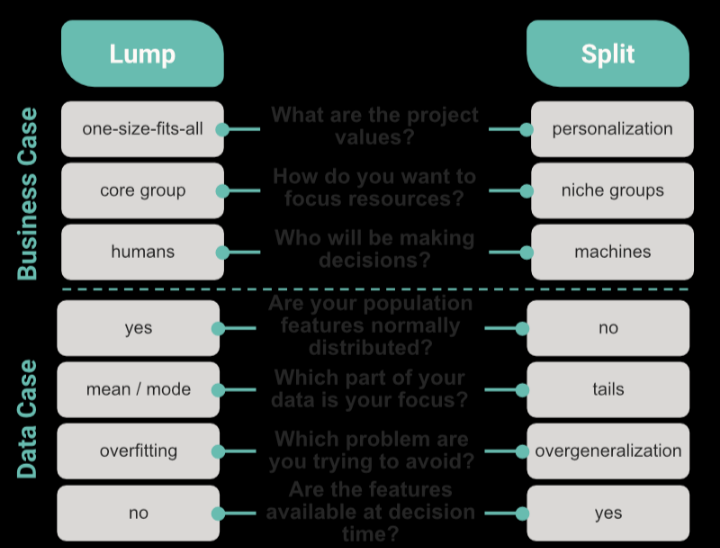
Lumpers are thinkers who attempt to fit things into overarching patterns, while splitters are thinkers who make as many distinctions as possible, recognizing the importance of being specific and getting the details right. The lumper mindset can be useful for identifying broad trends and connections, while the splitter mindset is essential for accurate analysis and nuanced understanding.
Fox vs. Hedgehog
The fox knows many things, while the hedgehog knows one big thing. Closely related to the lumper-splitter distinction, the fox mindset involves a broad array of knowledge and the ability to draw insights from diverse sources. The hedgehog mindset, in contrast, focuses on a single big idea and applies it everywhere. According to Tetlock’s research, the fox mindset is generally better for making accurate judgments in complex, uncertain situations.
Traps vs. Gardens
Well-kept gardens die by pacifism, meaning that conversations, societies, systems, and even thermodynamic equilibrium tend to slide toward disorder, conflict, and decay unless actively maintained.
Recognizing this distinction can help us be proactive in defending and nurturing the things we value, whether it’s a productive dialogue, a thriving community, or a well-functioning organization.
Nuanced thinking involves carefully distinguishing between seemingly similar concepts and recognizing the subtle differences that shape our understanding of the world.
By engaging in this kind of discernment, we can make more informed decisions, communicate more effectively, and develop a richer, more accurate perspective on the complex realities we navigate every day.