There is a kind of knowing that does not ask permission from the mind.
It does not build a case.
It does not cite its sources.
It arrives already finished — and you are left, afterward, trying to reverse-engineer a reasoning process that never actually happened, because there wasn’t one.
There was only recognition.
THIS IS INTUITION
And I want to be precise about what it is, because the word gets used carelessly — as a synonym for ‘hunch’, for ‘gut feeling’, for whatever unexamined impulse happens to walk through the door.
It is more disciplined than that.
It is older than that.
What the Word Actually Says
Intuitive: from the 1640s, meaning to perceive directly and immediately.
French intuitif. Medieval Latin intuitivus.
Beneath that, Latin intueri — to look at, to consider — built from in- (into) and the Proto-Indo-European root tueri, to look at, to watch over.
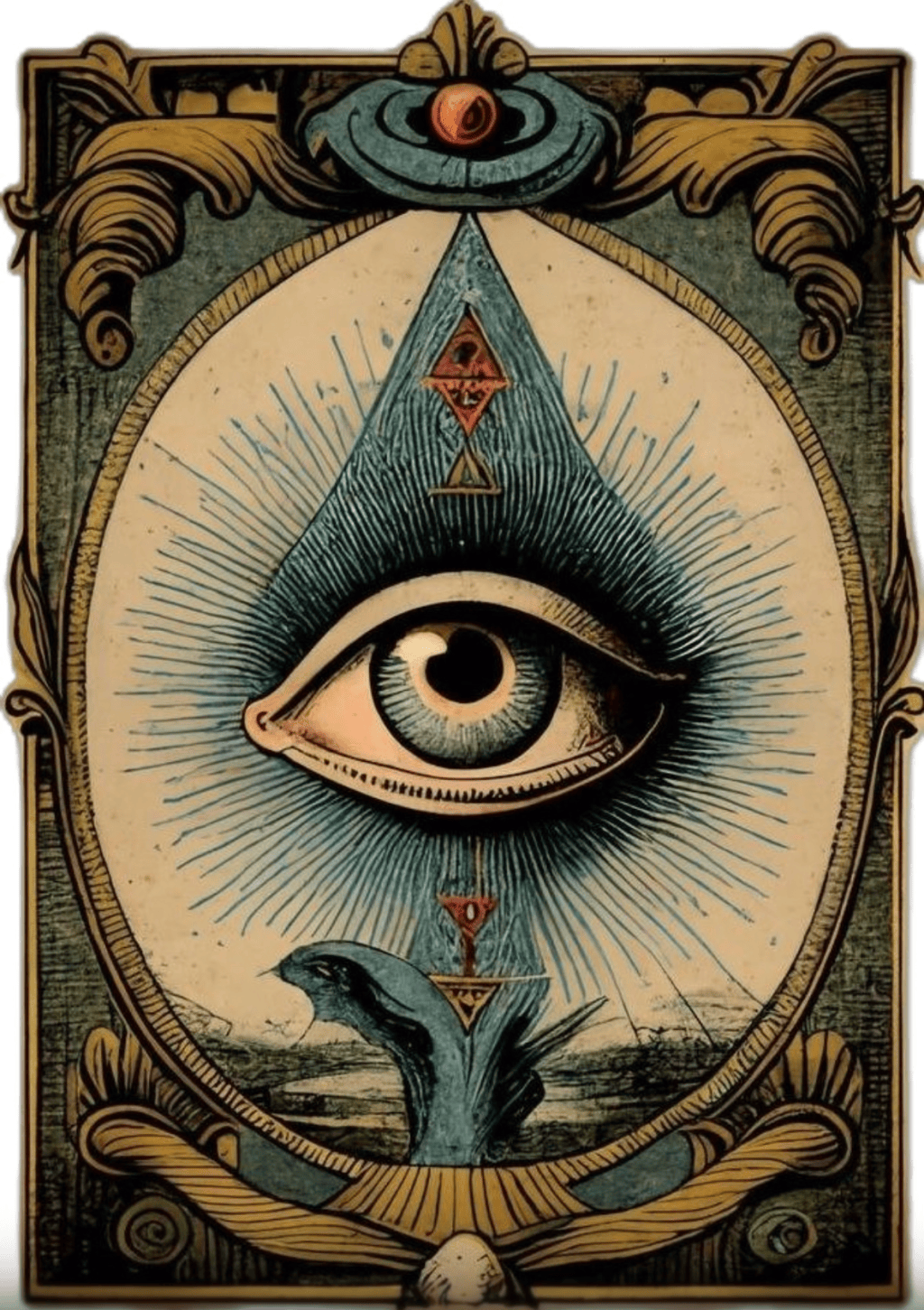
Sit with that construction for a second— TO LOOK INTO.
Not to look at something from the outside, the way the analytical mind does when it studies a thing and holds it at arm’s length.
TO LOOK INTO
Intuition was never framed, at its root, as a shortcut around understanding.
It was framed as a more direct route to the same place, perception without the detour through argument.
By 1833 the word had picked up its second meaning: self-evident.
Which tells you something about how intuitive knowledge behaves once it arrives.
It doesn’t feel like a conclusion you reached.
It feels like a fact you always had.
INTUITION’S ESSENCE
Intuition is knowledge acquired without recourse to conscious reasoning.
It costs little apparent effort, and it often arrives beneath the threshold of awareness. —you didn’t notice yourself knowing it, you just discovered that you already did.
I’ll say what I am convinced is objective reality and the rationalist minds reading this will resist:
Intuition is not knowledge in spite of the unconscious. It is knowledge because of it.
Subconscious Intuition
Somewhere beneath the noise of deliberate thought, pattern and truth are being recognized continuously, without your permission and without your effort.
Intuition is what it sounds like when that recognition finally surfaces loud enough to hear.
Call it whatever you want— Gnosis, Pattern Recognition …
Call it pattern-recognition if the word “gnosis” makes you nervous. I won’t argue about the name. I will insist on the thing.
The analytical mind — the part of you that constructs arguments, weighs pros and cons, wants everything justified before it’s trusted — is not the enemy of intuition.
But the analytical mind is not its source, either.
It is downstream.
It is the part of you that shows up afterward, translating a knowing into language, dressing it in reasons it can defend at a dinner party.
The knowing came first.
Four Intuitive Types Moving Through People
Not everyone’s intuition operates the same way.
I’ve watched these four show up distinctly enough, in myself and in the people I’ve cared about enough to study.
I think of these types less as a typology and more as four different instruments the same instinct can be played on.
1. ADAPTIVE INTUITION
Adaptive intuition moves fast, and it moves on experience — not analysis, experience, the kind that’s been lived through the body enough times to have left a residue.
It shows up when a situation is too time-compressed for deliberation, and it’s the one people instinctively turn to for guidance in a crisis, because it doesn’t destabilize when the ground does.
This is the intuition of someone who’s been through the fire enough times to recognize the smell of smoke before the alarm goes off.
2. OBSERVANT INTUITION
Observant intuition is quieter and more patient. It’s built on close attention — visual, sensory, environmental.
It notices the cue nobody else caught:
1. the tone that shifted & 2. the detail that doesn’t match the story being told.
People who carry this type tend to move cautiously, because they’re gathering before they’re deciding, and it often coexists with real artistic ability — the same faculty that reads a room can read a canvas, or make one.
3. ANALYTICAL INTUITION
Analytical intuition looks, from the outside, almost like its opposite — deliberate, unhurried, unwilling to move until every possibility has been turned over.
But it’s still intuition, not pure logic, because the “considering” isn’t a formal process; it’s a felt need to hold the question longer, even when it produces something that looks like indecision.
This is the instinct behind good lawyers and good detectives — not faster knowing, but knowing that refuses to close early.
4. QUESTIONING INTUITION
Questioning intuition is analytical intuition’s more skeptical cousin — the same refusal to rush, but anchored harder in fact and evidence rather than felt pattern.
It doesn’t trust a recognition until it can also verify it.
This is the instinct behind good accountants:
the sense that something’s off, followed immediately by the demand to prove it.
Why This Matters
None of these four are “more intuitive” than the others.
They’re the same faculty filtered through different relationships to time, evidence, and trust.
What they share is the thing the word has meant since the 1640s: direct perception.
A way of looking into something rather than only at it.
CULTURAL CONDITIONING
We’ve been trained — by a culture that worships the analysis it can show its work for — to distrust the knowing that arrives without a paper trail.
I’d ask you to consider the opposite: that the paper trail is the translation, not the source.
That the fastest, oldest, least defensible-sounding knowledge you have might also be the least corrupted.
It hasn’t been argued into a shape that’s convenient.
It’s just true, the way a self-evident thing is true — because you looked directly at it, and it looked back.
Mastering the nuance between perception and reality is not a passive philosophical exercise; it is the essential toolkit required to dismantle our own cognitive illusions and navigate our way out of profound hardship.
When you are in the trenches, survival depends on clarity.
By carefully distinguishing between seemingly identical ideas, you build an architecture of discernment… allowing you to separate the truth of a situation from the mental friction keeping you stuck.
Map vs. Territory
The first tool in this kit is recognizing that the crisis you are experiencing (the territory) is completely separate from the story you are telling yourself about it (the map).
The distinction between the map and the territory is a fundamental concept in rationality.
A map is a representation of reality, while the territory is the actual reality itself.
Why Does This Matter?
This distinction matters because it highlights the fact that our understanding of the world is always mediated through our mental models and representations.
We must be aware that our ‘maps‘ , no matter how detailed or accurate, are never identical to the ‘territory‘.
Recognizing that your map is flawed is the first step, but how does the map get drawn in the first place?
When we are struggling, our maps are rarely constructed from present reality. Instead, they are stitched together using outdated, unexamined assumptions.
To update your map, you must confront the difference between the mental debris you default to and the active awareness required to survive.
Cached Thoughts vs. Actual Thinking
CACHED THOUGHTS
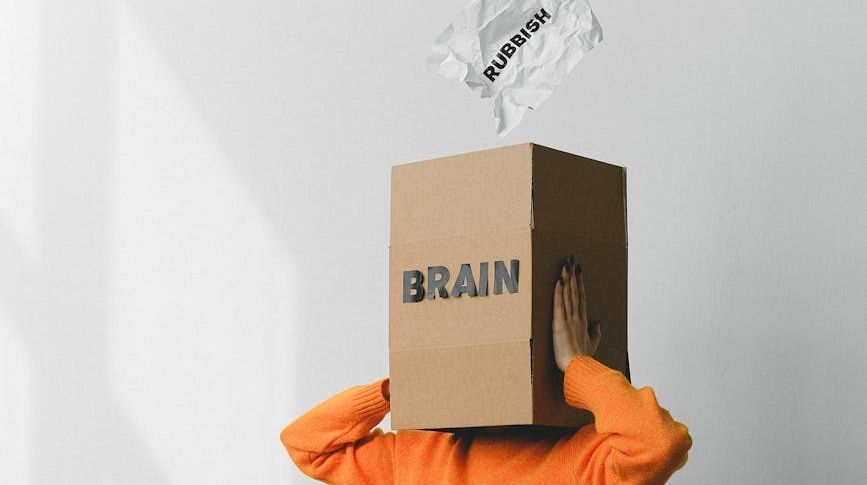
Cached thoughts are the pre-existing beliefs and assumptions that we hold, gathering trash and holding into them like a computer holds onto cqche. This means these are thoughts that lack conscious awareness.
This Repository of ‘thoughts’ are mental shortcuts that we rely on to make sense of the world, with no thought as to if these thoughts are based in objective reality or not.
THINKING
In contrast, thinking involves actively questioning and challenging our cached thoughts, engaging in critical analysis, and seeking new information to refine our understanding.
When you rely on cached thoughts instead of active thinking, your internal world becomes an echo chamber. You begin to mistake your unexamined biases for universal laws. This is where hardship turns into self-sabotage—when you project your own internal friction onto the external territory and assume everyone else is navigating the same distortion.
Mind Projection Fallacy
The Mind Projection Fallacy is a cognitive bias that occurs when people assume that their personal beliefs, values, or perceptions are shared by others or represent objective reality. This fallacy suggests that people often confuse their own thoughts and feelings with universal truths and expect others to have the same thoughts and feelings.
The Mind Projection Fallacy can significantly distort one’s ability to discern.
When we project our own beliefs and emotions onto others, we fail to accurately discern their unique perspectives and experiences.
Here Are Some Examples Of How Mind Projection Impedes Ones Ability To Discern:
Overestimating Agreement: One may falsely believe that others share their opinions, leading to an overestimation of consensus and potentially causing miscommunication or conflict when differing perspectives are eventually revealed.
Inaccurate Assumptions: When projecting personal beliefs, individuals can make inaccurate assumptions about others’ thoughts and feelings, leading to misunderstandings and incorrect conclusions.
Inability to Empathize: By assuming that everyone thinks and feels similarly, individuals can struggle to put themselves in others’ shoes and empathize with their unique experiences and emotions.
Poor Decision-Making: Decision-making can become flawed when one assumes their perspective is universally shared, potentially leading to choices that are not inclusive or beneficial for all parties involved.
To overcome the Mind Projection Fallacy and improve discernment, it is crucial to foster empathy, seek out diverse perspectives, and practice open communication. By recognizing the influence of personal beliefs and emotions on perception, individuals can become more discerning and accurately understand the viewpoints of others.
The Halo Effect:

a cognitive bias where our overall impression of someone or something influences our judgments of their specific traits. This term, coined by psychologist Edward Thorndike in 1920, illustrates how positive perceptions in one area can positively affect our opinions in another.
Escaping this cycle of projection requires a radical shift in how you process information. You must start dissecting the narratives you encounter, both internal and external. To do this effectively and strip away the illusion, you have to separate the mere structure of a situation from its actual substance.
Syntax vs. Semantics
In the context of language and communication, syntax refers to the physical structure of a message.
Semantics refers to the meaning or intended relationship to the territory.
Understanding this distinction is crucial for effective communication.
Yet, grasping the intended meaning is only half the battle.
When you are fighting your way out of a difficult season, it is not enough to know what a situation means—you must understand its real-world impact.
You must discern the difference between the definition of a problem and the actual consequences it produces.
Semantics vs. Pragmatics
Semantics refers to the literal meaning of a message, while pragmatics refers to the intended result or effect of conveying that message.
This distinction is important because it highlights the fact that communication is not just about transmitting information, but also about influencing behavior and shaping outcomes.
Once you understand the practical effects of your situation, the next logical step is determining where to apply your energy to fix it.
This requires pinpointing your exact position on the battlefield.
Are you fighting the immediate symptom right in front of you, or the overarching system that created it?
Object-level vs. Meta-level
The object-level refers to the specific task or problem at hand, while the meta-level refers to the broader context or framework within which that task or problem is situated.
A good meta-level theory can help us get things right at the object level, but it is usually impossible to get things right at the meta level before making significant progress at the object level.
Ultimately, navigating through these layers of abstraction brings you to the core of all discernment.
When the mental debris is cleared, the projections are silenced, and the structure is separated from the impact, you are left with the final, most vital distinction required for true liberation.
Seeming vs. Being
We can only deal with how things seem to us, not how they are in absolute terms.
This is a humbling reminder of our limited perspective and the importance of maintaining a degree of epistemic humility.
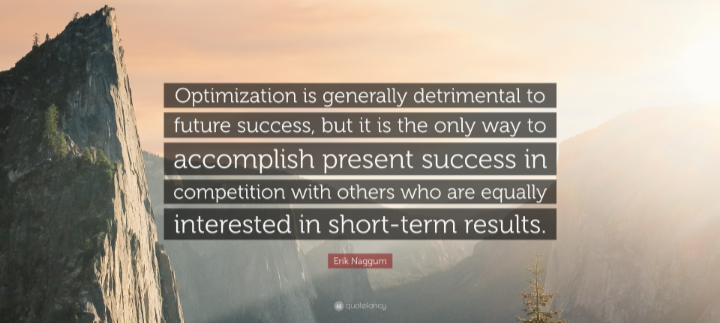
If we optimize too hard for things that seem good rather than things that are actually good, we may end up with suboptimal outcomes.
Signal vs. Noise
Not all information is created equal.
We often desire certain types of information while seeking to ignore others.
The distinction between signal and noise helps us focus on the most relevant and valuable information while filtering out the irrelevant or distracting.
Selection Effects
Selection effects occur when the evidence we have access to is filtered or biased in a particular way.
This can lead to distorted conclusions and faulty decision-making.
Understanding selection effects requires modeling where our information comes from and accounting for the processes that shape what we see.
What You Mean vs. What You Think You Mean
People often claim to have meant something slightly different than what was originally stated when their original position is challenged or refuted.
This automatic response, generated by our brains without conscious control, can be dangerous for clear thinking.
It is important to be aware of this tendency and to strive for consistency and honesty in our communication.
What You Mean vs. What Others Think You Mean
The illusion of transparency and the double illusion of transparency highlight the gap between what we think we are communicating and what others actually understand.
We often overestimate how clearly we convey our thoughts and feelings, while underestimating the extent to which others misinterpret our messages.
Effective communication requires being mindful of these biases and seeking feedback to ensure mutual understanding.
What You Optimize vs. What You Think You Optimize
Our actions are often driven by hidden motives and incentives that we may not be fully aware of.
Evolution, for example, optimizes for reproduction, but in doing so creates animals with a variety of goals that are correlated with reproduction.
Intrinsic motivation is generally stronger and more effective than extrinsic motivation.
Understanding the difference between what we think we optimize for and what we actually optimize for can help us align our actions with our true values and goals.
Stated Preferences vs. Revealed Preferences
Stated preferences are the preferences we explicitly express, while revealed preferences are the preferences we can infer from our actions.
These two types of preferences are often misaligned, with our actions not matching our stated beliefs or desires.
Recognizing this distinction can help us identify and address inconsistencies in our decision-making.
What You Achieve vs. What You Think You Achieve
Most of the consequences of our actions are unknown to us.
We often overestimate our ability to predict and control the outcomes of our decisions.
Effective action requires humility, openness to feedback, and a willingness to learn from experience.
It is impossible to optimize without proper feedback, so we must be vigilant in seeking out information about the actual results of our efforts.
What You Optimize vs. What You Actually Achieve
Consequentialism focuses on the expected consequences of our actions, rather than the actual consequences.
While it is important to consider the potential outcomes of our decisions, we must also be prepared to adapt and adjust our course based on the real-world results.
Rigid adherence to a particular optimization strategy can lead to suboptimal outcomes if it fails to account for the actual effects of our actions.
What You Seem Like vs. What You Are
Our external appearance and behavior may not always reflect our true nature or inner experience.
We may present a certain image to the world while privately struggling with doubts, fears, or contradictory impulses. Recognizing this distinction can help us cultivate self-awareness, authenticity, and empathy in our relationships with others.
What Other People Seem Like vs. What They Are
Similarly, we often make assumptions about others based on their outward behavior or reputation, without fully understanding their inner lives or the complex factors that shape their actions.
Assuming that we understand others is a common mistake that can lead to misunderstandings, prejudice, and missed opportunities for connection and growth.
What People Look Like vs. What They Think They Look Like
People tend to underestimate the gap between their stated preferences and their revealed preferences. We may claim to value certain qualities or characteristics in ourselves or others, but our actions often tell a different story. Recognizing this discrepancy can help us align our self-perception with reality and make more authentic choices.
What Your Brain Does vs. What You Think It Does
Our brains are complex, powerful, and often mysterious. We are running on “corrupted hardware” in the sense that our thought processes are shaped by social and evolutionary factors that can distort the truth. The brain’s machinations are fundamentally social, automatically engaging in signaling, face-saving, and other behaviors that can lead to biased or irrational decisions. While we must be skeptical of the outputs of our thought processes, we must also strike a balance between skepticism and action, particularly in situations that require quick thinking or decisive action.
Clever Argument vs. Truth-seeking
People often believe what they want to believe, a phenomenon known as motivated cognition.
Giving a smart person more information and more methods of argument may actually make their beliefs less accurate, because it provides them with more tools to construct clever arguments for what they want to believe.
The actual reason for believing something determines how well that belief correlates with the truth.
If you believe something because you want to, any arguments you make for that belief, no matter how strong they may sound, are devoid of informational context about the truth of the belief and should be ignored by a genuine truth-seeker.
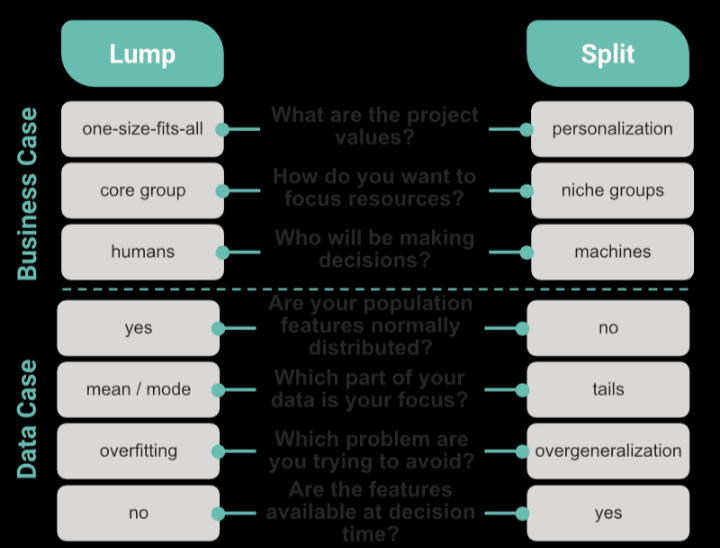
Lumpers vs. Splitters
Lumpers are thinkers who attempt to fit things into overarching patterns, while splitters are thinkers who make as many distinctions as possible, recognizing the importance of being specific and getting the details right. The lumper mindset can be useful for identifying broad trends and connections, while the splitter mindset is essential for accurate analysis and nuanced understanding.
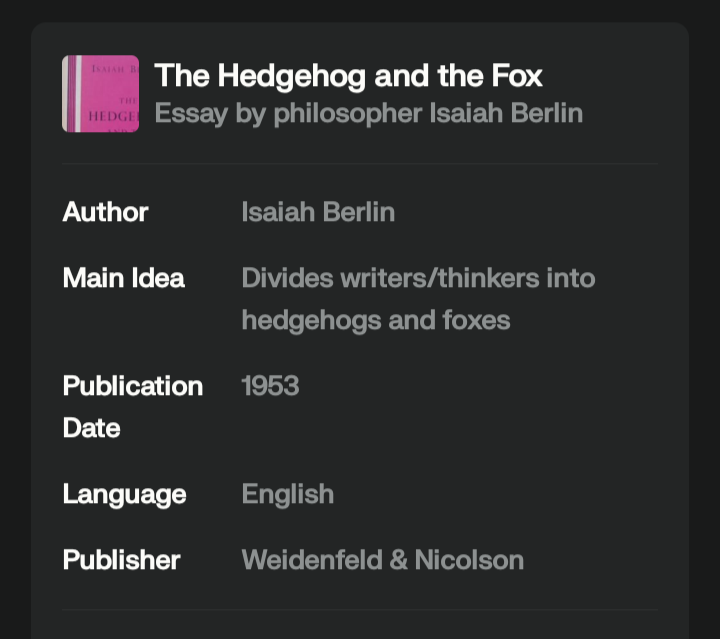
Fox vs. Hedgehog
The fox knows many things, while the hedgehog knows one big thing. Closely related to the lumper-splitter distinction, the fox mindset involves a broad array of knowledge and the ability to draw insights from diverse sources. The hedgehog mindset, in contrast, focuses on a single big idea and applies it everywhere. According to Tetlock’s research, the fox mindset is generally better for making accurate judgments in complex, uncertain situations.
Traps vs. Gardens
Well-kept gardens die by pacifism, meaning that conversations, societies, systems, and even thermodynamic equilibrium tend to slide toward disorder, conflict, and decay unless actively maintained.
Recognizing this distinction can help us be proactive in defending and nurturing the things we value, whether it’s a productive dialogue, a thriving community, or a well-functioning organization.
Nuanced thinking involves carefully distinguishing between seemingly similar concepts and recognizing the subtle differences that shape our understanding of the world.
By engaging in this kind of discernment, we can make more informed decisions, communicate more effectively, and develop a richer, more accurate perspective on the complex realities we navigate every day.
Philosophy breaks down into several domains that shed light on different aspects of existence.
“Philosophy is not a mere intellectual pursuit or a collection of abstract concepts; it is a way of life, a constant questioning and exploration of the fundamental truths and mysteries of existence.” – Friedrich Nietzsche
Aesthetics contemplates the essence of beauty in nature and art and what qualifies something as having artistic or creative worth.
Delving into these branches unveils endless layers of insight on essential topics.
For beginners, even surface-level awareness broadens understanding across diverse areas.
Getting Started
Resources and Methods:
Read introductory textbooks on general histories, key ideas, and pioneers in the field to build foundational knowledge.
Browse collections of short works by great philosophers like Plato, Aristotle, Descartes and Confucius to sample diverse perspectives.
Follow philosophy podcasts and YouTube channels that simplify complex concepts for newcomers through visual aids.
Join philosophy groups and forums to pose questions, learn from others and share thoughts.
Write notes or journals reflecting on what sparks curiosity or challenges beliefs for continued personal growth.
With dedication and an open mind, philosophy empowers novices to not only comprehend various perspectives but craft their own mature worldviews. Approaching this study with patience and enthusiasm ensures a rewarding start to the journey.
lFor any beginner interested in strengthening critical skills, broadening perspectives or simply satisfying curiosity – the philosophical journey provides endless opportunities for enrichment.
I hope this overview has inspired you to delve deeper through diligent study of history’s greatest minds, rigorous self-reflection and respectful dialog with other seekers of truth.
Philosophy’s bounties are yours to uncovered – may your adventure be filled with wonder!
Philosophy is the study of fundamental questions about existence, knowledge, and values. It addresses the most basic and essential questions about our world, such as:
What is the nature of reality?
How can we obtain knowledge and understanding?
What is right and wrong, good and bad?
The three major branches of philosophy are metaphysics, epistemology, and ethics. Each of these branches deals with different aspects of human thought and experience.
Together, these three branches of philosophy help to provide a comprehensive understanding of the world and our place in it. They enable us to make important decisions about how we should live our lives, what we should believe, and what we should value.
Metaphysics
Metaphysics, a fascinating branch of philosophy, explores the essence of reality. It involves deep inquiries into the fundamental nature and structure of existence. Through this intellectual journey, metaphysics seeks to reveal the mysterious nature of reality.
It poses thought-provoking questions, such as:
What truly defines existence?
Are there divine beings shaping our world?
How do the mind and body interact and influence each other?
In the context of historical and theological texts, metaphysics can help us understand the beliefs and assumptions that underlie all things. For example, when we read about the nature of God or the characteristics of God, this is the philosophical realm of Metaphysics.
Determinsm vs Free Will
The ideas and concepts explored in metaphysics often defy common sense and traditional scientific explanation, leading to heated debates and disagreements among thinkers. For example, the concept of free will and the concept of determininsm are central focuses of metaphysics, yet there is no consensus. Some philosophers argue that humans have complete control over their actions, while others believe that our actions are determined by external factors beyond our control.
Consciousness
Another controversial area of metaphysics is the concept of consciousness, which refers to our experience of awareness and self-identity.
While some thinkers argue that consciousness is solely a product of brain activity, others posit that it is separate from the physical body and linked to a larger Spiritual reality {This is the route I take}.
The depth and controversial nature of metaphysics reveal the complexity of our relationship with reality and the human experience.
EPISTEMOLOGY
Another important concept is epistemology. Epistemology is concerned with knowledge and understanding.
One of the key questions in epistemology is how we come to know things.
Do we gain knowledge through empirical observation and experience, or are there innate ideas that exist within us?
This debate between empiricists and rationalists has been ongoing for centuries, with both sides presenting compelling arguments.
Empiricists
Empiricism is an epistemological theory that suggests knowledge comes primarily from sensory experiences and evidence. Empiricists reject the notion of innate or inherited ideas, instead favoring acquiring knowledge through experiences.
Empiricists rely heavily on scientific observation and experimentation to validate or reject beliefs. While influential in fields like science, psychology, and medicine, it has faced criticism from rationalists.
Rationalists
Rationalism is a philosophical theory that emphasizes the use of reason and logical deduction for acquiring knowledge about the world, which is based on innate ideas or principles that humans are born with.
Rationalists assert that certain truths can be known a priori,without the need for observation or experimentation.
This theory has influenced renowned philosophers like Descartes, Kant, and Leibniz.
Another area of controversy in epistemology is the relationship between belief and truth.
Can a belief be true or false, or is truth dependent on social and cultural factors?
Debates exist on relativism and skepticism, with some arguing for subjective truth and others for objective truth through reason and evidence.
Relativism
Epistemological relativism suggests that there is no absolute or objective truth, and that knowledge and beliefs are dependent on the individual’s perspective, experience, and social context.
Skepticism
Philosophical skeptics argue that knowledge claims cannot be justified or proven, and that what we believe to be true is merely an illusion or mental construct. Scientific skeptics, on the other hand, use scientific methods to evaluate claims and evidence. Skepticism is important in encouraging critical thinking but can lead to a lack of confidence in knowledge claims, hindering scientific progress.
Technological progress influences the field of epistemology and the influence of information on shaping beliefs. Epistemology provides insights into how knowledge was perceived in historical and theological contexts.
For instance, when we examine narratives of individuals from the past embracing a belief in a higher power, we actively engage in the domain of epistemology.
ETHICS
Ethics is a branch of philosophy that deals with morality, values, and guidelines for behavior. Ethics is concerned with questions such as what is right and wrong, what is good and bad, and what is permissible and impermissible. Some of the major ethical theories include consequentialism, deontology, and virtue ethics.
It explores questions such as
“What is the right thing to do?” and
“What is the meaning of moral responsibility?”
Consequentialism
Consequentialism holds that the morality of an action is determined by its outcomes or consequences.
Deontology
Deontology, on the other hand, holds that actions are intrinsically right or wrong, regardless of their outcomes.
Virtue Ethics
Virtue ethics focuses on the character of the individual and how it can lead to a morally good life.
When we study how people in the past treated others or made choices, we engage with ethical principles.
Importance Of Philosophical Thought
By exposing us to different philosophical concepts and schools of thought that provide us with different ways of thinking about the world around us. Philosophy can also help us in developing critical thinking skills that allow us to analyze and evaluate arguments and ideas that we encounter. In this way, philosophy enables us to discern what is true, meaningful, and valuable from what is not, and to make informed decisions and choices accordingly. Ultimately, the study of philosophy can equip us with the tools to lead a more examined and fulfilling life.