Month: October 2025

  • Empathy

    Empathy

    Feeling Into Another

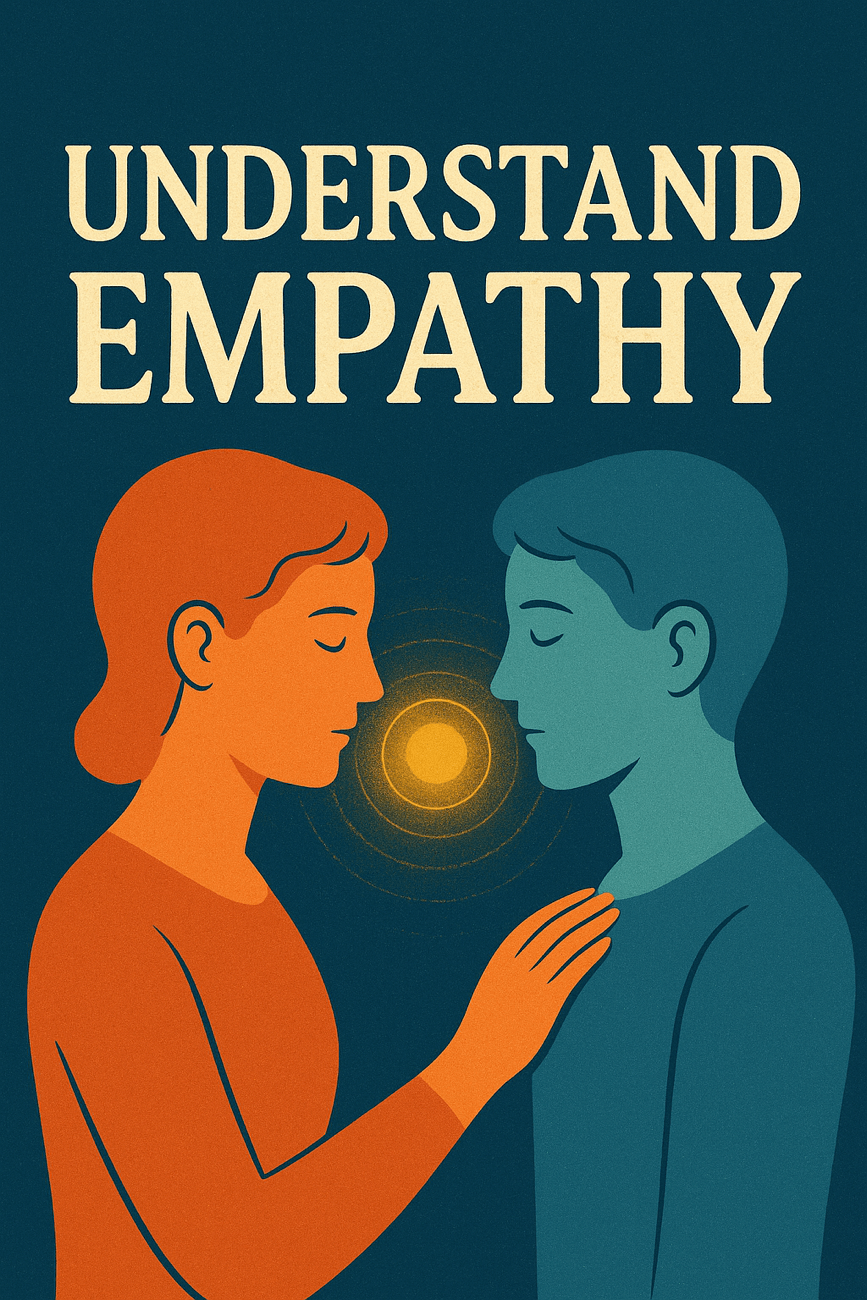
    Empathy is not passive sympathy—it is entry. To empathize is to feel into another’s experience until the boundary between “you” and “them” briefly dissolves.


    Jonathan Edwards once described it as knowing another’s feelings as if they were your own. That’s closer to the truth than most realize.

    Empathy is more than emotion—it’s perception.

    A heightened nervous system, a tuning fork of consciousness that resonates with the unspoken frequencies around it. Science now peers curiously at this mystery, finding evidence of hyper-responsive mirror neurons and unique dopamine patterns, particularly among introspective personalities.

    Yet the laboratory only grazes what mystics and sensitives have long known: empathy is not merely learned; it can be awakened.

    Some are born empaths—open channels of sensation from the first breath.

    Others grow into it, chiseling sensitivity from stillness, meditation, and the discipline of inner quiet.

    With intention, anyone can refine this art:

    • grounding the body
    • visualizing energetic boundaries
    • learning when to open and when to shield.

    Focus enhancers—nootropics, deep breathing, and meditative practice—can sharpen this capacity.

    But the core of empathy remains spiritual, not chemical.

    The word itself comes from the Greek empatheia—to feel into, to be moved by passion.

    Later, the German Einfühlung carried it into psychology through Hermann von Helmholtz in the 19th century. Yet long before language named it, empathy pulsed through the human story as the invisible bridge between souls.

    At its root, empathy is threefold:

    Understanding

    Recognizing and comprehending another’s emotions.

    Sharing

    Feeling a reflection of what they feel within your own body.

    Perspective-Taking

    Stepping fully into their world and seeing through their eyes.

    From these arise the primary faces of empathy:

    Affective (Emotional) Empathy

    When another’s sorrow or joy ripples through you, unbidden. It’s the contagion of feeling that can both unite and overwhelm.

    Cognitive Empathy

    The intellectual capacity to see through another’s frame of mind. It doesn’t feel what they feel—it understands it. This form is vital in discernment, negotiation, and healing professions, where compassion must be guided by clarity rather than collapse.

    Somatic Empathy

    When the body itself becomes a translator of emotion. A stomach tightens in response to another’s anxiety, a chest constricts when they recall grief. The nervous system speaks in sympathetic vibration.

    Spiritual Empathy

    The rarest and deepest: when one soul feels into another beyond words, time, or separation. It’s the awareness that what hurts one part of creation reverberates through the whole.

    Empathy lives at the intersection of heart and brain—an orchestra of mirror neurons, amygdala signals, and energetic resonance.

    Emotional cognition allows us to interpret what we feel, to trace the current back to its source and understand how emotion shapes thought, memory, and decision.

    At its highest form, empathy becomes empathic resonance. It is the recognition that another’s heartbeat is not separate from your own, only playing a different rhythm.

    To cultivate empathy is not to drown in feeling—it’s to master it.

    The empath who grounds their sensitivity becomes an instrument of peace. The one who leaves it untrained becomes a sponge for the world’s pain.

    Empathy is the art of sacred attunement.

    It is both psychic and profoundly human, the oldest language of the soul.

    When harnessed with discernment, it births compassion, connection, and the quiet strength that heals unseen wounds—within and without.
    READ MORE

  • Divination In Scripture

    I do not play games here.

    “Divination.”

    A word that sets off religious trauma alarms.

    In the evangelical imagination, it conjures imaginations of Hollywood witches, Ouija boards, and black cats sacrificed in fire…

    Depictions of hell meant to serve as a cautionary tale for Sunday school children.

    But strip away the hysteria, read the actual text, open a dictionary, and you’ll find something more nuanced, and far more unsettling.

    Both are true:

    – The Bible condemns divination.
    – The Bible uses divination.

    So the question isn’t if divination appears in Scripture.

    It’s what kind God condemns, and what kind He authorizes.

    The Counterfeit Path

    Divination God Forbids

    Let’s begin where the line is clear.

    “There shall not be found among you anyone… who practices divination, tells fortunes, interprets omens, or consults the dead.”

    -Deuteronomy 18:10–12

    No gray here. Right?

    It is wicked to perform spiritual piracy.

    This would cover unsanctioned attempts to access hidden knowledge through pagan ritual, necromancy, or invocation of alien spirits.

    This is divination that severs us from Divine order.

    It’s the lust to control the unknown rather than commune with it.

    It’s worshipping creation to extract secrets instead of worshipping the Creator to receive revelation.

    Example: Saul and the witch of Endor (1 Samuel 28).

    That was not prophecy. It was desperation dressed as devotion.

    It ended in judgment, not illumination.

    The Sanctified Channel

    Divination God Permits

    Now here’s the curveball.

    The same Scripture that forbids divination also records divinely sanctioned forms of divination.

    These were tools used by priests, prophets, and apostles to discern God’s will.

    Urim & Thummim

    (Exodus 28:30; Numbers 27:21)

    Sacred lots worn over the priest’s heart were literal instruments (magical amulets) used to decode Divine guidance.

    Casting Lots

    Used to distribute land (Joshua 18), appoint leadership (1 Samuel 10), and even select Judas’ replacement (Acts 1:26).

    Dream Interpretation

    Joseph, Daniel, and others functioned as interpreters of divine dreams.

    Prophetic Symbolism

    Ezekiel’s street performances, Jeremiah’s object lessons, John’s apocalyptic visions—all were divinatory acts in sacred alignment.

    The medium isn’t the issue.
    The source is.

    What God condemns is bypassing Him.

    What He blesses is listening to Him.

    The Sacred Line

    Source & Surrender

    Divination means “the seeking of hidden knowledge.”

    The Bible doesn’t condemn that impulse to Seek the hidden realm, in fact it encourages us to go to the Secret Rooms with The Father.

    The Bible condemns pride in the pursuit.

    If you’re consulting spirits to manipulate outcomes, you’re rebelling.

    If you’re surrendering to Divine mystery, seeking revelation on God’s terms, you’re worshipping.

    The sin isn’t the search. It’s the source.

    The danger isn’t knowledge.

    It’s control.

    The Modern Mirror

    Today’s symbolic tools; dreams, visions, synchronicities, even tarot or astrology—aren’t automatically evil.

    They’re languages, mirrors, archetypal scripts written into the psyche.

    Their moral weight depends entirely on the spirit animating their use.

    God has always spoken through signs and symbols.

    He still does.

    But His voice doesn’t feed curiosity; it refines character.

    It doesn’t confirm your ego; it crucifies it.

    So don’t dismiss the mystical as demonic.

    But don’t baptize every “download” as divine either.

    Discernment is not fear.

    It is fidelity.

    The Final Thought

    The Bible is not anti-divination.

    It is anti-ego.

    Anti-idolatry.

    Anti-manipulation.

    Scripture doesn’t call you to spiritual blindness.

    It calls you to holy vision:
    anchored in awe, humility, and fire.

    If you’re gifted to read signs, interpret dreams, or navigate symbols, do so with reverence.

    Walk softly.

    Seek truth, not control.

    Because in the end, God does not hate diviners.

    He hates when His creation believes it can replace Him.

  • Writing Is Magick

    Writing Is Magick

    The Alchemical Art of Turning Thought Into Reality

    Have you ever paused to consider the spell cast by a well-crafted sentence?

    The way words weave together, shaping emotion and image, is nothing short of alchemy.
    A single phrase, perfectly placed, can open doorways in the mind.

    The Spell of a Sentence

    Have you ever paused to consider the spell cast by a well-crafted sentence?

    Words weave together, shaping emotion and image—it’s nothing short of alchemy. A single phrase, perfectly placed, can open doorways in the mind.

    To write is to commune with the unseen. Language is the wand; attention is the incantation. When we master its rhythm, we access the flow states of God—those luminous currents of creation that move through us as expression.

    The Realm of Imagination

    Imagination is not mere fancy—it’s the workshop of reality. It’s where archetypes stir and symbols awaken. Reading the works of Bunyan, Plato, and Jung revealed this truth: thought itself is creative, and every word shapes the invisible architecture of being.

    To realize this is to take up a sacred responsibility.

    Words are not idle things. They reverberate in the psyche long after they’re spoken, planting seeds in the soil of consciousness—ours and others’.

    The language we release into the world becomes the atmosphere we breathe back in.

    The Hidden Architecture of Expression

    Beneath eloquence lies Essence—the silent intelligence that shapes our words before they form.

    Writing becomes self-revelation: transforming confusion into clarity, chaos into meaning.

    To merge logic with intuition is the mark of the alchemist. It grants lucidity without sterility, reason without rigidity. In this union, perception widens, and we recognize the strange with both wonder and discernment.

    Be Subtle | The Quiet Force of Influence

    Subtlety isn’t weakness—it’s power refined. The strongest influence whispers; it doesn’t demand.

    In persuasive writing, this is gold. Too much force repels; subtle persuasion invites. It works through resonance and rhythm, guiding rather than grabbing.

    Ask questions. Offer mirrors. Let truth be discovered, not dictated.

    That is the difference between manipulation and mastery.

    Alchemy of the Word

    To write alchemically is to transmute ordinary language into gold. Each word becomes a vessel of vibration; each sentence, a spell of transformation.

    Eloquence is part of this process: the Rule of Three, parallelism, and isocolon create rhythm that shapes emotional response.

    These are not ornaments—they are harmonics that make the unseen felt.

    Hermetic Principles of Creative Writing

    The magick of writing reflects the Hermetic Laws of reality:

    Mentalism — Thought precedes form.

    Correspondence — Every line mirrors a greater order.

    Vibration — Words carry frequency; tone determines impact.

    Polarity — Meaning lives between opposites.

    Rhythm — Language breathes; learn to breathe with it.

    When honored, these laws turn writing into manifestation.

    Unveiling the Essence

    Like ancient alchemical texts, true writing conceals treasures for readers willing to look deeper.

    Each phrase is a key—unlocking ideas, yes, but also aspects of self.

    Writing is a sacred act of becoming.

    Through subtlety, discipline, and imaginative daring, both writer and reader are transformed

    —lead into light, confusion into comprehension, word into world.