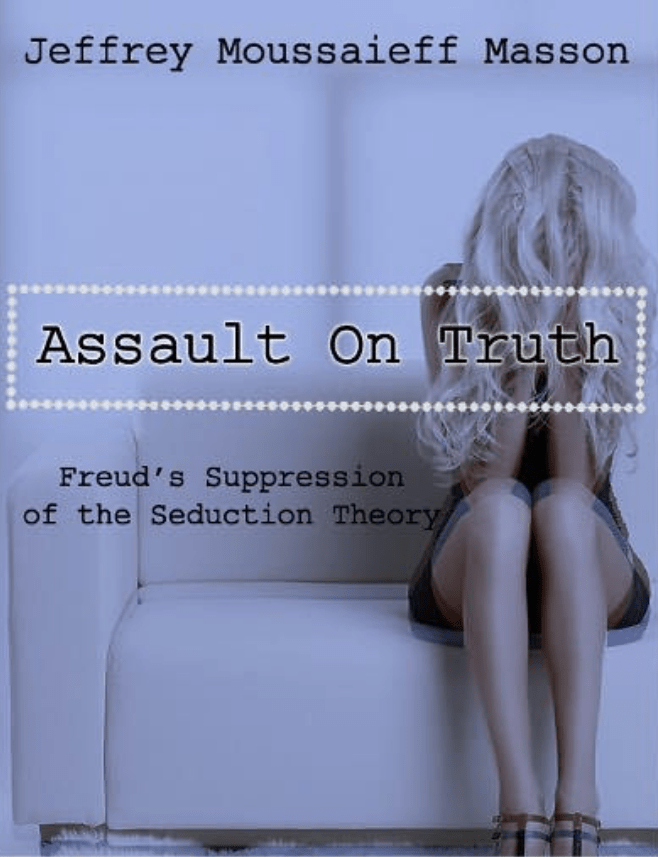
Jeffrey Masson’s “The Assault on Truth: Freud’s Suppression of the Seduction Theory” remains a groundbreaking and controversial work since its publication in 1984.
The book challenges the foundations of Freudian psychoanalysis by arguing that Sigmund Freud deliberately abandoned his seduction theory, which posited that many cases of neurosis were the result of childhood sexual abuse.
Masson’s meticulous research and bold assertions have faced criticism, yet his work merits defense for several compelling reasons.
The Courage to Challenge Orthodoxy
One of Masson’s most significant contributions is his willingness to question the established narrative of psychoanalysis.
Freud’s shift from the seduction theory to the theory of infantile sexuality marked a pivotal moment in the history of psychology.
By re-examining Freud’s letters, case histories, and other documents, Masson presents a compelling argument that Freud’s change of heart was not solely based on empirical evidence but also influenced by social and professional pressures.
This challenges us to consider how scientific theories can be shaped by external factors and the importance of remaining critical of accepted doctrines.
Advocacy for Survivors of Abuse
Masson’s work is particularly significant in the context of advocating for survivors of childhood sexual abuse.
By suggesting that Freud’s abandonment of the seduction theory contributed to the minimization of the prevalence of sexual abuse, Masson highlights the need for greater recognition and validation of survivors’ experiences.
This aspect of his work has resonated with many who feel that their voices have been historically marginalized.
In a society still grappling with the ramifications of abuse, Masson’s insistence on the importance of listening to and believing survivors is more relevant than ever.
Rigorous Scholarship and Intellectual Honesty
Critics of “The Assault on Truth” often focus on the implications of Masson’s arguments rather than addressing the substance of his research.
However, Masson’s work is grounded in extensive archival research and a thorough analysis of Freud’s writings.
His scholarship exemplifies intellectual honesty and a commitment to uncovering the truth, even when it challenges deeply held beliefs.
By engaging with primary sources and providing a well-documented critique, Masson invites readers to critically evaluate the foundations of psychoanalytic theory.
The Role of Controversy in Advancing Knowledge
Controversy is an essential driver of intellectual progress.
Masson’s book has sparked significant debate within the fields of psychology, psychoanalysis, and beyond.
This debate has encouraged scholars to re-examine Freud’s work and its implications, fostering a more nuanced understanding of the history of psychoanalysis.
By challenging the status quo, Masson has contributed to a richer and more dynamic discourse, demonstrating the value of dissenting voices in advancing knowledge.
A Call for Openness in Scientific Inquiry
“The Assault on Truth” serves as a reminder of the importance of openness and transparency in scientific inquiry.
Masson’s critique of Freud’s alleged suppression of the seduction theory underscores the need for scientists and scholars to remain open to new evidence and willing to revise their theories in light of new findings.
This ethos is essential for the continued advancement of any field of study and ensures that scientific progress is not hindered by dogma or institutional inertia.

Jeffrey Masson’s “The Assault on Truth” is a courageous and rigorous work that challenges the foundations of psychoanalytic theory and advocates for the recognition of survivors of childhood sexual abuse.
By questioning Freud’s motivations and highlighting the social context in which he worked, Masson encourages us to critically evaluate accepted narratives and remain open to new evidence.
His work exemplifies the importance of intellectual honesty, rigorous scholarship, and the role of controversy in advancing knowledge.
