Month: June 2024

  • Embracing Vulnerability

    Embracing Vulnerability

    Through Faith, I cherish the ability to feel genuine human emotions and show vulnerability during life’s challenging moments.

    It is through the strength of the Lord that I can embrace my weaknesses and recognize my need for His support.

    Gratitude for God’s Grace

    I am profoundly thankful to God for allowing me to experience deep emotions, to not shy away from pain and anguish until my final moments.

    My hatred for sin stems from a deep understanding of its nature.

    The Righteous Anger of Repentance

    The consequences of my sins incite rage within me, a righteous anger that leads to repentance and growth.

    This anger, when directed appropriately, ignites an ever-growing passion for the Lord with each trial He guides me through, fulfilling His promise.

    The Honor of Divine Discipline

    Being pruned by God is an honor; it signifies that I am His legitimate child.

    If one does not face God’s discipline in this life, it may indicate they are not His child and are instead awaiting judgment in the next.

    Seeing with the Eye of The Lord

    When you see with the Eye of The Lord, which is Light, you move beyond mere belief; you know that eternity is real and that the Lord reigns.

    This knowledge confirms that nothing impure can enter the Holy of Holies.

    The Intrinsic Holiness of God

    God’s holiness is intrinsic to His being.

    He cannot desire anything but holiness because it is not merely what He does or how He acts—it is who He is: THE GREAT “I AM.”

    The Choice of Pain Over Numbness

    I would choose to feel pain over becoming numb.

    Numbness, a state I’ve experienced, leads to detachment from genuine feelings.

    It’s a defense against the mental and emotional pain of realizing we are not who we thought we were.

    The Journey from Egotism to Self-Realization

    Egotism, rooted in childhood shame, persists into adulthood as a denial of our own shortcomings.

    But recognizing your worth and the extent of God’s love for you is far more astounding than any self-delusion of grandeur.

    The Heart Turned to Stone

    When numbness prevails for years, the senses we once had become dormant, leading to a heart that turns to stone.

    Rejecting one’s sinful nature or accountability, denying the wickedness within, prevents us from experiencing the true relief and comfort that Christ offers.

    The Power of Repentance

    It is only by denying oneself and following Jesus that we can begin to comprehend His sacrifice and the mercy He extends—a mercy beyond our understanding.

    The Dark Fraction of Our Being

    The inner child of a toxic family is a dark fraction of our being, a fragment of consciousness pushed into the shadows, resurfacing in moments of weakness.

    Facing My Iniquities

    In closing, remember the adage: “What you resist, persists.”

    It’s time to face our iniquities and embrace the transformative power of God’s grace.

  • Just in: Julian Assange Released

    Just in: Julian Assange Released

    Julian Assange has been released from Belmarsh prison in London, where he had been held for more than five years.

    He is now on his way to enter a plea deal with the U.S. Justice Department.

    The agreement is expected to end the yearslong legal battle over the publication of classified documents by WikiLeaks.

    Assange is anticipated to return to Australia following the proceedings.

  • FREE DIGITAL LIBRARIES

    FREE DIGITAL LIBRARIES

    1. Open Library

    OpenLibrary.org is a digital library project operated by the non-profit Internet Archive. It aims to create “one web page for every book ever published”.

    2. Digital Occult Library

    The site aims to foster learning, intellectual exchange, and growth by integrating different disciplines and perspectives on occult topics.

    3. Christian Classic Library

    Classic Christian books are enduring works of literature that have significantly influenced Christian thought, theology, and spiritual practice.

    These texts often explore themes of faith, morality, and the human relationship with the divine, providing insights that have transcended generations.

    Some of the most notable classic Christian books include “The Pilgrim’s Progress” by John Bunyan, an allegorical novel about a Christian’s journey towards spiritual enlightenment and salvation, and “Institutes of the Christian Religion” by John Calvin, a foundational work of Protestant theology.
    You can find more about these works on Gospel eBooks and Goodreads.

    Publishers like Ave Maria Press continue to release new editions of these classic works, ensuring their availability for contemporary readers. Their collection includes writings by influential figures such as Origen, Thomas à Kempis, and Teresa of Avila, among others avemariapress.com.

    4. Library Genesis

    Library Genesis (Libgen) is a comprehensive digital library offering free access to a vast collection of full-text content across various topics, including technology, art, biology, business, chemistry, and computers, aimed at democratizing knowledge by bypassing traditional access barriers associated with academic and literary resources.


    5. Many Books

    ManyBooks is a digital library providing access to a vast collection of free eBooks in multiple genres, catering to a wide range of reader interests.

    The platform features a diverse selection of titles, from fantasy and science fiction to romance and mystery, with options for both free and discounted books.

    Some highlighted titles include “The Show Must Go On” by Jonathon Kelley and “Do You Believe in Magic?” by Jim Melvin, showcasing the variety available to readers seeking new literary adventures.

  • Understanding the Supernatural

    Understanding the Supernatural

    The supernatural refers to phenomena that cannot be explained by conventional understandings of natural laws nor by mainstream science.

    This phenomena can include ghosts, spirits, psychic abilities, and other paranormal occurrences.

    Paranormal refers to occurrences or phenomena that are beyond the scope of scientific understanding or explanation. These events are often attributed to supernatural forces or powers that exist outside of the natural world. Examples of paranormal phenomena include ghosts, UFOs, telekinesis, and other unexplained phenomena.

    The word, Supernatural is derived from the Latin word “supernaturalis“.

    The term “Supernatural” refers to phenomena that are beyond the natural laws or understanding.

    The concept of the supernatural has existed throughout human history, with beliefs in gods, spirits, and otherworldly beings prevalent in various cultures and societies.

    Supernatural also includes premonitions, psychic dreams, and hauntings.

    In some cultures, the supernatural is embraced and celebrated, while in others it is feared and avoided.

    Scientific Perspectives on the Supernatural

    Some scientists believe that supernatural phenomena can be explained through psychology and neuroscience.

    Others argue that the supernatural is beyond the realm of scientific understanding.

    Over time, the exploration and interpretation of the supernatural have influenced mythology, religion, folklore, and literature, shaping our understanding of the unknown and the mystical.

    The development of supernatural beliefs has evolved alongside advancements in science and philosophy, sparking debates about the existence of the supernatural and its impact on human experience.

    Delving Beyond Mere Visual Observations

    Supernatural phenomenon goes beyond just what meets the eye.

    It delves into the realms of inner healing and divine intervention, offering a deeper understanding of a reality that surpasses the limits of our mortal existence.

    Exploring the supernatural opens up discussions on spirituality, consciousness, and the mysteries of the universe, challenging us to think beyond the tangible and consider the profound implications of forces beyond our understanding.

    Requirements Supernatural Perception

    Perceiving the supernatural requires individuals to open their minds to possibilities beyond the tangible realm.

    It goes beyond what can be easily explained or understood by conventional means, pushing us to contemplate the existence of forces and energies beyond our comprehension.

    The supernatural challenges the status quo and invites us to question our beliefs, leading to a deeper understanding of the mysteries of life.

    Spiritual Growth and Worldly Pursuits

    Individuals fixated solely on worldly pursuits risk neglecting their spiritual growth and ultimate destiny.

    The lure of material possessions and immediate gratification can blind individuals to the profound journey of self-discovery and spiritual awakening.

    By shifting our focus beyond this earthly existence, we can embrace realms beyond typical perception.

    Transcendence and Divine Intervention

    The supernatural offers a pathway of connection with the Creator offering a deeper understanding of our place in the grand scheme of existence.

    Divine intervention acts as a catalyst guiding us towards a more meaningful and purposeful life.

    Comprehending the supernatural realm requires a shift in perspective, opening the gateway of consciousness to understand profound insights and experience reality beyond the ordinary.

    It is through this exploration that we may uncover new insights into the mysteries of life and our place in the universe.

  • The Quantum Revolution

    The Quantum Revolution

    A Paradigm Shift in Physics

    The term “paradigm shift” (in the realm of physics) can be traced back to the work of Thomas Kuhn, a renowned philosopher of science.

    In his book: “The Structure of Scientific Revolutions,” published in 1962, Kuhn introduced the concept of a paradigm shift as a fundamental change in the basic assumptions and framework within a scientific discipline operates.


    Quantum Revolution

    The Quantum Revolution began in the early 20th century.

    This revolution led to a profound transformation in our understanding of the physical world, particularly on the atomic and subatomic scales.

    Key Figures such as Max Planck, Albert Einstein, Niels Bohr, and Werner Heisenberg played crucial roles in developing the principles of quantum mechanics.

    These principles upended classical physics and introduced a probabilistic view of the The Quantum Revolution, challenging long-held beliefs about the nature of reality.

    This paved the way for groundbreaking discoveries and technological advancements, such as quantum computing and quantum teleportation, that continue to shape the field of physics today.

    Historical Context leading up to the Quantum Revolution

    The Quantum Revolution had its roots in the early 20th century with the emergence of quantum theory.


    Prior to this revolutionary shift:

    Physics was dominated by classical mechanics established by Newton and others.

    However, scientists began to observe phenomena at the atomic and subatomic levels that could not be explained by classical physics alone.

    Key Event Leading To Quantum Revolution

    One key event leading up to the Quantum Revolution was Max Planck’s groundbreaking work on blackbody radiation in 1900, which introduced the concept of quantized energy.

    This laid the foundation for further developments in quantum theory by scientists like Albert Einstein, Niels Bohr, and Erwin Schrödinger.

    As research progressed, the wave-particle duality of light and matter, the uncertainty principle, and the concept of quantum superposition were all established, challenging traditional views of determinism in physics.

    These developments culminated in the quantum revolution, which fundamentally transformed our understanding of the physical world and paved the way for modern quantum mechanics.

    Challenges & Controversies surrounding the Quantum Revolution

    The Quantum Revolution has brought about a myriad of challenges and controversies that have sparked debates within the scientific community.

    Superpositioning

    One of the key educational facts surrounding this revolution is the concept of superposition, where quantum particles can exist in multiple states simultaneously.

    This idea challenges traditional notions of binary states and posed significant implications for computing and technologies.

    The controversy surrounding entanglement also touches on the concept of “spooky action at a distance,” coined by Albert Einstein, who initially dismissed the idea as incompatible with his theory of relativity.

    However, subsequent experiments have consistently confirmed the phenomenon, demonstrating that entanglement is a fundamental aspect of quantum mechanics.

    The debate surrounding entanglement has led to various interpretations, including:
    1. Quantum non-locality: The idea that information can be transmitted instantaneously between entangled particles, challenging classical notions of space and time.
    2. Hidden variables: The proposal that there are underlying variables governing the behavior of entangled particles, which could potentially explain the correlations without requiring non-locality.
    3. Copenhagen interpretation: The view that the act of measurement itself determines the outcome, effectively collapsing the wave function and eliminating any possibility of non-local information transfer.

    The controversy surrounding quantum entanglement serves as a catalyst for ongoing research and philosophical inquiry, driving us to reexamine our understanding of reality and the interconnectedness of the universe.

    As our knowledge and understanding of entanglement continue to evolve, we may uncover new insights into the fundamental nature of reality, ultimately reshaping our comprehension of the cosmos and our place within it.

    Quantum feat: physicists observe entangled quarks for first time
    Magnetic whirlpools creep and flow in response to emergent electrodynamics
    LHC experiments observe quantum entanglement at the highest energy yet

    These concepts highlight the complexities and intriguing possibilities of the Quantum Revolution, pushing the boundaries of our knowledge and reshaping the way we perceive the world.

  • Contrite Spirit

    Contrite Spirit

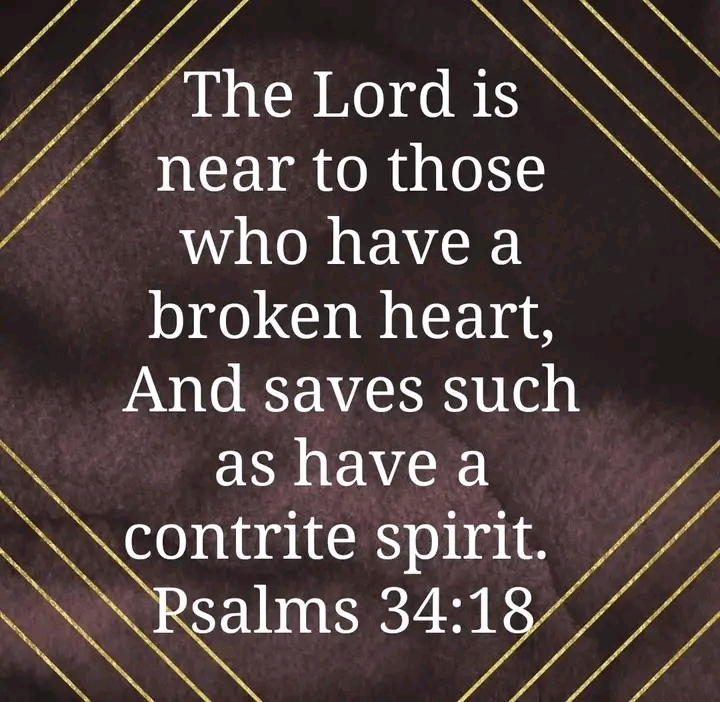
    A contrite spirit refers to a heart that is truly repentant, remorseful, and humble before God over one’s sins.

    Psalm 51 goes deeper…

    In Psalm 51:17, David declares:

    “The sacrifices of God are a broken spirit; a broken and contrite heart, O God, you will not despise.”

    A Contrite Spirit involves genuine brokenness, sorrow and acknowledgment of one’s sinfulness before a holy God.

    A Contrite Spirit is the attitude God desires more than mere outward religious rituals or sacrifices.

    “You do not delight in sacrifice…You do not take pleasure in burnt offerings.”

    A contrite spirit recognizes one’s utter need for God’s mercy and forgiveness.

    David pleads:

    “Have mercy on me, O God…blot out my transgressions.”

    A Contrite Spirit is characterized by humility, repentance, and a desire to turn from sin to obedience.

    “Create in me a pure heart, O God, and renew a steadfast spirit within me.”

    God promises not to “despise” or reject a truly contrite and repentant heart, but to forgive and restore the repentant sinner.

    In essence, a contrite spirit represents the broken, humble, and repentant attitude that God desires and responds to with mercy, rather than empty religious performances.

    Resources:

  • Why Face your shadow?

    Why Face your shadow?

    Shadow: the unconscious part of the human psyche that consists of repressed thoughts, emotions, desires, and characteristics.

    Avoidance: the act of keeping away from something or someone, often to prevent negative consequences or conflicts.

    What causes shadow avoidance to occur?

    Shadow avoidance occurs when we deny or refuse to see aspects of ourselves that make us feel uncomfortable, and instead attribute those unwanted qualities to others.

    This defense mechanism allows us to avoid responsibility for how we’ve hurt others and ourselves by misdirecting blame onto external targets.

    LETS GO DEEPER INTO SHADOW AVOIDANCE

    FEAR OF KNOWING THE ‘SELF’

    At a deeper level, shadow avoidance stems from the fear of truly knowing ourselves – afraid of our own…

    flaws, unhealed wounds, rejected aspects, dark emotions, and all that fun stuff.

    Facing the whole truth of who we are, and acknowledging our shared humanity is terrifying to unhealed people because it chips away at the façade; the false status & self-image.

    It means confronting painful experiences from the past, uncomfortable tendencies in the present, and an uncertain future.

    More threatening still …

    Within the darkness of our shadow something in us knows what’s there..
    our inner child –
    vulnerable, insecure, unloved.

    This child holds the parts of our ‘self’ from early life.

    If acknowledged, this inner child will demand our time and attention– we don’t have time for that.

    The needed healing we carry upon our shoulders is something that we feel ill-equipped to give and the very thought of it, exhausting…

    Their hurt (our hurt), having been buried deep for so long, sparks the complex reality behind of our inferiority complex .

    This reminds us of our powerlessness, insufficiency, and sparks immense guilt.

    A guilt that overwhelms us when it reveals the betrayal.

    Betrayal of self is the worst kind, forcing us to face the angry disowned child we neglected long ago.

    This Is Why We Project

    To protect against such fears, it becomes easier to simply deny our shadows exist.

    We project outward as a distraction. Projection protects us from facing what lies within.

    Tap here for DEFINITION OF PROJECTION

    In the field of psychology, projection is a defense mechanism that individuals often use to cope with their own feelings, thoughts, and impulses. This psychological phenomenon involves attributing one’s own undesirable traits, emotions, or thoughts onto another person. For example, if someone is feeling angry but finds it difficult to acknowledge that emotion within themselves, they might perceive others as being angry instead. This mechanism serves to protect the individual from facing uncomfortable truths about themselves, allowing them to avoid dealing with their own issues by externalizing them. Projection can manifest in various ways, affecting interpersonal relationships and one’s self-perception, and it is often explored in therapeutic settings to help individuals gain insight into their behaviors and emotional responses.

    In doing so, unfortunately, we miss opportunities for wholeness, self acceptance and compassion – both for ourselves and others.

    The lack of self-knowledge, to avoid suffering, keeps us trapped in a continual loop of suffering, and prevents genuine connection with anybody.

    IN COMES SHADOW WORK

    Shadow work provides a path of liberation. The truth is that -what seems too much to bear holds the most wisdom, but must be approached with care, empathy and non-condemnation.

    Our inner child embodied truth- a truth that you know deeply but have not been able to find words to describe. Your inner child has those words.

    With patience and compassion, we can listen for what who wants light, and love what who wants to be held.

    FEAR TURNS INTO AN ALLY

    Fear itself is a messenger. Each uncomfortable truth has a Gift – a peace needed for healing.

    There is strength in the human Soul to face what feels too extensive to face.

    YOU’RE NEVER ALONE

    Remember: You’re not alone in the shadows.

    You are there waiting for you to come and save yourself.

    This is the thing you are longing for…

    the hole in your heart that you have never been able to fill is waiting… in you & for you.

    Proceed at your own pace and discover the inner guide that will steer you towards all that you believe you lack.

    Allow it to emerge in its own time.

    But STOP blocking it.

  • Spirit of Inquiry

    Spirit of Inquiry

    The Spirit of Inquiry is a mindset of curiosity, open-mindedness, and a desire to seek out knowledge and truth.

    The Spirit of Inquiry involves asking thoughtful questions, digging for deeper understanding, and being willing to explore new ideas and perspectives.

    The Spirit of Inquiry is essential for intellectual growth, critical thinking, and the advancement of society as a whole.

    If you call out for insight and raise your voice for understanding, if you seek it like silver and search for it as for hidden treasures, then you will understand the fear of the Lord and find the knowledge of God.”

    – Proverbs 2:3-5

    It inspires us to challenge assumptions, think critically, and continually seek to expand our understanding of the world around us.

    How To Invoke The Spirit of Inquiry

    Embrace Curiosity

    Encourage a mindset of wonder and curiosity.

    Be open to new ideas and experiences that spark your interest.

    Question Everything

    Don’t be afraid to ask questions.

    Question assumptions, beliefs, and processes to gain a deeper understanding of the world around you.

    Seek Knowledge

    Continuously seek knowledge and information.

    Stay curious about different subjects and disciplines to expand your perspective.

    Critical Thinking

    Develop critical thinking skills to analyze information critically.

    Evaluate sources and evidence to make informed decisions.

    Experiment and Explore

    Be willing to try new things and explore unfamiliar territories.

    Take risks and learn from both successes and failures.

    Collaborate and Communicate

    Engage in conversations and collaborations with others to exchange ideas and insights.

    Build a network of mentors and peers to support your learning journey.

    Cultivating a spirit of inquiry is key to unlocking your full potential.

    By embracing curiosity and continuously questioning the world around you, you can boost your creativity, problem-solving abilities, and personal growth.

    Never stop seeking knowledge and be open to new possibilities.

    Enjoy the journey of discovery that comes with nurturing the spirit of inquiry.

  • Level Up On Scripture

    When reading the Bible, it is important to consider the following contexts in which the text was written.

    historical, cultural, and literary.

    Understanding the context can help illuminate the meaning and logic behind the various passages.

    Use of Symbolism & Metaphor

    1. SYMBOLISM

    Core Aspects of Biblical Symbolism

    Universal Archetypes:

    Water (purification), light (truth), and blood (life/sacrifice) appear across cultures but gain unique theological depth in scripture.

    Narrative Framing

    Stories like Jonah’s sea journey (Jonah 1-2) use physical peril to mirror spiritual rebellion and redemption.

    Prophetic Visions

    Ezekiel’s wheeled throne-chariot (Ezekiel 1) symbolizes divine mobility and sovereignty over human affairs.

    Christological Symbolism

    Lamb of God 
    (John 1:29): Subverts expectations by pairing sacrificial imagery with messianic authority.

    Vine & Branches 

    (John 15:5): Reinterprets Old Testament vineyard metaphors (Isaiah 5:7) as relational discipleship.

    Apocalyptic Layers

    The Book of Revelation employs:

    Numerology:

    7 (completion), 12 (covenant people), 144,000 (12x12x1000 = perfected community)

    Hybrid Creatures:

    Lion-Lamb (Revelation 5:6) embodies Christ’s paradoxical victory through sacrifice.

    Interpretive Keys

    Contextual Priority: Burning bush (Exodus 3:2) symbolizes God’s presence because of Moses’ barefoot reverence, not arbitrary fire imagery.

    Covenant Echoes: Rainbow (Genesis 9:13) gains meaning through Noah’s flood narrative, not just color spectrum symbolism.

    Cultural Anchors: Olive oil (James 5:14) represents healing and Spirit-anointing due to Mediterranean medicinal practices.

    Practical Application

    • Sacramental Symbols: Bread/wine (1 Cor. 11:23-26) maintain physical reality while conveying spiritual participation in Christ’s sacrifice.
    • Ethical Metaphors: “Salt of the earth” (Matthew 5:13) requires cultural translation (e.g., “social preservative” in modern contexts).

    Common Pitfalls

    • Over-allegorizing: Not every detail (e.g., Jonah’s fish species) carries symbolic weight.
    • Context Collapse: Israel’s Exodus becomes universal liberation metaphor only after establishing its historical covenant context.


    When interpreting symbolism in the Bible, it is important to consider the context in which the symbol is used and to look for recurring patterns throughout the text.

    2. Metaphor

    Metaphor in the Bible involves the use of figures of speech to illustrate spiritual truths or concepts.

    Metaphors are comparisons between two seemingly unrelated things that help to provide clarity and insight into complex ideas.

    For example, Jesus referring to himself as the “vine” and his followers as the “branches” in John 15:5.

    To discern metaphorical language in the Bible, it is essential to pay attention to the context in which the metaphor is used and to explore the significance of the comparison being made.

    Take the time to study the context, explore possible meanings, and consult trusted sources for guidance.

    Reflect on the deeper truths being conveyed.

    Learn Hermeneutic Interpretation

    Hermeneutic interpretation is the process of analyzing and understanding scripture in order to derive meaning and relevance for application in one’s life.

    It involves carefully examining the historical context, cultural background, literary style, and original language of the text to gain a deeper understanding of its intended message.

    Key Steps for Hermeneutic Interpretation

    Historical Context: Start by researching the time period, events, and societal norms when the scripture was written.

    Understanding the historical context can provide valuable insights into the intended meaning of the text.

    Cultural Background: Explore the cultural practices, beliefs, and traditions that may have influenced the writing of the scripture.

    This can help in interpreting the text within its cultural framework.

    Literary Style: Analyze the literary devices, structures, and themes used in the text.

    This can aid in uncovering the underlying message conveyed by the author.

    Original Language: If possible, study the original language in which the scripture was written.

    Translations can sometimes lose nuances and cultural references that are crucial for accurate interpretation.

    Balance Faith and Reason

    Both faith and reason are important aspects when deciphering the logic within the Bible.

    Importance of Faith

    Faith plays a central role in interpreting the Bible.

    It requires belief in the teachings and stories presented in the text. Trusting in the wisdom and guidance of the Bible is essential for a meaningful spiritual journey.

    Utilizing Reason

    While faith is crucial, reason can also be utilized to critically analyze and understand the logic within the Bible.

    Applying critical thinking skills to the text can help deepen your understanding and interpretation.

    Approach with an Open Mind and Heart

    Remember to approach the text with an open mind and heart.

    Allow yourself to be receptive to the message and teachings of the Bible.

    Let the logic within the text resonate with you and guide you on your spiritual journey.

    Overall, finding a balance between faith and reason is key to navigating Bible logic effectively.

    By combining trust in the teachings with critical analysis, you can deepen your understanding of the text and enrich your spiritual journey.

    Approach the Bible with openness and a willingness to learn, and let its logic guide you.

  • Time: The Fire That Burns

    Time, an aspect of the fourth dimension.

    Time: The fourth dimension created by God to separate and maintain matter, the containment ingredient needed to maintain form, something the ethereal domain would destroy without the distinction.

    Time is the fire in which we burn

    Time inexorably marches on, offering no respite for us to halt its progress or turn back the clock.

    It serves as a constant force that shapes and molds our very existence, propelling us to adjust and grow.

    Time has the power to be both an ally and an adversary.

    It can provide the opportunity for growth, learning, and transformation, but it can also bring about challenges, setbacks, and moments of reflection.

    Time has a way of magnifying our strengths and weaknesses, exposing us to our vulnerabilities and pushing us to confront our fears.

    Time highlights the impermanence of life. It reminds us that nothing lasts forever and that each moment is precious and fleeting.

    Time is a crucial element in the spiritual journey, serving as a tool for God to refine and purify his people.

    Unlike the eternal spirit which remains unaffected by time as God Himself is outside of time and space, the physical flesh and material world are bound by the constraints of time.

    Through the alchemical interaction of time and spirit, the process of sanctification is initiated, leading to the separation of the soul from the flesh.

    This transformative process, ignited by the indwelling of the Spirit, highlights the importance of time as a purifying force in the journey towards spiritual growth and enlightenment.

    The fusion of time and spirit represents a volatile yet necessary combination that ultimately serves to elevate and purify the individual, marking the beginning of a transformative journey towards a deeper connection with the divine.

    Time Forges Souls

    Time is the unrelenting forge where our souls are tested, separating the enduring essence from fleeting illusions.

    Just as a blacksmith molds iron in fiery crucibles, time shapes our spirits with its transformative touch.

    The eternal spirit remains untainted by these temporal flames, while the material world succumbs to its alchemical dance.

    My Pessimistic View on Time:

    Time, merely an additional dimension to confine us, serving as a reminder of our boundaries and unavoidable decline.

    Time exists as a framework to tether us to this deteriorating world, ensnaring us in the ceaseless progression towards entropy and hindering our spirits from connecting to the Origin.

    The grasp of time’s hold remains unyielding, as we utter words of falsehood to delude ourselves into believing we hold significance in this fruitless existence.

    Cami